
Skills analytics measures what employees can actually do, compares that against what the business needs, and points L&D leaders toward the training that closes the gap fastest. Platforms like Leaderly AI build on this idea, and research from the World Economic Forum shows why the discipline has become urgent. A significant portion of workers' skill sets will shift substantially by the end of the decade.
TL;DR:
- Skills analytics should focus on measuring employee readiness and capability to address specific business goals rather than just reporting activities or training completion.
- Starting with a clear business problem and mapping relevant skills ensures targeted interventions and more reliable results; pilots should be small and linked to measurable outcomes.
- Prioritizing skills based on strategic importance, proficiency level, and impact of gaps helps allocate resources effectively, with impact measured through business metrics, behavior change, and time-to-competency.
- Avoid common pitfalls by emphasizing outcome-based metrics, involving managers for context, and establishing governance to maintain data accuracy and credibility.
- Integrating skills data into existing HR systems and ensuring transparency and diversity in assessments safeguards privacy, supports compliance, and enhances decision-making.
Table of Contents
- What skills analytics covers and why it matters for organizational outcomes
- A step-by-step process for running a skills-analytics project
- How to prioritize skills and prove the impact of closing gaps
- Common pitfalls and how to avoid them
- Data privacy, ethics, and compliance in skills analytics
- Technological tools and platforms commonly used for skills analytics
- Integrating skills analytics with broader talent management and HR systems
- Trends and future directions in skills analytics
- Why decision-oriented skills analytics beats data collection for its own sake
- How Leaderly AI turns skills data into measurable behavior change
- Sources
- FAQ
What skills analytics covers and why it matters for organizational outcomes
Skills analytics, in the HR and L&D sense, has nothing to do with the technical skill set of a data analyst. It refers to measuring employee capability and readiness: who can do what today, what the organization needs them to do next, and where the gap sits. Confusing the two leads teams to buy the wrong tools or benchmark against the wrong job descriptions.
The case for investing in it is not abstract. The World Economic Forum's Future of Jobs Report 2025 found that a substantial portion of workers' existing skill sets are expected to be transformed or become outdated between 2025 and 2030, while many employers already call skill gaps a major barrier to business transformation. A large majority plan to prioritize workforce upskilling in response.
None of that data matters if the analytics stops at reporting. The CIPD's people-analytics guidance is direct on this point: the purpose of skills analytics is to solve a business problem, not to produce activity reports.
- Skills analytics tracks employee readiness and capability, not the technical skills of a data professional.
- The value comes from connecting skill data to business results, not from dashboards alone.
- Reporting training completions is not the same as measuring whether performance improved.
A step-by-step process for running a skills-analytics project
Most skills-analytics efforts fail before they start because someone opens with a dashboard instead of a question. The CIPD recommends the opposite order: define the business problem, then work backward to the data and interventions that address it.
- Define the business objective. Name the outcome you want to move, whether that is faster onboarding, fewer safety incidents, or improved customer retention.
- Map capabilities to that outcome. Identify the specific skills, technical and behavioral, that plausibly drive the result, and build a focused framework rather than a sprawling competency library.
- Assess current versus target capability. Combine assessments, manager ratings, and performance data so you are not relying on one biased signal.
- Rank the gaps. Prioritize by strategic importance, current proficiency, and the consequence of leaving the gap unaddressed.
- Pilot a focused intervention. Test one or two development actions on a small group rather than rolling out to everyone at once.
- Measure behavior change and iterate. Check whether the targeted capability actually shifted, adjust the approach, then scale what worked.
CIPD's research on learning value backs the pilot-and-reassess model directly: organizations that test digital learning at small scale and revisit their plans as needs to evolve see stronger adoption and less wasted spend than those that commit to full rollouts up front.
Assign clear ownership before you start. A single data owner should hold responsibility for the skills framework and its accuracy, while HR business partners connect findings to team-level decisions, and a business sponsor keeps the project tied to the original objective rather than letting it drift into a general engagement survey.
Pro Tip: Run your first skills-analytics pilot on one team and one business metric. A narrow, well-measured test builds more credibility with executives than an organization-wide rollout with fuzzy results.
How to prioritize skills and prove the impact of closing gaps
Not every skill gap deserves the same budget. A practical prioritization model multiplies three factors: strategic importance to the business, current proficiency level, and the impact of leaving the gap open. A skill that is critical to a growth initiative, currently weak across the team, and directly tied to revenue outranks a nice-to-have skill that is already at an adequate level.
Once you have prioritized, measuring impact comes down to three outcome types rather than a long list of metrics.
- Business-metric lift: did the target metric, such as error rate or sales conversion, move after the intervention?
- Observable behavior-change indicators: did managers or peer reviewers see the skill applied on the job, not just demonstrated in training?
- Time-to-competency: how long did it take the group to reach the target proficiency level compared with before the intervention?
CIPD's guidance on learning value argues for exactly this kind of outcome-focused KPI set instead of broad completion inventories. When you frame ROI for stakeholders, lead with the business metric first, then show the behavior-change evidence that explains why it moved. A manager dashboard that pairs "team proficiency rose from developing to proficient" with "customer complaints dropped in the same quarter" makes a far stronger case than a completion percentage on its own.
Common pitfalls and how to avoid them
The same few mistakes show up across most failed skills-analytics rollouts, and each has a straightforward fix.
- Measuring activity instead of outcomes. Completion rates feel productive but say nothing about performance. Define the target outcome before you pick a metric.
- Building an overly complex framework. A competency library with hundreds of skills becomes unusable. Prioritize transferable skills that affect multiple roles and keep the measured set small.
- Ignoring manager input. Quantitative data alone misses context. Embed short manager assessments and qualitative check-ins alongside the numbers.
- Skipping governance. Without a named data owner, skill definitions drift and dashboards lose credibility. Appoint an owner and tie every metric back to a business KPI.
CIPD and Accenture's research found that manager involvement and short qualitative checks meaningfully increase learning transfer, which is the practical reason the manager-input pitfall matters more than it looks on paper.
Pro Tip: Before approving any new metric for the dashboard, ask whether a manager could explain what changing it would mean for their team. If they can't, cut it.
Data privacy, ethics, and compliance in skills analytics
Skills analytics involves personal performance and assessment data, which raises the same privacy obligations as any other employee data system. Employees should know what is being measured, why, and who can see the results. Assessment scores and manager ratings tied to an individual carry more sensitivity than an aggregate team proficiency number, and access should be limited accordingly: individual scores to the employee and their manager, aggregated trends to leadership.
Consent and transparency matter especially when behavioral assessments like personality or emotional-intelligence instruments are involved, since these can feel more invasive than a technical skills test. Organizations should document why each data source is collected, how long it is retained, and how it will and will not be used, particularly ruling out its use in disciplinary decisions unless that is explicitly disclosed up front.
Bias is a second concern. A skills framework built only from current top performers' profiles can quietly encode the demographic makeup of that group rather than the actual capability needed. Reviewing assessment criteria for adverse impact, and involving a diverse set of managers in defining what "proficient" looks like, reduces that risk.
None of this is a substitute for legal review. Data protection requirements vary by jurisdiction and by the type of data collected, so HR and legal teams should confirm compliance obligations for their specific location and workforce before rolling out any new assessment or tracking system.

Technological tools and platforms commonly used for skills analytics
Most organizations combine several tool categories rather than relying on one system. HRIS platforms hold the foundational workforce data: roles, tenure, and organizational structure. Learning management systems track training completion and engagement, though on their own they only show activity, not applied skill. Dedicated people-analytics and business-intelligence tools sit on top of both, pulling data together to connect skill signals with performance and business metrics, which the CIPD identifies as the actual purpose of the exercise.
A newer category focuses specifically on leadership and behavioral development. These platforms combine microlearning, personalized content, and structured assessments such as DiSC, EQ, or MBTI with analytics dashboards that track behavior change over time rather than just course completion. Leaderly AI sits in this category, pairing machine-learning personalization with manager-facing dashboards built to show whether a habit or capability actually shifted after a learning intervention.
Choosing among these tools comes down to what you are trying to measure. A platform strong on technical certification tracking may offer little on behavioral or leadership metrics, and vice versa. For a broader look at how these platform categories differ and what to weigh when selecting one, see this rundown of scalable HR learning platforms. Whatever the mix, the tool matters less than whether the resulting data actually gets used to make a staffing or development decision.
Integrating skills analytics with broader talent management and HR systems
Skills data loses most of its value when it lives in a silo. The strongest implementations connect skills analytics directly to the systems that make people decisions: recruiting, succession planning, performance management, and compensation. A gap identified in a skills dashboard should be visible to the manager running a performance review and to the recruiter filling an adjacent role, not buried in a separate report nobody opens.

Practically, this means mapping skill data fields consistently across the HRIS, LMS, and performance system so a "proficient in stakeholder communication" tag means the same thing everywhere it appears. It also means feeding skills data into succession planning: instead of asking who is "ready now" based on tenure, planners can ask who has closed the specific gaps tied to the next role.
Engagement data adds another layer worth connecting. Low engagement scores on a team often correlate with unaddressed skill gaps, particularly around management capability, so pairing engagement analytics with skills data helps distinguish a motivation problem from a capability problem before choosing an intervention.
Integration does not require replacing existing systems. It requires agreeing on shared definitions and making sure the skills data flows into the same decision points, whether that's a promotion conversation, a hiring plan, or a budget request for the next development cycle.
Trends and future directions in skills analytics
The World Economic Forum's skills outlook points to a shift already underway: technical skills like AI and big data are among the fastest growing in demand, but human capabilities such as analytical thinking, resilience, flexibility, leadership, and collaboration remain persistent differentiators. Skills analytics is following that lead, moving away from tracking only certifications and technical proficiency toward measuring behavioral and leadership capability with the same rigor.
Predictive use is also expanding. Rather than reporting where gaps exist today, more organizations are trying to forecast which skills will matter in 18 to 24 months based on business strategy, then building the pipeline before the gap becomes urgent.
Personalization is the other clear direction. Static, one-size-fits-all training paths are giving way to systems that adjust content based on an individual's assessment results and demonstrated behavior, which is the model machine-learning-driven platforms are built around. Expect the line between "learning platform" and "analytics platform" to keep blurring, since the two only deliver value when they operate together: content that adapts to what the data shows, and data that gets collected because someone is going to act on it.
Why decision-oriented skills analytics beats data collection for its own sake
Most organizations already collect more skills data than they use. The gap is not information, it's discipline: too many teams build the dashboard before they've named the business problem it's supposed to solve, then wonder why the finished report doesn't change anyone's mind.
The evidence points to a narrower approach working better. Combine that with the World Economic Forum's finding that most employers already see skill gaps as a barrier to transformation, and the priority becomes clear: fewer metrics, tied explicitly to a business outcome, checked by a manager who can vouch for what the number means.
Where conventional advice falls short is in treating comprehensiveness as rigor. A hundred-skill competency framework looks thorough and delivers little, because nobody can act on a hundred priorities at once. Readers should start smaller than feels comfortable: one business objective, a handful of skills, one pilot team, and a plan to expand only once the numbers move.
— Drew
How Leaderly AI turns skills data into measurable behavior change
Leaderly AI was built around the same principle this article has argued for: skill data only matters when it changes what people do. The platform delivers personalized microlessons shaped by machine learning, pairs them with built-in assessments including DiSC, EQ, and MBTI, and surfaces the results on manager dashboards designed to show behavior-change metrics rather than just completion counts.
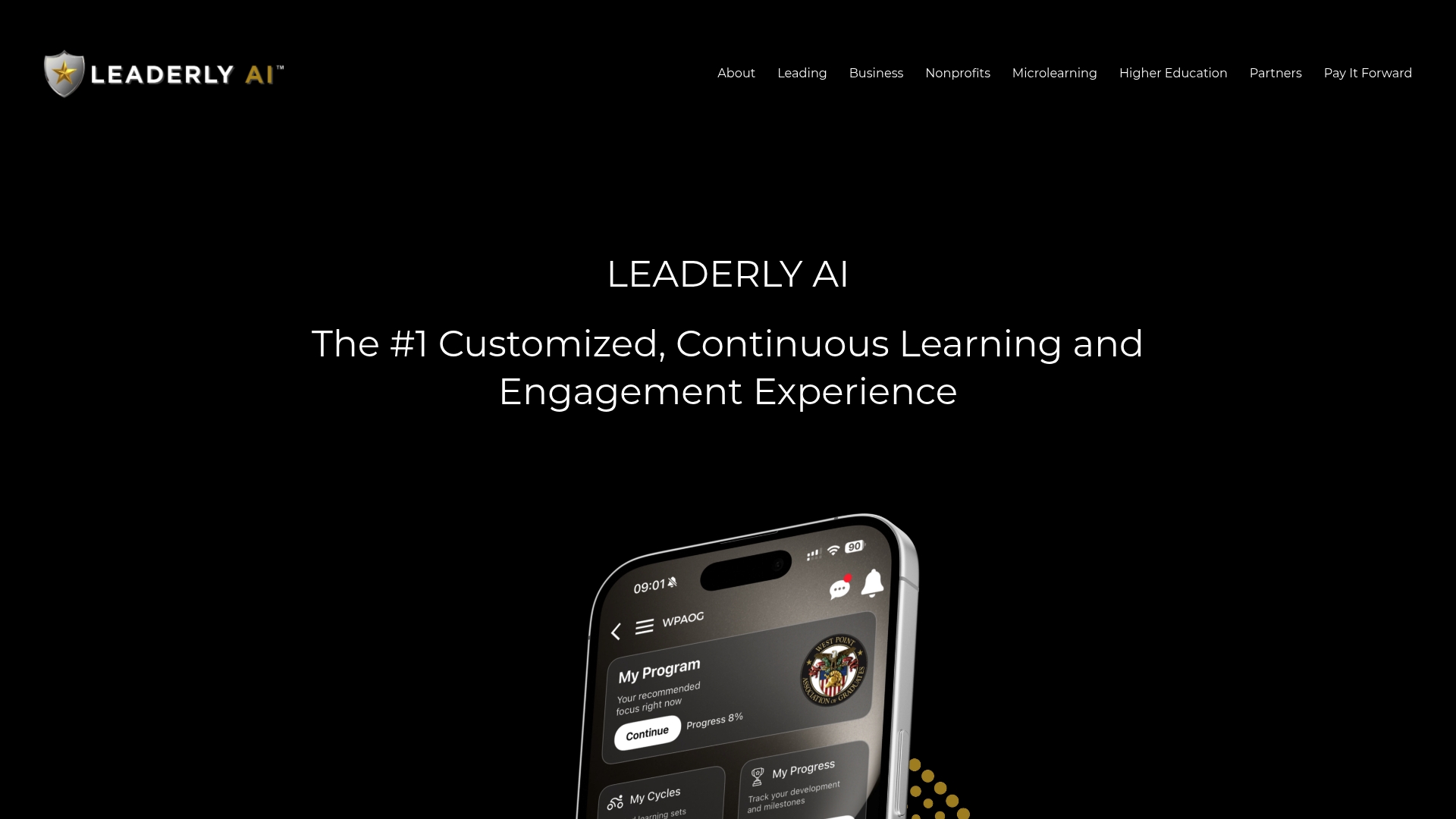
A typical pilot looks like the process outlined earlier in this article: pick one team and one business metric, assign a targeted microlesson track with manager nudges built in, then track the behavior-change indicators on the dashboard before deciding whether to scale. That structure keeps the pilot small, measurable, and tied to a real outcome rather than a training calendar.
- Personalized microlessons that adjust to each employee's assessment results and progress.
- Built-in behavioral assessments, including DiSC, EQ, and MBTI, for a structured proficiency baseline.
- Manager dashboards that track behavior-change indicators alongside completion data.
- Scalable design for organizations rolling programs out beyond managers to every employee.
Leaderly AI serves corporate teams through continuous professional development and leadership engagement, along with dedicated programs for higher education and nonprofits. If your team is ready to run a focused pilot instead of another broad training rollout, visit the Leaderly AI business page to see how a pilot could fit your organization.
Sources
Good skills analytics pulls from more than one system, because no single source tells the whole story. HRIS records give you role and tenure data. The LMS shows what training people actually completed. Performance reviews and manager ratings capture judgment that no test can replicate, and periodic assessments, whether technical certifications or behavioral instruments, add a structured baseline.
The CIPD factsheet frames useful analytics output in four tiers: descriptive (what happened), diagnostic (why it happened), predictive (what is likely to happen), and prescriptive (what to do about it). Most HR teams get stuck at descriptive, counting completions and calling it analysis.
One in three learning professionals proactively diagnoses the performance problem before recommending a fix. A CIPD and Accenture study put that figure at 32%, meaning most training decisions still start from assumption rather than evidence.
For KPIs, keep the set small and outcome-focused: proficiency percentage against a defined standard, gap size between current and target capability, transfer rate (whether the skill shows up in actual work), and time-to-proficiency for new hires or promoted employees. Behavior-change indicators, tracked through manager observation or repeated micro-assessments, matter more than completion counts because they show whether the skill stuck.
FAQ
What is skills analytics in HR and L&D?
Skills analytics is the practice of measuring employee capability and readiness, then comparing it against what the business needs to identify gaps. Its purpose, per CIPD's people-analytics guidance, is to solve a specific business problem, not to produce a general activity report.
How is skills analytics different from workforce analytics?
Workforce analytics covers a broader set of people metrics, including headcount, turnover, and hiring trends, while skills analytics focuses specifically on capability: what employees can do and where the gaps sit against business need. The two overlap when a workforce analytics team investigates why a specific gap is affecting a business outcome.
What metrics matter most in a skills-analytics dashboard?
The most useful metrics are outcome-focused: proficiency percentage against a defined standard, gap size, transfer rate into actual work, and time-to-proficiency. CIPD's research recommends a small set of practitioner-focused metrics tied to business results rather than a broad inventory of completion counts.
How do you measure ROI on a skills-development program?
ROI is best shown by pairing a business-metric lift, such as a change in error rate or retention, with behavior-change evidence from managers showing the skill is actually being applied on the job. Time-to-competency, or how quickly a group reaches target proficiency, adds a third data point stakeholders can compare across programs.
What is the biggest mistake organizations make with skills analytics?
The most common mistake is measuring training activity instead of diagnosing the underlying performance problem first. CIPD and Accenture's research found that only 32% of learning professionals identify the actual performance issue before recommending a solution, meaning most programs are built on assumption rather than evidence.