
An effective engagement survey measures the workplace conditions that drive performance and ends with one or two team actions owned by named people. Design around two rules: protect anonymity with simple arithmetic, and match your cadence to your capacity to act. Aim for 70–85% participation, using an annual census plus short pulses.
TL;DR:
- Use six to eight actionable themes, with three or four questions each, and tailor topics to the workforce, such as safety or role clarity.
- Keep full surveys to 30–50 questions, or 10–15 minutes; those exceeding 60–70 questions tend to cause fatigue, while pulses need only five to eight items.
- Suppress groups with fewer than five respondents, including slices created by combined filters; report response rates beside scores and treat rates below 60% as directional.
- Pilot questions with employees across roles and access needs; split items that ask two things, avoid reversed wording, and place overall engagement questions after driver items.
Table of Contents
- How do you set survey goals before writing a single question?
- Which themes should you measure: drivers or outcomes?
- How do you write survey questions people can answer honestly?
- How long should the survey be, and how often should you run it?
- How do you protect anonymity and set reporting rules?
- How do you get people to take the survey honestly?
- How do you turn results into one or two team actions?
- What does a ready-to-use survey workbook look like?
- Why survey results should feed leadership development
- How can we help you connect survey findings to follow-up?
- FAQ
- Sources
How do you set survey goals before writing a single question?
Start with the decision the survey must inform, not the question list. A survey built around "let's see how people feel" produces a report. A survey built around "why are first-year hires leaving?" produces a plan.
Gallup's guidance describes the purpose of an engagement survey as assessing workplace conditions such as clear expectations, access to resources, and quality of leadership. Use that as your anchor, then narrow it to your own context. The Fisher College of Business walks through practical steps that start with organizational context and a stated purpose.
Work through these steps before drafting:
- Translate priorities into one to three goals. Examples: reduce regretted attrition, improve manager effectiveness, increase role clarity.
- Interview a small group. Talk to someone in HR, two managers and one executive. Ask what decision each would make differently with better data.
- Choose the format. A full census, a diagnostic on one population, or a pulse. Pick based on your goals and, just as important, how much follow-up your organization can realistically deliver.
- Name the owner. Decide now who will act on results at the team level, and what they will be allowed to change.
If you cannot name a decision the data will inform, shrink the survey until you can. Every extra topic is another promise to act.
Which themes should you measure: drivers or outcomes?
Separate what you want to improve from what you want to track. Outcome items tell you where you stand, such as an overall engagement index or an employee Net Promoter Score (eNPS). Driver items tell you why, and they are where your actions will live.

Typical driver themes include manager quality, enablement (having the tools and authority to do the job), recognition, resources, and growth. Our piece on why manager behavior affects engagement explains why manager items deserve special attention.
A few rules keep the theme list useful:
- Use several items per theme. A single question is noisy, and one odd interpretation can swing the score. Three or four items per theme give you something you can trust.
- Keep themes actionable. If no team can change it, it belongs in a different conversation.
- Adapt to the workforce. Manufacturing and frontline teams often need items on safety, scheduling fairness and equipment. Hybrid teams need items on collaboration and visibility. Fast-growing organizations should probe role clarity and onboarding.
- Limit the count. Six to eight themes are plenty for most census surveys. More than that and you will struggle to prioritize.
When you review early drafts, ask of each theme: "If this scores low, who would do what next?" A theme with no answer should be cut.
How do you write survey questions people can answer honestly?
Question wording quietly decides whether your data is usable. The SHRM viewpoint on crafting the survey argues for aligning every design choice with the impact you want the survey to have. Apply that to the details below.
- Make agreement scales your backbone. A consistent agree/disagree scale is easy to complete and easy to trend.
- One idea per item. "My manager listens and acts on my input" is two questions. Split it.
- Skip reverse-coded items. Flipped wording tends to confuse respondents and muddy results.
- Put headline metrics after drivers. Asking for overall engagement or eNPS once people have thought through specifics reduces anchoring on a single gut reaction.
- Add one to three optional open-ended prompts at the end. Decide before launch how you will code comments into themes, or they become a pile of quotes nobody uses.
- Order questions logically. Group items by theme, and keep sensitive items away from the opening.
Pro Tip: Read every item aloud as if you were a new hire on a night shift. If you have to explain it, rewrite it.
Pilot the draft with a handful of employees from different roles and levels. Ask what they thought each item meant, and watch for any that were read two different ways. Include people who use assistive technology or take the survey in a second language, so wording and layout work for everyone.
How long should the survey be, and how often should you run it?
Length drives completion. Quantum Workplace's design guidance notes that 30–50 questions, taking roughly 10–15 minutes, is a common best practice, and that surveys beyond 60–70 questions tend to cause fatigue. If your draft is creeping past that, cut themes, not response options.
A three-layer architecture keeps the load sensible, as described in Wavefield Research's survey guide:
- Annual census. The full instrument, covering every theme, for the complete picture and year-over-year trends.
- Short pulses. Five to eight items between censuses to check whether your actions are moving a specific driver. Our tactical guide to fixing your first pulse surveys covers the mechanics, and our post on eNPS versus pulses helps you decide what to run when.
- Lifecycle surveys. Event-triggered check-ins at onboarding and exit, which catch problems the annual cycle misses.
Cadence is a promise. Surveying more often than you can follow up teaches employees that their answers go nowhere. Match pulse frequency to how often your managers can realistically follow up.
How do you protect anonymity and set reporting rules?
Honest answers depend on believing nobody can trace them. Decide up front whether the survey is anonymous (no identifying data collected) or confidential (data collected but access restricted), because the choice shapes what demographic cuts you can offer and who can see them. Tell employees exactly which one it is.
Then adopt an arithmetic rule and publish it:
- Never report a group smaller than five respondents. Practitioners follow this threshold to prevent individual identification, and stating it openly in invitations helps build trust.
- Watch combined filters. A cut by department, tenure and location can produce a slice of two people even when each filter alone looks safe. Suppress those combinations.
- Limit leader-level access. Managers see their own team's rollup, not raw comment exports with names or identifying details.
- Report response rates beside scores. A score without its base is easy to misread.
Healthy engagement surveys typically reach 70–85% response, and waves below 60% should be treated as directional only. The most disengaged employees are often the least likely to respond, so a high average on thin participation can hide the very people you most need to hear from.
When participation is low, say so plainly in your readout and pair the results with other listening, such as focus groups, rather than presenting the numbers as settled.
How do you get people to take the survey honestly?
Participation is built before the survey opens. Employees decide whether to answer based on whether they believe something will happen afterward, so trust work comes first.
- Secure visible leadership endorsement. A short note from a senior leader explaining why the survey exists and what decisions it will inform.
- State the purpose and the reporting rules. Include the minimum-group-size rule in the invitation itself.
- Use access that fits the workforce. Single-use links by email work for desk teams. For frontline staff, use SMS links or provide time and a shared device during shifts. The ASAE guidance on helping staff feel heard also stresses accessible collection methods and explaining how feedback will be used.
- Plan reminders. Keep the window open long enough for shift workers and people on leave to respond.
- Share early progress. Posting participation by team encourages friendly momentum without exposing individuals.
Pro Tip: Send the first reminder to everyone, but give managers of low-participation teams a quiet heads-up and protected time rather than a public ranking.
If response rates fall short anyway, treat that as a finding. Either start with grassroots listening, such as focus groups, or run targeted outreach to under-responding teams, and ask what is making people reluctant to answer.
How do you turn results into one or two team actions?
Collecting feedback and going quiet can backfire. Macalester's action-planning guide notes that employees judge a survey by whether they see visible action afterward. Plan the follow-up before you launch.
Read scores with their base sizes and margin of error in mind, then prioritize drivers a team can change: enablement, manager behavior, recognition. The ACT protocol in George Mason's supervisor toolkit gives a clean sequence: acknowledge and share results, collaborate in a team conversation to choose one or two opportunities, then take measurable action with owners and review checkpoints.
Use a short template for each priority:
- Focus area: the driver you are improving.
- Action steps: specific, small and scheduled.
- Owner and supporters: a named person plus helpers.
- Timeline: dates, not "soon."
- Success signal: the pulse item or observable behavior that will show movement.
| Step | What happens | Output |
|---|---|---|
| Acknowledge | Share results with the team and thank them | Shared understanding |
| Collaborate | Discuss and pick one or two priorities | Agreed focus areas |
| Take action | Assign owners, dates and check-ins | Visible commitments |
Close the loop with a "you said, we did" summary and revisit progress in regular team meetings. For dashboards and reporting ideas, see our guide to employee engagement analytics.
What does a ready-to-use survey workbook look like?
Use these scenario checklists and starter items, then adapt them to your culture.
- New program: goals signed off, stakeholders interviewed, themes chosen, pilot run, reporting rules written, action owners named before launch.
- Replacing an old instrument: map old items to new themes, keep a bridge set of unchanged questions, and explain the break in trend lines.
- Pulse tracking: pick two or three drivers, assign a manager owner to each, schedule the readout before the pulse goes out.
- Customization rule: keep changes between waves limited and keep core wording identical, so trends stay valid.
| Instrument | Sample items | Optional open-end |
|---|---|---|
| Census (—) | "I know what is expected of me at work." "My manager helps me grow." "I have what I need to do my job well." "I feel recognized for good work." | "What is one change that would improve your work?" |
| Pulse (5–8 items) | "I received useful feedback this month." "Recent changes on my team have improved how we work." | "What is getting in your way right now?" |
Why survey results should feed leadership development
I treat a low-scoring driver as a coaching signal, not just a number for a slide. If "my manager helps me grow" scores low, the useful response is a short manager practice, such as making time for regular development conversations with direct reports, rather than a company-wide memo.
Pick one driver, pair it with one small learning module or habit, and check whether the next pulse moves. That keeps leaders running small, measurable experiments tied to what employees actually said, which is how survey data starts changing behavior.
— Drew
How can we help you connect survey findings to follow-up?
The hardest part of any survey cycle is the gap between results and action. We built Leaderly AI, and you can see how it works for organizations on our business page.
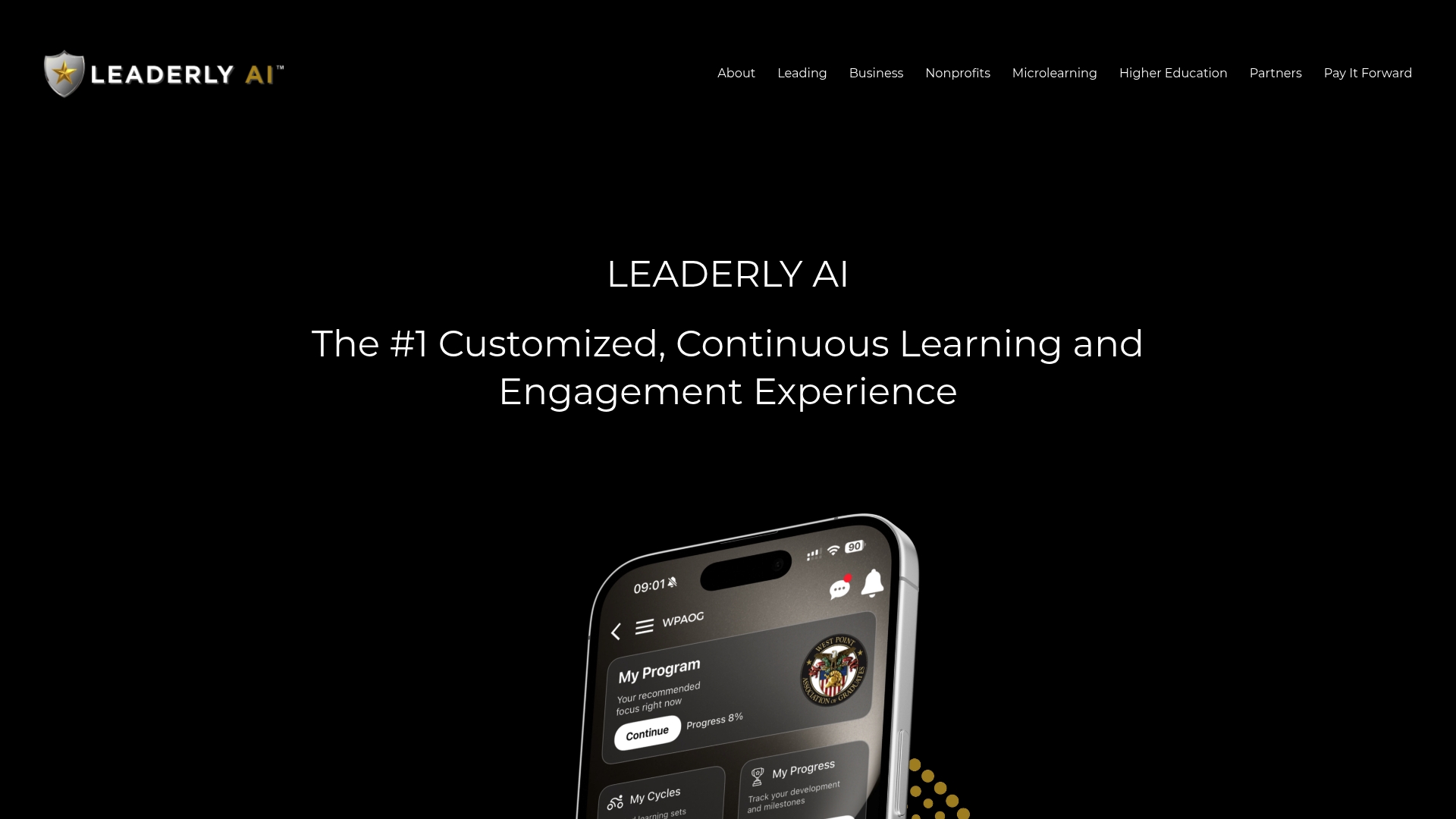
- Microlessons tied to drivers. When a survey flags manager feedback or recognition, we offer short, personalized lessons on that skill.
- Analytics for HR. Dashboards help you track learning activity.
- Nudges for managers.
If you want to pilot survey-linked development with one team, explore Leaderly AI and request a demo.
FAQ
What is an engagement survey?
An engagement survey is a structured set of questions that measures workplace conditions such as expectations, resources and leadership quality. Gallup describes these conditions as predictive of team performance. Its value comes from the actions that follow.
What makes a good employee engagement survey?
A good survey has clear goals, one idea per question, enough items per theme to be reliable, and firm anonymity rules. It also leads to visible action. Employees judge a survey by what happens after it closes.
What are examples of survey designs?
The most common design is a three-layer model: an annual census, short pulses, and lifecycle surveys at onboarding and exit. Wavefield Research outlines this structure. Choose the layers your managers can realistically act on.
How long should an engagement survey be?
Most full surveys run 30–50 questions, or roughly 10–15 minutes, according to Quantum Workplace guidance. Pulses should stay much shorter than full surveys.