
A manager enablement program equips leaders with the skills, practice time, systems, and measurement tools tied directly to business goals, not generic leadership theory. The single best first move for HR is to align the program with one to three business priorities, then run a 90-day pilot targeting just one to three behavioral goals per manager, tracked through observable behavior change. The frameworks and evidence below show why that sequence works and how to build it.
TL;DR:
- The program should focus on one to three key business priorities, with managers practicing observable behaviors aligned to specific goals like retention or execution speed.
- Measure success through participation rates, observed behavior changes, team engagement scores, and retention, expecting modest but meaningful improvements within 90 days.
- Conduct triangulated skill assessments—including self, peer, and coach observations—and prioritize a small number of behavioral goals with practice-based learning over broad training.
- Use role plays, immediate feedback, protected coaching, and homework logging to turn knowledge into habits and reinforce behaviors through repetition and peer learning.
- Secure leadership sponsorship by linking behaviors to KPIs, establishing governance, and maintaining consistent communication, then run a structured 90-day pilot to evaluate behavior change before scaling.
Table of Contents
- Align the Manager Enablement Program to Business Objectives
- What Metrics Actually Prove the Program Is Working?
- How Do You Assess Manager Skill Gaps Before Training?
- Turning Knowledge Into Habit Through Practice and Coaching
- Making Inclusion and Emotional Intelligence Practical, Not Aspirational
- Getting Senior Leadership and Cross-Functional Buy-In
- A 90-Day Pilot Playbook You Can Copy
- What the Research Says About Manager Enablement That Actually Works
- What HR Teams Get Wrong About Manager Enablement
- How Leaderly Supports a Manager Enablement Program Rollout
- Further Reading and Primary Sources
- Sources
- FAQ
Align the Manager Enablement Program to Business Objectives
A manager enablement program only earns its budget when it moves numbers the business already cares about. Start by mapping one to three business priorities to specific manager behaviors. If retention is the priority, the behavior might be "hold monthly stay conversations." If execution speed matters, it might be "run weekly OKR check-ins."
From there, build a short responsibilities rubric so managers know exactly what "doing the job well" looks like:
- Set and clarify team goals tied to company priorities
- Deliver specific, timely feedback at least weekly
- Hold regular one-on-ones focused on growth, not status updates
- Model the behaviors the program is teaching
Google's own research on scaling manager capability backs this structure, recommending that organizations clarify expectations and align accountability before adding training on top. Measurable outcomes to watch include team OKR completion rates and voluntary attrition among direct reports.
What Metrics Actually Prove the Program Is Working?
Track two categories: leading indicators that show the program is running, and lagging indicators that show it's working. Confusing the two is the most common measurement mistake in manager training initiatives.
- Participation and practice frequency: session attendance, coaching logs, homework completion
- Observed behavior change: manager 360 feedback, direct-report pulse survey shifts
- Team engagement: quarterly engagement scores segmented by manager
- Retention: voluntary attrition on teams led by pilot managers versus non-pilot teams
Realistic benchmark: A 2023 randomized controlled trial on managerial behavioral training found small but measurable gains: leader effectiveness improved by an effect size of d = .21, and employee engagement rose by d = .27. Expect modest, real shifts, not dramatic overnight transformation.
Run weekly check-ins during the pilot, formal measurement monthly, and a full review each quarter. That cadence gives you enough data to adjust the curriculum before it hardens into something managers tune out.
How Do You Assess Manager Skill Gaps Before Training?
Skip the single self-assessment survey. It flatters people who are already confident and misses blind spots entirely. Triangulate instead.
- Self-assessment against the responsibilities rubric you built in step one.
- Direct-report input through a short, anonymous pulse survey or informal 360.
- Structured observation, sometimes called topographic assessment, where a coach watches an actual one-on-one or team meeting and rates specific behaviors against a checklist.
Once the picture is clear, resist the urge to fix everything at once. Prioritize one to three behavioral goals per manager for the pilot, using a simple rubric that weighs business impact against how coachable the behavior is in 90 days. Then sequence a learning path: a microlesson to introduce the concept, a live practice session to rehearse it, and an on-the-job assignment to apply it that same week. This is the design logic behind behavioral science approaches to employee development, and it works because each stage reinforces the last instead of standing alone.
Turning Knowledge Into Habit Through Practice and Coaching
Managers don't change behavior because they watched a good training video. They change because they rehearsed the behavior under low stakes, got specific feedback, and then had to do it for real with a homework assignment attached.
- Use role plays and video-based rehearsal so managers practice a hard feedback conversation before they need it live.
- Give in-session feedback immediately after each rehearsal, not days later in a written recap.
- Protect coaching time on the calendar. Development that gets bumped for "urgent" meetings never becomes habit.
- Build peer learning groups so managers troubleshoot real situations with colleagues facing the same problems.
- Assign specific, countable homework, like delivering three feedback conversations in two weeks and logging what happened.
The GROW coaching model, which moves a conversation from Goal to Reality to Options to Will, gives coaches a repeatable structure for these sessions instead of an open-ended chat.
Pro Tip: Have managers log outcomes, not just completion. "I delivered the feedback conversation" tells you nothing. "I delivered it and the employee asked a follow-up question about their goals" tells you the behavior actually landed.
Making Inclusion and Emotional Intelligence Practical, Not Aspirational
Emotional intelligence training fails when it stays abstract. Turn it into specific, observable behaviors managers can practice the same way they practice a budget review.
- Teach active listening as a checklist: paraphrase before responding, ask one clarifying question, avoid interrupting for the first 60 seconds.
- Practice validation language explicitly. Most managers know the concept but freeze on the actual words.
- Use bias-aware checklists before performance conversations, prompting managers to check whether feedback language differs across employees for similar performance.
- Build psychological-safety behaviors into the same practice sessions used for hard conversations, since the two skills reinforce each other.
Measure the payoff with targeted engagement survey items on fairness and being heard, and track retention specifically among underrepresented employees on pilot-manager teams versus the rest of the organization. If those numbers move, the training is doing more than checking a compliance box.
Getting Senior Leadership and Cross-Functional Buy-In
A manager enablement program dies quietly when it has no sponsor above the HR team pushing it. Building the business case early prevents that.
- Write a one-page business case that links two or three manager behaviors directly to a business KPI leadership already tracks, like attrition cost or time-to-productivity for new hires.
- Name a governance group of no more than five people: an HR lead, a business unit sponsor, an operations partner, and one frontline manager. Ask sponsors for three specific things: visibility (mentioning the pilot in their own meetings), protected time (not pulling pilot managers into conflicting meetings), and role-modeling (practicing the same behaviors themselves).
- Coordinate HR, People Ops, and business unit leaders on a shared calendar so pilot managers aren't getting three competing initiatives launched the same month.
Google's guidance on building manager capability at scale describes this as communicating at key manager moments rather than launching once and going quiet. That single habit separates programs that stick from ones that fade by month four.
A 90-Day Pilot Playbook You Can Copy
Run the pilot in four phases, each roughly three weeks, with a clear owner for each step.
- Weeks 1 to 3, Assess: Triangulate skill gaps, secure sponsor commitments, and select 8 to 15 pilot managers.
- Weeks 4 to 6, Design: Build the microlearning and practice sequence, finalize the responsibilities rubric, and set baseline metrics.
- Weeks 7 to 10, Pilot: Run weekly practice sessions, protected coaching time, and homework assignments.
- Weeks 11 to 13, Measure: Collect 360 feedback, engagement pulse data, and manager self-reports; compare against baseline.
Decision thresholds to scale the program organization-wide:
- Observed behavior change on at least two of three targeted goals per manager
- Positive shift in direct-report engagement pulse scores
- Manager feedback indicating the practice time felt worth protecting, not disruptive
Keep the assets low-friction: one-page cheat sheets for each behavior, short daily micro-practices, and a manager role template that spells out expectations in plain language rather than corporate jargon. Culture Amp's account of Workplace Options launching a manager enablement program in eight weeks shows how fast a focused pilot can improve manager confidence and review quality when the scope stays tight.
What the Research Says About Manager Enablement That Actually Works
The evidence for structured manager training is stronger than most HR teams assume, and more modest than most vendors claim. Both things are true at once, and the second half matters just as much as the first.
The 2023 randomized controlled trial on managerial behavioral training found effect sizes around d ≈ .20 to .22 for specific behaviors like goal setting, performance feedback, and consequential listening, with leader effectiveness improving by d = .21. These are small, real, and durable gains, not dramatic transformations, and that's exactly what a credible program should promise.
The trial's design offers a reusable blueprint: structured pre-assessment, participative goal setting where the manager helps choose the target behavior, in-session practice with feedback, and homework tied to actual work tasks. Gallup's manager research reaches a similar conclusion from a different angle, finding that manager development is among the most effective levers for engagement when it includes strengths-based coaching and ongoing reinforcement rather than one-off workshops.
There are platforms that operationalize this sequence through microlessons tied to specific behaviors, practice prompts, self-assessments for gap analysis, and analytics dashboards tracking metrics HR needs for quarterly reviews.

What HR Teams Get Wrong About Manager Enablement
Most manager enablement programs fail for a boring reason: leadership treats development time as optional the first time a deadline gets tight. Protecting that time, and holding senior leaders accountable for protecting it, matters more than the curriculum itself.

The second mistake is measuring attendance instead of behavior change. A packed training calendar proves nothing if managers walk out and run the same one-on-ones they always have. Track the three or four behaviors that matter, and let attendance data go quiet in the background where it belongs.
Treat manager enablement as an operating system that runs continuously, not a course that ends. The organizations that get real returns are the ones still coaching in month twelve, not just week two.
— Drew
How Leaderly Supports a Manager Enablement Program Rollout
Running the 90-day pilot outlined above by hand, with spreadsheets tracking coaching logs and separate survey tools for engagement pulses, eats weeks of HR bandwidth before a single manager gets trained. There are solutions built to run that whole sequence in one place: microlessons mapped to specific behaviors, in-app practice prompts for homework assignments, self-assessments for gap analysis, and analytics dashboards surfacing the indicators needed for quarterly reviews.
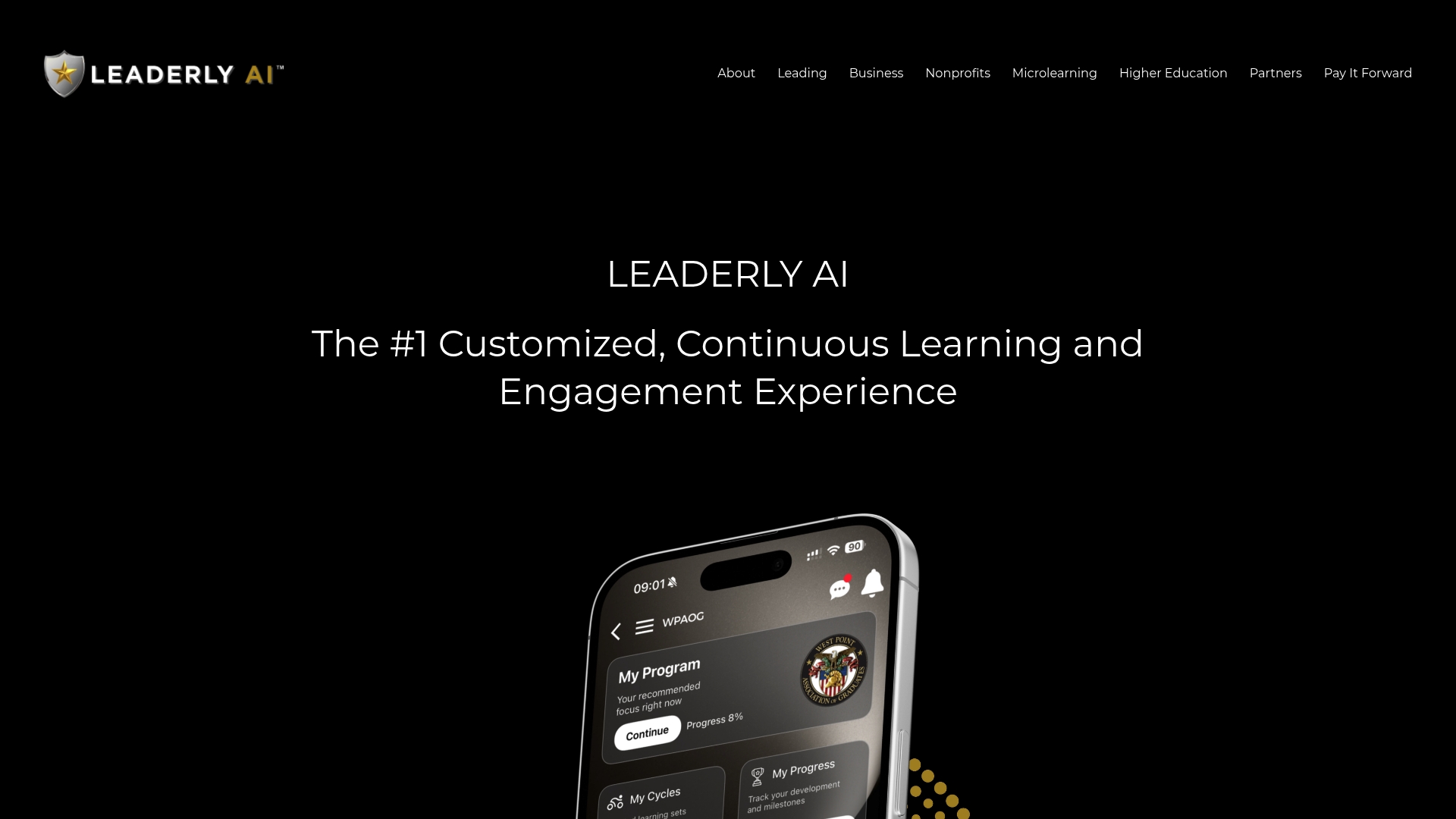
A typical pilot engagement runs with a small cohort of managers over roughly the same 90-day window this guide walks through, giving HR a real behavior-change signal before committing budget to a full rollout. Teams supporting frontline safety conversations can pair that with focused de-escalation training for managers handling higher-stakes team situations. If your organization is a nonprofit or higher education institution, dedicated program pages cover Leaderly AI for Nonprofits and Leaderly AI for Higher Education with pricing available on request. Visit the Leaderly AI business page to request a demo and scope your own pilot cohort.
Further Reading and Primary Sources
- Managerial behavioral training RCT — Journal of Organizational Behavior Management
- Building manager capability at scale — re:Work with Google
- Manager development — Gallup
- Leaderly AI
Sources
- Managerial behavioral training RCT — Journal of Organizational Behavior Management (2023)
- Building manager capability at scale — re:Work with Google
- Manager development — Gallup (2026)
- How Workplace Options built an innovative manager enablement program — Culture Amp
FAQ
What Is Manager Enablement?
Manager enablement is the practice of giving managers the skills, coaching, tools, and measurement systems they need to lead their teams effectively, tied directly to business goals rather than generic leadership theory. It combines training, structured practice, and ongoing reinforcement instead of one-time workshops.
What Is the 30-60-90 Rule for Managers?
The 30-60-90 rule is a planning framework where a new or newly promoted manager sets short-term goals in sequential phases: an initial learning phase, followed by building relationships and early wins, and then focusing on driving independent results. It's often adapted into onboarding plans inside a broader manager enablement program.
What Are Red Flags in a Manager?
Common red flags include avoiding direct feedback conversations, taking credit for team wins while deflecting blame for failures, and inconsistent expectations across team members. A structured assessment process, including direct-report input and observed behavior, catches these patterns earlier than a self-assessment alone.
How Long Should a Manager Enablement Pilot Run?
A focused pilot works well over roughly 90 days, giving enough time for baseline assessment, structured practice, and a follow-up measurement cycle. Some organizations, like Workplace Options, have launched a tighter eight-week version tied to a single performance review cycle with measurable results.
Does Leaderly Offer a Manager Enablement Pilot?
Leaderly AI supports pilot cohorts through role-specific microlessons, practice prompts, and assessment tools like DiSC and EQ, paired with analytics dashboards for tracking behavior change. Pricing and pilot scoping are available by request through the Leaderly AI business page.