
Engagement-driven performance management is defined as a continuous system of feedback, coaching, and goal alignment that replaces the traditional annual review cycle. Organizations with highly engaged employees are 23% more profitable, while low-engagement teams report 41% higher defect rates. The industry term for this approach is "continuous performance management," and the examples below show exactly how HR leaders are putting it into practice. Techniques like OKR-based goal setting, biweekly coaching check-ins, and AI-assisted review drafting are the methods driving real results. Each case in this article gives you a concrete model to adapt.
1. Engagement-driven performance management examples: AI-assisted quarterly reviews
NexGen SaaS is the clearest proof that technology can make continuous performance management work at scale. The company moved from annual reviews to quarterly performance summaries supported by AI-generated draft feedback. Managers no longer faced the "blank page" problem. Instead, the system pulled from goal progress, peer input, and ongoing feedback to pre-populate review drafts, capturing 70–80% of content automatically.
The results were direct and measurable:
- Manager review prep time dropped from 4.5 hours to 45 minutes, an 83% reduction.
- Annual employee attrition fell from 28% to 18.5%, a 34% decrease.
- Promotion velocity increased by 45%, meaning high performers moved up faster.
Biweekly manager-employee check-ins ran alongside the quarterly cycle. Peer feedback was integrated into every review, giving managers a fuller picture of each employee's contribution. OKRs provided the goal alignment layer, so every conversation connected individual work to business outcomes. Real-time analytics surfaced engagement trends before they became retention risks.
Pro Tip: If your managers resist quarterly reviews because of prep time, show them the 45-minute benchmark. The objection usually disappears when you demonstrate that AI drafting handles the heavy lifting.

The NexGen SaaS model works because it solves two problems at once. It reduces manager burden while increasing the frequency and quality of feedback employees receive. That combination is what drives engagement, not just one or the other.
2. Replacing punitive appraisals with coaching conversations
A major UK transport operator scrapped a 14-page disciplinary appraisal form and replaced it with voluntary coaching check-ins. The old system treated minor mistakes as formal events requiring documentation. The new approach treated every conversation as a development opportunity. That shift in framing changed everything.
"The move from command-and-control management to human-centered conversations produced engagement scores that rose from 41 to 64, staff turnover that halved, and operating profits that doubled. The appraisal form was not the problem. The culture behind it was."
The frontline engagement improvements came from several parallel changes:
- Coaching check-ins replaced formal appraisals for minor performance issues.
- Quick feedback loops gave employees real-time recognition for positive behaviors.
- Environmental improvements addressed physical wellbeing, which directly affected morale.
- Managers received training to lead conversations rather than conduct interrogations.
The lesson here is that the format of a performance system signals what the organization values. A 14-page disciplinary form signals distrust. A voluntary coaching check-in signals investment. Employees respond to that signal before a single conversation even happens. This is one of the most transferable performance engagement strategies in this article because it requires no technology, only a cultural decision.
3. Monthly 1:1s and project-based 360 feedback at CFGI
CFGI, a financial consulting firm, identified a core problem with its twice-yearly spreadsheet reviews: they captured almost nothing useful in real time. Feedback arrived months after the work was done. Managers had no structured way to track development conversations. The system scaled to 95% of the workforce on paper but delivered almost no continuous qualitative feedback in practice.
The firm rebuilt its performance system around two changes:
- Monthly development manager check-ins replaced the twice-yearly cycle. Each meeting had a set agenda and tracked action items, so conversations produced commitments, not just discussion.
- Project-based 360 reviews ran throughout the year, complementing the mid-year and year-end processes. Feedback arrived when it was still relevant to the work being done.
The platform they adopted centralized all feedback data, making it visible to both managers and employees. That transparency created a culture of accountability because no one could claim they had not received feedback. Upward feedback was also integrated, giving employees a formal channel to assess their managers.
Pro Tip: When you introduce monthly 1:1s, give managers a simple three-question agenda: What went well? What needs attention? What support do you need? Structure prevents the meeting from becoming a status update.
Annual reviews rely on retrospective memory, which is why they consistently underperform. Monthly check-ins capture performance while it is still fresh, creating coaching opportunities that annual cycles simply cannot produce. CFGI's model is replicable in any professional services environment where project work is the primary output.
4. OKR frameworks for transparent goal alignment
OKRs, which stands for Objectives and Key Results, are the goal-setting framework most consistently linked to fair promotions and higher goal completion rates. Structured OKR frameworks increase transparency by showing exactly how each person's work connects to business objectives. That transparency matters because employees who cannot see the connection between their daily work and company goals disengage faster.
The practical mechanics are straightforward. Each employee sets three to five objectives per quarter, each with two to four measurable key results. Managers review progress in check-ins rather than waiting for a formal review cycle. When OKRs are visible across teams, peer accountability increases naturally.
OKRs also make promotion decisions more defensible. When performance data is tied to measurable outcomes rather than manager impressions, high performers from underrepresented groups are less likely to be overlooked. That fairness signal is itself an engagement driver.
5. Real-time peer recognition integrated with performance data
Peer recognition programs fail when they operate separately from performance management. The most effective models integrate recognition data directly into performance records, so a manager reviewing an employee's quarter can see not just goal progress but also how peers experienced working with that person.
Monthly and ad-hoc recognition creates a continuous feedback culture that improves retention. The mechanism is simple: when employees feel seen by their peers, they are less likely to leave. When that recognition is documented and visible to managers, it informs development conversations with real evidence rather than general impressions.
The integration point matters. Recognition that lives in a separate system from performance data produces two siloed pictures of an employee. Recognition that feeds into the same platform as check-in notes, goal progress, and 360 feedback produces one complete picture. HR leaders should audit whether their current tools connect these data streams or keep them apart.
6. Manager coaching training as a core performance strategy
Managers account for 70% of team engagement variance, according to Gallup's 2026 research. That single statistic reframes the entire performance management conversation. No feedback system, no OKR framework, and no recognition program can compensate for a manager who does not know how to coach.
Effective coaching training focuses on three skills: asking questions instead of giving answers, listening without immediately problem-solving, and giving feedback that is specific enough to act on. These are learnable behaviors, not personality traits. Organizations that treat manager coaching as a training priority rather than a hiring criterion see faster improvement across their entire performance system.
The four types of coaching that support employee engagement include developmental coaching, performance coaching, skills coaching, and career coaching. Each serves a different moment in an employee's growth. Managers who can move between these modes are significantly more effective than those who apply one approach to every situation.
7. Transparent promotion paths and competency frameworks
Employees disengage when they cannot see how to advance. Transparent promotion paths solve this by publishing the exact competencies required for each level, so employees know what to work toward and managers know what to assess. This removes the ambiguity that makes performance conversations feel arbitrary.
Competency frameworks work best when they are tied directly to the feedback and check-in system. If a manager discusses a specific competency in a monthly 1:1, that conversation should connect to the employee's documented development plan. The importance of performance leadership in this context is that managers must actively use the framework, not just reference it at review time.
Organizations that publish promotion criteria alongside performance data see higher engagement among employees who are not yet ready to advance. Knowing the path exists and understanding the steps reduces the frustration that drives voluntary turnover.
Key Takeaways
Engagement-driven performance management works when frequent coaching, transparent goals, and real-time feedback replace the outdated annual review cycle.
| Point | Details |
|---|---|
| Quarterly reviews beat annual cycles | AI-assisted quarterly reviews cut manager prep time by 83% and reduced attrition by 34% at NexGen SaaS. |
| Coaching culture doubles outcomes | Replacing punitive appraisals with voluntary check-ins doubled operating profits and halved turnover at a UK transport operator. |
| Monthly 1:1s require structure | Agenda-driven monthly meetings with action tracking produce accountability that unstructured check-ins cannot. |
| Managers drive 70% of engagement | Gallup's 2026 data shows manager coaching is the single highest-leverage investment in any performance system. |
| OKRs make promotions fair | Transparent goal frameworks reduce bias in promotion decisions and increase goal completion across teams. |
What I've learned about performance management that most articles won't tell you
The cases in this article share one uncomfortable truth: most performance management failures are not system failures. They are leadership failures dressed up as process problems. I have seen organizations spend months selecting a new performance platform, only to see engagement scores stay flat because managers never changed how they talked to their people.
The UK transport operator's story is the one I return to most often. They did not buy new software. They made a cultural decision to stop treating employees like suspects and start treating them like adults. That decision cost nothing and produced results that most technology investments cannot match.
The risk with AI-assisted tools, which I do think are genuinely useful, is that they become a substitute for manager judgment rather than a support for it. When a manager reads an AI-generated draft and signs off without adding anything personal, the employee on the receiving end knows. The feedback feels generic because it is. The technology should handle the data aggregation. The manager should handle the human part.
The organizations getting this right in 2026 are the ones where senior leaders model the behaviors they want managers to practice. When a VP shares what they are working on in a team check-in, it signals that development conversations are safe. That signal travels faster than any training program.
Leadership behavior directly impacts employee performance, and the research consistently shows that employees mirror what they see at the top. Build the culture from the leadership layer down, and the performance system will follow.
— Drew
How Leaderlyapp supports managers building coaching-driven performance cultures
HR leaders who want to move from annual reviews to continuous coaching need managers who are actually equipped to have those conversations. That is the gap Leaderlyapp is built to close.
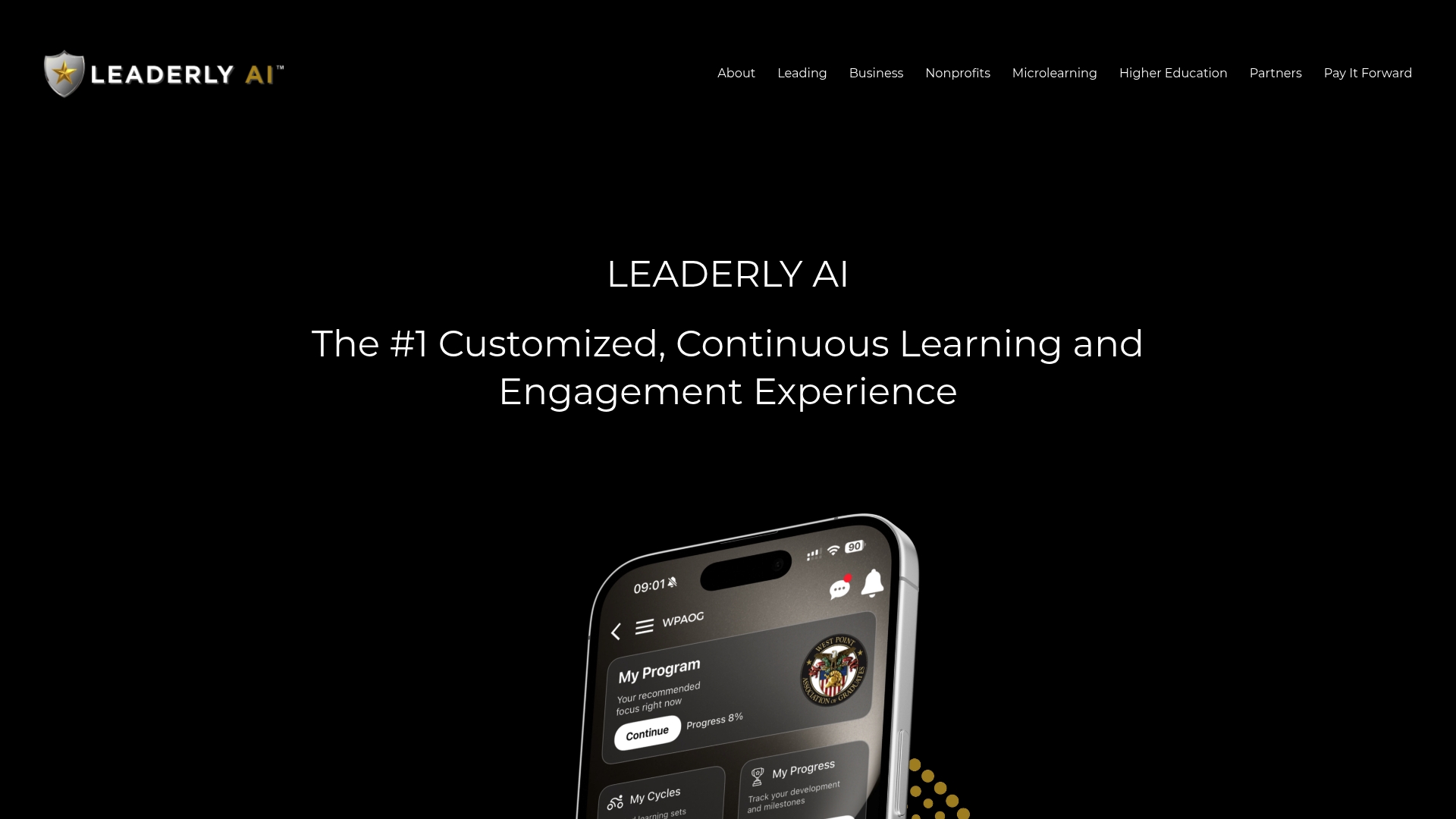
Leaderlyapp delivers personalized microlessons grounded in behavioral science, helping managers build coaching habits one conversation at a time. The platform uses machine learning to adapt content to each manager's development stage, so a first-time team lead and a senior director get different material at the right moment. For HR leaders focused on people-centric leadership development, Leaderlyapp provides the leadership layer that makes performance systems actually work. Explore how the platform supports talent retention strategies that connect directly to engagement outcomes.
FAQ
What is engagement-driven performance management?
Engagement-driven performance management is a continuous system of coaching, feedback, and goal alignment that replaces annual reviews. It prioritizes frequent check-ins, real-time recognition, and transparent development paths to improve retention and performance.
How do quarterly reviews improve employee engagement?
Quarterly reviews reduce the gap between performance and feedback, which removes the "surprise" effect that damages trust. NexGen SaaS saw a 34% reduction in attrition after shifting from annual to quarterly reviews supported by continuous feedback.
Why do managers matter so much in performance management?
Gallup's 2026 research shows managers account for 70% of team engagement variance. No performance system produces results without managers who are trained to coach rather than simply evaluate.
What is the best framework for goal alignment in performance management?
OKRs are the most widely validated framework for connecting individual work to business objectives. They increase goal completion, support fair promotion decisions, and give managers a structured basis for development conversations.
How does continuous feedback differ from traditional performance reviews?
Continuous feedback captures performance in real time rather than relying on retrospective memory. Monthly check-ins and project-based 360 reviews, as used by CFGI, produce more accurate and useful development data than twice-yearly spreadsheet reviews.