
An employee pulse survey is a short, recurring questionnaire, usually 5 to 15 items, that tracks how people feel about work over weeks or months instead of once a year. Use one when you need fast signals on morale, a change initiative, or manager effectiveness, and only if your organization can commit to acting on what it finds. Skip it if you can't guarantee follow-up. That single condition determines whether the whole exercise builds trust or burns it.
TL;DR:
- Regular pulse surveys should focus on trend detection, with a frequency of monthly or quarterly, depending on your organization's capacity to respond quickly.
- Keep pulse questions simple, one idea at a time, referencing recent timeframes and aligned with specific actions managers can take.
- Responses should be tracked over time with a 0.2 to 0.3 point movement indicating meaningful change; avoid overreacting to single low scores.
- Follow-up actions must be immediate and concrete, utilizing microlearning or coaching to close the loop within weeks and build trust.
- Avoid survey fatigue by limiting questions, ensuring anonymity, and always attaching a clear, actionable next step to gather ongoing engagement.
Table of Contents
- What Is an Employee Pulse Survey (And How It Differs From Annual Surveys)
- Why HR Leaders Run Pulse Surveys
- How to Write Pulse Survey Questions People Will Answer Honestly
- Choosing the Right Cadence and Length for Your Organization
- Turning Pulse Results Into Real Action
- The Risks: Survey Fatigue, Anonymity, and Misreads
- What Counts as a Good Pulse Survey Score
- How Leaderlyapp Helps Close the Loop After a Pulse
- The Mistake Most HR Teams Make in Their First Three Pulses
- Turn Pulse Data Into Manager Action With Leaderlyapp
- Primary Sources and Further Reading
- Sources
- FAQ
What Is an Employee Pulse Survey (And How It Differs From Annual Surveys)
A pulse survey is a brief, focused, repeatable check on employee sentiment. Most run 5 to 15 questions and get sent out far more often than a traditional survey, which is exactly the point. Gallup describes pulse surveys as tools built to monitor trends and shifts in the employee experience over time, not to produce a single definitive verdict.
That's the core difference from annual engagement surveys. Annual surveys go deep: 50 to 100 questions, heavy benchmarking, a full diagnostic of culture and drivers. Pulses go narrow and frequent, catching movement between those annual snapshots. Qualtrics frames the relationship as complementary rather than competitive: annual surveys diagnose, pulses monitor.
Common use cases include:
- Tracking sentiment during a merger, reorg, or leadership change
- Checking whether an action plan from the last annual survey is actually landing
- Monitoring team-level wellbeing during high-pressure periods (product launches, seasonal crunch)
- Testing a new policy or benefit before committing to it organization-wide
Lifecycle surveys (onboarding, exit, promotion) are a third category entirely, triggered by an event rather than a calendar. Pulses run on a schedule regardless of individual milestones.
Why HR Leaders Run Pulse Surveys
The operational case for pulse surveys comes down to speed. Annual surveys tell you what happened last year. Pulses tell you what's happening now, while there's still time to change course.
Trend detection and early warning. A single low score on one question means little. Three consecutive drops on the same question, from the same team, is a pattern worth a manager's attention before it shows up in resignation letters.
Measuring whether action plans actually work. If you rolled out a new hybrid-work policy last quarter, a monthly pulse tells you within weeks whether sentiment is improving or if the plan needs adjusting, instead of waiting a full year to find out it flopped.
Faster, more localized management. Pulse data pushed down to team level gives managers a reason to have a specific conversation instead of a vague one. That's where most of the value actually lives, not in the executive dashboard.
Gallup's research on workplace listening points to a consistent theme: the payoff from pulse data comes from the conversations and course corrections it enables at the team level, not from the report itself. A pulse survey nobody discusses is just a spreadsheet.
Pro Tip: If you can't name the manager conversation a pulse result is supposed to trigger, don't ask the question. Every item on the survey should map to an action someone is prepared to take.
Additional reasons HR teams adopt pulses:
- They catch problems while there's still budget and time to fix them
- They give managers a data point to open a coaching conversation, not just an annual review talking point
- They create a paper trail showing leadership responded to feedback, which matters for trust
How to Write Pulse Survey Questions People Will Answer Honestly
Good pulse questions share three traits: they cover one idea, they reference a recent timeframe, and a manager can actually act on the answer. Assessment Cloud's guidance on pulse wording is blunt about this: multi-clause questions like "I have the resources and support I need to do my job well" muddy the data because a low score could mean either problem.
Here's a practical approach to building your question set, based on how to create effective surveys for actionable insights:
- Split compound questions. "I have the resources and support I need" becomes two separate items: one on resources, one on support.
- Anchor to a recent window. Phrase items as "in the past two weeks" or "this month," not "in general," so responses reflect current conditions rather than a vague overall impression.
- Apply the 70:20:10 rule. Keep about 70% of questions as stable anchors you never change, 20% as rotating themed blocks (workload one month, inclusion the next), and 10% as one-off questions tied to a current event or initiative.
- Preserve 2 to 3 anchor items every single pulse. Assessment Cloud recommends locking in a small anchor set so you can build a real trend line instead of comparing apples to oranges each cycle.
- Write for a manager's next move. If a low score wouldn't change what a manager does on Monday morning, the question probably doesn't belong in a pulse.
A workable sample bank, organized by theme, drawing on question categories AIHR catalogs for pulse programs:
- Engagement: "I feel motivated to do my best work" (recent timeframe implied by cadence)
- Workload: "My workload has felt manageable over the past two weeks"
- Manager support: "My manager has given me useful feedback this month"
- Inclusion: "I feel comfortable sharing my opinion in team discussions"
- Change readiness: "I understand how the recent changes affect my role"
For scoring, a simple 5-point agreement scale works fine. Plot each anchor question over time rather than judging any single result in isolation. A drop of half a point that holds for two consecutive pulses is a real signal; a one-point dip that bounces back the next cycle is usually noise. Perceptyx's cadence research backs this up: pulse tools are built for trend detection, and single data points rarely tell the full story on their own.
Choosing the Right Cadence and Length for Your Organization
The right frequency depends less on best practice and more on whether your organization can respond in time to matter. Perceptyx's guidance on pulse cadence puts most pulse programs at 5 to 10 questions, run monthly or quarterly, with higher frequency demanding much stronger follow-through capacity.
A workable default:
- Monthly: 5 to 10 questions. This is the sweet spot for most mid-size organizations with dedicated HR capacity to act on results.
- Biweekly: Reserve for active change events, restructuring, a major system rollout, or a crisis response, where sentiment can shift fast and leadership needs a tighter feedback loop.
- Quarterly minimum: If monthly feels unsustainable, quarterly with 15 to 20 questions is the floor before you're really just running a mini annual survey.
Length should shrink as frequency rises. A monthly pulse with 20 questions will kill your response rate by month three. A quarterly pulse with 5 questions wastes the extra time you have to ask something more useful.
On distribution: whole-organization pulses give you the cleanest trend line but the highest fatigue risk. Rotating panels, where a third of the organization gets pulsed each month on a rolling basis, spread the load but complicate team-level comparisons. Targeted pulses aimed at one department during a specific change event sit somewhere in between and tend to get the highest response rates because relevance is obvious.
Pro Tip: Send pulses through the channel people already check daily, not a separate portal. Mobile delivery with a manager mentioning the survey in a team meeting beats an unprompted email nearly every time.
Practical tactics that move response rates:
- Keep the survey open no longer than five business days
- Send one reminder, not three
- Have managers reference the survey by name in a standup, which signals it's taken seriously
- Report back results within a week of closing, before anyone forgets what they answered
Turning Pulse Results Into Real Action
Data without a decision process just accumulates. The fix is a repeatable framework managers and HR can run every cycle without reinventing it each time.

Start with interpretation discipline. A single low score is a data point, not a verdict. Look for a consistent slope across three or more consecutive pulses on the same question before treating it as a real trend rather than noise, a rule both Gallup and Perceptyx echo in their guidance on reading pulse data over time.
Once a pattern shows up, prioritize with a simple filter:
- Impact: How many people does this affect, and how severely?
- Effort: Can this be fixed with a conversation, or does it need a policy change?
- Ownership: Is there a specific manager or leader who can actually move on this?
Issues that score high on impact and low on effort go first. High impact, high effort items need executive sponsorship before a manager can tackle them alone.
Manager scripts help close the loop faster. A few starters that work in practice:
- "Your team's workload score dropped this month. What's the one thing eating up the most time right now?"
- "Your inclusion score moved up. What changed that felt different this month?"
- "We're seeing this trend across the department. Is it hitting your team the same way?"
Short-cycle experiments work better than big announcements. If workload scores dip, try shifting one recurring meeting to async for a month and measure the next pulse. That kind of tight loop, described in more depth in how continuous feedback improves engagement at work, is what separates a pulse program that works from one that just generates reports nobody reads.
For leadership reporting, connect pulse trends to metrics that already matter to the business: voluntary turnover, quality defects, customer satisfaction scores. A pulse dashboard sitting next to retention data lands with executives in a way an isolated engagement number never does, a link explored further in improving retention through development.
The Risks: Survey Fatigue, Anonymity, and Misreads
The single biggest risk in any pulse program isn't frequency. It's silence after the survey closes. Cerkl's research on pulse follow-through is direct about this: action planning that assigns ownership, timelines, and a visible small change after each pulse is what keeps trust and response rates intact. Skip that step and fatigue sets in fast, regardless of how short the survey was.
Anonymity is the second trust factor. Most platforms suppress results for groups under a minimum threshold, often five to eight respondents, to prevent individual identification. Below that threshold, report aggregated results only; above it, team-level detail becomes useful for managers.
Common mistakes worth avoiding:
- Rewording anchor questions between cycles, which breaks the trend line you were trying to build
- Running pulses so often that "survey" becomes background noise nobody reads carefully
- Treating one bad month as a crisis instead of waiting to see if the pattern holds
- Publishing results without a single named action attached
The fix isn't complicated: communicate why you're asking, publish at least one concrete action after every pulse, and coach managers on how to talk about results without sounding defensive.
What Counts as a Good Pulse Survey Score
There's no universal passing grade, and any source claiming a flat benchmark number is oversimplifying. What matters more is direction and consistency.
Build a simple pulse index by averaging your 2 to 3 anchor questions on a 5-point scale, then track that number pulse over pulse. A meaningful shift usually looks like a consistent 0.2 to 0.3 point movement sustained across two or more consecutive pulses, not a single jump that could just be a smaller or different sample responding.
Practical guidance for reading your numbers:
- Internal benchmarking, comparing your own scores over time, beats chasing external industry averages, since survey design and workforce composition vary too much between companies for those comparisons to mean much
- A steady decline across three pulses on the same anchor question deserves a real intervention, even if the absolute number still looks fine
- Use open-text responses to explain what moved a numeric score. The comment about a system outage will explain a workload dip faster than the number alone ever could
How Leaderlyapp Helps Close the Loop After a Pulse
Collecting pulse data is the easy part. The harder problem is what happens in the two weeks after scores come back, when a manager has a workload dip on their team and no clear next move.
A microlearning platform can pair manager nudges with short behavioral exercises tied directly to the themes a pulse surfaces. If a team's manager-support score drops, a manager can get a targeted microlesson on feedback conversations the same week, not buried in a quarterly training calendar.
That speed matters. The gap between "we found a problem" and "someone did something about it" is exactly where most pulse programs lose credibility. Practical ways this shows up:
- A manager whose team flags low inclusion scores receives a short exercise on running more balanced team discussions
- A department seeing workload strain gets a nudge toward time-management habits alongside the manager's own follow-up conversation
The Mistake Most HR Teams Make in Their First Three Pulses
Run one anchor question monthly, tied to a manager-led action, before building anything fancier. Add a rotating micro-theme by pulse two, and track one outcome against it. By pulse three, publish a single visible change company-wide, no matter how small.
Skip the dashboard obsession early on. A manager who has one good conversation because of a pulse result beats a beautiful chart nobody discusses. Tie your pulse goals to one business metric, like turnover or a quality score, before you send the first survey. That decision shapes every question you write afterward.
— Drew
Turn Pulse Data Into Manager Action With Leaderlyapp
Some platforms are built to address a common gap in pulse programs: good data, no fast way to act on it. Instead of a scorecard that sits in a folder, managers get short, targeted microlessons tied to whatever theme a pulse surfaces, so a workload dip or a low inclusion score turns into a specific exercise a manager can run that same week.
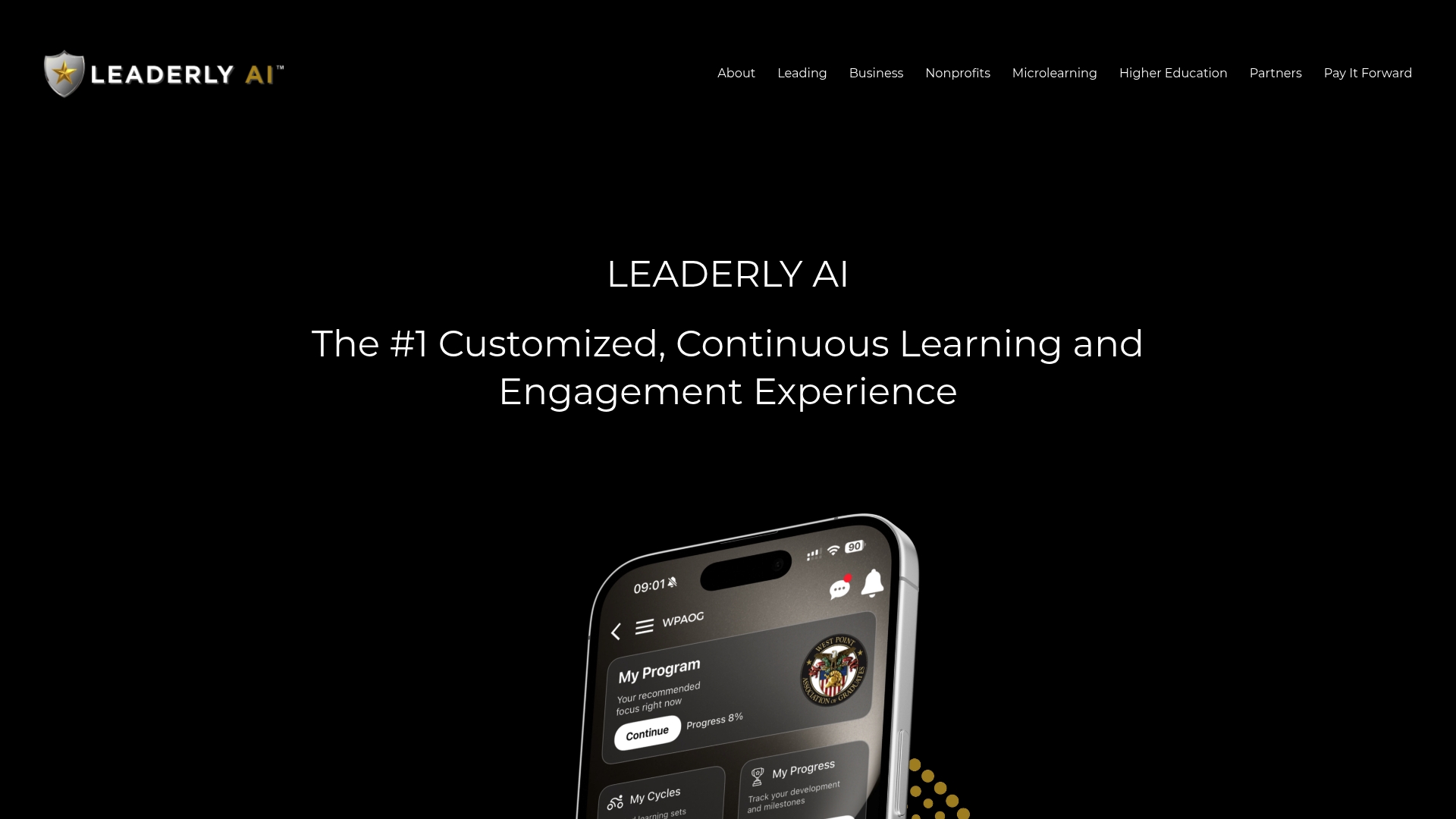
Picture a team that comes back with a low manager-support score after this month's pulse. Instead of a generic "improve communication" reminder, that manager gets a focused microlesson on feedback conversations, paired with a follow-up nudge two weeks later to check whether anything actually changed. Or a department showing change-readiness fatigue during a reorg gets a short sequence on leading through uncertainty, timed to land right when the pulse flagged the issue. That's the kind of loop described in developing people-centric leadership skills, where the point isn't more data, it's faster behavior change.
If your pulse results keep surfacing the same manager gaps every quarter, visit Leaderlyapp to see how the platform connects feedback to microlearning managers can actually use.
Primary Sources and Further Reading
- Gallup's guide to workplace surveys covers survey types and the role of action in listening strategies.
- Perceptyx on pulse survey cadence details question counts and frequency trade-offs.
- Assessment Cloud's pulse question guide explains anchor and rotation strategy.
- Cerkl on real-time feedback breaks down action planning and follow-through.
- Qualtrics' complete pulse survey guide clarifies how pulses complement annual surveys.
- AIHR's pulse question bank offers themed sample items for engagement, workload, and inclusion.
Sources
- Employee Surveys: Types, Tools and Best Practices
- What Is a Pulse Survey? Uses, Limits, and Best Practices
- Pulse Survey Questions: 25 Short Questions That Work
- Employee Pulse Survey: Real-Time Feedback for Real Action
FAQ
Are Employee Pulse Surveys Really Anonymous?
Most platforms aggregate results and suppress reporting for any group below a minimum respondent threshold, often five to eight people, to prevent individual identification. Below that threshold, only company-wide or department-wide results should be shared, not team-level detail.
What Are the Disadvantages of Pulse Surveys?
The main risks are survey fatigue from over-asking without visible follow-up, and misreading a single low score as a crisis rather than waiting for a consistent trend across multiple pulses. Both problems trace back to the same root cause: no visible action after results come in.
What Is a Good Pulse Survey Score?
There's no universal passing number since scales and workforce composition vary too much between organizations for external benchmarks to mean much. A meaningful shift is usually a sustained 0.2 to 0.3 point movement on a 5-point anchor question across two or more consecutive pulses, tracked against your own historical baseline.
What Are Some Good Questions to Ask in an Employee Pulse Survey?
Effective questions are single-idea statements tied to a recent timeframe, such as "My workload has felt manageable over the past two weeks" or "My manager has given me useful feedback this month." Keep 2 to 3 of these as fixed anchors every cycle and rotate the rest by theme, like inclusion or change readiness.