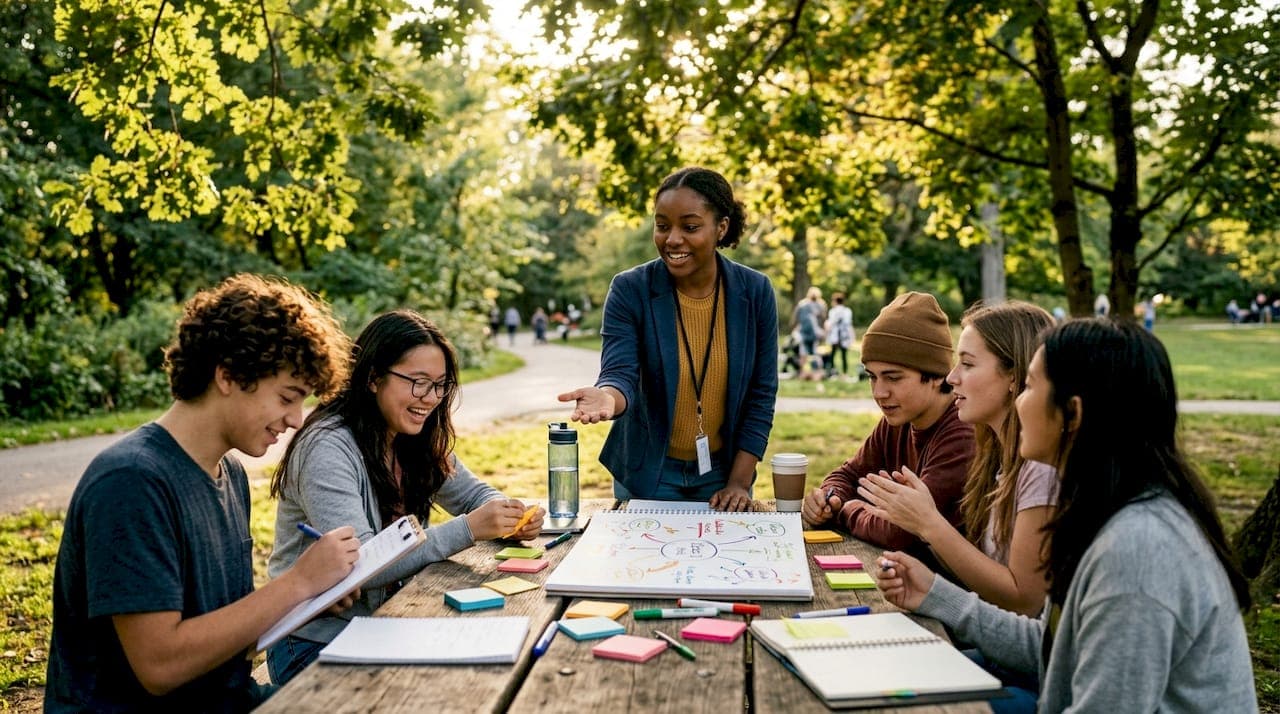
Student leadership development falls into six core categories: experiential learning, team-based programs, peer mentoring, community service-learning, contemplative practice, and knowledge dissemination. Each type builds leadership capacity through a different mechanism, and the strongest programs combine several of them rather than relying on any single approach. Two programs that illustrate this well are the Hugh O'Brian Youth Leadership (HOBY) seminars, which have served students from all 50 U.S. states and over 15 countries annually since 1958, and the Emerging Leaders Program (ELP) at Case Western Reserve University, a one-semester cohort model built specifically for first-year students. Understanding which types of leadership development for students actually work, and why, is what separates programs that change behavior from those that simply fill a schedule.
The six types break down like this:
- Experiential learning: Students lead real projects, make real decisions, and reflect on what happened. The cycle is learn, do, reflect, act.
- Team-based programs: Small groups tackle shared challenges, building collective leadership identity rather than individual heroics.
- Peer mentoring: Near-peer relationships give students a model they can actually see themselves becoming.
- Community service-learning: Civic projects connect leadership theory to community impact, grounding abstract concepts in real stakes.
- Contemplative practice: Reflection papers, self-assessments, and diversity workshops build self-awareness and clarity of purpose.
- Knowledge dissemination: Lectures, guest speakers, and structured curricula deliver the conceptual frameworks students need to make sense of their experiences.
What makes a student leadership program actually work?
The most effective student leadership programs blend education and training rather than treating them as separate tracks. Education covers theory and models; training puts those models into practice through structured activities. Programs that lean too hard on one side end up with students who can define transformational leadership but freeze when asked to run a meeting, or students who are busy but have no framework for understanding what they are doing.
The foundational design principle is the experiential cycle: learn, do, reflect, act. Passive instruction alone rarely produces behavioral change. Students need repeated cycles where they apply a concept, encounter friction, and then process what the friction revealed. That reflection step is the one most programs cut when time gets tight, and it is also the one that drives the deepest learning.
Strong programs share several structural features:
- Recurring leadership opportunities: One retreat or one workshop does not build a habit. Students need regular, low-stakes chances to practice before high-stakes moments arrive.
- Role-specific skill alignment: A student body president needs different skills than a club treasurer. Programs that treat all leadership roles as identical miss the specificity that makes training stick.
- Diversity and inclusion integration: Sociocultural discussions and diversity workshops increase self-awareness and capacity for appreciating difference, both of which are foundational to leading across difference.
- Mentoring structures: Formal mentoring relationships give students a consistent adult or near-peer who can offer feedback outside the pressure of a program event.
- Layered pedagogy: Combining knowledge dissemination with experiential learning and mentoring produces richer outcomes than any single method alone.
One design pitfall worth naming directly: programs that focus exclusively on skill training without helping students develop a leadership identity tend to produce graduates who know techniques but do not see themselves as leaders. The Social Change Model of Leadership addresses this by centering personal values, collaborative approaches, and civic purpose, which leads to deeper engagement and better retention in leadership roles.
What do real student leadership programs look like in practice?
HOBY's tiered seminar model
HOBY structures its programs as a progression. Freshmen attend one-day community workshops that introduce leadership concepts and peer connection. Older students advance to week-long global seminars, where they work alongside ambassadors from across the country and internationally. The tiered design means students do not just attend once and move on; they return at different developmental stages, each time with more experience to bring to the work.
The Emerging Leaders Program at Case Western Reserve University
The ELP at Case Western Reserve runs over one semester and is built around three interlocking components. First, students attend a retreat early in the fall to establish relationships and set a personal leadership vision. Second, they participate in three team sessions that build on retreat connections while deepening their understanding of leadership concepts. Third, each student joins a campus organization that meets regularly, giving them a real leadership context to practice in rather than a simulated one. The program explicitly welcomes both experienced and inexperienced student leaders, which matters because programs that screen for prior experience tend to recycle the same students rather than developing new ones.
Common student leadership activities across program types
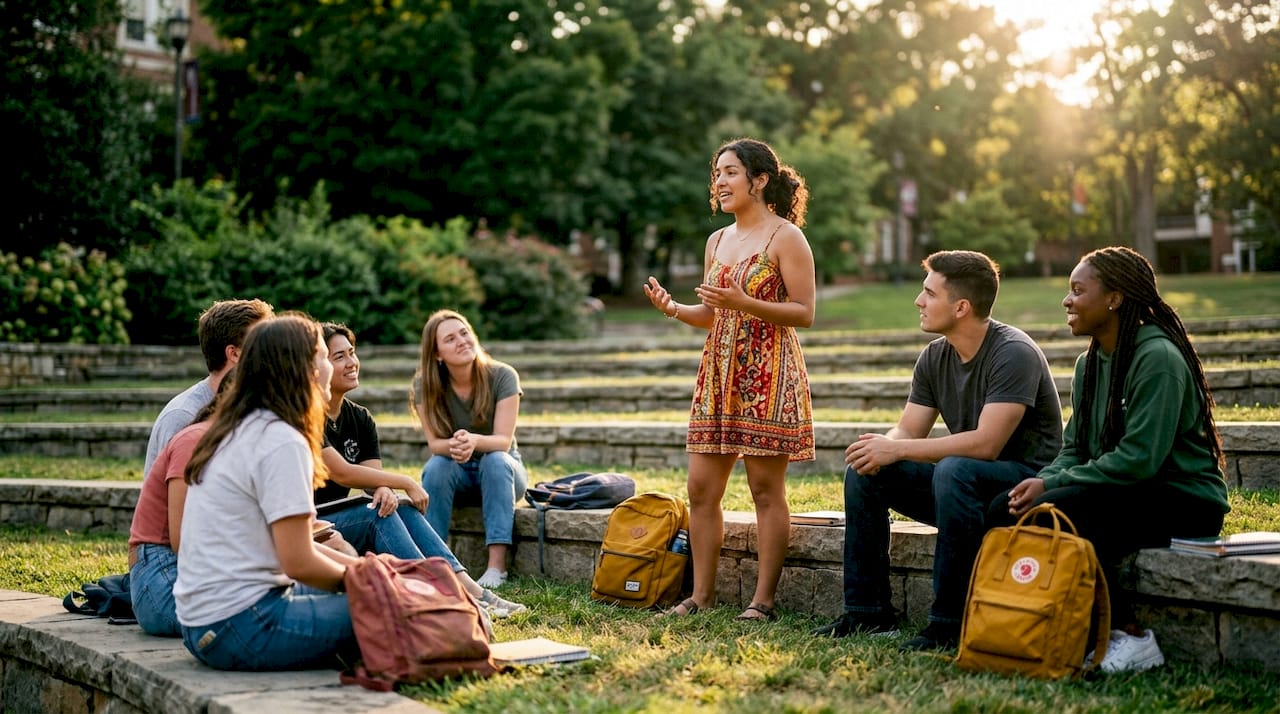
The activities that show up most consistently in well-designed programs include:
- Peer mentoring roles: Students mentor younger peers, which reinforces their own skills while building the mentee's confidence.
- Community service projects: Real civic work with real stakeholders, not volunteer hours for a résumé.
- Team-based problem-solving: Groups tackle a defined challenge with a deadline, then debrief on what the process revealed about their leadership.
- Diversity and socio-cultural discussions: Structured conversations that build the capacity to lead across difference.
- Reflection journals and papers: Written reflection that forces students to articulate what they learned, not just what they did.
- Guest speaker series: Practitioners who connect classroom models to real-world application.
- Leadership retreats: Intensive off-campus experiences that accelerate relationship-building and self-discovery.
Peer mentoring and team-based learning are particularly effective at building collective leadership capacity and civic engagement, partly because they put students in situations where they must rely on each other rather than on a facilitator.
Which leadership skills do student programs actually develop?
The skills that student leadership programs build most reliably are emotional intelligence, active listening, critical thinking, communication, and conflict resolution. These used to get filed under "soft skills," a label that undersold them. The World Economic Forum's Future of Jobs Report 2025 identifies emotional intelligence, active listening, and critical thinking as core professional assets, not supplementary ones. Employers are not asking for them as a bonus; they are screening for them.
What makes student leadership programs particularly good environments for developing these skills is the combination of real stakes and structured support. A student running a campus event faces genuine pressure: people are counting on them, things go wrong, and they have to respond in real time. That pressure is what makes the learning stick. A classroom exercise can simulate the scenario, but it cannot replicate the feeling of actually being responsible.
Here is what each core skill looks like in a program context:
- Emotional intelligence: Recognizing your own emotional state and reading others accurately, especially under pressure. Programs develop this through self-awareness exercises and structured feedback.
- Active listening: Giving full attention without preparing your response while the other person is still talking. Peer mentoring and team sessions create repeated practice opportunities.
- Critical thinking: Evaluating a situation, identifying assumptions, and choosing a course of action based on evidence rather than habit.
- Communication: Adjusting your message for different audiences, whether that is a faculty advisor, a peer, or a community partner. Effective communication in leadership is a learnable skill, not a personality trait.
- Conflict resolution: Navigating disagreement without damaging relationships. Team-based projects generate natural conflict, which is exactly why they are so useful for developing this skill.
Student leadership roles serve as critical environments for practicing emotional intelligence and decision-making, two skills that modern employers consistently rank among their top hiring criteria.
How can educators support student leadership growth more effectively?
The most common mistake educators make is treating leadership development as something that happens inside a formal program and nowhere else. Students spend most of their time outside structured programs, and that is where the real practice happens. Creating additional student-led opportunities beyond existing roles, such as student-run committees, peer facilitation roles, and project ownership, gives students more repetitions without requiring a new program budget.
Mentoring is the single highest-leverage investment a coordinator can make. A student who has a consistent adult mentor who offers honest feedback, not just encouragement, develops faster than one who moves through a program without that relationship. Mentor leadership is not about having all the answers; it is about asking the questions that help students find their own.
Practical strategies for educators and coordinators:
- Set clear role expectations before students start. Ambiguity about what a leadership role requires is one of the fastest ways to erode student confidence.
- Train on core skills explicitly. Do not assume students know how to run a meeting, give feedback, or manage a conflict. Build those skills into the program curriculum.
- Use repeated experiential cycles. One experience is an event. Three or four experiences with reflection between them is a pattern of growth.
- Build in structured reflection. Reflection papers, debrief conversations, and journaling are not soft add-ons; they are the mechanism by which experience becomes learning.
- Recruit broadly, not just from existing leaders. Programs that pull only from students already in leadership roles miss the students who most need the development.
- Assess inclusivity actively. Ask whether your program's schedule, cost, and culture are accessible to first-generation students, students with disabilities, and students from underrepresented backgrounds.
Pro Tip: When designing a leadership program for a diverse student population, run a brief needs assessment before finalizing the curriculum. Ask students directly what barriers they face to participation and what skills they most want to develop. Programs built from that data tend to see higher completion rates and stronger outcomes than those designed from the top down.
The Social Change Model offers a useful frame here: programs that help students explore their personal values and connect those values to a collaborative leadership identity produce more sustained engagement than programs focused purely on skill acquisition. The identity piece is what keeps students in leadership roles after the program ends.
How technology and behavioral science are changing student leadership development
The traditional model of student leadership development, a semester-long cohort, a retreat, a few workshops, works well for the students who can show up consistently. But it leaves out students with jobs, caregiving responsibilities, or schedules that do not fit a fixed program calendar. Technology is changing that constraint in ways that matter for program coordinators.

Leaderlyapp uses machine learning to deliver personalized microlessons that adapt to each student's leadership development trajectory. Rather than a fixed curriculum that every student moves through at the same pace, the platform tailors content based on how a student engages, what they struggle with, and where they are in their growth. That kind of personalization was previously available only through one-on-one coaching, which most programs cannot afford to scale.
Behavioral science adds another layer. The most durable leadership habits form through spaced repetition, immediate feedback, and small wins that build confidence over time. Leaderlyapp's approach applies these principles directly: short, frequent practice moments rather than long, infrequent training sessions. The research on leadership development efficacy consistently points to iterative cycles of real-situation learning and reflection as the driver of genuine behavioral change, and microlearning platforms are built around exactly that structure.
Personalized microlearning, when grounded in behavioral science, gives every student access to the kind of iterative, reflective leadership practice that used to require a full-time coach. The technology does not replace human mentoring; it makes the space between mentoring sessions productive rather than empty.
Benefits of integrating technology into student leadership programs:
- Accessibility: Students engage on their own schedule, removing the barrier of fixed meeting times.
- Personalization: Content adapts to individual growth areas rather than delivering the same material to everyone.
- Continuity: Learning continues between program events, reinforcing concepts before they fade.
- Data for coordinators: Engagement patterns give program coordinators insight into where students are struggling, without waiting for a mid-semester check-in.
- Scalability: A platform like Leaderlyapp can serve a cohort of 20 or a campus of 20,000 without a proportional increase in staff time.
Pro Tip: Use a microlearning platform to bridge the gap between program events. Assign a short module on active listening before a team session, then debrief on what students noticed in their own behavior during the session. That sequence, concept, practice, reflection, is the experiential cycle in miniature.
For coordinators thinking about the future of leadership development, the question is not whether to integrate technology but how to integrate it without losing the relational core that makes leadership development work. The answer is to use technology for the content and repetition layer, and preserve human interaction for mentoring, feedback, and the high-stakes experiences that require real relationships.
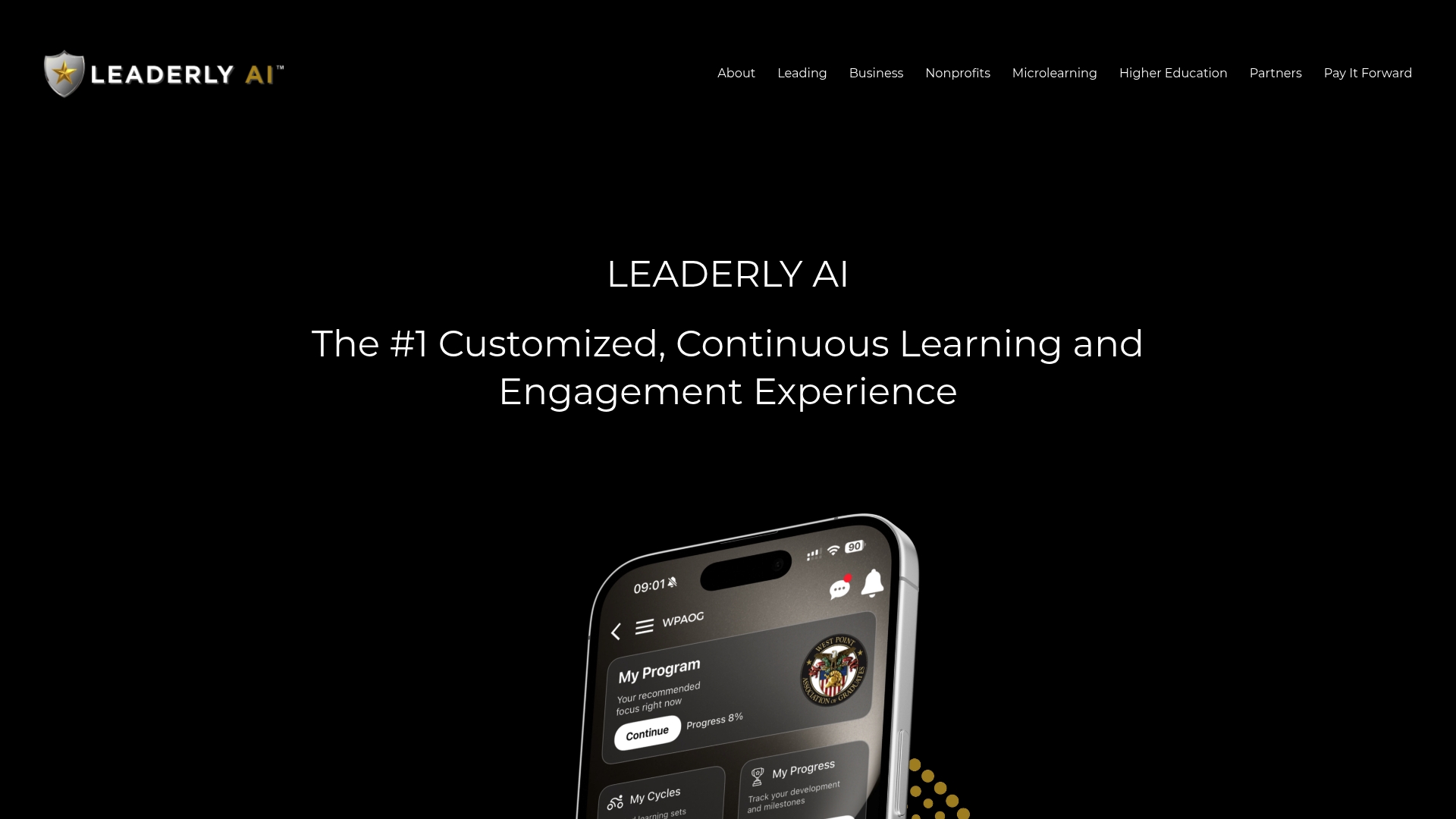
Leaderlyapp's platform is built for exactly this kind of integration. Whether you are running a semester-long cohort program or looking to supplement an existing curriculum, Leaderlyapp delivers personalized leadership development that adapts to each student's pace and growth areas, making high-quality leadership training accessible to every student, not just the ones who can attend every session.
Key Takeaways
The most effective types of leadership development for students combine experiential learning, peer mentoring, and structured reflection rather than relying on any single program format.
| Point | Details |
|---|---|
| Six core program types | Experiential learning, team-based programs, peer mentoring, service-learning, contemplative practice, and knowledge dissemination each build different capacities. |
| Experiential cycle drives change | Programs structured around learn, do, reflect, act produce deeper behavioral change than passive instruction alone. |
| Identity matters as much as skills | Programs that help students develop a leadership identity alongside skills produce stronger long-term engagement than skill-only training. |
| Core skills are career assets | Emotional intelligence, active listening, and critical thinking are top employer priorities, not supplementary traits. |
| Technology extends reach | Microlearning platforms make personalized, iterative leadership practice accessible to students who cannot fit fixed program schedules. |