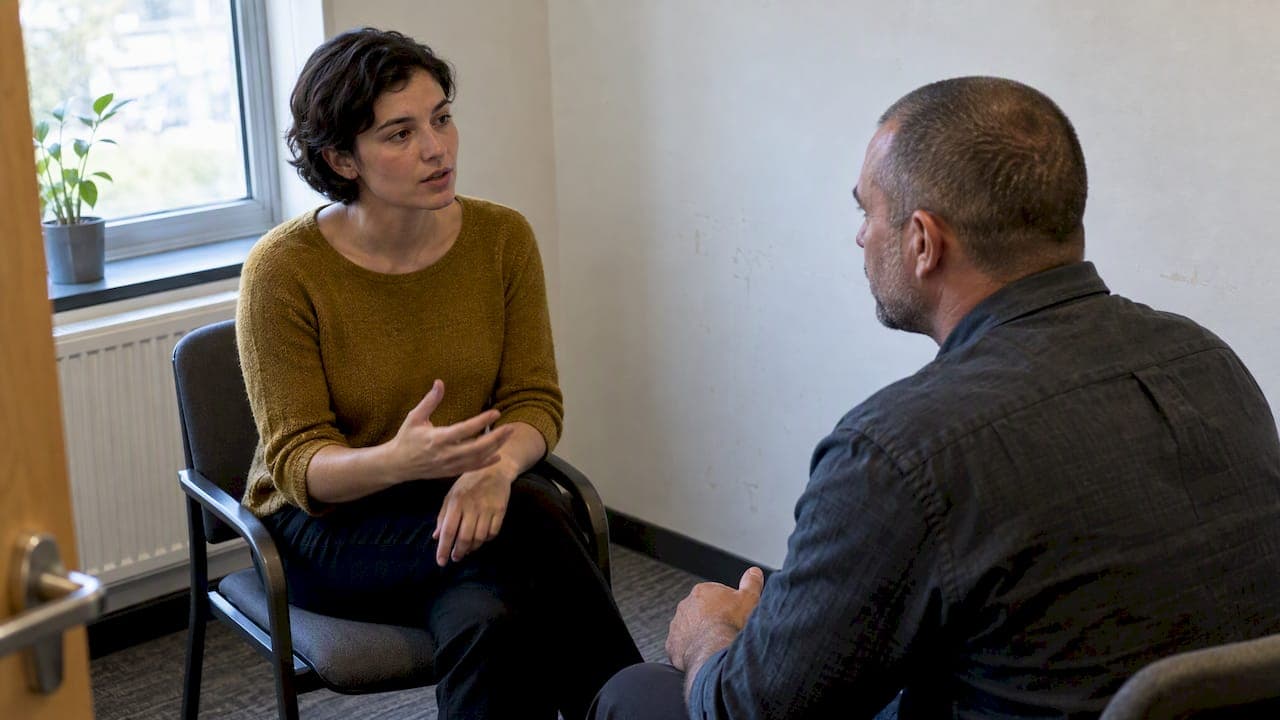
Scenario-based learning trains judgment by putting learners inside realistic situations where they make choices and see the consequences play out. It is the right tool when the gap you're solving is applied decision-making, not raw knowledge: use it when people already know the facts but struggle to act on them under pressure.
TL;DR:
- A 2020 review of 145 higher education studies found learning through simulation had an effect size of g = 0.85, though design quality shaped results.
- Use mini scenarios for one decision, branching formats for three to six decision points, and immersive simulations for frequent or high risk skills.
- Novices need worked examples and a linear path; authentic context and structured reflection matter more than visual polish, while experienced learners can handle open branching.
- Prototype one scene cheaply, pilot it with learners, and track branch choices and rubric scores; completion rates alone cannot show whether judgment improved.
Table of Contents
- Key characteristics and measurable benefits of scenario-based learning
- SBL types and build-time spectrum: mini, branching, and immersive
- When scenario-based learning fits, and how it differs from PBL and case studies
- A step-by-step process for designing a scenario from scratch
- Tools and prototyping strategies for building scenarios efficiently
- Assessment and analytics: proving what scenarios actually teach
- Making scenarios inclusive, scaffolded, and ready to scale
- How scenario practice shows up inside a microlearning platform
- Scenario-based learning in action across industries and roles
- Fitting scenario-based learning into ongoing leadership development
- Tailoring scenarios to different learner personas and leadership levels
- Using AI and machine learning to personalize scenario practice
- Common challenges in deploying scenario-based learning, and what actually solves them
- Measuring ROI from scenario-based learning in an enterprise program
- Quick priorities and pitfalls when launching scenario-based learning
- Scaling scenario practice with Leaderly
- FAQ
- Sources
Key characteristics and measurable benefits of scenario-based learning
Scenario-based learning works because it puts a learner inside a decision, not in front of a fact. Instead of reading about a difficult conversation with an employee, a learner has that conversation, picks a response, and watches the outcome unfold. That situated, decision-focused structure, paired with immediate feedback and a moment of reflection afterward, is what separates scenario practice from a slide deck with a quiz at the end.
A 2020 meta-analysis of 145 studies in higher education found a large overall effect for simulation-based learning, with an effect size of g = 0.85 across fields including medicine, teacher education, and management. That is a strong signal that realistic practice, done well, changes performance more than passive instruction does.
The 2020 meta-analysis of 145 studies found simulation-based learning produced an effect size of g = 0.85 across higher education domains. That places it among the more reliable levers available to instructional designers, though the strength of the effect depends heavily on design quality, not just format.
The practical benefits show up in a few consistent places:
- Learners retain more because they practiced retrieving and applying knowledge, not just recognizing it.
- Decision-making improves because the scenario forces a choice, not a guess.
- Engagement rises because the stakes, even simulated ones, feel real.
- Transfer to the job improves when the scenario context matches the actual work environment.
The biggest misconception is that fidelity drives learning. It doesn't, at least not on its own. Research on asynchronous scenario-based learning points to authentic context and structured reflection as the real engines of learning, with scaffolding mattering more than graphical polish, particularly for learners with less prior knowledge. A text-based scenario with sharp writing and a good debrief question will often outperform an expensive 3D simulation with none.
SBL types and build-time spectrum: mini, branching, and immersive
Scenario-based learning isn't one format. It's a spectrum, and picking the wrong point on that spectrum is the most common reason projects stall or blow their budget.
According to Devlin Peck's guide to scenario-based learning, the spectrum breaks down into three practical tiers:
- Mini-scenarios: a single decision point with two or three choices and instant feedback, buildable in hours. These work well for reinforcing a single concept or checking judgment on a narrow point.
- Branching scenarios: a sequence of connected decisions, typically three to six decision points and five to fifteen minutes of learner time, built over days to weeks. These suit situations where sequence matters, like a performance conversation that unfolds in stages.
- Immersive or gamified simulations: multi-path environments with richer visuals, characters, or game mechanics, often taking weeks of development. These fit high-stakes or high-frequency skills where the investment pays off over many learners.
The right choice depends less on budget and more on the learning objective and the learner's starting point. A learner with strong prior knowledge can handle an open branching structure; a novice usually needs a more linear path with worked examples built in, a point backed by research on scaffolding and prior knowledge. If the skill only shows up once in a while but carries real risk when done wrong, like a safety escalation, the time investment in branching or immersive formats tends to pay off. If the skill is practiced constantly, a fast mini-scenario repeated often may teach more than one elaborate simulation ever will.
When scenario-based learning fits, and how it differs from PBL and case studies
Not every learning gap calls for a scenario. Scenario-based learning earns its build cost when a few conditions line up.
- Judgment is the actual gap. The learner already knows the content but struggles to apply it under realistic conditions.
- The cost of a real-world error is meaningful. Scenarios let people fail safely before they fail in front of a customer, patient, or direct report.
- The skill needs repeatable practice. A one-time case discussion won't build the muscle memory that repeated scenario attempts can.
- Motivation is part of the problem. A realistic stake, even a fictional one, tends to pull in learners that a lecture loses.
Scenario-based learning differs from problem-based learning and case-based teaching mainly in scale, pacing, and who drives the session. Problem-based learning usually unfolds over days or weeks, with learners researching and constructing their own solution path, often in groups, with an instructor acting as a guide rather than a scorekeeper. Case-based teaching centers on analyzing a real or realistic case, usually in discussion, without the learner making sequential choices that change the outcome. Scenario-based learning compresses that into a structured, often individual experience where the learner's choices directly branch the story and the feedback is built into the system rather than delivered live by a facilitator.
Before you build, run this short checklist: Is the gap behavioral rather than informational? Can you tolerate a few days to weeks of build time? Will learners practice this scenario more than once? If the answers point toward applied decisions over pure facts, scenario-based learning is worth the investment.
A step-by-step process for designing a scenario from scratch
A good scenario starts with a measurable objective, not a storyline. Here's a process that holds up across corporate training and classroom use.
- Define the performance objective and what success looks like. Write it as an action the learner must demonstrate, not a topic they must "understand." This is constructive alignment in practice: the objective, the scenario, and the assessment all need to point at the same behavior.
- Gather real stories and real errors from subject matter experts. The most believable wrong answers in a scenario come from mistakes people actually make on the job, not ones a writer invents in isolation.
- Draft one representative scene first. Write the opening situation, the choices, and at least one full branch all the way to its consequence before building out the rest. This single scene tells you whether the tone, difficulty, and pacing are right.
- Storyboard the branches, favoring convergence over sprawl. Let wrong choices lead somewhere meaningfully different, but bring paths back together at key checkpoints so the scenario doesn't multiply into an unmanageable tree.
- Design feedback, reflection prompts, and a rubric tied to the original objective. Feedback should explain why a choice worked or failed, not just that it did. A short reflection prompt afterward, asking what the learner would do differently, helps convert the activity into actual learning.
- Pilot with a small group, collect decision data, and iterate before scaling. Watch where learners cluster on wrong answers. That cluster is your best clue to a confusing scenario or a genuine skill gap.
Pro Tip: Write the hardest wrong answer first. If you can make a wrong choice believable, the right choice will feel earned rather than obvious.
This process mirrors the PIRA model used in experiential learning research: preparation, immersion, reflection, and assessment, as described in work on experiential learning frameworks. Preparation is your objective and SME research; immersion is the scenario itself; reflection is the debrief prompt; assessment is the rubric that closes the loop. Skipping any one of these four weakens the rest, no matter how polished the scenario looks.

For teams building scenarios for a training program rather than a one-off module, it helps to document this process once and reuse it. A practical guide to decision-first scenario writing walks through prototyping and testing scenarios before investing in full production, which keeps early mistakes cheap.
Tools and prototyping strategies for building scenarios efficiently
The fastest way to waste a build budget is to open a high-fidelity authoring tool before you know if the scenario structure actually works. Prototype cheap, then upgrade.
- Low-fidelity prototyping: tools like Twine or even a structured Google Forms document let you test branching logic and pacing without touching visual design.
- Mid-fidelity builds: Articulate Storyline and Rise's built-in scenario blocks handle most branching needs with reasonable production speed.
- High-fidelity or conversation-simulation tools: suited to skills like negotiation or difficult conversations, where natural language interaction adds real value over multiple choice.
- Workflow discipline matters more than tool choice: prototype the structure, test it with a handful of real users, fix the confusing branches, then migrate to your final tool. Building in the final tool from the start tends to lock in early mistakes.
Watch for branch sprawl. Every added decision point roughly doubles your potential paths unless you converge them deliberately, which is why Devlin Peck's build-time guidance keeps branching scenarios to three to six decision points for most use cases. Save immersive formats, including AI-driven role-play, for skills practiced often enough or risky enough to justify the heavier investment.
Assessment and analytics: proving what scenarios actually teach
A completion rate tells you almost nothing about whether a scenario worked. What matters is which choices learners made and why.
- Track decisions, not just completions, using xAPI statements or LMS event logs to see which branch each learner took.
- Score performance with rubrics tied to the original objective rather than recall-style quizzes bolted on afterward.
- Watch decision accuracy, the frequency of each path taken, time-to-decision, and any available signals of on-the-job transfer.
- Build a pilot report around these numbers: what percentage chose each branch, where confusion clustered, and what changed after the first revision.
A 2020 meta-analysis found a g = 0.85 effect size for simulation-based learning across 145 higher education studies. Use that as your baseline expectation, then measure your own pilot against it rather than assuming impact without data. A short guide to formative assessment in leadership training offers a useful rubric structure for scenarios that need to measure behavior rather than memory.
Making scenarios inclusive, scaffolded, and ready to scale
Scenarios fail learners quietly when they assume everyone starts at the same level. A learner with little background needs a worked example or two before facing an open decision; dropping them straight into ambiguity tends to produce frustration rather than practice, a pattern confirmed in research on scaffolding and prior knowledge.
- Add a worked example or guided first attempt before the first fully open scenario for learners with limited background.
- Embed structured reflection, a short journal prompt or a guided debrief script, right after the scenario rather than days later.
- Build for accessibility from the start: clear text alternatives for any audio or video, keyboard-navigable choices, and plain language in branching text.
- Reuse a scenario template across topics once one works, and train facilitators or instructional staff on how to read the resulting DISC group debrief decision data.
Pro Tip: Keep one debrief question constant across every scenario in a program, something like "what would you do differently next time?" Consistency here makes it easier to compare reflection quality across cohorts.
A practical guide to scaffolding in leadership learning covers this in more depth, including how to calibrate difficulty as learners move from early scenarios to more open-ended ones.
How scenario practice shows up inside a microlearning platform
Scenario-based learning fits naturally into short, repeated practice rather than one long session. Leaderly AI delivers leadership development through personalized microlessons built on behavioral science, which gives scenario practice a home it can live in week after week rather than a single workshop that fades from memory. Reflection prompts and analytics dashboards support the same preparation, immersion, reflection, and assessment loop that research on experiential learning recommends, applied at a scale that covers every employee rather than only a managers' cohort.
Scenario-based learning in action across industries and roles
The format adapts to wildly different jobs because the underlying need, applied judgment under realistic conditions, shows up everywhere.
In healthcare education, simulation-based scenarios let nursing and medical students practice triage decisions or patient conversations before encountering the real stakes, which lines up with the strong effect sizes the meta-analysis found specifically in medical training. In teacher education, scenario practice lets a trainee teacher rehearse classroom management choices, like responding to a disruptive student, without a real classroom on the line. In management and leadership development, scenarios built around a difficult feedback conversation or a resource conflict let new managers practice the exact kind of judgment call that written policy can't teach on its own.
Sales and customer service teams use branching scenarios to practice objection handling, where the "right" response depends on reading the customer's tone and history rather than following a script. Compliance and safety training leans on scenarios to rehearse escalation decisions, since the whole point is practicing judgment under pressure rather than memorizing a policy document. Nonprofit and volunteer coordination programs use similar scenario structures to prepare volunteers for sensitive conversations with the people they serve, where tone and timing matter as much as content.
Across all of these, the common thread is the same: scenarios work best where the job actually requires a decision, not just recall of a procedure.
Fitting scenario-based learning into ongoing leadership development
Leadership growth rarely comes from a single workshop. It comes from repeated exposure to realistic decisions over months, which is exactly where scenario-based learning earns its place inside a continuous development program rather than a one-time course.
A new manager who practices a single difficult conversation scenario once will forget most of it within weeks. The same manager who faces a short scenario on giving feedback, handling conflict, or delegating work every few weeks, as part of an ongoing program, builds the kind of pattern recognition that holds up under real pressure. That cadence matches what microlearning platforms are built to deliver: short, frequent touches rather than infrequent intensives.
This also changes how you measure success. Instead of a single post-course quiz, a continuous program can track how decision patterns shift across many scenario attempts over a quarter or a year, giving a far more honest picture of whether judgment is actually improving. Programs aimed at emerging leaders benefit especially from this approach, since the skills in question, like giving direct feedback or managing up, are rarely learned from a single exposure no matter how well designed the scenario is.
Tailoring scenarios to different learner personas and leadership levels
A scenario built for a first-time manager and one built for a senior executive should rarely look the same, even if they're nominally teaching the same skill, like "giving feedback."
Emerging leaders generally benefit from more structured scenarios with clearer right and wrong paths, since they're still building a mental model of what good judgment looks like in the role. Senior leaders tend to need more ambiguous, higher-stakes scenarios with competing priorities and no single clean answer, since their actual job rarely offers one either. A scenario that feels appropriately challenging to a new supervisor may feel condescending to a director, and the reverse is just as true.
Persona also shapes the content, not just the difficulty. A scenario for a frontline retail supervisor should reflect the pace and constraints of that floor, not the slower cadence of a corporate office conversation. A scenario for a nonprofit program lead should reflect resource constraints and mission tension that a for-profit manager scenario wouldn't need to include.
The practical move is to build a small set of scenario templates by role level and swap in context-specific details rather than writing every scenario from scratch. This keeps development time reasonable while still respecting that a VP and a new team lead are solving genuinely different problems.
Using AI and machine learning to personalize scenario practice
AI's clearest value in scenario-based learning is matching the right scenario, and the right difficulty, to where a specific learner actually is, rather than running every learner through the same fixed sequence.
Machine learning can track which branches a learner tends to choose and adjust future scenarios accordingly, offering more scaffolded options to someone who struggles with a particular decision type and more ambiguous, open scenarios to someone who consistently handles them well. This personalization matters most when a program covers a large and varied population, like an entire organization rather than a single team, where a one-size difficulty level inevitably under-serves some learners and bores others.
AI-driven conversation simulation is also worth considering for skills that depend on natural dialogue, like negotiation or coaching conversations, where multiple-choice branching feels artificial. That investment is worth making selectively: reserve it for high-frequency or high-stakes skills, and keep lower-stakes practice in simpler branching formats where the return doesn't justify the build cost.
The practical guardrail is to let personalization adjust difficulty and pacing, not the underlying objective. A scenario personalized by AI should still be assessed against the same rubric as everyone else's, or the data stops being comparable across a cohort.
Common challenges in deploying scenario-based learning, and what actually solves them
Most scenario-based learning projects stumble in predictable places, and most of those problems have straightforward fixes.
The most common failure is building too much before testing anything. Teams invest in a fully branched, high-fidelity scenario before confirming the core decision points even make sense, which the prototype-first workflow described earlier directly addresses. A close second is branch sprawl: each additional decision point multiplies potential paths, and without deliberate convergence, a scenario becomes unmaintainable within a few revisions.
Facilitator and instructional staff buy-in is another frequent obstacle, particularly when scenarios replace a lecture format that staff are used to delivering. Involving subject matter experts early, during the story-gathering step rather than only at review time, tends to build the ownership that smooths adoption later. Low completion or engagement can also show up when scenarios feel disconnected from real work. The fix is almost always sourcing distractors and story details from actual job situations rather than generic, invented ones.
Finally, many programs struggle to prove impact because they only track completion. Shifting measurement toward decision patterns and rubric-based scoring, as covered earlier, turns a vague sense that "the training helped" into an actual, defensible data set.
Measuring ROI from scenario-based learning in an enterprise program
Proving business impact from scenario-based learning means connecting decision data to outcomes the organization already tracks, not inventing a new metric from scratch.
Start with the behavior the scenario targets and find its existing proxy: fewer escalated customer complaints after objection-handling scenarios, faster time-to-resolution after troubleshooting scenarios, or improved manager feedback scores after difficult-conversation scenarios. Comparing a trained cohort's performance on that existing metric against a baseline or an untrained group gives a far more credible ROI story than citing completion rates alone.
Decision data from the scenarios themselves adds a leading indicator long before the lagging business metric moves: if accuracy on a specific decision point climbs across a cohort's attempts, that is an early signal the training is working before the downstream metric catches up. Pairing that leading indicator with the lagging business result, and reporting both together, is what turns a pilot into a credible case for scaling the program organization-wide.
The practical reporting structure is simple: state the objective, show the decision-level data from the pilot, and tie it to one business metric the organization already cares about. Stakeholders fund what they can see moving, and decision data is the clearest window into that movement before the slower business numbers arrive.
Quick priorities and pitfalls when launching scenario-based learning
If you're starting from zero, resist the pull toward tools and fidelity first. Define the measurable action you want to see, then prototype one scene and test it with real learners before building anything else. Reflection and feedback quality will teach you more than visual polish ever will, and most failed pilots trace back to skipping that order.
— Drew
Scaling scenario practice with Leaderly
Once you've validated a scenario format that works, the harder problem is keeping it running across every team, not just the pilot group. We offer a platform with personalized microlessons, built-in reflection prompts, and analytics dashboards that track engagement and behavior change across an entire organization rather than one workshop cohort.
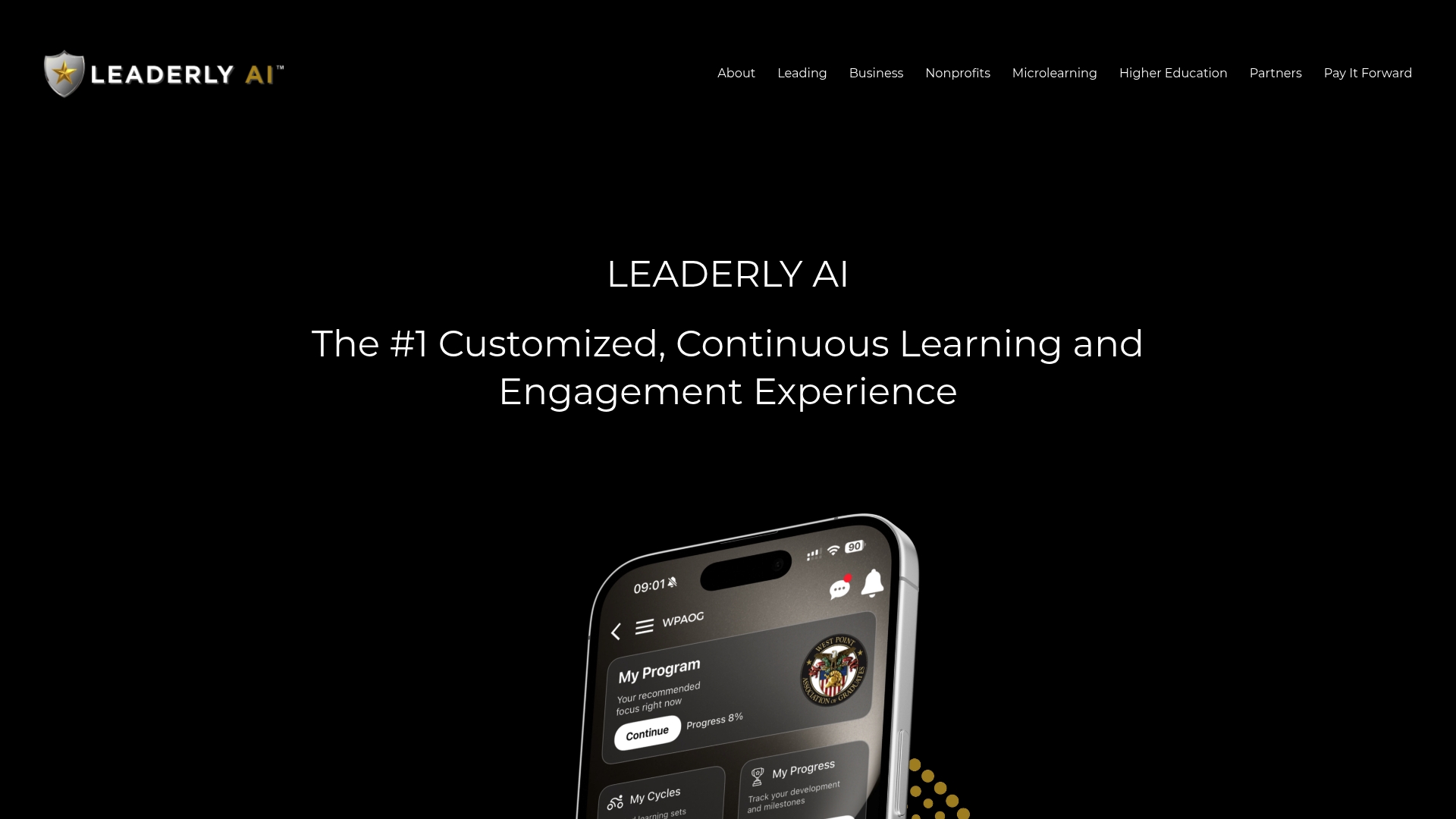
- Microlessons deliver short, repeated scenario-style practice rather than a one-time course.
- Reflection prompts are built into the learning flow, not bolted on afterward.
- Analytics dashboards show participation and behavior trends across teams, not just individual completions.
If you're ready to see how that works for your organization, explore Leaderly AI or look at our continuous professional development offering to pilot a cohort.
FAQ
What is scenario-based learning?
Scenario-based learning is a training method where learners make decisions inside a realistic situation and see the consequences of those choices play out. It works best for building judgment and applied decision-making rather than for delivering new facts, and a 2020 meta-analysis of 145 studies found a strong effect size (g = 0.85) for simulation-based formats in higher education.
What are the four types of learning methods?
Common frameworks group learning methods into categories like direct instruction, experiential or scenario-based learning, collaborative or discussion-based learning, and self-directed or independent study, though exact category names vary by source. Scenario-based learning falls under the experiential category, emphasizing practice and feedback over passive content delivery.
What does "scenario-based" mean?
"Scenario-based" describes an activity built around a specific, realistic situation where the learner must act, rather than simply read or listen. The scenario provides context, a decision point, and feedback on the outcome, which is what distinguishes it from a straightforward case study or lecture.
Can you give me an example of problem-based learning?
A common example of problem-based learning is giving a group of learners a real-world problem, such as designing a community health intervention, and having them research, collaborate, and propose a solution over several sessions with an instructor acting as a facilitator rather than a lecturer. Unlike scenario-based learning, problem-based learning typically unfolds over a longer timeline and centers on open research rather than a sequence of branching choices.
Sources
- Simulation-Based Learning in Higher Education: A Meta-Analysis
- Scenario Based Learning: The Complete Guide | Devlin Peck
- Scenario Based Learning’s Potential for Online, Asynchronous Learning and Beyond