
AI leadership coaching can deliver scalable, just-in-time practice and measurable behavior change, but only when HR treats it as a piloted program rather than a software rollout. Harvard Kennedy School's research on generative AI in leadership development backs this up, and platforms like Leaderly build around the same premise: personalization plus habit-building, not a chatbot substitute for a manager. Start small, keep a human in the loop, and measure behavior, not just logins.
TL;DR:
- AI leadership coaching should be piloted with human oversight and behavior measurement to ensure meaningful development instead of relying solely on engagement metrics.
- Most platforms combine natural language processing, personalization, analytics, and simulation to support practice and habit formation, but data transparency and valid assessment are crucial.
- Effective pilots involve a few departments over 8 to 12 weeks, measuring behavior and confidence changes, with clear success KPIs and strong vendor transparency.
- Risks include bias amplification, over-reliance on AI advice, and confidentiality issues, requiring careful governance and human review, especially around sensitive topics.
- Scaling benefits depend on careful measurement of behavior and confidence, with a focus on small, iterative improvements rather than large, unchecked rollouts.
Table of Contents
- What Is AI Leadership Coaching, Really?
- What Benefits Should HR Actually Expect?
- How Do These Systems Actually Work?
- How to Choose and Pilot an AI Leadership Coaching Platform
- What Are the Real Risks and Governance Needs?
- How Do You Measure Impact and ROI?
- Why a Pilot Beats a Platform Purchase Every Time
- Starting a Pilot With Leaderly
- Sources
What Is AI Leadership Coaching, Really?
AI leadership coaching describes any tool that uses machine learning or natural language processing to deliver coaching-like support at scale: practice conversations, personalized nudges, or an assistant that helps a human coach work faster. It is not a replacement for a certified executive coach. It is closer to a flight simulator for interpersonal skills, available whenever a manager needs it, not just when a coaching session is scheduled.
You'll typically run into four formats during vendor evaluation:
- Conversational coach: chat-based tools that let a manager rehearse a tough conversation or ask "how do I say this?"
- Simulated role-play: scenario engines that model a direct report's likely reactions, useful for performance review prep
- Coach-assistant: software that helps a human coach with notes, follow-up prompts, or progress tracking between sessions
- Microlearning modules: short, personalized lessons tied to a specific leadership habit or competency gap
AI does well with volume, repetition, and availability. It does poorly with the nuance of organizational politics, accountability for real decisions, and the trust that builds over months with a human coach. Korn Ferry's analysis frames this as augmentation, not substitution, and that framing should guide how you pitch this internally.
What Benefits Should HR Actually Expect?
The realistic payoff isn't "coaching for everyone at zero cost." It's consistent, available practice for people who would otherwise get none.
- Scale and access. Every manager gets some form of coaching support, not just the top 10% identified for succession planning.
- Rehearsal before it counts. Managers can practice a layoff conversation, a tough performance review, or a meeting where they'll disagree with a peer, before the real thing.
- In-the-flow support. A manager prepping for a 2 p.m. one-on-one can get a five-minute nudge at 1:45, something a quarterly coaching cadence can't touch.
- More consistent access. Junior managers in remote offices get the same starting point as headquarters staff, which matters for equity across a large organization.
The consistency gap is real. Coaching has historically gone to senior leaders identified as "high potential." AI-driven tools spread the same foundational practice further down the org chart, though usage still needs monitoring, since easy access can also mean shallow, one-off engagement rather than sustained habit change.
The caution: usage metrics look great in a dashboard and mean very little on their own. A manager who opens the app ten times a week but never changes how they run a difficult conversation hasn't benefited from coaching. That's a measurement problem you'll need to solve before you scale, covered further down.
How Do These Systems Actually Work?
Most platforms combine three layers: natural language processing to understand what a manager types or says, a personalization engine that adjusts content based on role, past responses, and stated goals, and an analytics layer that tracks engagement and, ideally, behavior signals over time. Simulation engines add a fourth layer, modeling likely responses in a role-play scenario so the practice feels closer to a real conversation.
The inputs matter as much as the outputs. Typical data feeds include self-assessments (DiSC, EQ, or similar frameworks), manager-reported goals, usage history, and sometimes 360 feedback. Ask any vendor exactly what they collect and how long they retain it.
- Assessment data (personality, EQ, leadership style)
- Goal-setting inputs from the manager or their HR partner
- Usage and interaction history
- Optional 360 or peer feedback for calibration
Validated leadership frameworks, not generic advice, should shape how the system prompts and personalizes content. If a vendor can't point to a specific model behind their coaching logic, that's worth flagging in procurement.
Pro Tip: Ask vendors to show you exactly what a coaching prompt looks like for two different manager profiles. If the content barely changes, the "personalization" is mostly marketing.
How to Choose and Pilot an AI Leadership Coaching Platform
Selection should run through six lenses: personalization depth, evidence base behind the content, integration with your existing HR systems, data security practices, built-in measurement capability, and the quality of implementation support.
Before signing anything, run a scoped pilot. Here's a workable structure:
- Pick a cohort of a moderate number of managers across at least two departments, so results aren't tied to one team's culture.
- Run it for 8 to 12 weeks. Shorter windows rarely show behavior change; longer ones delay your decision.
- Set a baseline using a short self-assessment or manager confidence survey before day one.
- Define success KPIs upfront, not after you see the data.
- Debrief with participants and their managers, not just the vendor's dashboard.
Questions worth asking every vendor during procurement:
- What leadership framework underlies your content, and can you show your training data sources?
- How do you test for and mitigate bias in recommendations?
- What integrations exist with our existing HRIS or LMS?
- What does a manager see if the AI gives advice that's clearly wrong for their situation?
- Can you provide a reference client running a program at our scale?
Red flags include vendors who can't explain their training data, tools with no measurement beyond login counts, and any platform with zero human review built into the escalation path. If a vendor's pitch focuses entirely on cost savings from removing human coaches, that's a signal to slow down, not speed up.
What Are the Real Risks and Governance Needs?
The risks are specific, not hypothetical. Generative AI coaching tools can amplify existing bias in training data, produce advice that sounds confident but misses organizational context, and create over-reliance where managers stop developing their own judgment. Confidentiality is another live concern: managers may type sensitive team issues into a chat interface without knowing how that data is stored or reviewed.
Harvard Kennedy School's Policy Analysis Exercise on AI in leadership development recommends structured experimentation paired with feedback mechanisms and human-in-the-loop governance, not open deployment. That same research flags bias risk as a reason to test tools with diverse user groups before wide rollout, not after complaints surface.
Controls worth mandating in any pilot:
- Human review of any AI-generated advice touching performance, discipline, or legal exposure
- Documented process for managers to flag advice that felt wrong or unhelpful
- Clear disclosure to users about what data the system collects and who can see it
- Regular bias testing across demographic groups before and during rollout
Teams building internal guardrails around AI use more broadly can also lean on structured programs like the AI Prompting Essentials Certification to get coaches and HR staff comfortable with prompt design and its limits.
How Do You Measure Impact and ROI?
Usage numbers alone don't prove anything. Pair them with a behavior measure, like a short pre and post 360 or a manager confidence survey, and you get a much clearer read on whether the tool is working.
Track these four things:
- Behavior change: pre and post self-assessment or peer feedback on specific competencies
- Manager confidence: a simple survey before and after the pilot window
- Engagement quality: session depth and return usage, not just login counts
- Retention proxies: whether coached managers show improved team retention over the following two quarters
The ICF Global Coaching Study offers useful benchmarks for what "normal" engagement looks like in coaching programs generally, which helps you judge whether your pilot numbers are actually good or just average. Expect early signals, not full proof, within your first 8 to 12 weeks. A confidence bump and a handful of concrete behavior examples are enough to justify expanding the cohort. Full ROI clarity usually needs a second measurement cycle.
Why a Pilot Beats a Platform Purchase Every Time
Most HR teams overbuy before they know what actually changes behavior. Start with a narrow pilot, keep a human reviewing anything that touches performance or legal risk, and measure confidence and behavior, not clicks. That discipline is what separates a program that sticks from one that gets quietly dropped after budget season. The approach of some platforms, focusing on personalized microlessons and behavioral habit-building rather than a generic chatbot, reflects a bias toward small, measurable steps over sweeping rollouts.
— Drew
Starting a Pilot With Leaderly
Some leadership development platforms deliver personalized microlessons and behavioral habit-building exercises tailored to individual assessment results and goals, often accompanied by analytics dashboards so HR can monitor engagement. A typical pilot involves a defined cohort with baseline assessments, a set review window, and check-ins to track behavior signals, not just usage.
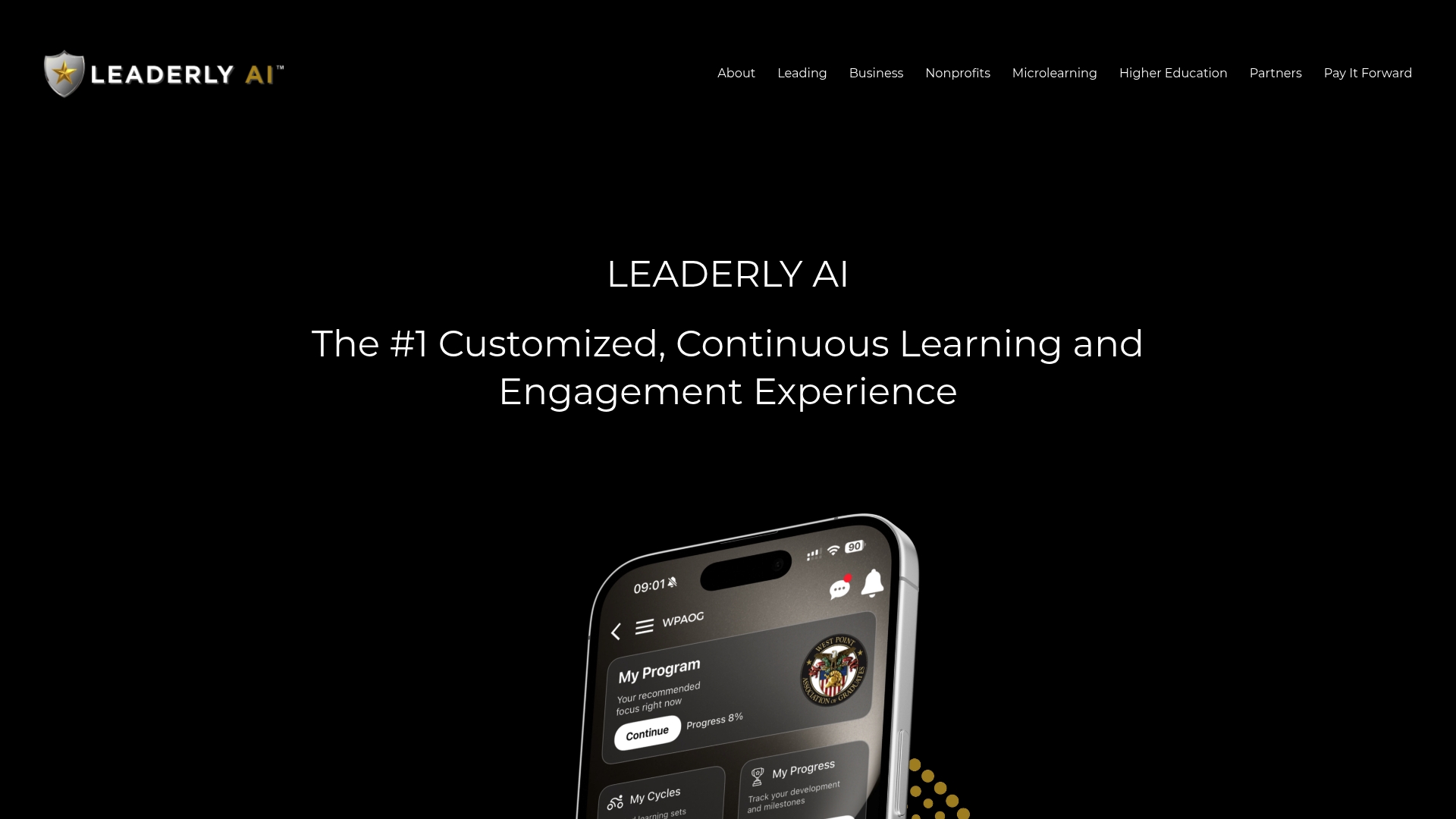
What separates this from a generic chatbot is the habit-building layer: microlessons that adapt as a manager progresses, paired with practical exercises rather than open-ended chat. If you're already comparing platforms, our breakdown of Genee.coach alternatives is worth a look before you commit budget. When you're ready to scope a pilot for your organization, visit the Leaderly platform page to start a conversation about cohort size, timeline, and what a measurement plan would look like for your team.
Sources
- Leadership Development in the Age of Artificial Intelligence | Harvard Kennedy School
- The AI-Enabled Coach — Korn Ferry