
Pick an LMS when your priority is compliance, certifications, and audit-ready records; pick an LXP when the priority is engagement, self-directed growth, and continuous skill building. Most organizations don't choose one and walk away from the other. They combine both, or move to a unified platform that does both jobs, and the decision framework below shows how to figure out which path fits your organization right now.
TL;DR:
- Most organizations benefit from integrating both LMS and LXP platforms to balance compliance tracking with learner engagement and skill development.
- Ensuring seamless integration through single sign-on, HRIS sync, and shared skills taxonomy prevents data silos and maintains accurate reporting across systems.
- An LMS remains essential for audit-ready reporting, certification management, and compliance, especially in regulated industries like healthcare and finance.
- LXPs excel at personalized microlearning, social features, and AI-driven recommendations but lack the deep compliance reporting required for audits.
- Starting with small pilots, focusing on specific needs, and evaluating vendor support and integration capabilities help organizations choose the right platform mix early on.
Table of Contents
- LMS vs. LXP: What Is a Learning Management System?
- What Is a Learning Experience Platform, and When Does It Win?
- LMS vs. LXP: Comparing the Features That Actually Matter to Buyers
- How Do You Choose Between LMS and LXP?
- Combining LMS and LXP Without Creating a Data Silo
- Vendor Checklist: What to Verify Before You Sign
- Where a Platform Like Leaderly Fits the LXP Side of the Equation
- An Honest Read on Where Teams Get This Wrong
- Try Leaderly for Leadership Development That Learners Actually Finish
- Sources
- FAQ
LMS vs. LXP: What Is a Learning Management System?
A learning management system is a structured, administrator-led platform built to push required training out to employees and prove it happened. That's the whole job: assign content, track completion, generate the reports an auditor or regulator will eventually ask for.
Anyone comparing LMS and LXP options should know the LMS side hasn't changed much in purpose, even as the interfaces have. The core features are:
- Course creation and enrollment management, often built around SCORM packages
- Compliance tracking with expiration dates and renewal reminders
- Certification management for licenses, safety training, and onboarding requirements
- Audit-ready reporting that shows who completed what, and when
An LMS is administrator-led and built to deliver and track structured training, which is exactly why compliance-heavy industries (healthcare, finance, manufacturing) still lean on it hard, according to Articulate's breakdown of the two models. If a regulator can ask "prove this happened," you want an LMS underneath that answer.
The limitation shows up fast once training moves past the mandatory stuff. LMS content tends to feel like homework. Completion rates for optional courses lag badly, and the platform has no real mechanism for surfacing relevant content a learner didn't already know to search for. That gap is exactly where an LXP starts to matter.
What Is a Learning Experience Platform, and When Does It Win?
A learning experience platform flips the model: instead of the administrator pushing content, the platform recommends it, and the learner drives their own path. Think of it less like a training portal and more like a learning-focused version of a streaming recommendation engine, pulling from internal courses, external content, videos, and podcasts based on role, goals, and past behavior.
Core features that define an LXP:
- AI-driven content recommendations based on role, skill gaps, and behavior patterns
- Content aggregation from multiple sources, internal and external, in one search experience
- Social learning tools like peer discussions, ratings, and shared playlists
- Microlearning formats built for short, frequent sessions rather than hour-long modules
That microlearning piece deserves attention, especially as herramientas de IA para vídeos simplify creating and recommending short educational content. Short, frequent lessons tied to specific behaviors show up repeatedly as a strong format for skill retention, particularly in leadership and soft-skill development, where a five-minute lesson on giving feedback lands better than a 45-minute seminar nobody remembers by Friday.
The trade-off: LXPs generally lack the deep compliance reporting that gets an LMS through an audit. If your legal team needs a signed-off completion trail for a safety certification, an LXP alone usually won't cut it. That's the gap hybrid approaches exist to close.
LMS vs. LXP: Comparing the Features That Actually Matter to Buyers
Reduced to the dimensions that show up in a real procurement conversation, the two platforms split cleanly along control versus autonomy.
| Dimension | LMS | LXP |
|---|---|---|
| Who drives content | Administrator assigns | Learner discovers, AI recommends |
| Primary content type | Structured courses, SCORM packages | Aggregated: video, articles, microlearning, peer content |
| Reporting strength | Deep, audit-ready compliance data | Engagement and consumption metrics, lighter on compliance |
| Personalization | Minimal, rule-based assignment | AI-driven, adapts to behavior and role |
| Admin overhead | Higher, manual content curation | Lower, algorithm-assisted curation |
Adoption data backs up why so many teams keep an LMS even after buying an LXP: roughly a substantial majority of L&D buyers report using an LMS, while a smaller share use an LXP, a gap that reflects how much of corporate training is still mandatory and regulated. Compliance doesn't go away just because engagement scores improve.
On the operational side, integrations matter more than most buyers expect going in. Does the platform sync with your HRIS for automatic enrollment when someone changes roles? Does it support single sign on so employees don't need a separate login? Does it own the learner data, or does it live in a silo you can't export? An LXP often augments rather than replaces an LMS, providing the AI recommendations and social features an LMS wasn't built for, while the LMS keeps the compliance backbone intact, as TechTarget's comparison of the two models lays out.
The business outcome split follows the same line: LMS strength maps to risk reduction (avoiding fines, passing audits), while LXP strength maps to retention and upskilling, since engaged learners are the ones who actually apply new skills rather than clicking through slides to close a compliance ticket.
How Do You Choose Between LMS and LXP?
Run this as a simple flow before you sit through another vendor demo:
- If compliance and certification tracking dominate your training needs, start with an LMS. Regulatory audits don't care how engaged your workforce felt.
- If continuous development, upskilling, and retention are the priority, an LXP fits better. This is the common case for leadership development, onboarding culture, and skills programs with no regulatory deadline attached.
- If you need both, and most mid-size and larger organizations eventually do, plan for a hybrid architecture or a unified platform rather than running two disconnected systems that never talk to each other.
When you get vendors in a room, ask direct questions instead of watching a scripted demo: How granular is the compliance reporting? What data trains the AI recommendation engine, and can you see it? How does skills tagging work across the catalog? What integrations exist for HRIS and SSO out of the box, and what requires custom development? What's the SLA for support response times?
Score each vendor on five criteria during the demo: reporting depth, personalization quality, integration ease, content library breadth, and admin time required per week. Weight them by what your organization actually needs, not what sounds impressive in a sales deck.
Pro Tip: Before signing anything, run a 60-day pilot with a single department and track completion rate, engagement (logins and time spent), skills improvement on a pre/post assessment, and compliance adherence if any mandatory content is involved. Vendors will show you their best-case metrics; a pilot shows you yours.

Combining LMS and LXP Without Creating a Data Silo
The most common working architecture treats the LMS as the system of record for completions and certifications, while the LXP handles discovery and day-to-day engagement, syncing skill tags and completion events back to the LMS through xAPI or a direct API connection so nothing falls into a reporting gap, a pattern TechTarget documents in detail. Some vendors now sell unified platforms that skip the two-system problem entirely, and that shift toward AI-driven, blended platforms is showing up across the vendor landscape, according to Docebo's analysis of where the market is heading.
Whichever route you take, a few integration pieces are non-negotiable:
- Single sign on so learners don't juggle two logins (here's what breaks when SSO is done wrong)
- HRIS sync so role changes automatically update assigned learning paths
- SCORM or xAPI support so content and completion data move cleanly between systems
- Shared skills taxonomy so both systems tag competencies the same way
Governance matters as much as architecture. Assign a content owner, a compliance owner, and a curator role separately, because one person trying to do all three is how catalogs turn stale. Roll out in phases: pilot with one team, fix what breaks, then expand.
Vendor Checklist: What to Verify Before You Sign
Run through this before any contract gets signed, not after:
- Reporting granularity. Can you export raw completion and engagement data, or only pre-built dashboards?
- Standards support. Does it handle SCORM and xAPI, and does the API allow custom integrations without a costly add-on?
- Security and privacy. Ask for current certifications and data handling policies in writing, not a verbal assurance from the sales rep.
- Support and SLAs. What's the guaranteed uptime, and what's the actual response time for a critical issue, not the marketing page's claim?
- Pricing structure. Is it per active user or tiered by seat count, and are AI personalization features bundled in or an extra line item that shows up later?
That last point catches more buyers than anything else. AI features often get sold as core functionality in the demo, then reappear as a paid add-on in the actual contract.
Where a Platform Like Leaderly Fits the LXP Side of the Equation
An example platform applying LXP-style personalization to leadership development is built around microlessons that adapt with machine learning based on each user's behavior and progress, following a learner-led model rather than an assign-and-track LMS model.
Some features map directly to common LXP strengths such as personalized microlearning journeys that evolve with user behavior data, built-in assessments that inform content recommendations, analytics dashboards providing administrator visibility without rigid assignment structures, and scalability for organizations running leadership programs across teams.
None of this replaces a compliance-grade LMS for regulated certifications. It's positioned for the engagement and continuous-growth side of the decision framework, which is exactly the gap most pure LMS deployments leave open.
An Honest Read on Where Teams Get This Wrong
The mistake I see most often isn't picking the wrong platform. It's treating the choice as permanent when the actual need shifts every year as an organization grows. A 200-person company piloting leadership microlearning has a completely different urgency than a 5,000-person company managing safety certifications across three states.
Start smaller than feels comfortable. Pilot one platform with one team, track completion and skills progression for 60 days, and let that data make the case internally rather than a vendor's demo deck. If your gap is engagement and behavior change rather than audit trails, look at what a personalized, LXP-style tool does with a leadership cohort before assuming you need a full enterprise LMS overhaul.
— Drew
Try Leaderly for Leadership Development That Learners Actually Finish
If your real gap is engagement, not compliance tracking, Leaderlyapp is built for that exact problem: personalized microlessons that adapt to each person's progress instead of a static course catalog nobody finishes.
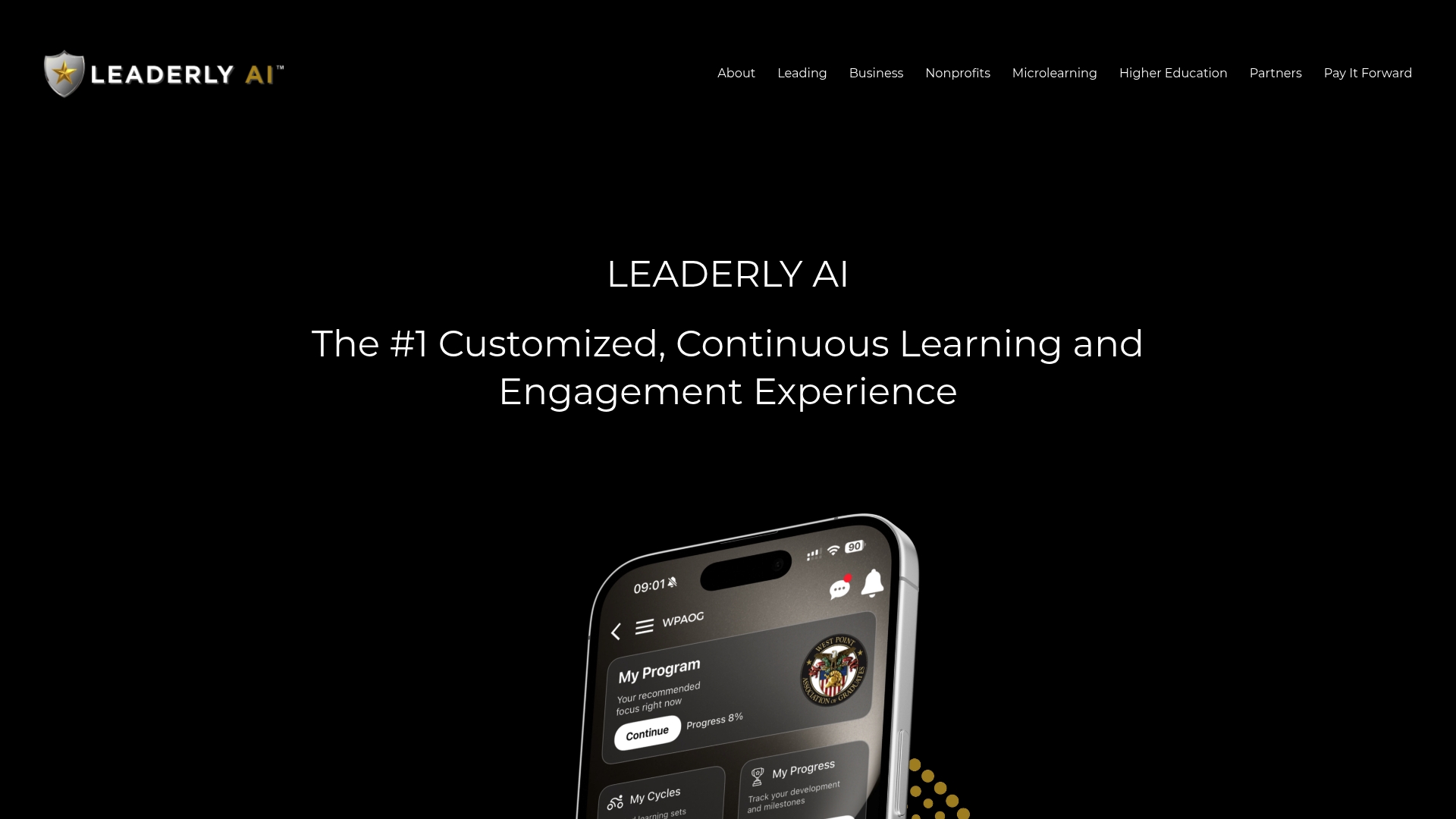
It fits best where a traditional LMS falls short: building leadership habits, running self-assessments, and providing growth paths that adjust dynamically rather than assigning the same module to everyone. Organizations may benefit from scalability and analytics dashboards to track adoption across teams, while users access microlearning that fits into a real workday.
If you're weighing a pilot, start with a single leadership cohort and measure completion and skill movement over a defined window, the same way the buying-guide section above recommends. Explore how the approach to continuous leadership development works, or look at a concrete example in how organizations cultivate people-centric leadership before deciding whether Leaderlyapp belongs in your hybrid stack.
Sources
- LMS vs. LXP: What's the Difference? | Articulate
- LXP vs LMS: What are the differences? | TechTarget
- LMS vs LXP: Differences, Pros, and What Fits Training in 2026 | Docebo
FAQ
Is Docebo an LMS or an LXP?
Docebo markets itself as a unified platform that blends LMS controls with LXP-style personalization and AI recommendations, reflecting the broader industry shift away from choosing strictly one model or the other.
What Are the Top LMS Systems People Compare?
Buyers typically shortlist platforms by category (enterprise LMS, compliance-focused LMS, or unified LMS/LXP platforms) rather than a fixed top-five list, since the right fit depends heavily on integration needs and industry-specific compliance requirements.
How Much Does an LXP Typically Cost?
Pricing varies widely by vendor and is usually structured per active user or in tiers by organization size, with AI personalization features sometimes billed as a separate add-on rather than included in the base price.
What Is the Difference Between SCORM and an LMS?
SCORM is a packaging standard that makes course content interoperable across systems, while an LMS is the platform itself that hosts SCORM content and manages learners, enrollments, and completion tracking.
Can a Platform Like Leaderly Work Alongside an Existing LMS?
Yes. Leaderlyapp is built around personalized microlearning and behavioral assessments, making it a natural fit as the engagement layer in a hybrid setup where your existing LMS continues handling compliance records.