
Behavioral nudges are small changes to choice environments that shift behavior without removing options or adding penalties. On average they produce small-to-moderate effects, with stronger results in some domains, such as food choices and one-time health actions, than in others. What follows covers the evidence, the design rules, and concrete ways to apply nudges in health, work, and policy settings.
TL;DR:
- Defaults and the order of choices have a more significant impact on behavior than informational nudges, with an average effect size of Cohen's d ≈ 0.43.
- Friction points, like scheduling hassles, should be targeted first to make the desired actions as effortless as possible, especially in health and workplace settings.
- Piloting interventions with clear process and outcome metrics is essential, as results tend to vary by domain and population, and success must be confirmed before scaling.
- Ethical considerations include transparency, proportionality, genuine opt-outs, and built-in evaluation periods to prevent the outlasting of the nudges' purpose.
- Sustaining large-scale nudging programs requires personalized, timely prompts and defaults that align with people's workflow, not one-size-fits-all reminders.
Table of Contents
- What counts as a nudge, and what doesn't
- What the evidence says about effect sizes and limits
- How to design a nudge you can defend
- Three blueprints: health, workplace, and policy
- How Leaderly applies behavioral nudging to leadership habits
- A realistic view of what nudges can and can't do
- Put nudge design into a system that runs itself
- FAQ
- Sources
What counts as a nudge, and what doesn't
A nudge changes how a choice is presented, not what choices are available. The term comes from choice architecture: the idea that every decision happens inside a structure (a form, a menu, a screen) and that structure already pushes people one way or another, whether anyone designed it on purpose or not.
Nudges tend to fall into a few buckets:
- Decision structure: defaults, opt-out instead of opt-in, and the order options appear in, such as automatic retirement enrollment or organ donation registries that default to "yes."
- Decision information: framing, social norm messages, and simplified comparisons, like a utility bill showing a household's usage next to similar neighbors.
- Decision assistance: reminders, implementation prompts, and checklists, such as an electronic health record (EHR) that flags a missed vaccine during a visit.
- Digital nudging: the same mechanics applied inside apps and interfaces, from pre-checked boxes to notification timing.
A cafeteria that moves fruit to eye level is nudging. A cafeteria that removes soda from the menu is not: that's a restriction. A tax on sugary drinks or a mandatory vaccination policy also falls outside nudge territory, since both change the cost or legality of a choice rather than its presentation.
What the evidence says about effect sizes and limits
The strongest evidence base comes from a meta-analysis of choice architecture interventions covering more than 200 studies and 440 effect sizes. It found an overall effect of Cohen's d ≈ 0.43, a small-to-moderate shift, with decision-structure techniques (defaults, option ordering) outperforming information-only nudges, and food-related choices showing some of the largest gains.

A meta-analysis of over 200 studies found nudges produce an average small-to-moderate effect, with structural techniques like defaults generally outperforming informational ones. That gap matters for anyone choosing between a reminder email and a default setting: the default usually wins.
Health care offers a more mixed picture. A systematic review of EHR nudges and clinician behavior looked at 54 studies, most from the United States, and found that nudges built into clinical software reliably improved process measures like documentation and order entry. Improvements in actual clinical outcomes were less consistent, and several studies flagged alert fatigue and poor workflow fit as the reasons nudges stalled.
Separately, a habit-formation field experiment tracking 4,799 employees over multiple years found that completing a first annual health screening raised the odds of future screenings by a substantial percentage, while additional financial incentives after that first screening added little extra persistence.
Three patterns repeat across this research: effects vary a lot by domain, decision-structure techniques generally beat pure information campaigns, and published results likely skew toward successes. Piloting before scaling isn't optional.
How to design a nudge you can defend
Good nudges start with the friction, not the message; this aligns closely with student-led learning approaches that emphasize learner autonomy and choice environments. Before writing a reminder or picking a default, map out where people actually drop off, then target that exact point.
- Reduce friction on the first action. Make the desired choice the easiest one to complete, whether that's a pre-filled form or a default appointment slot.
- Set defaults deliberately. A default should reflect what most people would choose anyway if they thought it through, not just what's administratively convenient.
- Match the workflow. A prompt that interrupts a clinician mid-chart or a manager mid-meeting gets ignored or resented.
- Use social proof sparingly. Norm messages work when the norm is real and specific; vague claims erode trust fast.
- Time prompts to the moment of decision, not before it and not long after.
Before launching anything broader, run a short pilot: define one process metric and one outcome metric, pre-register what counts as success, and check whether the effect holds across subgroups rather than just on average, since a nudge that helps most people while quietly disadvantaging a smaller group is still a failure.
Ethical grounding matters as much as design. The OECD BASIC toolkit for behaviorally-informed policy lays out a practical sequence: be transparent about the intervention, keep it proportional to the problem, preserve a real opt-out, and build in evaluation and a sunset date so the nudge doesn't outlive its purpose.

Pro Tip: Fix the first interaction before you touch anything downstream, and watch closely for backfire signals, like opt-outs spiking or complaints clustering around one group.
Three blueprints: health, workplace, and policy
The principles above translate into short, testable programs. Each blueprint below targets one high-leverage moment rather than trying to redesign an entire system at once.
- Health: Simplify scheduling for a first screening, default patients into a convenient appointment slot, and pair it with a single low-friction reminder tied to location. Track initial uptake, then track the one-year repeat rate, since that first completion is where most of the long-term effect comes from.
- Workplace: Set default meeting norms (shorter blocks, fewer invitees) and default calendar holds for training sessions, then add a brief social-norm nudge showing how many peers have completed a module. Track completion rates and a performance proxy tied to the behavior you're targeting.
- Public policy: Change one form field or default at a time, such as auto-enrolling residents in a benefit unless they opt out, paired with plain-language framing. Pilot in a limited area first, check for differential effects across income or demographic groups, and publish the evaluation.
For each blueprint, decide upfront what you'll test first (usually the single biggest friction point) and what success looks like in measurable terms before you launch anything wider.
How Leaderly applies behavioral nudging to leadership habits
We build our platform around the same mechanics described above: short microlessons, timely prompts, and defaults that make the next right action the easiest one. Rather than relying on one large training event, we deliver frequent, personalized nudges that map to decision-assistance and decision-structure categories, reminders tied to a specific moment, defaults that help encourage consistent check-ins, and progress prompts that reinforce habits after the first completion rather than before it.
Our guide on behavioral science in employee development and our breakdown of measuring behavior change go deeper into how these mechanics hold up over a full program cycle.
A realistic view of what nudges can and can't do
Nudges are a lever, not a cure. They work best on specific, well-defined behaviors where the barrier is friction or inattention rather than cost, skill, or genuine disagreement with the goal. When a problem runs deeper, a nudge paired with education, incentives, or a policy change tends to outperform a nudge alone, a point echoed in research on combining nudges with broader strategies.
My honest read: the organizations that get the most out of nudging are the ones willing to measure results, kill what doesn't work, and stay transparent about what they're doing and why. Start with one friction point, test it, and let the data decide whether it scales.
— Drew
Put nudge design into a system that runs itself
Designing one good nudge is manageable. Sustaining dozens of them across a growing team, with the right timing and personalization for each person, is where most programs stall. We built our platform to carry that weight: personalized microlessons, behavioral prompts, and progress tracking that adjust to each person's habits rather than issuing the same reminder to everyone.
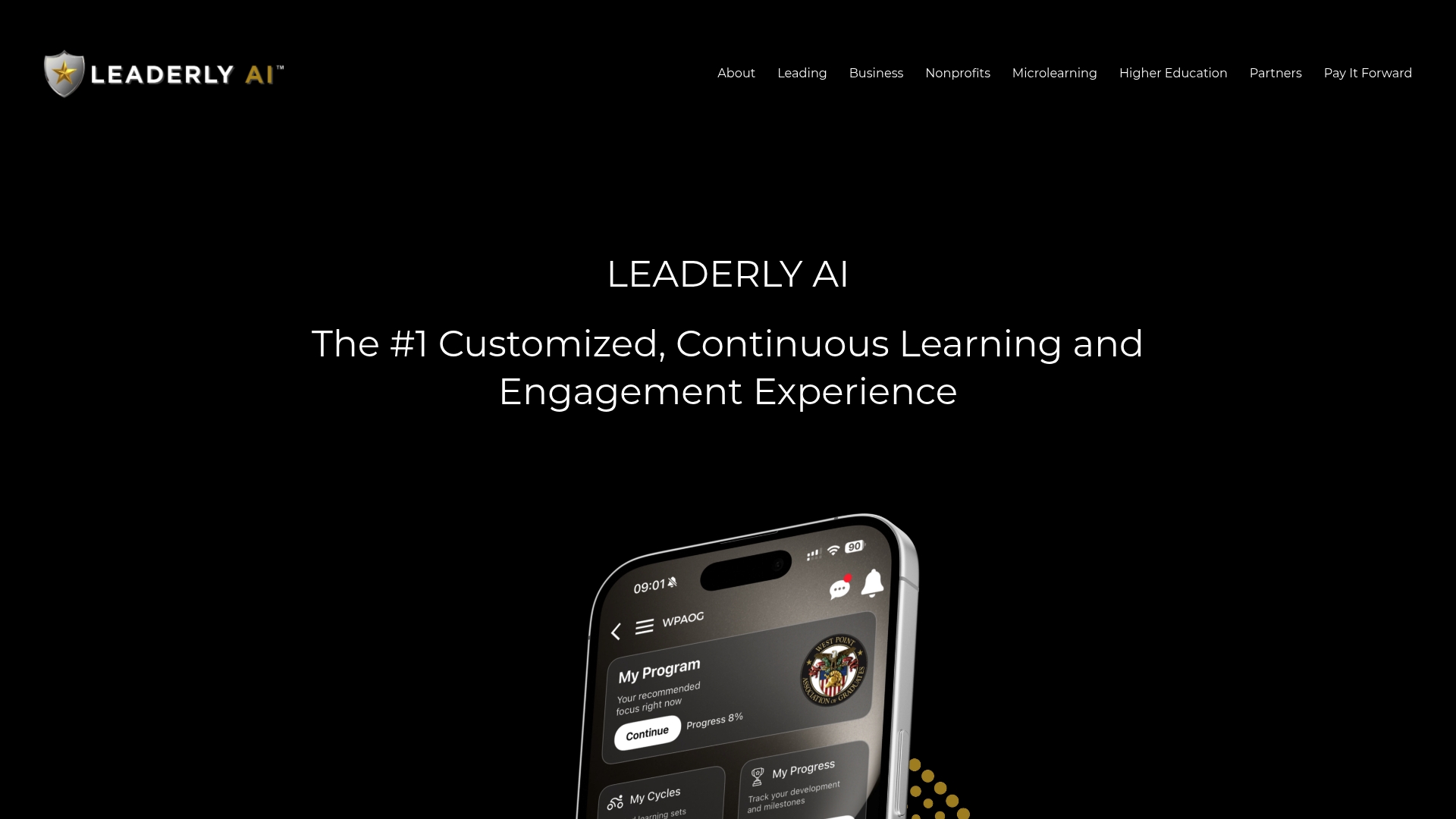
If you're responsible for employee engagement or leadership development, our continuous professional development platform is built to turn behavioral design into a running program instead of a one-time workshop. Request a look at how it fits your team.
FAQ
What are behavioral nudges?
Behavioral nudges are small, deliberate changes to how choices are presented, such as defaults, reminders, or framing, that shift behavior while keeping every original option available. They differ from mandates or financial penalties, which restrict or change the cost of a choice rather than its presentation.
What are the 5 A's of behavior change?
The 5 A's (Ask, Advise, Assess, Assist, Arrange) come from clinical counseling frameworks used mainly in health behavior change, particularly around smoking cessation and chronic disease prevention. They describe a conversation structure for providers rather than a nudge taxonomy, so they overlap with, but aren't identical to, the decision-structure and decision-assistance categories used in nudge design.
Can you give me some examples of behaviors nudges target?
Common targets include completing a health screening, enrolling in a retirement plan, finishing a workplace training module, or choosing a healthier item in a cafeteria line. A habit-formation field experiment found that getting someone through a first annual screening raised future screening odds by a substantial percentage, showing how a single well-placed nudge can anchor a longer habit.
What are the three types of nudges?
Most frameworks group nudges into decision structure (defaults, option order), decision information (framing, social norms), and decision assistance (reminders, prompts), with digital nudging acting as a fourth layer applied inside apps and interfaces. A meta-analysis of choice architecture interventions found decision-structure techniques generally produce stronger effects than information-only approaches.
How do I know if a nudge is actually working?
Track one process metric (did the desired action happen) and one outcome metric (did it stick over time), and compare results against a control group or a clear baseline before scaling. Piloting first matters because effects documented in the research literature vary widely by domain and population.
Sources
- Choice architecture interventions and their effect sizes (PNAS)
- Systematic review of EHR nudges and clinician behavior (JAMA/PMC)
- Incentives and habit formation in health screenings (NBER working paper)