
Behavioral science improves classroom instruction, student engagement, and equitable outcomes by applying empirically supported principles to how teachers design lessons, manage behavior, and build school culture. The American Psychological Association's 20 principles and the IES What Works Clearinghouse (WWC) practice guides give U.S. educators a concrete evidence base to work from, not just theory. When schools apply these principles well, the results are measurable: higher on-task time, better homework follow-through, and fewer behavioral referrals.
- APA's Coalition for Psychology in Schools and Education identified 20 evidence-based principles spanning motivation, cognition, social context, and assessment
- The IES WWC recommends seven teacher-delivered interventions for K–5 with strong evidence ratings
- Leaderlyapp operationalizes these principles through microlearning and behavioral habit-building for educator professional development (PD)
Table of Contents
- What are the core behavioral science principles every educator needs?
- Concrete classroom strategies grounded in behavioral science
- How do you scale behavioral design across an entire school?
- How to design, pilot, and measure a behavioral intervention
- Common misconceptions about behavioral approaches in schools
- What does the research actually show?
- How Leaderlyapp supports behavioral science in educator PD
- Key Takeaways
- Why behavioral science is the equity lever schools keep underestimating
- Build staff capacity with Leaderlyapp's behavioral PD pathway
- Useful sources and further reading
What are the core behavioral science principles every educator needs?
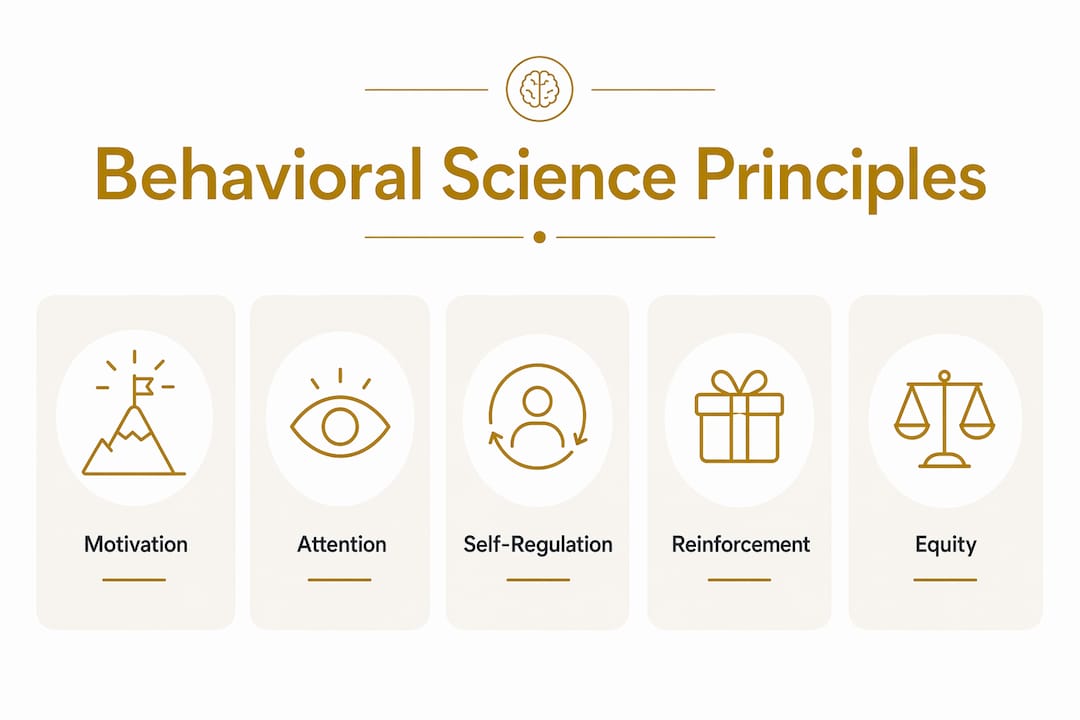
The APA's 20 principles cluster into four instructional levers that teachers can actually use:
- Motivation: Growth mindset framing, mastery goals, and autonomy support increase persistence on hard tasks
- Attention and cognition: Spacing, retrieval practice, and interleaving strengthen long-term retention more than massed review
- Behavior shaping: Reinforcement timing, co-created expectations, and self-monitoring routines build consistent habits
- Social and environmental design: Classroom arrangement, peer norms, and predictable routines reduce cognitive load before instruction begins
The APA framework is explicit that these principles are not sequential steps. They interact. A student who lacks motivation will not benefit from a well-designed retrieval practice schedule. Diagnosing the underlying barrier first, whether it is attention, motivation, or skill, determines which lever to pull.
Pro Tip: Commitment devices are one of the most underused tools in this taxonomy. Before a project, ask students to write down one specific action they will take and when. This simple pre-commitment shifts follow-through from intention to behavior, and it costs nothing to implement.
| Lever | Principle example | Classroom application |
|---|---|---|
| Motivation | Mastery goals over performance goals | Frame tasks as skill-building, not grading events |
| Attention/cognition | Spacing and retrieval practice | Weekly low-stakes quizzes instead of end-unit tests |
| Behavior shaping | Reinforcement and self-monitoring | Student behavior tracking charts with teacher check-ins |
| Social/environmental | Predictable routines | Same transition signal every day, posted visually |
Concrete classroom strategies grounded in behavioral science
The IES WWC practice guide's seven recommendations translate directly into daily teacher moves. Here are the highest-leverage tactics:
- Co-create expectations: Students who help write classroom norms are more likely to follow them. Spend 20 minutes at the start of a unit building a shared agreement.
- Micro-routines: A consistent entry routine (bell-ringer, two-minute silent read, agenda review) reduces transition time and primes attention.
- Behavior-specific praise: "I noticed you re-read that paragraph before answering" lands harder than "good job." It names the behavior worth repeating.
- Brief retrieval practice: Three questions at the start of class on last week's content, no grade attached, builds retention faster than re-reading.
- Self-monitoring: Give students a simple weekly tracker (on-task minutes, homework completed, questions asked). Students who track their own behavior show significantly higher follow-through than those who receive only teacher feedback.
Numbered implementation sequence for a new classroom routine:
- Introduce the routine explicitly, model it yourself
- Practice it three times in the first week with feedback
- Add a brief student self-check at the end of each session
- Fade your prompting by week three; let the routine run on its own
One caution: overuse of external rewards can erode intrinsic motivation. Design reinforcement systems to fade over time, and involve students in designing the system itself. When students help build the structure, they invest in it.
Pro Tip: Before a cognitively demanding lesson, try a 2–3 minute emotional scaffolding routine: a brief visualization or slow breathing exercise. Research shows this lowers resistance and primes engagement for the task ahead.

How do you scale behavioral design across an entire school?
Moving from one classroom to a whole school requires aligning individual teacher tactics with a shared framework. Positive Behavioral Interventions and Supports (PBIS) is the most widely adopted U.S. structure for this, and it maps cleanly onto behavioral science principles: define expectations, teach them explicitly, reinforce them consistently, and use data to adjust.
- Schoolwide norms: Co-create three to five school-wide expectations with staff and students, post them everywhere, and revisit them at the start of each semester
- SEL integration: Social-emotional learning skills (self-regulation, empathy, responsible decision-making) are non-cognitive skills that behavioral scaffolds can build systematically, not just model
- Coaching cycles: Monthly 30-minute teacher coaching sessions focused on one behavioral strategy at a time produce more durable change than annual workshops
- Family engagement: Send families a one-page summary of the school's behavioral expectations and how to reinforce them at home. Low-cost nudges for families (text reminders, simple checklists) improve parent-child interactions around homework and attendance
Behavioral science should extend beyond discipline. The real opportunity is building non-cognitive skills — perseverance, emotional intelligence, self-regulation — that mobilize students' cognitive potential toward learning goals. Schools that treat behavior management as separate from academic instruction are leaving their most powerful lever unused.
For historically underserved students, behavioral design has an equity dimension that administrators often overlook. Low-cost nudges that reduce administrative friction (simplified enrollment forms, proactive outreach at key transition points) disproportionately benefit students who face the most systemic barriers. Explore student leadership development as one vehicle for building these non-cognitive skills at scale.
How to design, pilot, and measure a behavioral intervention
A six-to-eight-week pilot is enough time to generate usable data without overcommitting resources.
Pilot checklist:
- Define one primary outcome metric (e.g., on-task time, homework completion rate, office referrals)
- Assign roles: one teacher-coach, one data lead, one administrator sponsor
- Conduct an equity review before launch — check whether the intervention design could disadvantage any subgroup
- Obtain consent from families for any data collection beyond standard school records
- Set a weekly data review cadence (15 minutes, same day each week)
- Plan a 6-week midpoint check and an 8-week summary report
| Metric | Measurement method | Frequency |
|---|---|---|
| On-task time | Momentary time sampling (10 observations/session) | Weekly |
| Homework completion | Teacher gradebook log | Weekly |
| Office referrals | School discipline data system | Bi-weekly |
| SEL skill rubric | Teacher-rated checklist | Start and end of pilot |
Technology reduces the cost of this measurement loop. Analytics dashboards in platforms like Leaderlyapp can track PD engagement and coaching completion, feeding directly into the measurement plan without adding manual data entry for teachers.
Common misconceptions about behavioral approaches in schools
The biggest source of resistance is a false binary between behavioral and constructivist teaching. They are not opposites.
- Myth: Behavioral methods produce passive, compliant learners. Fact: Direct instruction and generative instruction both show empirical gains in literacy and basic skills. The behavioral scaffold enables the inquiry, it does not replace it.
- Myth: Reward systems are manipulative. Fact: Poorly designed reward systems are. Well-designed ones fade extrinsic reinforcement and build ownership.
- Myth: Behavioral science ignores student agency. Fact: Self-monitoring, commitment devices, and co-created norms are all agency-building tools.
Constructivist goals and behavioral tools are compatible. The evidence base for behavioral approaches in literacy and foundational skills is strong. Philosophical resistance, not evidence, is what limits adoption.
Pro Tip: When staff push back on behavioral approaches, frame the conversation around equity. Ask: "Which students are most harmed when we don't have consistent expectations and feedback systems?" The answer is almost always students who already face the most barriers.
What does the research actually show?
The WWC rates setting clear behavior expectations and modeling them (Recommendations 1–3 of the K–5 practice guide) as supported by strong evidence across multiple studies. That is the highest confidence rating the IES assigns.
- Literacy: Behavioral approaches including direct instruction show reliable gains in foundational reading and math skills
- College access: Low-cost messaging nudges that reduce FAFSA administrative burden increase financial aid applications among low-income students, a model transferable to K–12 transition points
- Summer melt: Proactive text-based outreach to graduating seniors reduces summer melt (students who intend to enroll but do not)
- Teacher incentives: Loss-framed financial incentives for teachers show promising effects on student performance, though the research base remains limited
Where evidence is thinner: nudging college students to improve study habits has not yet produced consistent gains. Middle school behavioral interventions are understudied compared to K–5 and postsecondary. The field is nascent relative to health or tax policy, and researchers should prioritize developmental-stage tailoring and subgroup analysis next. For a broader view of how personalized learning platforms are incorporating behavioral personalization, the edtech sector offers useful parallel evidence.
How Leaderlyapp supports behavioral science in educator PD
Leaderlyapp applies behavioral science principles directly to teacher and leader professional development through microlessons, habit-building exercises, and analytics dashboards that track engagement and progress over time.
A practical 6–8 week PD pilot using Leaderlyapp looks like this:
- Weeks 1–2: Teachers complete three microlessons per week on one behavioral strategy (e.g., behavior-specific praise). Coaching prompts are sent automatically after each lesson.
- Weeks 3–5: Teachers implement the strategy in class and log one observation per week in the platform. The data lead reviews aggregate completion data bi-weekly.
- Weeks 6–8: Teachers reflect using a built-in self-assessment, and the instructional coach reviews analytics to identify who needs additional support.
The platform's self-regulation and soft-skills content maps directly to the non-cognitive skill development goals in PBIS and SEL frameworks. Leaderlyapp's behavioral science approach to employee development is documented in detail for organizations that want to understand the underlying model.
Pro Tip: Combine Leaderlyapp microlessons with a simple weekly paper-based behavior metric for teachers (one number, one observation). The combination of digital PD and analog classroom data creates a feedback loop that accelerates adoption faster than either alone.
| PD element | Leaderlyapp feature | Outcome tracked |
|---|---|---|
| Microlessons | AI-personalized lesson delivery | Lesson completion rate |
| Coaching prompts | Automated post-lesson nudges | Coach check-in frequency |
| Self-assessment | DiSC/EQ/MBTI-style reflections | Skill growth over pilot |
| Analytics | Dashboard for administrators | PD engagement and fidelity |
Key Takeaways
Behavioral science gives educators a concrete, evidence-backed toolkit for improving instruction, student engagement, and equitable outcomes when applied systematically across classrooms and school culture.
| Point | Details |
|---|---|
| APA's 20 principles | Map to four instructional levers: motivation, attention/cognition, behavior shaping, and social/environmental design. |
| IES WWC strong evidence | Setting and modeling clear expectations is the highest-confidence intervention for K–5 classrooms. |
| Equity through nudges | Low-cost behavioral nudges reduce systemic friction most for historically underserved students. |
| Pilot structure | A 6–8 week pilot with one metric, defined roles, and weekly data review generates usable evidence without overcommitting resources. |
| Leaderlyapp for PD | Pairs microlessons, coaching prompts, and analytics to embed behavioral science into educator professional development. |
Why behavioral science is the equity lever schools keep underestimating
The conventional framing treats behavioral science as a classroom management tool. That is too narrow. The deeper opportunity is using it as a design discipline: diagnosing why students or teachers are not doing what we want, then removing the friction or adding the right scaffold. Most school improvement efforts focus on what to teach. Behavioral science asks why people do not do what they already know they should, and that question is where the real leverage lives.
The equity argument is especially strong. Students from historically underserved backgrounds face more administrative friction, more ambiguous expectations, and fewer behavioral scaffolds at home. A school that applies behavioral design systematically is not just improving average outcomes. It is disproportionately helping the students who need it most. Cross-functional teams, including teachers, families, and researchers, should co-design these interventions rather than having them handed down from administration. That co-design process is itself a behavioral intervention: it builds ownership and increases fidelity.
The vision is a school system where behavioral science is not a special program but the default design language for instruction, culture, and professional development.
Build staff capacity with Leaderlyapp's behavioral PD pathway
Schools serious about embedding behavioral science need more than a one-day workshop. Leaderlyapp offers an 8-week behavioral PD pathway that pairs three microlessons per week with in-class coaching prompts and a minimal measurement plan, designed for a cohort of up to 20 teachers.
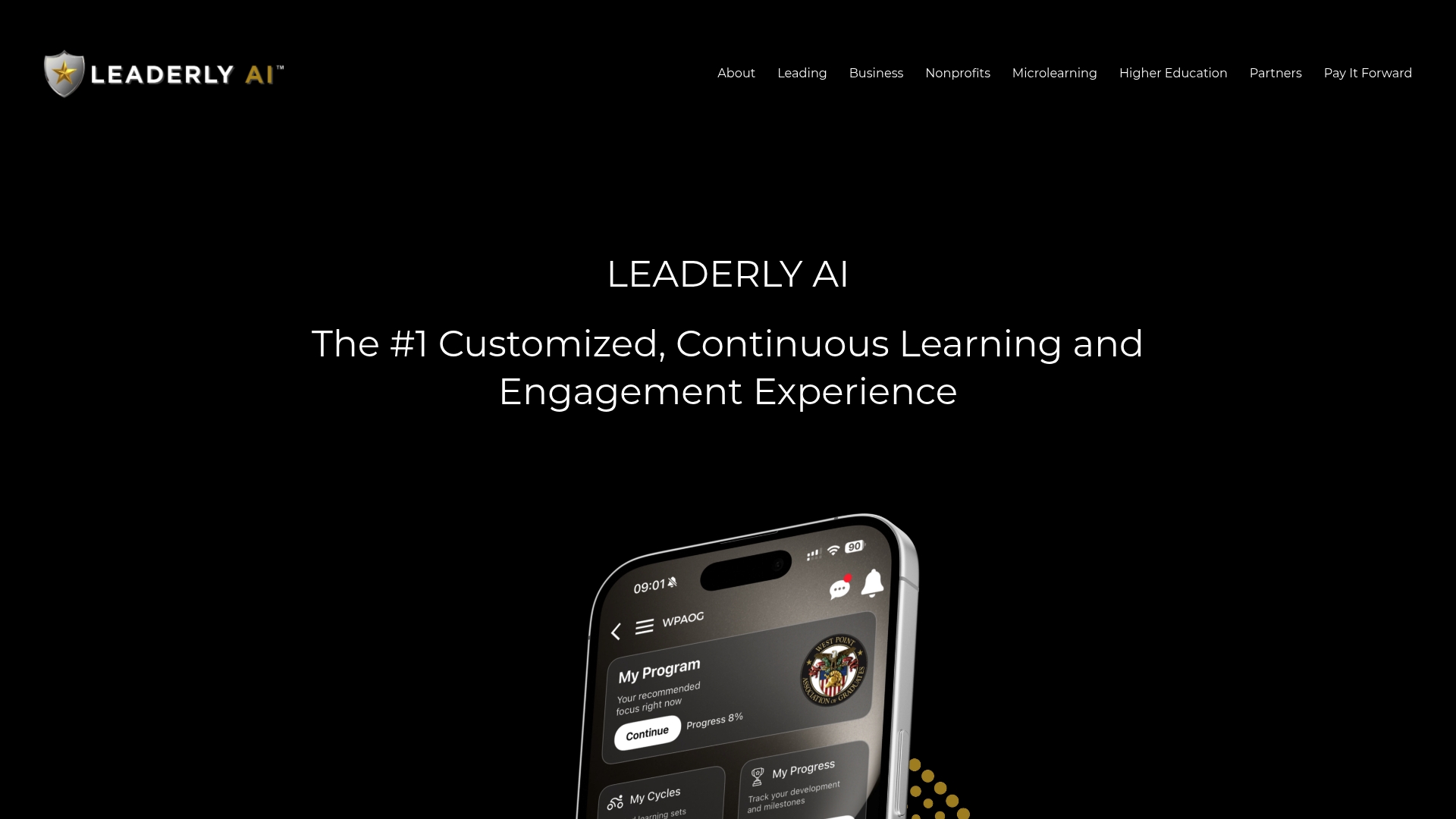
The pilot scope is intentional: small enough to run without a large budget, structured enough to generate real data. Weekly coach check-ins take 15 minutes. The analytics dashboard shows administrators exactly where engagement is strong and where teachers need additional support, without adding reporting burden to anyone's plate.
If your school is ready to move from theory to practice, start with Leaderlyapp's leadership development pathway and request a pilot scoped to your team's size and goals.
Useful sources and further reading
- APA's Top 20 Principles — The foundational evidence base for PreK–12 behavioral science applications. Best for researchers and curriculum designers.
- IES WWC K–5 Practice Guide — Seven teacher-delivered interventions with strong evidence ratings. Best for classroom teachers and instructional coaches.
- Cambridge review on behavioral psychology in education — Covers barriers to adoption and the constructivism compatibility argument. Best for administrators navigating staff resistance.
- The Decision Lab overview — Accessible summary of nudge applications in education, including FAFSA and summer melt examples. Best for leaders new to behavioral economics.
- Pearson behavioral insights brief — Makes the case for non-cognitive skill development through behavioral design. Best for administrators building schoolwide culture.
- NCBI Bookshelf: Education and Behavioral Economics — Covers postsecondary nudges, teacher incentives, and research gaps. Best for researchers and policy-focused administrators.
- PME Journal: Emotional scaffolding — Evidence for pre-task emotional preparation routines. Best for classroom teachers implementing readiness strategies.
- AI for studying: practical student guide — Practical overview of technology tools that reduce friction in student learning. Best for instructional coaches exploring edtech integration.