
Peer recognition programs let employees formally acknowledge each other's contributions instead of routing every "great job" through a manager. The fastest way to get one working is to run an 8-week pilot on one low-friction channel (usually Slack or Teams) with three or four explicit criteria for what counts as recognition. Within weeks you'll see quick participation gains and visible shifts in the behaviors you named.
TL;DR:
- Peer recognition programs can be effectively launched with an 8-week pilot focused on clear, explicit criteria and low-friction channels like Slack or Teams.
- Recognition should be instant or within 24 to 48 hours to maximize its cultural impact, especially in remote or hybrid work environments.
- Tracking key performance indicators such as participation rate, recognitions per employee, and recognition distribution across departments helps maintain program health.
- Vague criteria and a lack of pilot testing are common causes of program failure, which can be mitigated through targeted interventions and leadership modeling.
- Recognition messages should specify the behavior, impact, and values reflected, with public praise for achievements and private notes for sensitive wins.
Table of Contents
- What Do Peer Recognition Programs Actually Look Like?
- How Do You Design and Launch a Peer Recognition Program?
- What KPIs Should You Track to Measure Program Health?
- Why Do Peer Recognition Programs Fail, and How Do You Fix It?
- Which Channels and Features Actually Matter?
- What Should a Great Peer Recognition Message Actually Say?
- Leaderly's Perspective: Turning Recognition Into a Learning Moment
- See How Leaderly Connects Recognition to Real Growth
- Sources
What Do Peer Recognition Programs Actually Look Like?
Most HR teams overthink the launch and underthink the criteria. A peer recognition program only works when employees know exactly what earns a shoutout, so start with categories, not tools.
No-cost, in-flow recognition. This is the cheapest tier and often the most used, because it lives where people already work.
- A dedicated Slack or Teams channel where anyone can tag a colleague and name a specific value they demonstrated.
- A weekly "wins" thread where managers ask, "Who helped you this week?"
- A shared doc or channel for shout-outs tied to onboarding, where new hires get their first taste of the culture.
Low-cost, structured recognition. These add just enough ceremony to make recognition feel intentional.
- Digital badges tied to specific competencies (mentorship, problem-solving, cross-team collaboration) that show up on an internal profile.
- A monthly "peer spotlight" newsletter section pulling three or four of the best recognitions from the past month.
- Printable or digital certificates for milestone contributions, useful for frontline teams without constant screen access.
Experiential and physical recognition. These work well when budget allows a small step beyond words.
- A rotating "team choice" award decided by peer vote, paired with a small perk like a reserved parking spot or an extra break.
- Handwritten thank-you cards distributed through a manager, which still outperform digital notes for perceived sincerity.
- Lunch or coffee credits triggered automatically after a threshold of peer recognitions received.
Monetary recognition. Cash or points-based rewards matter most when tied to real budget discipline. Programs that set a monetary floor of roughly $5 to $10 per employee per month tend to sustain engagement better than purely social praise, especially once the novelty of a new program wears off.
- Point-based systems redeemable for gift cards, extra PTO, or merchandise.
- Spot bonuses peers can nominate a colleague for, subject to manager approval.
For remote and hybrid teams, in-flow channels do the heaviest lifting since there's no hallway or breakroom to catch informal praise. Frontline and shift-based teams need physical or SMS-based options since they're rarely logged into a laptop. As for public versus private: use public recognition for achievements that reinforce a value everyone should see modeled (a client save, a mentoring moment), and keep private notes for sensitive wins, like someone covering for a struggling teammate without fanfare.
How Do You Design and Launch a Peer Recognition Program?
Skipping straight to a company-wide rollout is the single fastest way to kill a program before it has a chance to prove itself. A three-phase Pilot → Scale → Optimize model, recommended by Vantage Circle, cuts that risk substantially.
Phase 1: Pilot (weeks 1 to 8).
- Pick one team of 15 to 30 people, ideally one with a mix of tenure and role types.
- Define three to four recognition criteria tied to company values, written in plain language employees will actually use.
- Set a participation target of at least 60% of the pilot team giving or receiving recognition by week 4, and 80% by week 8.
- Assign one champion (not the team's manager) to model the behavior in week 1.
Phase 2: Scale (months 3 to 6).
- Roll out to additional departments in waves, not all at once, so support capacity keeps pace.
- Introduce lightweight gamification, points, badges, leaderboards, once the core habit is established, not before.
- Pair every new team with a manager briefing on how to seed recognitions without dominating them.
- Run a quarterly campaign (a themed week, a values challenge) to keep momentum past the initial excitement.
Phase 3: Optimize (ongoing).
- Audit recognition data quarterly for participation gaps, silent teams, and over-concentration among a few employees.
- Export data to your HRIS or engagement survey platform to correlate recognition activity with retention and performance signals.
- Revisit your criteria annually. Stale wording is one of the quietest ways programs lose relevance.
Pro Tip: Send recognitions within 24 to 48 hours of the triggering event. Tremendous's research on peer recognition found that delayed or vague praise loses most of its cultural impact, so build reminder nudges into whatever channel you use.
What KPIs Should You Track to Measure Program Health?
A peer recognition program without a dashboard is just a nice idea. Track these four numbers monthly, not quarterly, so you catch problems while they're still cheap to fix.
- Participation rate: the share of employees giving or receiving at least one recognition per month. Aim for a clear majority participation by the end of your pilot, and higher once scaled.
- Recognitions per employee per month: a rough frequency gauge. A couple of recognitions per employee signals a healthy habit.
- Peer-vs-manager ratio: if managers are issuing more recognitions than peers, the program has quietly become a performance review tool.
- Reciprocity index: the percentage of employees who both give and receive recognition, not just receive it. Low reciprocity often means a popularity bias.
- Values-tag share: the percentage of recognitions tagged to a specific company value rather than left generic.
Often it's one or two silent departments dragging the average down.
Why Do Peer Recognition Programs Fail, and How Do You Fix It?
Most programs don't die from a bad idea. They die from a bad launch. Common failures: skipping the pilot and going company-wide immediately, leaving criteria vague ("great work!" instead of a named behavior), letting visibility bias reward the loudest employees, and manager gatekeeping that turns peer praise into another approval chain.
- Write explicit, values-linked criteria before you write a single recognition message.
- Seed the program with leadership recognitions in week one so employees see what "good" looks like.
- Run targeted interventions, a manager nudge, a team-specific campaign, for any team below 40% participation.
- Run a quarterly equity audit: check recognition rates by department, tenure, and role type to catch demographic gaps early.
Pro Tip: If your recognition data skews heavily toward one department or seniority band, don't just add more prompts. Ask a peer champion from an underrepresented team why participation is low. The friction is usually structural (shift schedules, language barriers) not motivational.
Which Channels and Features Actually Matter?
You don't need an enterprise platform to start, but you'll outgrow a plain Slack channel faster than most HR teams expect. Match the channel to how your workforce actually works.
- Distributed and remote teams: a dedicated channel with tagging and searchable history matters more than fancy visuals.
- Frontline or shift-based teams: SMS or a kiosk-style option beats anything requiring a laptop login.
- Hybrid teams: a mobile app with push notifications keeps recognition from becoming an "office-only" habit.
When evaluating tools, check for native peer-to-peer flow (not a bolted-on manager feature), values tagging, peer-vs-manager analytics, reciprocity monitoring, single sign-on, and clean HRIS export. A Slack or Teams channel is enough for a pilot under 50 people. Once you're managing multiple departments, tracking equity, or trying to link recognition data to performance reviews, a purpose-built platform pays for itself in the reporting hours it saves.
What Should a Great Peer Recognition Message Actually Say?
Every message should name the behavior, the impact, and the value it reflects. Skip the generic "thanks for everything" and get specific.
- Teamwork: "Thanks for jumping into the client call with zero notice, [Name]. You kept us from losing the account, and that's exactly the ownership we talk about."
- Deadline rescue: "You stayed late three nights to get the report out. That's the kind of reliability this team runs on."
- Mentoring: "Watching you walk [Name] through their first launch this week, patiently, without taking over, was a masterclass in developing others."
- Remote help: "You caught that bug in my code from another time zone before it hit production. That's collaboration without borders."
- Onboarding: "Your welcome doc saved me a week of guessing. That's generosity in action."
- Innovation: "The workaround you built for the reporting gap probably saved the team ten hours a month. That's initiative."
Keep public recognitions short and value-forward. Save longer, more personal notes for private messages, especially when the moment involves vulnerability, like someone admitting a mistake and fixing it well.
Leaderly's Perspective: Turning Recognition Into a Learning Moment
Recognition and learning shouldn't live in separate systems. Peer learning research consistently shows structured peer interactions produce measurable behavior change, which is exactly why a recognition moment, "you led that project well", is also a natural trigger for a two-minute microlesson on delegation or a stretch assignment. Leaderly builds toward that connection directly: gamified recognition tied to personalized microlearning means a shoutout doesn't just feel good, it points someone toward their next skill. If you're rethinking how recognition fits your broader leadership development strategy, that's the gap worth closing first.
— Drew
See How Leaderly Connects Recognition to Real Growth
Most recognition tools stop at the "thanks." Leaderly is built to do more with that moment: gamified peer recognition feeds directly into personalized microlessons, so a shoutout for mentoring can trigger a two-minute lesson on coaching, and a badge for problem-solving can nudge someone toward a stretch assignment. Analytics dashboards track participation and values alignment alongside actual skill growth, not just praise volume.
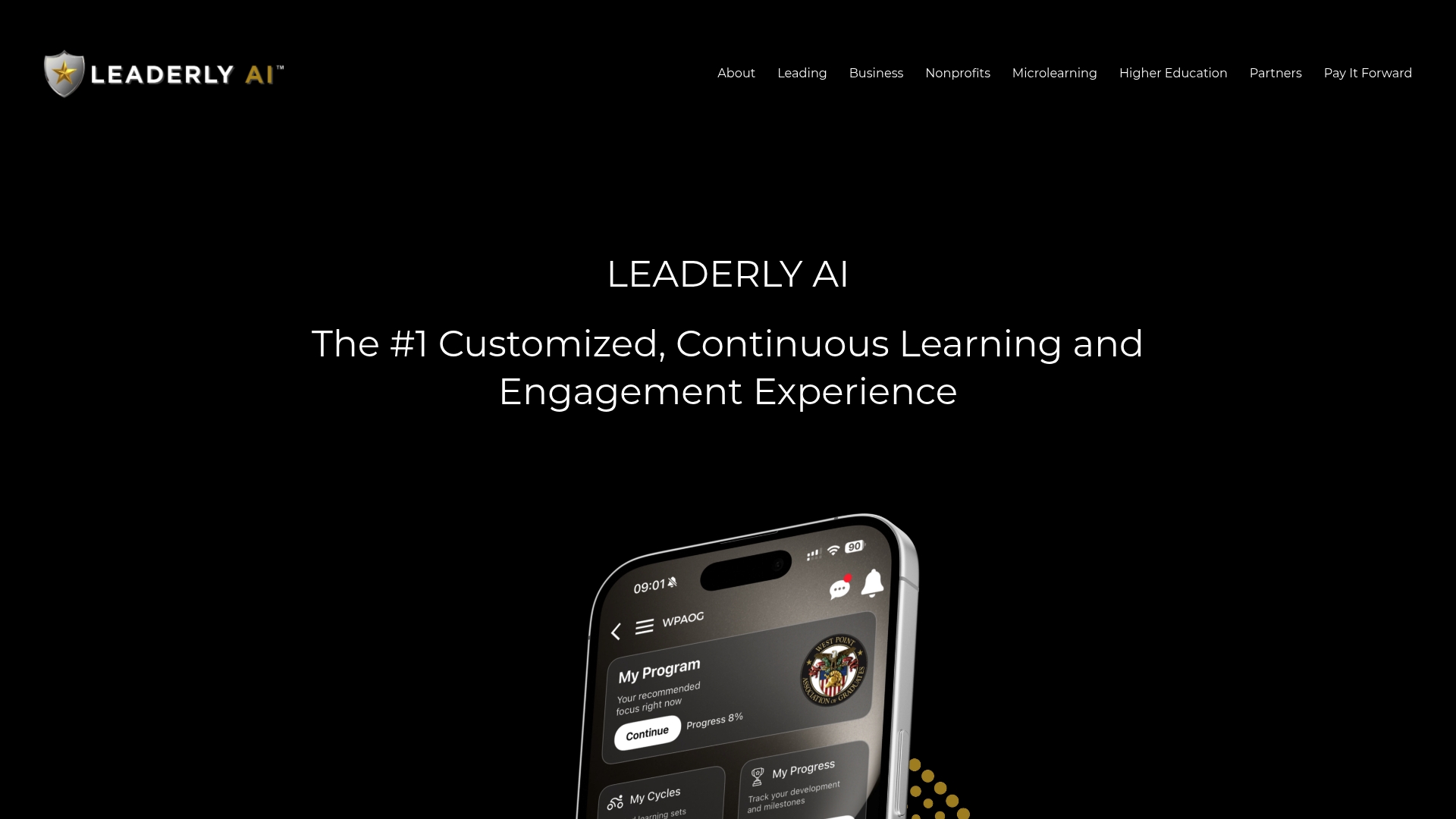
If your organization is scaling past a Slack channel and wants recognition data that ties back to leadership readiness, see how Leaderly supports people-centric development and request a walkthrough to see how it fits your current program.
Sources
- How to Start a Peer-to-Peer Recognition Program (2026)
- Motivate employees with peer-to-peer recognition