
Leadership microcoaching means short, targeted coaching moments, often a few minutes, delivered inside the flow of work rather than in a scheduled hour-long session. The recommended approach for most organizations is a blended model: managers deliver micro-moments during real work, backed by digital microlessons and prompts, with formal coaching reserved for complex or high-stakes development. Done right, it scales behavior change cheaply, works for distributed teams, and reinforces learning long after a workshop ends. The tactics, rollout steps, and metrics that make it stick follow below.
TL;DR:
- Leaders and managers should focus microcoaching on one specific behavior at a time, delivered through quick, situational exchanges immediately following relevant moments.
- Scaling effective microcoaching requires a blended approach with manager-led moments, digital reinforcement, and formal coaching for complex issues, supported by proper technology and training.
- Measuring success involves tracking coaching frequency, prompt usage, and improvements in 360 feedback or confidence, rather than activity alone.
- A four-week pilot should define clear behaviors, train managers on structured prompts, run real-time coaching, and review both quantitative and qualitative results before wider adoption.
- Cultures where microcoaching persists emphasize consistency, visible leadership practice, and protected time, not just initial rollout or content quality.
Table of Contents
- What is leadership microcoaching, exactly?
- Why does microcoaching move the needle for managers and teams?
- What does an effective coaching conversation actually sound like?
- How do you roll out microcoaching without overloading managers?
- How do you measure whether microcoaching is working?
- What does a 4-week microcoaching pilot look like?
- How does Leaderly put microcoaching into practice?
- Why culture, not tools, decides if microcoaching sticks
- Run a microcoaching pilot with Leaderly
- Sources
What is leadership microcoaching, exactly?
Microcoaching is a brief, in-workflow coaching exchange, typically a few minutes, focused on a single observable behavior rather than a broad development plan. It happens right after a meeting, before a tough call, or in the margins of a 1:1, not in a separate calendar block.
It's the right tool when a manager notices a specific moment: a rushed presentation, an avoided conflict, a missed delegation opportunity. Formal coaching still matters for career transitions, deep skill gaps, or sustained behavior patterns that need structured sessions over months.
Delivery takes several forms: a manager's quick observation after a client call, a two-minute check-in before a 1:1 agenda starts, an in-app microlesson triggered by a self-assessment result, or a text and AI-generated prompt sent the morning of a high-pressure meeting. Coaching in the moment works because it closes the gap between the decision and the feedback, instead of waiting for a retrospective that may never happen.

Why does microcoaching move the needle for managers and teams?
Coaching embedded in real work moments improves how leaders apply what they learn, because the feedback lands while the behavior is still fresh, not weeks later in a review cycle. Research on in-the-moment coaching backs this up: short, situational coaching conversations show stronger transfer to actual leader behavior than one-off training events.
The practical case for HR is just as strong:
- Cost per touchpoint drops sharply compared to hiring external coaches for every manager.
- Access widens. Frontline supervisors and emerging leaders get coaching, not just senior executives.
- Remote and hybrid teams benefit disproportionately, since micro-moments travel through Slack, email, or a quick video call as easily as a hallway conversation.
- Habits form faster through repetition, small corrections applied dozens of times a quarter build muscle memory that a single seminar cannot.
Statistic callout: Leaders and practitioners increasingly prefer frequent, short coaching moments over infrequent long sessions, reporting better retention when coaching happens close to the actual work rather than in isolated blocks.
What does an effective coaching conversation actually sound like?
A microcoaching exchange follows a tight structure: name the target behavior, clarify what happened, deliver a brief intervention, and land a concrete next step. That whole sequence runs in a few minutes, which is what keeps managers from skipping it on a busy day.
Five prompts cover most situations managers face:
- Prep prompt (before a meeting): "What's the one thing you want this room to remember when you're done talking?"
- Feedback prompt (right after an interaction): "What do you think landed well, and what would you change if you had thirty more seconds?"
- Debrief prompt (after a decision): "What information would have changed your call, and where could you have gotten it sooner?"
- Accountability prompt (following up on a commitment): "What's the specific action, and when will I see it?"
- Confidence anchor (before a hard conversation): "What's happened before when you handled something like this well?"
Formats shift with context. In person, these questions fit naturally into the walk back from a conference room. Remote, they work as a two-line Slack message sent within an hour of a call, not the next morning. Digitally, an AI-driven prompt can trigger automatically based on calendar data, flagging a high-stakes meeting and offering the prep prompt before the leader even asks.
Pro Tip: Ask one question and stop talking. The most common microcoaching mistake is stacking three pieces of advice into a two-minute window. Pick the single behavior that matters most right now and let the leader do the thinking.
How do you roll out microcoaching without overloading managers?
Scaling microcoaching works best as a blended model: manager-led micro-moments, digital microlessons that reinforce the same behaviors, and periodic formal coaching for deeper gaps. The Center for Creative Leadership's guidance on effective development strategies points to exactly this mix: sustained, workplace-linked learning supported by assessments and tools, not a single delivery channel.
Before rolling it out broadly, check three things:
- Tech stack: in-app microlessons, a messaging channel managers already use, and an analytics dashboard that tracks engagement without becoming a surveillance tool.
- Privacy and escalation guardrails: define upfront what stays between manager and employee versus what gets flagged to HR.
- Manager enablement: a short training session, a practice plan with real scenarios, and a quick coachability check to see if this manager actually asks questions instead of lecturing?
Pro Tip: Run manager enablement as a practice session, not a slide deck. Have managers coach each other through the a small set of prompts above before they try it on a direct report.
Change management follows a simple arc: pilot with a small group, gather feedback fast, adjust the prompts and cadence, then embed the practice into existing routines like 1:1s and post-mortems rather than adding new meetings.
How do you measure whether microcoaching is working?
Track two categories: behavior metrics and outcome measures. Behavior metrics include coaching frequency per manager, prompt usage rates, and how many direct reports a manager actually reaches in a month.
Outcome measures matter more for proving impact to leadership:
- 360-feedback shifts on the specific behaviors targeted by microcoaching.
- Manager self-reported confidence in handling difficult conversations.
- Engagement and retention proxies, tracked over a full quarter, not a single pulse survey.
Run a simple pre/post survey against a pilot cohort and a comparable control group before scaling. Watch for the trap of measuring activity alone, a manager who sends ten prompts a week but sees no behavior change on 360 feedback hasn't proven the program works. Consistent, sourced data on microcoaching-specific outcomes is still limited, so pair any pilot metrics with qualitative interviews to confirm the numbers mean what they seem to.
What does a 4-week microcoaching pilot look like?
A short pilot answers whether microcoaching fits your culture before you spend budget on a full rollout.
- Week 1: Define scope, pick two or three target behaviors, choose your KPIs, and select a cohort of 10 to 20 managers.
- Week 2: Train managers on the five-prompt structure and turn on whatever tech (messaging, in-app lessons) you'll use.
- Week 3: Run microcoaching in real work moments and send digital nudges on schedule.
- Week 4: Collect pre/post survey data, review qualitative feedback from managers and participants, and make a go or no-go call on wider rollout.
How does Leaderly put microcoaching into practice?
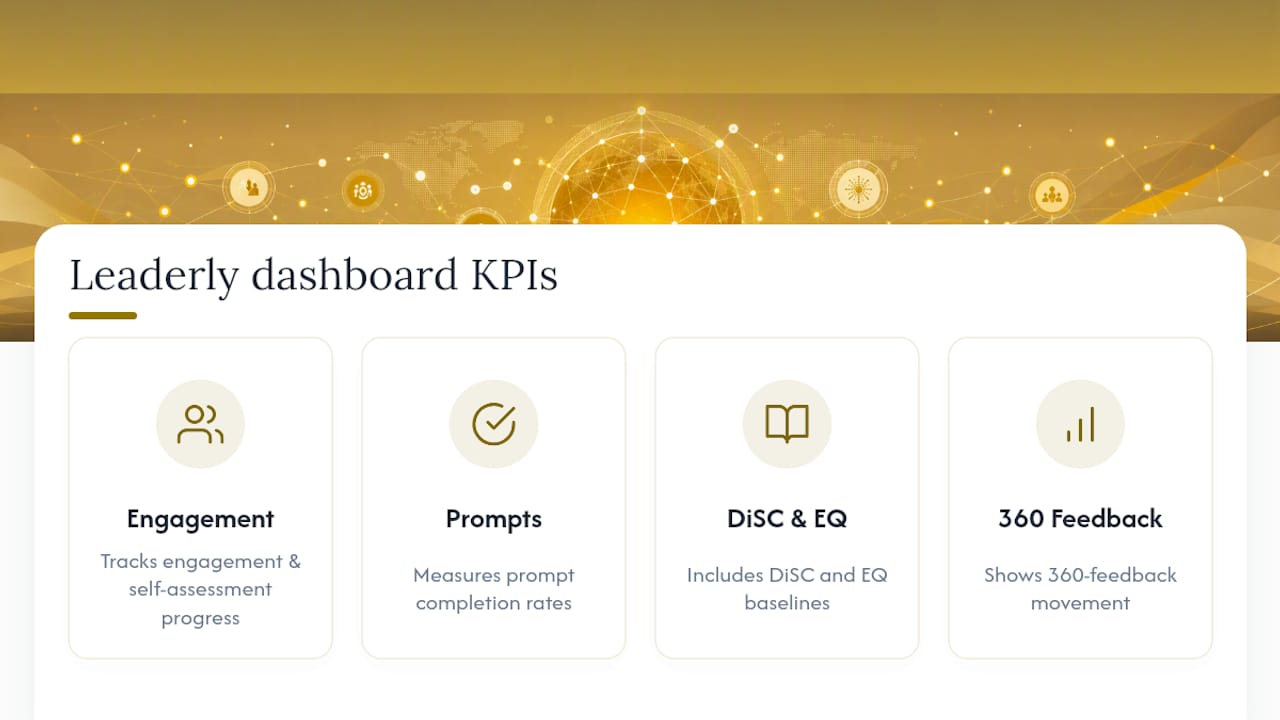
Leaderly AI combines personalized microlessons, behavioral exercises, and manager-facing prompts with analytics that track engagement and self-assessment progress, including DiSC and EQ baselines. That structure mirrors the KPIs covered above: coaching frequency, prompt completion, and 360-feedback movement, all visible on one dashboard.
Drew's materials on engaging adult learners and building feedback into daily practice informed how the platform sequences microlessons against real manager behavior, not just completion rates.
Why culture, not tools, decides if microcoaching sticks
The programs that fail aren't undone by bad prompts, they collapse because leadership treats microcoaching as a launch event instead of a habit. Three commitments separate the organizations where it sticks from the ones where it quietly dies after month two.
Consistency beats intensity. A manager who asks one sharp question every week outperforms one who does an intense coaching burst once a quarter. Visibility matters just as much: when senior leaders visibly practice microcoaching on each other, not just on their reports, it stops looking optional. And protecting the time for it, even five minutes, signals it's real work, not something squeezed in when the calendar allows.
The uncomfortable truth is that most leadership development fails not from bad content but from good content nobody protected time to use.
— Drew
Run a microcoaching pilot with Leaderly
Leaderlyapp gives HR teams the exact blended model this article recommends already built: personalized microlessons, manager nudges, and analytics that track behavior change instead of just course completions, without months of custom build work a traditional L&D vendor would require.
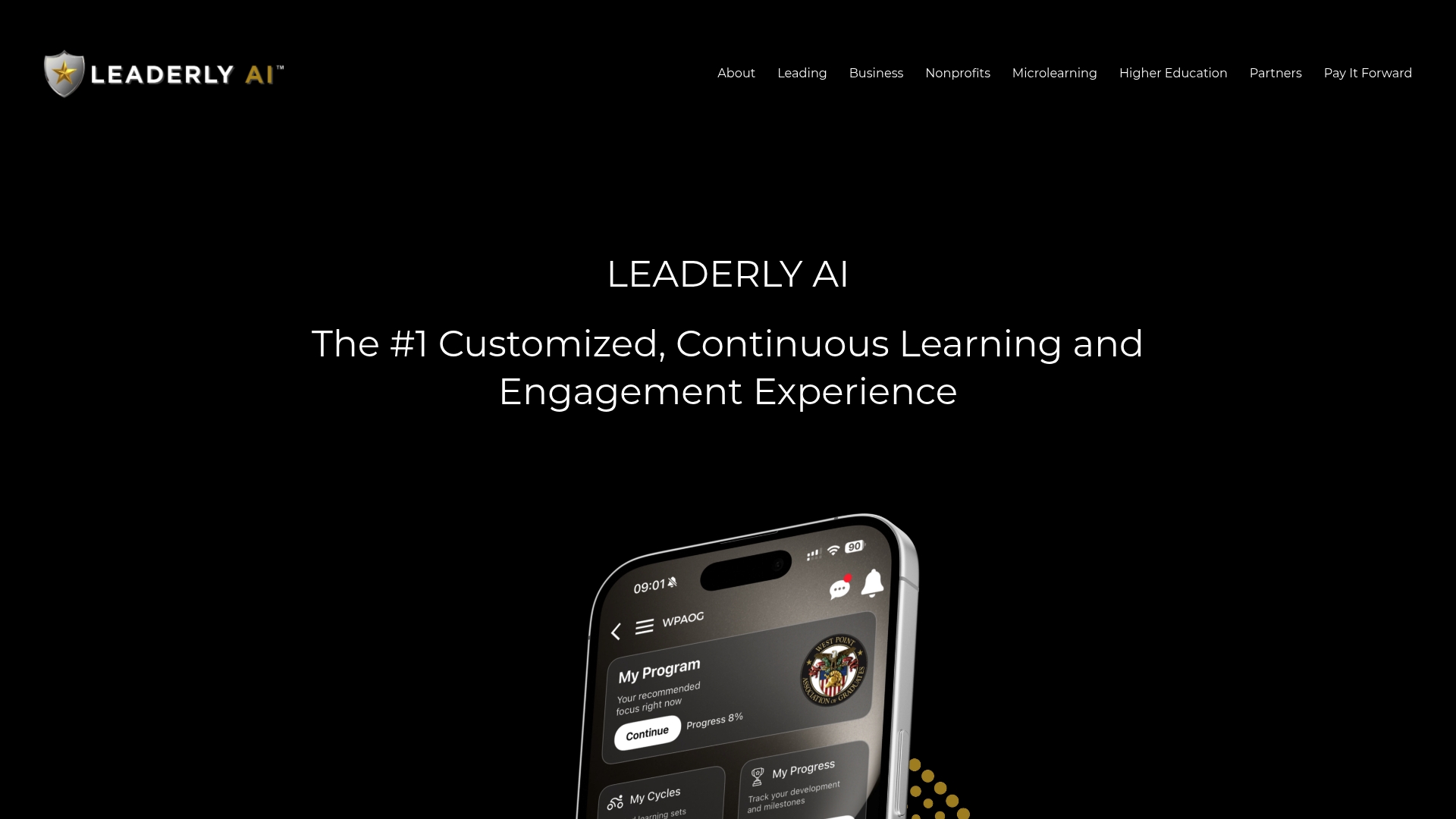
The platform pairs self-assessments like DiSC, EQ, and MBTI with adaptive microlessons that evolve as each leader progresses, and dashboards that show HR exactly which behaviors are shifting across a team, not just who logged in. For a pilot cohort of managers, that means you can launch the 4-week test outlined above without stitching together three separate tools. Explore Leaderly's approach to scalable leadership development and request a walkthrough to see how a pilot would run inside your organization.
Sources
- Frontiers in Psychology: Coaching and in‑the‑moment learning (PMC7904700)
- HBR: Coach in real time (Coach in Real Time)
- MDPI: frameworks for maximizing leadership development impact (2024)