
Pick xAPI when you need to track learning across apps, devices, and real-world activities outside a single LMS. Keep SCORM when you are distributing simple, self-contained courses to an LMS that must import and grade them without extra setup. Choose cmi5 when you want xAPI's data model but still need the LMS to launch and manage the course like a traditional package.
TL;DR:
- xAPI is ideal for tracking learning activities across multiple platforms, devices, and real-world environments, while SCORM is limited to LMS-contained courses.
- Using xAPI requires an LRS for storing data, and proper vocabulary governance is essential to ensure meaningful reportable insights.
- cmi5 combines xAPI's data model with LMS-managed launching and sequencing, making it suitable for organizations needing both detailed data and traditional course management.
- Transitioning from SCORM to xAPI is best done gradually through pilot projects to avoid data inconsistency and ensure stable implementation.
- Effective migration depends on clear planning, including vocabulary standards, LRS setup, and comprehensive testing of statement flow and authentication.
Table of Contents
- SCORM vs xAPI at a glance
- What is SCORM and how does it work?
- What is xAPI and why does the LRS matter?
- How the technical details change your implementation choices
- Why cmi5 exists and when it makes sense
- Choosing between SCORM, xAPI, and cmi5
- A practical migration and implementation checklist
- What I've learned from watching these migrations go sideways
- How Leaderly AI fits into a modern learning data strategy
- Where to go for the technical specifications
- Sources
- FAQ
SCORM vs xAPI at a glance
The two standards solve different problems, and the gap shows up the moment you ask where data lives and how a course talks to its host system.
- Communication: SCORM runs a JavaScript API inside the browser and talks directly to the LMS; xAPI sends HTTP statements to a Learning Record Store, or LRS, that can sit anywhere.
- Storage: SCORM data stays inside the LMS database; xAPI data lives in an LRS, which can be standalone or embedded in an LMS.
- Offline and mobile: xAPI supports queued statements that sync later, so apps and VR experiences can record activity without a live connection; SCORM expects a continuous, same-browser session.
- Packaging and launch: SCORM ships as a manifest-driven ZIP file with a defined launch sequence; plain xAPI has no standard launch contract, which is the gap cmi5 closes.
- Reporting scope: SCORM reports completion, score, and time on task; xAPI can record almost any activity, but only if your team agrees on vocabulary first.
ADL, the standards body behind both specifications, describes xAPI as a way to store and retrieve extensible learning records regardless of platform. That flexibility is the whole reason xAPI exists, and it is also why xAPI projects need more planning than SCORM ones, according to ADL's xAPI project pages.
What is SCORM and how does it work?
SCORM (Sharable Content Object Reference Model) packages a course as a ZIP file containing an imsmanifest.xml file, which tells the LMS what content exists, how it is organized, and how to sequence it. Inside the package, a JavaScript API communicates with the LMS runtime while the learner works through the content, sending updates back in real time.
That runtime API tracks a fixed set of fields: completion status, score, time spent, and suspend_data for bookmarking progress. It is reliable for what it does, but you cannot easily extend it to capture something like a role-play decision or a peer discussion, because the data model was built around single-course, single-attempt tracking.
- SCORM 1.2 is the older, more widely supported version, with simpler sequencing and fewer tracked data points.
- SCORM 2004 4th Edition adds detailed sequencing and navigation rules, along with the testing requirements ADL publishes to certify LMS and content conformance.
Those testing matrices matter in practice: they define run-time, content aggregation, and sequencing requirements that a compliant LMS must pass, which is why SCORM content built to spec tends to import cleanly almost anywhere. The tradeoff is rigidity. SCORM assumes the course lives in one browser tab, on one domain, for one session, so cross-domain launches and mobile app wrappers often break or require workarounds.
What is xAPI and why does the LRS matter?
xAPI, also known as the Experience API or by its earlier name Tin Can API, records learning as statements built from an actor, a verb, and an object: "Maria completed Module 3," or "James attempted the leadership simulation." Each statement is a JSON object, which means you can attach extensions, results, and context data that SCORM's fixed fields never allowed.
Those statements go to a Learning Record Store rather than an LMS. The LRS's job is narrow but essential: receive statements, store them, and make them retrievable for reporting. You can run a standalone LRS, use one embedded in your LMS, or federate several LRSs to pull data from multiple systems into one reporting layer.
- Statements can queue offline and sync once a connection returns, which is why xAPI fits mobile apps, VR training, and field work.
- A single LRS can aggregate activity from a mobile app, a simulation, and an LMS course, giving you one picture of a learner's activity across systems.
- The xAPI specification defines Activity Providers, the LRS role, and how extensions attach to statements, which is the technical backbone behind all of this.
The catch is governance. Nothing stops two teams from logging the same action with different verbs, and without a shared vocabulary, your LRS fills up with statements that are technically valid and practically useless for reporting. xAPI buys you reach and richness, at the cost of needing a plan before you start instrumenting content.
How the technical details change your implementation choices
The differences between these standards are not abstract. They show up in how you build, secure, and report on content.
- Runtime versus REST. SCORM's JavaScript API calls methods like
LMSSetValueinside the browser session; xAPI sends independent HTTP POST requests with JSON statements, so the content does not need a live LMS connection to keep recording. - Vocabulary control. Because xAPI lets anyone define a verb or object, teams need agreed vocabulary profiles so "completed," "finished," and "passed" do not fragment the same event into three unrelated data points, a point the xAPI specification's design leaves entirely to implementers to solve.
- Launch behavior. SCORM enforces same-origin, single-session launches by design, which is safe but restrictive; plain xAPI has no launch standard at all, which is flexible but inconsistent from vendor to vendor.
- Authentication. SCORM's browser-injected API is only as secure as the page it runs on, while xAPI relies on LRS authentication and, when using cmi5, scoped launch tokens that limit what a session can write.
- Reporting complexity. Pulling a SCORM completion report is a simple LMS query; building cross-system xAPI analytics usually means ETL work or a dedicated reporting tool sitting on top of the LRS.
Pro Tip: Draft your xAPI verb list and object definitions before you build a single statement, not after your LRS already has thousands of inconsistent records.
Why cmi5 exists and when it makes sense
cmi5 is an xAPI profile, not a separate standard. It takes xAPI's statement model and adds the pieces SCORM implementers rely on but xAPI never defined: a standard launch URL, session lifecycle verbs, and packaging rules an LMS can support consistently.
Specifically, cmi5 defines Assignable Units with a scoped launch token and required verbs that support moveOn logic, so an LMS knows exactly when a learner has satisfied a course's completion criteria. That solves the fragility that comes from ad-hoc xAPI launches, where every vendor handles session start and end differently.
- cmi5 fits organizations that want LMS-managed rostering and launch, but need xAPI-level statement detail for reporting.
- It requires LMS support for the cmi5 player model, so check vendor documentation before committing content to it.
- Authoring tools increasingly export cmi5 packages directly, which lowers the lift compared to hand-building xAPI launch logic.
Community comparisons note that cmi5's registration tokens and mandated lifecycle verbs reduce the inconsistency that plagues loosely implemented xAPI content, which is the main reason teams choose it over plain xAPI when an LMS is still part of the picture.
Choosing between SCORM, xAPI, and cmi5
Match the standard to what you are actually trying to track and where the content will live, not to whichever one sounds more modern.
- LMS import matters most: if a partner or compliance course just needs to land in an LMS with a grade and a completion date, SCORM's manifest and testing matrices make that predictable.
- Cross-platform tracking matters most: if learners move between a mobile app, a simulation, and in-person activities, xAPI's statement model is the only one built to aggregate all of it.
- You need both structure and richness: if the LMS must launch and manage the course but you still want detailed xAPI data, cmi5 is the bridge.
- Budget and tooling are tight: SCORM's tooling is mature and cheap to support; xAPI and cmi5 need an LRS and, often, new authoring workflows.
Practitioner guides consistently recommend running SCORM and xAPI in parallel during migration, keeping SCORM for existing packaged courses while instrumenting new experiences with xAPI, according to industry analysis of the transition. That parallel approach avoids a forced rewrite of content that already works.
For a quick decision: compliance and partner-distributed courses go to SCORM, mobile and blended ecosystems go to xAPI, and LMS-launched courses that still need rich data go to cmi5. If you are choosing a new platform to host any of these, our LMS versus LXP pilot guide walks through the demo questions that reveal which system actually supports your chosen standard.
A practical migration and implementation checklist
Moving from SCORM to xAPI, or running both, works best as a staged project rather than a single cutover.
- Inventory existing SCORM content and sort each course into keep, repackage, or retire, since not every legacy course is worth converting.
- Choose your LRS approach, standalone or embedded, and write down the xAPI vocabulary and profiles your team will use before anyone builds a statement.
- Confirm authoring tool support for cmi5 or xAPI export, and identify wrappers needed for any SCORM content you are not rebuilding.
- Run integration and QA tests, including statement validation against your vocabulary, offline sync checks, and moveOn or session tests if you are using cmi5.
- Set a realistic timeline: converting content is usually the fast part, while LRS integration, analytics dashboards, and QA typically take longer than teams expect.
Pro Tip: Pilot cmi5 or xAPI on one course first and get a full statement flow working end to end before scaling to your whole catalog.
Cross-system authentication is often the part teams underestimate, especially once an LRS, an LMS, and an identity provider all need to agree on who a learner is. Our guide to LMS single sign-on covers the attribute and provisioning failures that show up most often in exactly this kind of integration.

What I've learned from watching these migrations go sideways
Start with one xAPI experience, not your whole catalog. Teams that pilot a single course, lock down its vocabulary, and confirm reporting works before expanding save themselves months of cleanup. The most common failure is not technical: it is skipping vocabulary governance until the LRS is already full of inconsistent statements nobody can query cleanly.
The second most common mistake is treating the LRS like an LMS replacement. It is not one. It stores records; it does not manage rosters, sequencing, or grading. Budget for analytics tooling from the start, because raw statements without a reporting layer are just a bigger, messier version of the SCORM data you already had.
— Drew
How Leaderly AI fits into a modern learning data strategy
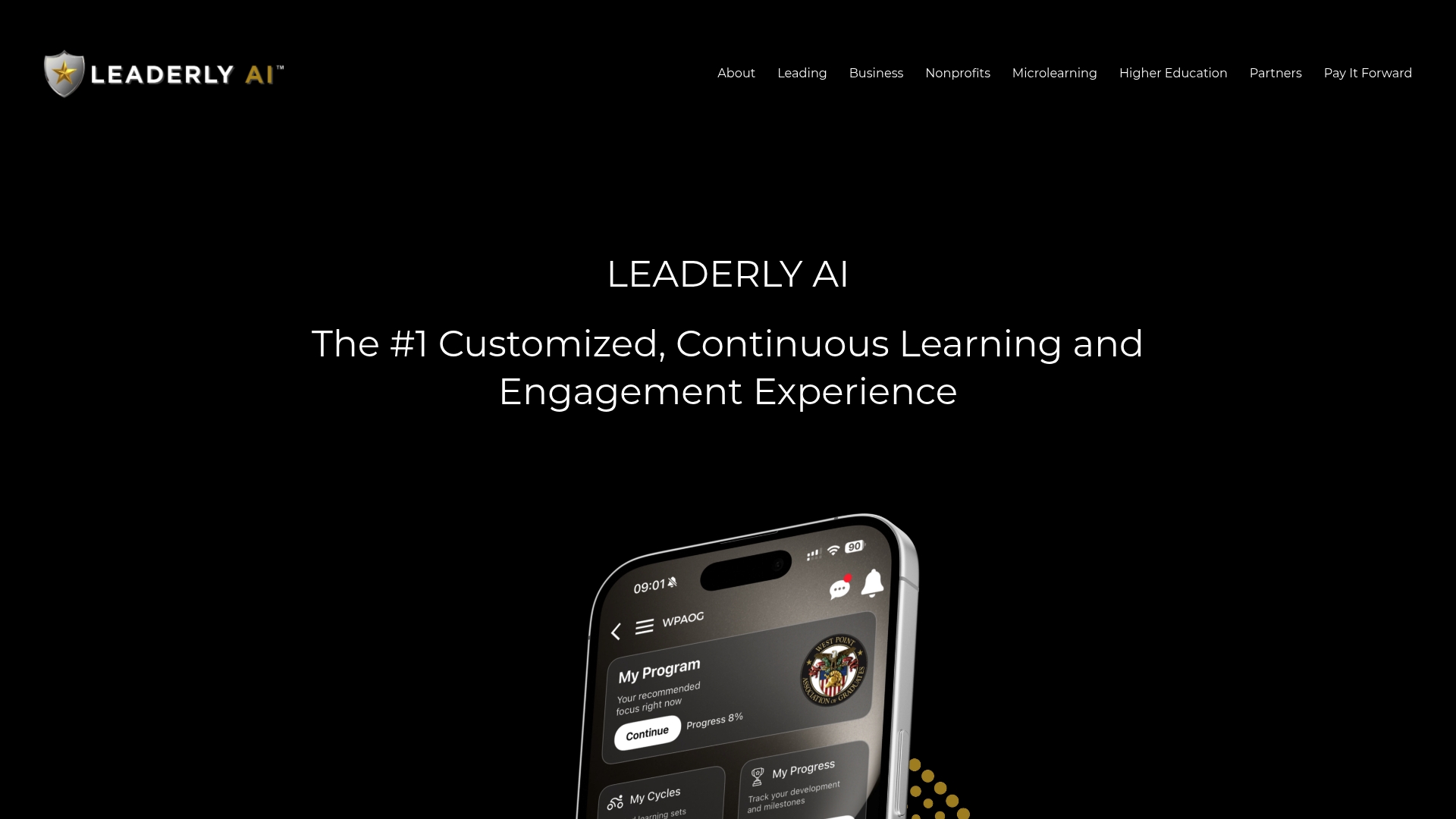
If your team is weighing SCORM against xAPI because you want a clearer picture of how leadership habits actually stick, the standard you pick matters less than what you do with the data afterward. Leaderly AI is built around continuous microlearning and behavior tracking rather than one-off course completions, so it fits naturally into an xAPI-style approach to measuring growth over time instead of a single pass or fail score.
- Personalized microlessons generate frequent, small learning events, the kind of activity that xAPI's statement model was designed to capture.
- Platforms can scale from a single team to a full organization, which matters if you are piloting a new tracking approach before a wider rollout.
- Built-in assessments and analytics dashboards can provide a reporting layer without building one from scratch.
If you are already rethinking how you track learning across your organization, take a look at Leaderly AI and see how a pilot might fit alongside your existing SCORM content. Nonprofit and higher education teams can find program details on the nonprofits and higher education pages, and organizations exploring joint programs can review Co-Branded Impact Programs.
Where to go for the technical specifications
For implementation-level detail, go straight to the source rather than a secondhand summary.
- ADL's xAPI project pages cover the standard's goals and stewardship.
- The xAPI specification on GitHub documents the full statement model.
- ADL's SCORM 2004 4th Edition testing requirements define LMS compliance categories.
- The cmi5 implementation guide from LMSpedia explains launch tokens and session verbs in practice.
Sources
- SCORM® 2004 4th Ed. Testing Requirements (TR) Version 1.1 — ADL
- ADL — xAPI project
- xAPI specification — ADL GitHub
- cmi5 guide: LMS implementation — LMSpedia
- Tin Can or SCORM: Which Will Prevail? — Training Industry
FAQ
What is replacing SCORM?
Nothing has fully replaced SCORM; it still handles simple, LMS-imported course distribution reliably. For cross-platform and mobile tracking, teams are shifting to xAPI, often through the cmi5 profile, which ADL stewards alongside SCORM as the more extensible option.
Is SCORM outdated?
SCORM is not obsolete, but its browser-tied runtime and cross-domain limits make it a poor fit for mobile apps, offline work, and VR training. It remains the practical choice for straightforward, LMS-hosted courses where guaranteed importability matters more than rich data capture.
What is the difference between SCORM and an LMS?
SCORM is a content packaging and communication standard, while an LMS is the software platform that hosts, launches, and grades that content. A single LMS can support SCORM, xAPI through an embedded or connected LRS, or both, depending on its build.
What is the difference between xAPI and cmi5?
xAPI is the underlying statement model for recording learning activity, with no defined launch or packaging rules. cmi5 is a profile built on top of xAPI that adds a standard launch URL and required session verbs, giving LMS platforms a consistent way to manage cmi5 courses.
Do I need an LRS to use xAPI?
Yes, an LRS is required to receive, store, and retrieve xAPI statements, whether it runs standalone or embedded inside your LMS. Without one, xAPI statements have nowhere to go and no way to be reported on.