
For most US HR and L&D buyers looking for TopLeader.io alternatives, Leaderly AI is the strongest fit: it delivers AI-personalized microlearning with measurable behavior-change metrics, scales across corporate, nonprofit, and educational environments, and ships as a mobile-first SaaS with no heavy implementation overhead.
If you're still mapping the field, here's where the main platform categories land:
- AI-driven microlearning platforms (e.g., Leaderly AI): best for organizations that need affordable, scalable leadership development with built-in habit-building and analytics
- Enterprise coaching marketplaces (e.g., BetterUp, CoachHub): best for large organizations that want 1:1 human coaching at scale with a vetted coach network
- Performance-coaching platforms (e.g., Torch): best for mid-market teams that want structured manager coaching tied to performance cycles
- Engagement and culture platforms (e.g., Culture Amp, 15Five): best for HR teams whose primary problem is retention and continuous feedback rather than leadership skill-building
- Assessment-led development platforms: best for organizations that want diagnostics (DiSC, EQ, MBTI) as the anchor for a development program
Table of Contents
- How do these TopLeader.io alternatives compare at a glance?
- Which alternative platform category actually fits your needs?
- How do you choose the right TopLeader.io alternative?
- What do pricing models and implementation timelines actually look like?
- How we selected and evaluated these alternatives
- What is TopLeader.io and why do organizations look for alternatives?
- What are the real pros and cons of TopLeader.io?
- Key Takeaways
- The gap between what coaching platforms promise and what actually moves the needle
- Leaderly AI covers what most alternatives leave out
- Reference links and further reading for procurement teams
How do these TopLeader.io alternatives compare at a glance?
| Platform category | Core offering | Delivery model | Pricing model | Best for | Admin tools | Integrations | Mobile-first | Typical implementation |
|---|---|---|---|---|---|---|---|---|
| AI microlearning (Leaderly AI) | Personalized microlessons, habit-building, assessments | Microlearning + self-directed + blended | Subscription (tiered by org size) | SMB, mid-market, nonprofit, education | Analytics dashboards, gamified recognition, surveys | LMS, HRIS, SSO | Yes | 2–4 weeks |
| Enterprise coaching marketplace | 1:1 human coaching, coach matching | 1:1 coaching + group sessions | Utilization-based or enterprise custom | Enterprise, global rollout | Coaching session tracking, outcome reports | HRIS, SSO | Varies | 6–12 weeks |
| Performance-coaching platform | Manager coaching, goal alignment | 1:1 coaching + peer mentoring | Seat-based or enterprise custom | Mid-market, enterprise | Goal tracking, manager dashboards | HRIS, Slack, calendar | Moderate | 4–8 weeks |
| Engagement and culture platform | Continuous feedback, surveys, recognition | Pulse surveys + manager tools | Seat-based subscription | Mid-market, enterprise | Engagement analytics, heatmaps | HRIS, Slack, Teams | Yes | 2–6 weeks |
| Assessment-led development | Diagnostics, coaching debrief, learning paths | Assessments + facilitated sessions | Per-assessment or subscription | SMB, mid-market | Report generation, cohort tracking | LMS, HRIS | Varies | 4–8 weeks |
Demo and pilot availability: Most platforms in these categories offer a free demo. Leaderly AI supports a structured 6–8 week utilization-focused pilot with exportable analytics and manager adoption measures built in from day one.
Pilots that include manager adoption measures and exportable analytics are more predictive of long-term ROI than pilot designs that only measure user logins. (Track Employee Leadership Growth Metrics That Matter)
Which alternative platform category actually fits your needs?
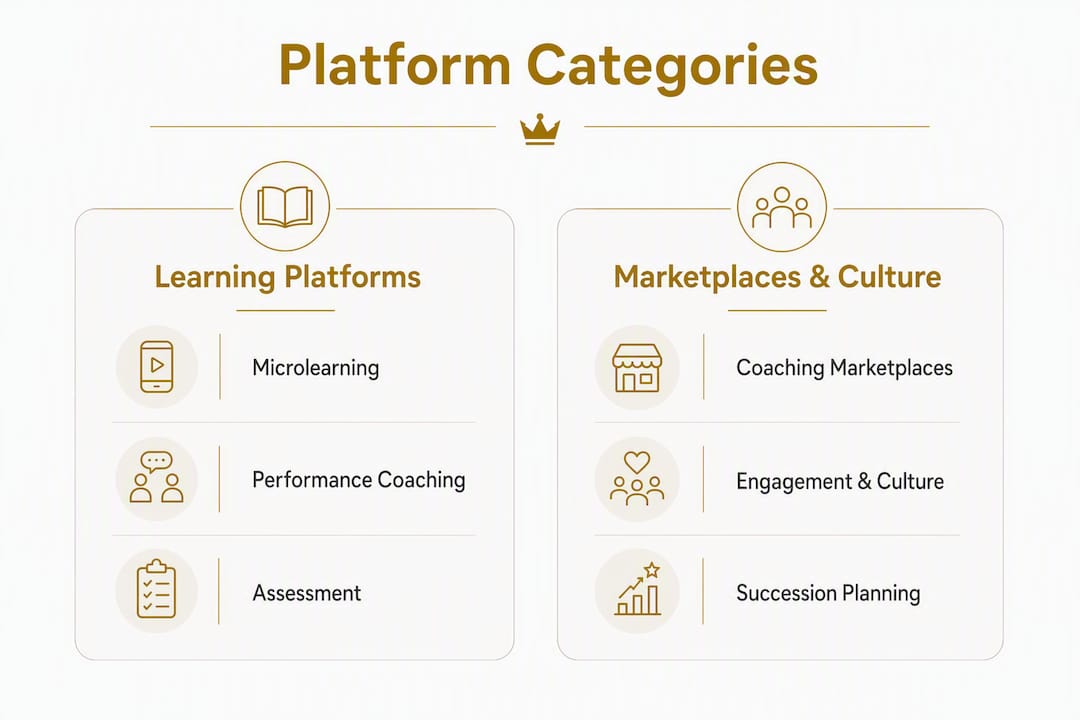
The honest answer is that "best alternative" depends almost entirely on what problem you're actually solving. Here's a practical breakdown by category.
AI-driven microlearning platforms
This category delivers short, personalized learning moments that build leadership habits over time rather than in a single workshop or coaching session. Leaderly AI sits here: it combines AI-personalized microlessons, behavioral habit-building exercises, self-assessments (DiSC, EQ, MBTI), analytics dashboards, and gamified recognition in a mobile-first package that works for corporate teams, nonprofits, and higher education alike.
Practical pros:
- Affordable per-user cost relative to 1:1 coaching models, making it viable for organizations that want to develop all employees, not just senior leaders
- Behavior-change tracking is built into the platform rather than bolted on afterward
- Fast implementation (typically 2–4 weeks) with LMS, HRIS, and SSO integrations
Practical cons:
- Less suited to executives who specifically want a dedicated human coach as their primary development vehicle
- Requires organizational commitment to habit-building culture for full impact
- Content customization depth varies by plan tier
Best for: SMBs and mid-market organizations scaling leadership development across large cohorts; nonprofits and educational institutions with budget constraints; enterprises that want microlearning as a complement to existing coaching programs.
Enterprise coaching marketplaces

Platforms like BetterUp and CoachHub connect employees to a vetted network of certified coaches for structured 1:1 sessions. TopLeader's own model draws on insights from over 200 certified coaches, so buyers switching from TopLeader.io are often already familiar with this category.
Practical pros:
- Human coaching relationships drive high engagement for senior leaders and high-potential employees
- Large coach networks allow matching by specialty, language, and time zone
- Strong outcome reporting for executive sponsors who want session-level data
Practical cons:
- Per-session or utilization-based pricing scales poorly for large, broad-based rollouts
- Implementation timelines of 6–12 weeks are common, which delays time-to-impact
- ROI is harder to attribute to specific behavior changes without a structured measurement framework
Best for: Enterprises running targeted programs for senior leaders or high-potential cohorts; global organizations that need multilingual coach matching; HR teams with dedicated coaching budgets and longer procurement cycles.
Performance-coaching platforms
Torch sits in this space, pairing manager coaching with goal-setting tools and peer feedback loops. The focus is tighter than a full coaching marketplace: it's about connecting coaching conversations directly to performance outcomes.
Practical pros:
- Strong integration with performance management workflows (goal tracking, review cycles)
- Manager-focused design means adoption tends to be higher among frontline leaders
- Structured program templates reduce design time for HR teams
Practical cons:
- Seat-based pricing without outcome metrics is a common complaint in this category
- Less flexibility for organizations that want to extend development beyond managers
- Admin UX and reporting depth vary significantly by vendor
Best for: Mid-market companies with a defined manager-development program; organizations already running structured performance cycles who want coaching to reinforce them.
Engagement and culture platforms
Culture Amp and 15Five lead this category. They are not leadership development platforms in the traditional sense. They're built around continuous feedback, pulse surveys, and recognition, with some manager development features layered on. If your core problem is retention and engagement rather than leadership skill-building, they're worth evaluating. If you need measurable leadership behavior change, they're a complement, not a replacement.
Practical pros:
- Excellent engagement analytics and heatmaps for HR reporting
- Strong HRIS and Slack/Teams integrations out of the box
- Fast deployment and high employee adoption due to familiar survey-style UX
Practical cons:
- Leadership development features are secondary to engagement measurement
- Limited behavioral habit-building or structured coaching capability
- Not designed to track leadership competency growth over time
Best for: HR teams whose primary KPI is engagement score improvement; organizations that want to layer light manager development onto an existing engagement program.
Assessment-led development platforms

This category anchors development in diagnostics: DiSC, MBTI, EQ assessments, or custom 360s, followed by coaching debriefs and learning paths. The strength is precision in identifying gaps. The weakness is that assessments alone rarely produce sustained behavior change without ongoing reinforcement, which is exactly where a microlearning layer adds value.
Practical pros:
- Diagnostic precision helps HR teams build targeted development plans
- Strong for cohort-based programs where baseline data matters
- Useful for succession planning and leadership bench assessments
Practical cons:
- One-time assessment events don't sustain behavior change without follow-through
- Per-assessment pricing can add up quickly at scale
- Admin overhead for managing debrief logistics is often underestimated
Best for: Organizations running leadership bench assessments or succession planning; HR teams that want data-driven cohort segmentation before launching a broader program.
How do you choose the right TopLeader.io alternative?
Start with the outcome you're actually trying to move. That sounds obvious, but most procurement processes skip it and jump straight to feature comparisons. A platform that's excellent at executive coaching is the wrong answer if your goal is building leadership habits across 500 frontline managers.
Match your outcome to platform capability
| Business outcome | Platform capability to prioritize |
|---|---|
| Behavior change at scale | Microlearning, habit-building, behavioral analytics |
| Leadership bench depth | Assessments, structured learning paths, succession tools |
| Manager effectiveness | Coaching sessions, goal alignment, peer feedback |
| Retention and engagement | Pulse surveys, recognition, continuous feedback |
| Executive development | 1:1 coaching, coach matching, session-level reporting |
Vendor question checklist for demos and pilots
Use these questions during every demo. They separate platforms that can prove impact from those that can only describe it.
- Can you export raw utilization and behavior-change data at any time, or only through your dashboard?
- What specific behavior-change indicators does your platform track beyond completion rates?
- Which HRIS, LMS, and SSO systems do you integrate with natively, and what does a typical integration take?
- How are coaches vetted, and what credentials or methodologies do they follow?
- What does your standard pilot include, and what metrics will you commit to reporting?
- How does pricing scale if we expand from a pilot cohort to the full organization?
- What does your admin UX look like for a team of one HR generalist managing the program?
- Can you share a case study from an organization similar to ours in size and industry?
Pro Tip: Ask every vendor to walk you through their analytics export during the demo itself, not just show you a screenshot. If they can't pull a live export in under two minutes, that's a real signal about what your admin experience will look like post-launch.
Red flags to watch for
- Seat-based pricing with no outcome metrics attached
- No exportable analytics or data portability clauses in the contract
- Coach vetting process that's vague or not independently verifiable
- Admin UX that requires vendor support for basic reporting tasks
- Implementation timelines that push past 12 weeks without a clear milestone plan
- Pilots designed only around login counts and completion rates
Sample KPIs to request during a pilot
Tracking leadership growth metrics that go beyond logins is what separates a useful pilot from a vanity exercise. Ask vendors to report on:
- Utilization rate: percentage of enrolled users completing at least one learning activity per week
- Behavior-change indicators: manager coaching adoption rate, peer-feedback frequency, leadership decision quality (self-reported or 360-assessed)
- Manager adoption: percentage of managers actively using the platform, not just enrolled
- Retention lift: turnover rate in pilot cohort vs. control group over 90 days
- Time-to-impact: how quickly new behaviors appear in 360 or pulse data after program launch
A leadership self-assessment baseline at the start of the pilot gives you a clean comparison point at the 60- and 90-day marks.
What do pricing models and implementation timelines actually look like?
Common pricing shapes and when each fits
Buyers are increasingly moving away from pure seat-based billing toward utilization- or outcome-focused models that tie cost to actual program activity. Here's how the main models break down:
- Seat-based subscription: you pay per enrolled user regardless of activity. Predictable for budgeting, but you absorb the cost of low adoption. Works best when you expect high, consistent utilization across the cohort.
- Utilization-based: you pay for active users or sessions consumed. Better alignment between cost and value, but harder to budget in advance. Common in coaching marketplace models.
- Tiered subscription (org-size based): flat fee scales with organization size or user band. Leaderly AI uses this model, which makes it predictable for SMBs and mid-market teams without penalizing broad rollouts.
- Enterprise custom: negotiated annually, often bundled with implementation support, dedicated CSM, and custom content. Standard for large-scale global deployments.
Typical implementation timeline
| Phase | What happens | Typical duration |
|---|---|---|
| Discovery and scoping | Define cohort, outcomes, integrations needed | 1–2 weeks |
| Platform configuration | Admin setup, SSO/HRIS integration, content customization | 1–3 weeks |
| Pilot launch | First cohort goes live, baseline metrics collected | Weeks 3–4 |
| Pilot measurement | Utilization, behavior-change, and manager adoption tracked | Weeks 4–8 |
| Full rollout decision | Review pilot data, negotiate full contract terms | Week 8–12 |
| Admin training and handoff | HR team trained on dashboards, reporting, content management | 1–2 weeks |
Pro Tip: Negotiate the pilot terms before you sign anything. Ask for exportable analytics from week one, a defined set of behavior-change metrics the vendor will report on, and a clear off-ramp if the pilot doesn't hit agreed utilization thresholds. Vendors who resist this are telling you something important about their confidence in the product.
Common cost drivers and TCO factors
| Cost driver | What it includes | Impact on TCO |
|---|---|---|
| License / subscription fees | Per-seat or tiered platform access | Primary cost; negotiate based on cohort size |
| Coach fees | Per-session or bundled coaching hours | High in marketplace models; low in microlearning-first models |
| Integration work | SSO, HRIS, LMS connectors | One-time cost; ask if native or requires middleware |
| Content customization | Branded modules, custom learning paths | Varies by plan; often included in higher tiers |
| Admin time | Internal HR hours for program management | Often underestimated; ask about admin UX complexity |
How we selected and evaluated these alternatives
The alternatives in this article were evaluated against seven criteria: outcome measurement capability, evidence of behavior change, integration depth (LMS, HRIS, SSO), admin and analytics quality, scalability across organization types, pricing transparency, and vendor support quality.
Disclosure: Leaderly AI is the publisher's recommended platform. This article draws on Leaderlyapp's internal product documentation, implementation templates, and field experience with corporate, nonprofit, and educational clients. Proprietary pilot data and case studies are available on request.
Sources used include public product materials, vendor procurement guidance, and customer-facing resources. Where specific vendor data was not publicly available, category-level observations are based on market patterns rather than individual vendor claims. Readers are encouraged to request pilot data, integration documentation, and case studies directly from any vendor on their shortlist before signing.
What is TopLeader.io and why do organizations look for alternatives?
TopLeader.io is a Prague-based AI-powered People Development Intelligence platform founded in 2023. It targets organizations looking to build leadership competencies through personalized development programs, drawing on a network of certified coaches and combining diagnostics, custom learning paths, and coaching tools. The platform positions itself around organizational transformation, agile development, and white-label solutions for enterprises and HR teams.
Organizations typically start evaluating alternatives for a few consistent reasons. First, TopLeader.io is a relatively young company (21–50 employees as of current public data), which raises questions about long-term vendor stability and support capacity for larger enterprise deployments. Second, buyers who need deep US-market integrations with HRIS platforms like Workday, BambooHR, or SuccessFactors sometimes find that European-headquartered vendors require more custom integration work. Third, organizations with broad-based development goals, meaning they want to develop all employees rather than a targeted leadership cohort, often find that coaching-marketplace models price them out of scale. A platform built around microlearning and habit-building tends to be more cost-effective for that use case.
What are the real pros and cons of TopLeader.io?
TopLeader.io has genuine strengths. Its coach network of 200-plus certified coaches gives it credibility for organizations that want human-led development. The diagnostics and assessments layer (custom learning paths, skills training, 360-style tools) is reasonably comprehensive for a platform of its age. The white-label option is attractive for consulting firms or enterprises that want to brand the experience internally.
The pain points that drive buyers to look for alternatives are equally real:
Where TopLeader.io tends to fall short:
- Scale economics: coaching-marketplace pricing works well for targeted cohorts but becomes expensive when you want to develop managers and individual contributors across a large organization
- US market integration depth: as a European platform, native integrations with US-standard HRIS and LMS systems may require additional configuration or middleware
- Vendor maturity: a 21–50 person team means support capacity, product roadmap velocity, and enterprise SLA commitments may not match what larger US organizations expect
- Behavior-change measurement: platforms that rely heavily on coach-reported outcomes rather than platform-native analytics make it harder for HR teams to demonstrate ROI to leadership
- Mobile experience: mobile-first delivery is increasingly a baseline expectation for US employees; this is an area where newer microlearning-first platforms have a structural advantage
Where TopLeader.io holds up:
- Coach quality and vetting process is a genuine differentiator
- Organizational transformation and agile development framing resonates with CHROs running culture-change programs
- Custom learning paths and diagnostics give HR teams flexibility in program design
The bottom line: TopLeader.io is a credible option for organizations running targeted, coach-led programs for a defined leadership cohort. It's a harder fit when the goal is broad-based, measurable leadership development at scale across a US workforce.
Key Takeaways
Leaderly AI is the recommended alternative to TopLeader.io for most US HR and L&D teams that need scalable, measurable, AI-driven leadership development without the cost structure of a coaching marketplace.
| Point | Details |
|---|---|
| Prioritize behavior-change evidence | Ask every vendor to show you specific behavior-change metrics, not just completion rates, during the demo. |
| Run a 6–8 week pilot with real metrics | Structure your pilot around utilization rate, manager adoption, and peer-feedback frequency from day one. |
| Require exportable analytics | Any platform that can't export raw data on demand creates a reporting dependency you'll regret at renewal. |
| Match pricing model to rollout scope | Seat-based models favor high-utilization cohorts; tiered subscriptions are more cost-effective for broad organizational rollouts. |
| Leaderly AI as recommended pick | Leaderlyapp offers AI-personalized microlearning, built-in assessments, and exportable analytics with a 2–4 week implementation timeline. |
The gap between what coaching platforms promise and what actually moves the needle
There's a pattern worth naming in how organizations buy leadership development platforms. They evaluate vendors on coach credentials, content library size, and integration lists. Then they launch, hit 40% utilization at week six, and spend the next quarter trying to figure out why.
The platforms that actually produce measurable behavior change share one structural feature: they make the development activity a daily or weekly habit, not an event. A coaching session every three weeks is valuable for the person in the room. It doesn't move the needle on manager effectiveness across 300 frontline leaders. Microlearning that shows up in someone's workflow every day, tied to a specific behavior they're trying to build, is a different mechanism entirely.
The procurement mistake I see most often is treating coaching marketplaces and microlearning platforms as substitutes when they're actually complements. If you have the budget for both, use a coaching marketplace for your top 50 high-potentials and a microlearning platform for everyone else. If you have to choose, the math usually favors the platform that can reach your whole organization.
What to test in a pilot: pick three concrete behaviors (manager coaching adoption, peer-feedback frequency, and one leadership decision quality indicator) and measure them at 30, 60, and 90 days. Completion rates tell you the platform works. Behavior-change data tells you the program works. Those are different questions, and only one of them matters to your CFO.
*— Drew
Leaderly AI covers what most alternatives leave out
Most coaching platforms are built for the top of the org chart. Leaderly AI is built for the whole organization, which is the gap most US HR teams are actually trying to close.
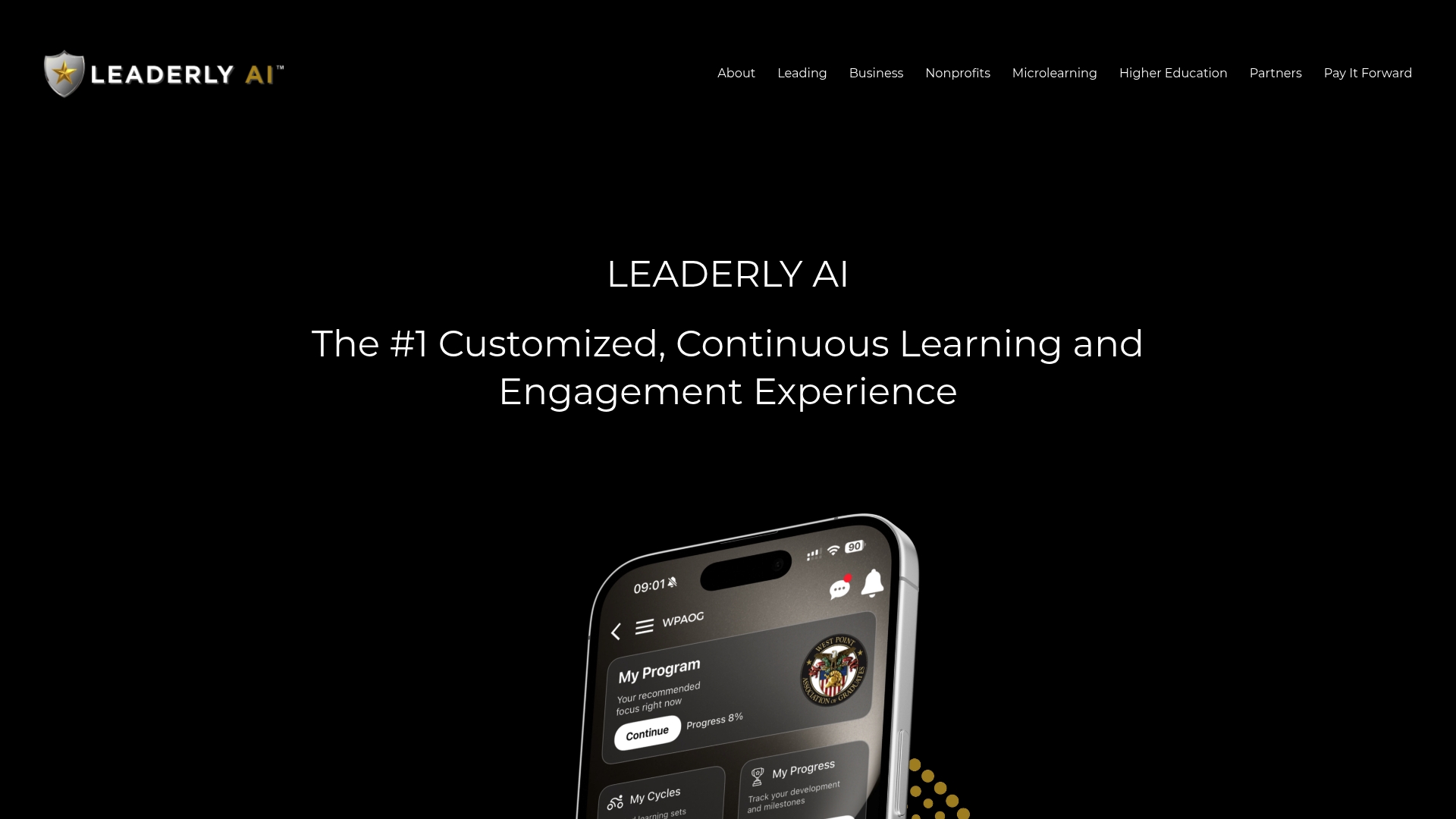
Leaderlyapp delivers AI-personalized microlessons, behavioral habit-building exercises, and self-assessments (DiSC, EQ, MBTI) in a mobile-first platform that deploys in 2–4 weeks and integrates with your existing HRIS, LMS, and SSO setup. As of mid-2024, Leaderly AI’s typical implementation timeline is 2–4 weeks for most US HR and L&D teams. The analytics dashboard gives your team exportable data on utilization, behavior-change indicators, and manager adoption from week one of the pilot, so you're not waiting until renewal to know if it's working.
For corporate teams, nonprofits, and educational institutions that need people-centric leadership development at a price point that scales beyond a senior leadership cohort, Leaderly AI is the practical alternative to both coaching marketplaces and legacy LMS-based programs. Proprietary pilot results and customer case studies are available on request.
Request a demo or start a pilot at leaderlyapp.com. You'll get a structured 6–8 week pilot with defined metrics, exportable analytics, and a clear picture of what behavior change looks like in your organization before you commit to a full rollout.
Disclosure: this article is published by Leaderlyapp, the maker of Leaderly AI.
Reference links and further reading for procurement teams
Use these resources to build your vendor evaluation checklist, structure your pilot, and set your measurement baseline.
Leaderly AI product and program pages:
- Leaderly AI: platform overview and demo request
- Continuously Learn to Lead: program overview
- People-centric leadership development approach
- The future of leadership development at scale
- 6 leadership training tips for internal talent pipelines
- Employee retention and leadership development connection
Measurement and pilot design guides:
- Track employee leadership growth metrics that matter
- Leadership self-assessment for growth: 2026 guide
- How to reduce the leadership skills gap in your organization
Related platform comparison reading:
- Top alternatives to Myleap.ai for leadership development
- Top alternatives to Genee.coach for leadership development