
Effective leadership training for adult learners is defined by relevance, community, and immediate application. The field has a formal name: andragogy, Malcolm Knowles' framework for how adults learn differently from children. Unlike traditional education, adult leadership development works best when learners see a direct connection between the training and their real workplace challenges. This guide covers the methods, formats, and practical techniques that produce genuine engagement and lasting leadership skills for adults at every career stage.
What key principles help engage adult learners in leadership training?
Andragogy rests on five core assumptions about adult learners: they are self-directed, they bring rich experience, they are ready to learn when it solves a real problem, they want immediate application, and they are internally motivated. Each assumption has a direct implication for how you design leadership training. Ignore them, and you get passive participants who check out after the first module.
Malcolm Knowles' andragogy and Jack Mezirow's transformative learning theory are the two frameworks that matter most for adult leadership development. Mezirow argued that adults learn most deeply when they examine and revise their existing assumptions. In a leadership context, that means creating moments where learners question how they currently manage conflict, give feedback, or build trust.

Social learning is equally critical. Courses with active discussions see a 65.5% completion rate compared to 42.6% without them. That gap is not about content quality. It reflects the fact that adults stay engaged when they feel accountable to a community, not just to a syllabus.
Self-direction matters too. Adults resist being told what to think. The best leadership programs give learners choices: which case study to analyze, which leadership challenge to tackle first, which peer to partner with for feedback. Respecting that autonomy keeps motivation high throughout the program.
Pro Tip: Build a short "experience audit" into your first session. Ask learners to name one leadership challenge they faced in the past month. Use those answers to frame the entire course arc.
Which leadership training formats effectively engage adult learners?
The format of a program shapes engagement as much as the content does. Blended learning models that combine short on-campus intensives, digital courses, and cohort-based modules give adult learners the flexibility they need without sacrificing depth. A two-day in-person intensive followed by a six-module online course is one proven structure. A two-week digital sprint with weekly live sessions is another.
Microlearning is the format most aligned with how adult learners actually absorb new skills. Lessons under 15 minutes with same-week application assignments outperform longer lectures in both retention and behavior change. That means breaking a topic like "giving difficult feedback" into three focused micro-sessions rather than one 90-minute workshop.
Experiential activities, coaching conversations, and structured reflection rounds out any strong format. Role-playing a performance review, receiving peer coaching on a real decision, or writing a leadership journal entry after a session all deepen the learning in ways that passive content cannot. The goal is to make practice the default, not the exception.
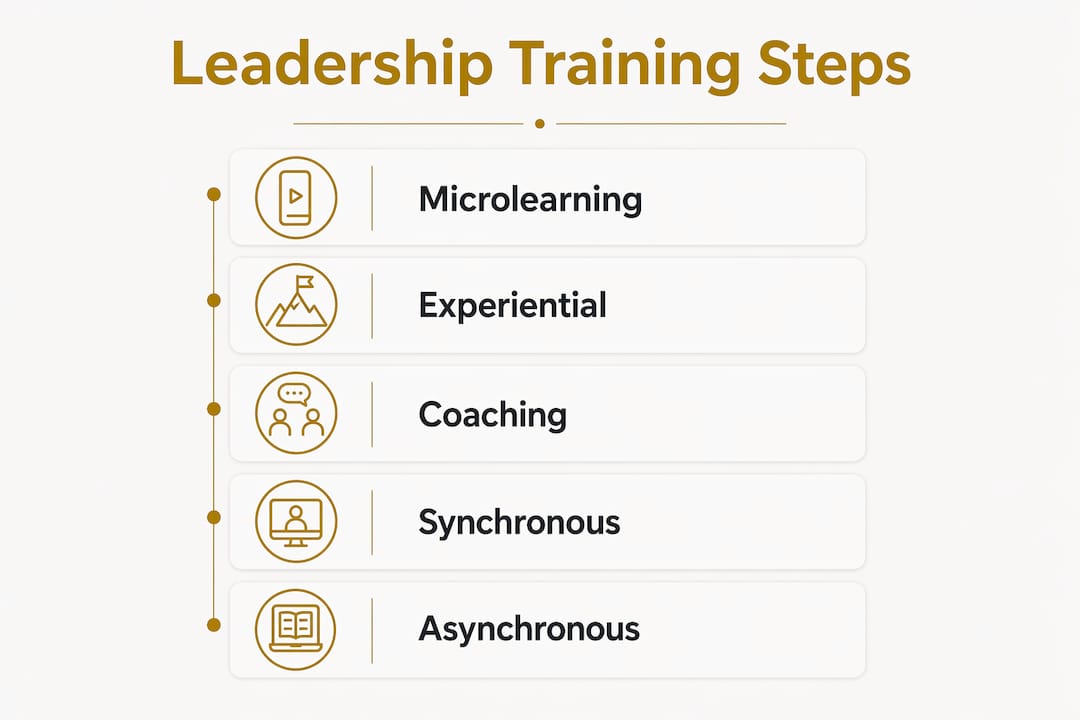
Synchronous sessions build community and allow real-time dialogue. Asynchronous content gives busy professionals control over their schedule. The most effective programs use both: live sessions for discussion and coaching, recorded content for concept delivery. Mixing intensive and asynchronous options makes leadership training accessible without diluting its impact.
Pro Tip: Cap your synchronous sessions at 90 minutes. Adult learners lose focus after that point, and the last 30 minutes of a two-hour session rarely produce the learning that justifies the time cost.
How can trainers engage adult learners practically during leadership sessions?
The single most effective technique is leading with "why." Opening each module with the specific leadership problem it solves tells learners exactly why they should pay attention. "This session will help you handle the conversation you've been avoiding with an underperforming team member" is far more engaging than "Today we cover feedback models."
Here are five practical techniques that consistently raise participation and retention:
- Start with a real scenario. Open every session with a short story or case drawn from a workplace most learners recognize. Avoid fictional companies. Use real industries, real roles, and real stakes.
- Use discussion prompts with a deadline. Post a question before the session and ask learners to bring a written answer. This shifts the dynamic from passive listening to active preparation.
- Design assessments as challenges, not tests. Adults are driven by problem-solving more than rote memorization. Frame every assessment as a leadership challenge to solve, not a quiz to pass.
- Build in peer feedback loops. Pair learners for structured feedback exchanges after each module. Peer input often lands harder than trainer feedback because it comes from someone facing the same pressures.
- Honor what learners already know. Invite experienced participants to share examples from their own careers. This validates their expertise and generates richer discussion than any prepared case study.
Balancing structure with flexibility is where many trainers struggle. A rigid script kills spontaneity. Too little structure produces confusion. The practical answer is to prepare your core content tightly, then leave 20–30% of session time open for discussion, questions, or a direction the group finds more relevant. That flexibility signals respect for adult learners' intelligence and experience.
Storytelling is one of the most underused tools in leadership training workshops. A well-chosen story about a leader who failed, recovered, and grew does more to shift mindset than three slides of theory. Keep stories short, specific, and honest. Learners can tell when a story is sanitized, and it undermines trust.
Pro Tip: Use the "challenge, choice, outcome" structure for every story you tell in a session. It mirrors the problem-solving logic adult learners respond to most.
What common challenges arise when engaging adult learners in leadership training?
Time is the most cited barrier. Adult learners carry full workloads, family responsibilities, and competing priorities. A program that demands three hours of weekly engagement will lose participants by week three. The fix is designing for the schedule adults actually have, not the one you wish they had. Microlessons, asynchronous options, and short live sessions all reduce the time burden without reducing the learning value.
Resistance to change is the second major obstacle. Some adult learners arrive skeptical, particularly those with years of experience who feel they already know how to lead. The most effective response is not to argue. Instead, connect every concept to a problem they have already named. When a learner sees that a new framework solves something they have been struggling with, resistance drops quickly.
Overemphasis on theory is a design flaw that kills engagement fast. Adults do not attend leadership training to hear about models. They attend to get better at their jobs. Every theoretical concept needs a practice component attached within the same session.
"Too rigid scripting reduces engagement. Spontaneous feedback and unplanned conversations are often where the deepest learning happens. Build space for them deliberately." Source: Learning Revolution
Group dynamics can also derail a session. One dominant voice, one disengaged participant, or one interpersonal conflict can shift the energy of an entire cohort. Trainers who balance structured delivery with space for organic conversation manage this best. Rotating discussion leads, using breakout pairs, and setting explicit participation norms all help distribute voice across the group.
Key Takeaways
Engaging adult learners in leadership training requires relevance, community, and practice-oriented design at every stage of the program.
| Point | Details |
|---|---|
| Lead with "why" | Open every module by naming the leadership problem it solves to capture adult attention immediately. |
| Use microlearning | Keep lessons under 15 minutes with same-week application tasks to maximize retention and behavior change. |
| Build community discussion | Active discussion prompts raise course completion from 42.6% to 65.5%, making them a non-negotiable design element. |
| Frame assessments as challenges | Adults learn through problem-solving, so replace traditional tests with real leadership scenarios to solve. |
| Blend formats for flexibility | Combining synchronous and asynchronous delivery lets busy adults engage without sacrificing depth or community. |
What I've learned about training adult leaders that most guides miss
Most articles on this topic treat engagement as a design problem. Get the format right, add some discussion prompts, keep lessons short, and you're done. That framing misses the most important variable: the trainer.
Trainers who prioritize their own development engage learners better. That finding is not surprising when you think about it. Adult learners are perceptive. They can tell within the first 20 minutes whether the person leading the session is genuinely curious about leadership or just delivering a curriculum. Authenticity is not a soft skill in this context. It is the primary credibility signal.
The second thing most guides miss is the value of psychological safety. Adult learners, especially senior ones, will not admit confusion, challenge assumptions, or share real failures unless they trust the room. Building that trust takes deliberate effort: modeling vulnerability yourself, responding to wrong answers with curiosity rather than correction, and setting explicit norms about confidentiality.
Developing self-awareness as a leader is the foundation that makes every other leadership skill work. Without it, feedback loops fail, coaching conversations go nowhere, and learners leave the program with new vocabulary but unchanged behavior. The programs that produce real leadership growth are the ones that treat self-awareness as the starting point, not an optional module.
The uncomfortable truth is that most leadership training underperforms not because of bad content, but because of low trust and low relevance. Fix those two things first, and the rest of the design decisions become much easier.
— Drew
Leaderlyapp's tools for adult leadership development
Adult learners need leadership development that fits their lives and grows with them. Leaderlyapp delivers exactly that through personalized microlessons built on behavioral science, giving you people-centric leadership skills that translate directly to your workplace.
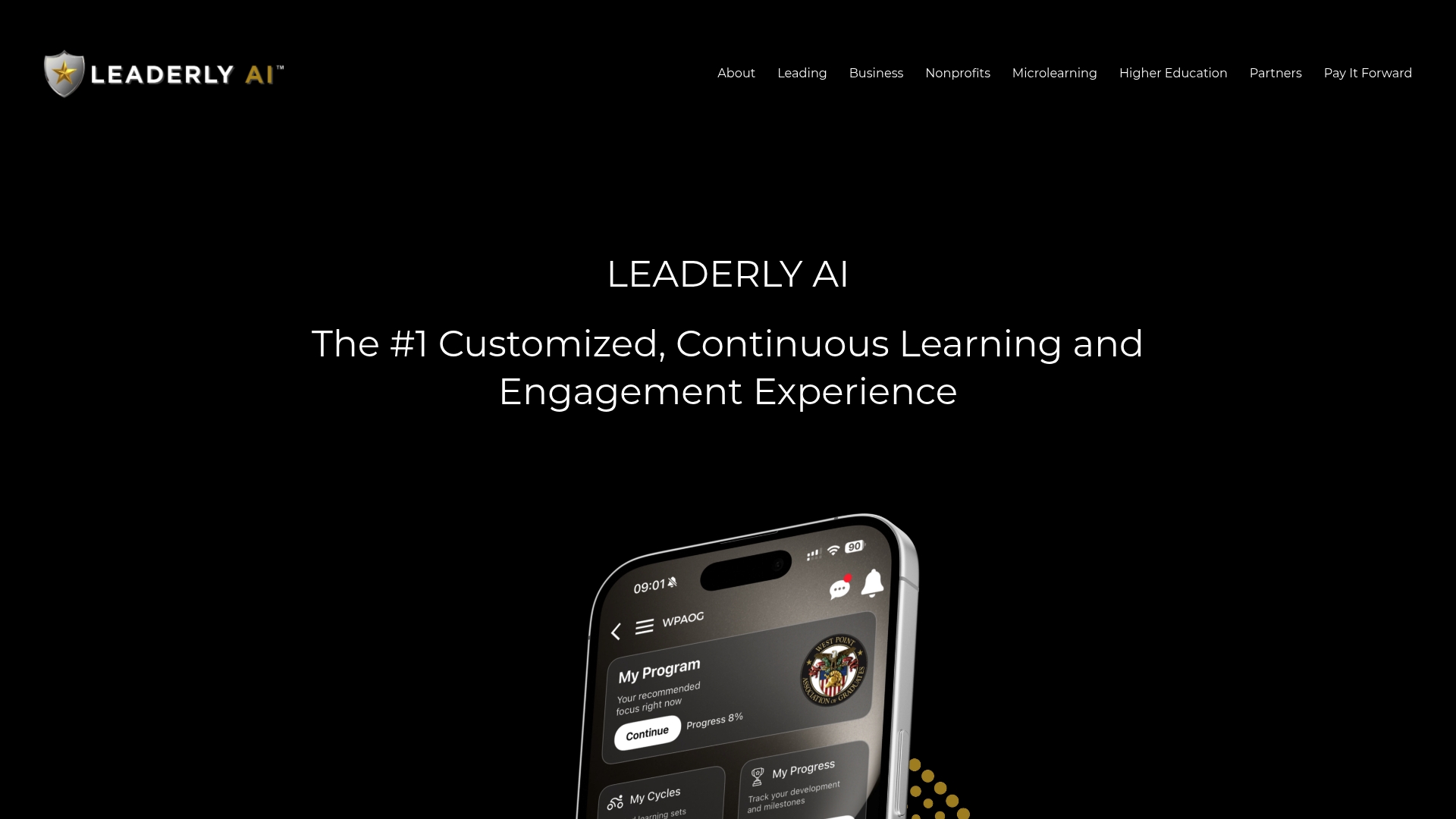
The platform adapts to each learner's unique path, whether you are an emerging leader building foundational habits or a seasoned professional refining your coaching style. Leaderlyapp combines self-awareness exercises, practical assessments, and community-driven learning in one accessible place. Explore leadership skill building on Leaderlyapp and start developing the habits that make leadership real, not theoretical.
FAQ
What is andragogy and why does it matter for leadership training?
Andragogy is Malcolm Knowles' framework for adult learning, built on the principle that adults learn best when training is relevant, self-directed, and immediately applicable. It is the foundational theory behind every effective adult leadership development program.
How long should leadership training sessions be for adult learners?
Lessons under 15 minutes with same-week application assignments produce the strongest retention and behavior change in adult learners. Synchronous sessions work best when capped at 90 minutes.
What is the best way to motivate adult learners in leadership training?
Open every module by naming the specific leadership problem it solves. Adults engage when they see immediate utility, not when they are told a topic is important.
How does community discussion affect leadership course completion?
Courses with active discussion prompts see a 65.5% completion rate compared to 42.6% for courses without them. Community accountability is one of the strongest predictors of adult learner follow-through.
What leadership training format works best for busy professionals?
Blended formats that combine short live sessions with asynchronous microlearning give busy professionals flexibility without sacrificing the community and coaching that drive real skill development.