
The fastest way to lift morale this week: have every manager give one specific, public shout-out before Friday, launch a peer nomination channel, and commit to a 30–90 day pilot tied to three measurable KPIs. Great Place To Work research shows a genuine leadership "thank you" can raise discretionary effort by a significant margin. Leaderlyapp's microlearning nudges can train managers to make that habit stick.
Start today with this checklist:
- Pick one employee per team and write a specific, behavior-tied shout-out for your next meeting.
- Open a peer recognition channel (Slack, Teams, or a physical board) and seed it with two nominations this week.
- Define three KPIs you will track: recognition frequency, engagement score, and 90-day voluntary turnover.
- Set a 30-day check-in on your calendar to review participation data.
- Brief managers on the "specific, timely, tied to values" standard before they give their first recognition.
Key Takeaways
Consistent, specific, and timely recognition, backed by trained managers and measurable KPIs, is the most cost-effective lever HR leaders have for improving engagement and reducing voluntary turnover.
| Point | Details |
|---|---|
| Start with specificity | Recognition tied to a named behavior and outcome is far more effective than generic praise. |
| Weekly cadence matters | Programs with weekly recognition see materially better engagement and belonging outcomes than quarterly ones. |
| Measure from day one | Set baseline KPIs before launch; track recognition frequency, participation rate, and voluntary turnover monthly. |
| Equity requires structure | Use criteria-based recognition and quarterly data reviews to prevent favoritism and keep all roles visible. |
| Leaderlyapp builds the habit | Microlearning nudges and analytics help managers develop consistent recognition behavior over 30–90 days. |
Table of Contents
- Why recognition drives real business results
- What recognition tactics actually move morale
- How to design and launch a recognition program
- How to measure the impact of your recognition program
- Avoiding the pitfalls that undermine recognition programs
- Templates and scripts you can use right now
- How recognition connects to leadership development
- Recognition has to be intentional, not occasional
- Leaderlyapp makes recognition a leadership habit, not a one-time event
- Sources
Why recognition drives real business results
Recognition is not a morale nicety. It is one of the fastest-moving levers in your HR toolkit, and the data behind it is hard to ignore.
Great Place To Work links timely, specific recognition to measurable lifts in engagement, innovation, and the likelihood that employees go above and beyond. When that recognition comes from a senior leader, the effect is outsized.
Workhuman's research draws a useful distinction between quick wins and strategic gains. Public recognition can lift morale within weeks. Culture-level changes, the kind that survive a bad quarter, typically take three to six months. That gap is exactly why a structured pilot matters: you get the fast win AND build the infrastructure for durability.
The ROI case is straightforward. Organizations with strong recognition cultures report lower voluntary turnover, higher productivity, and stronger engagement scores. Recognition is also one of the lowest-cost interventions available. A handwritten note costs nothing. A 30-second shout-out in a team meeting costs 30 seconds. The return, measured in retained talent and sustained output, is disproportionate to the investment.
What recognition tactics actually move morale
Not every tactic fits every moment. The most effective employee recognition strategies match the method to the context.
Proven tactics and when to use them:
- Manager shout-outs (weekly): Name the behavior, name the impact. "Alex, the way you restructured that client brief saved us two revision cycles" lands far better than "great job this week."
- Peer-to-peer recognition (ongoing): Peer nominations build belonging and catch contributions managers miss. Rippling's guidance confirms that shout-outs, personalized notes, and peer-nominated awards are effective morale boosters, especially for distributed teams.
- Spot awards (event-driven): Deploy these within 48 hours of the behavior you want to reinforce. Delayed praise loses specificity and impact.
- Milestone celebrations (scheduled): Work anniversaries, project completions, and promotions deserve a moment. Keep them personal, not generic.
- Handwritten notes (high-value moments): A physical note from a manager or executive is rare enough to be memorable. Reserve it for significant contributions.
- Social posts with consent (public wins): A LinkedIn mention or company intranet post amplifies recognition, but always confirm the employee wants public visibility first.
- Low-cost team rituals (cultural glue): A weekly "wins" thread, a rotating "spotlight" segment in your all-hands, or a peer kudos wall costs nothing and builds habit.
Sample language managers can use now:
- "I want to recognize [Name] for [specific behavior] during [situation]. It directly contributed to [outcome], and it reflects exactly the kind of [company value] we're building here."
- "[Name], I noticed [specific action] last week. That took real initiative. Thank you."
Peer nomination example:
- "I'm nominating [Name] because [specific behavior] made [concrete difference] for our team. This is exactly what [value] looks like in practice."
How to design and launch a recognition program
A recognition program without structure becomes a recognition event. Here is how to build one that runs itself.
Define objectives first. Before you pick a platform or write a policy, decide what you are trying to move. Engagement score? Voluntary turnover rate? Manager recognition frequency? Achievers recommends tying recognition to company values and embedding it in daily work, which means your objectives need to connect to behaviors, not just feelings.
Assign roles clearly. HR owns program design, policy, and measurement. Managers own delivery: they give recognition, model the behavior, and coach their teams. Peer champions (two to three per department) seed participation in the early weeks. A communications owner handles announcements, templates, and intranet updates. Without named owners, programs drift.
The 30/60/90-day pilot:
Days 1–30: Launch the peer recognition channel. Run a manager kickoff session covering the "specific, timely, values-tied" standard. Set baseline metrics. Budget guidance: most organizations can run a meaningful pilot on $10–$25 per employee for the quarter, covering spot award gift cards and a kickoff event.
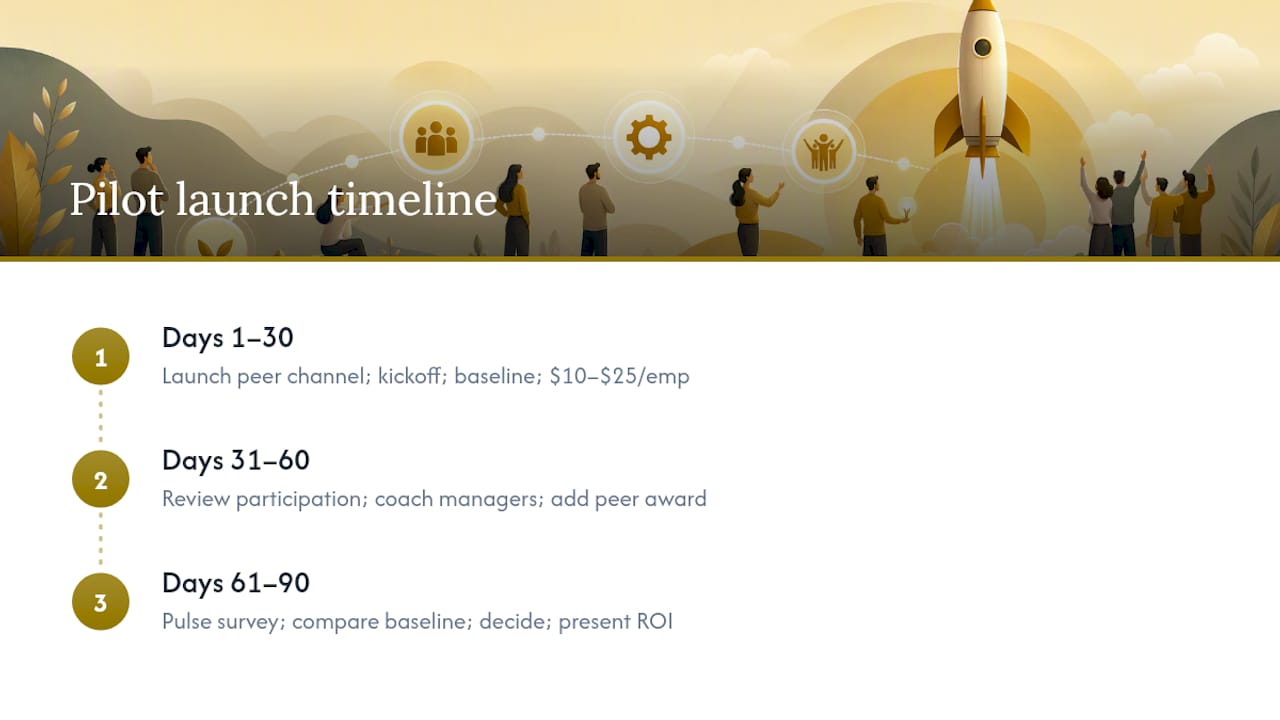
Days 31–60: Review participation data. Identify which teams are recognizing frequently and which are not. Coach lagging managers individually. Add one tangible reward element, such as a quarterly peer-nominated award, to sustain momentum. Custom Ink's step-by-step guide recommends combining digital peer recognition with periodic tangible rewards and scheduling a 90-day check-in to assess retention and engagement linkage.
Days 61–90: Run a pulse survey. Compare engagement and recognition frequency against baseline. Decide whether to expand, adjust, or formalize the program. Present findings to leadership with a clear ROI narrative.
Pro Tip: Tie every recognition to a named company value in your program guidelines. It tells employees exactly what behavior to repeat and gives managers a consistent frame that reduces favoritism risk.
How to measure the impact of your recognition program
Measurement is what separates a program from a gesture. Track these KPIs from day one.
| KPI | How to measure it | Suggested cadence |
|---|---|---|
| Recognition frequency | Count of recognitions given per manager per week | Weekly |
| Participation rate | % of employees giving or receiving recognition | Monthly |
| Engagement score | Pulse survey (1–5 scale) | Monthly |
| Voluntary turnover | Headcount exits / average headcount | Quarterly |
| Manager effectiveness | Direct report survey rating | Quarterly |
Sample pulse survey questions:
- "In the past two weeks, have you received recognition for your work?" (Yes / No)
- "When you receive recognition, does it feel specific and meaningful?" (1–5 scale)
- "Do you feel your contributions are visible to your manager and team?" (1–5 scale)
- "How often does your manager recognize your work?" (Never / Rarely / Sometimes / Often / Always)
Attribution best practices: Establish a baseline before launch, not after. Triangulate recognition frequency data with turnover and engagement scores rather than treating any single metric as proof. Achievers' research on weekly recognition cadence shows that programs with weekly recognition see materially better engagement and belonging outcomes than those running quarterly. Run your measurement cycle monthly for the first quarter, then quarterly once the program stabilizes.
Avoiding the pitfalls that undermine recognition programs
The most common failure mode is not a bad program. It is an inconsistent one.
Red flags to watch for:
- Favoritism: When the same three people get recognized every month, the program signals who is in the inner circle, not who is performing.
- Vague or delayed praise: "Good work lately" is not recognition. Specific behavior, named outcome, delivered promptly.
- Recognition fatigue: Overusing awards dilutes their meaning. Cadence matters as much as frequency.
- Misaligned rewards: A gift card to a restaurant an employee cannot afford to visit is not a reward. Know your people.
Equity checklist:
- Use criteria-based recognition tied to observable behaviors, not personality or visibility.
- Rotate peer nomination opportunities so quieter contributors get seen.
- Publish your recognition criteria openly so every employee knows what earns recognition.
- Review recognition data quarterly by department and demographic to catch patterns before they become grievances.
For public posts and social announcements, always get explicit written or digital consent before naming an employee externally. A one-line consent ask in your recognition workflow ("May we share this on our company LinkedIn page?") protects both the employee and the organization.
Pro Tip: Calibrate recognition across roles. A warehouse team member and a sales director contribute differently. Build recognition criteria that make both visible, or you will quietly tell half your workforce their work does not count.
Templates and scripts you can use right now
Copy, adjust the bracketed fields, and send.
-
30-second meeting shout-out: "Before we move on, I want to recognize [Name]. During [specific situation], they [specific behavior], which led to [concrete outcome]. That's exactly what [company value] looks like. Thank you, [Name]."
-
Private thank-you note: "[Name], I wanted to take a moment to thank you personally. The way you handled [situation] showed real [quality]. It made a difference to [team/client/project], and I don't want it to go unnoticed."
-
Peer nomination: "I'm nominating [Name] for [award/recognition]. Specifically, [behavior] during [timeframe] resulted in [outcome]. This reflects our value of [value]."
-
Spot-award announcement: "This week's spot award goes to [Name] for [specific contribution]. The impact: [measurable or observable result]. We're grateful to have you on this team."
-
Public social post with consent: "Huge congratulations to [Name] for [achievement]. [He/She/They] [specific behavior], and the result speaks for itself: [outcome]. We're proud to have [Name] on our team. [Name has given permission to share this publicly.]"
Personalizing quickly: Swap the bracketed fields, add one sentence about what makes this person's contribution unique to them specifically, and you have moved from template to genuine recognition. Rippling's guidance emphasizes that specificity is what separates effective recognition from noise, especially for remote and hybrid teams.
How recognition connects to leadership development
Recognition works best when it is a trained behavior, not a personality trait. That distinction matters for program sustainability.
The most durable recognition programs treat manager recognition as a leadership skill to develop, not a checkbox to complete. When managers receive a short microlesson on giving specific, timely feedback, followed by a behavioral nudge to recognize one team member before their next meeting, the behavior compounds. Over 8–12 weeks, it becomes habit rather than effort.
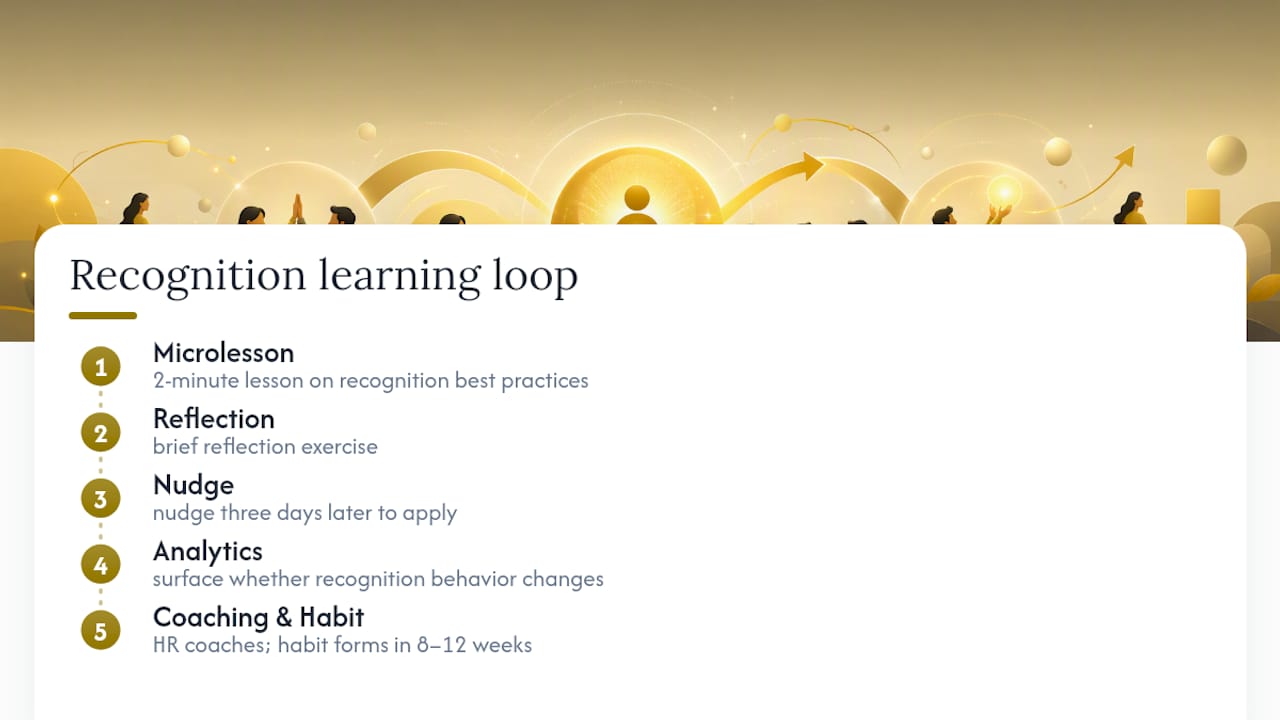
Leaderlyapp's platform is built for exactly this loop. A manager receives a two-minute microlesson on recognition best practices, completes a brief reflection exercise, and gets a nudge three days later to apply it. The platform's analytics then surface whether recognition behavior is changing, so HR can see which managers are developing the habit and which need additional coaching. Leaders who share the spotlight with their teams consistently drive higher engagement scores, and that behavior can be taught.
Pair this with people-centric leadership development and the recognition program stops being a standalone initiative. It becomes part of how your leaders lead. Combine recognition frequency data from your program with Leaderlyapp's learning engagement analytics, and you get a clear picture of which leadership behaviors are shifting and which are not.
Pro Tip: Build one recognition micro-practice into every manager's weekly one-on-one template: "Who on your team did something worth recognizing this week?" That single question, asked consistently, changes what managers notice.
Recognition has to be intentional, not occasional
Most recognition programs fail not because the design is wrong but because the intention behind them fades after the launch event. The first month sees energy. By month three, the peer channel is quiet, the spot awards have stalled, and managers are back to their default of saying nothing unless something goes wrong.
The fix is not a better platform. It is a clearer commitment from leadership that recognition is a management responsibility, not an HR program. When executives model it publicly, when managers are coached on it regularly, and when the data makes the gap visible, the behavior changes. A one-week experiment worth running: ask every manager on your team to give one specific, written recognition per day for five days. Not a shout-out in a meeting. A written note, a Slack message, a nomination. At the end of the week, compare how it felt to give versus how it felt to receive. That asymmetry, where giving feels awkward and receiving feels significant, is exactly why training matters. Recognition is a skill. Treat it like one.
Leaderlyapp makes recognition a leadership habit, not a one-time event
Recognition programs stall when managers lack the skill and the habit to deliver them consistently. Leaderlyapp addresses that gap directly.
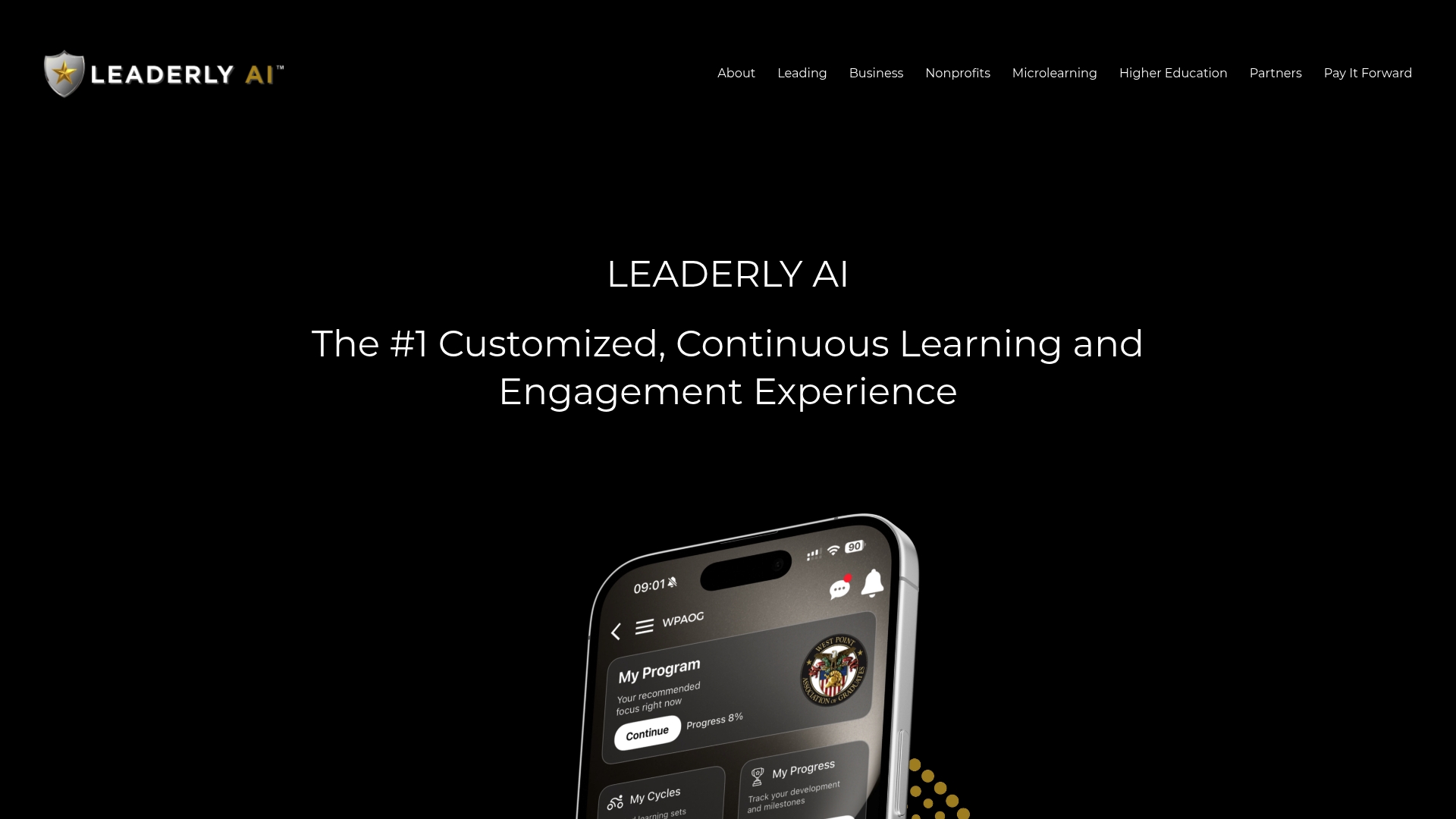
The platform delivers AI-personalized microlessons on recognition, feedback, and people-centric leadership, paired with behavioral nudges that prompt managers to act between sessions. In a 30–90 day pilot, HR teams can set measurable goals (recognition frequency, engagement score lift, participation rate), assign microlearning paths to managers, and track behavior change through Leaderlyapp's analytics dashboard. The result is a recognition program that does not depend on HR reminders to keep running.
Explore Leaderlyapp's leadership development platform to see how a pilot could work for your organization, or review the people-centric leadership resources to start building manager capability today.
Sources
These are the primary research sources used throughout this guide. Each is worth bookmarking for internal business cases and KPI design.
- Creating a culture of recognition — Great Place To Work
- How to build an employee recognition program | Achievers
- How to Boost Employee Morale at Work: Effective Strategies for 2026 — Workhuman
- Employee Recognition Programs: A Step-by-Step Guide for HR Managers - Custom Ink Blog
- 10 actionable ways to boost your remote team's morale — Rippling