The best employee engagement games are short, voluntary, easy to join and tied to something your team cares about. A trivia round or a virtual scavenger hunt can lift a meeting once. Games that keep people engaged over months sit inside a habit: a small, regular activity that builds skills and recognition into the workweek instead of adding another event to the calendar. This guide covers games for in-person and online teams, how to run them without forcing fun, how to keep them inclusive, and how to measure whether they help. If you want the ongoing version for every employee, Leaderly AI offers gamified recognition, microlearning and habit-building exercises in one mobile-first platform.
TL;DR
- Pick games that fit your team's size, time and location, and keep them short: 10 to 30 minutes is plenty for most formats.
- Make participation truly optional, rotate who hosts, and send the format ahead of time so quieter people can prepare.
- Design for access first: captions, non-physical options and a prize structure that does not favor only the highest scorers.
- One-off games build rapport. Lasting engagement comes from repeated, small, personalized activity tied to growth and recognition.
- Measure before and after with a short pulse survey and participation rates, and pilot with a small group before rolling out.
Table of Contents
- Why games help engagement, and where they backfire
- In-person employee engagement games
- Online and hybrid team engagement games
- Keep it from feeling forced
- Make games inclusive from the start
- From one-off games to gamification that lasts
- How to run your first engagement game program
- How to tell whether engagement games are working
- Our perspective: engagement is built in small, repeated habits
- Bring engagement into the daily workflow with Leaderly AI
- FAQ
- Sources
Why games help engagement, and where they backfire
Play lowers the stakes of working together. When colleagues solve a puzzle or guess a trivia answer side by side, they see each other outside their job titles, and that is the raw material of trust and collaboration.
The research on gamification at work points the same way. A 2023 peer-reviewed study of 400 respondents found that how useful employees perceived a gamified system to be, and how readily they adopted it, were significantly associated with job engagement. The same study found that recognition and motivation were linked to productivity, with job engagement as the connecting step. A conceptual model published in Administrative Sciences cites empirical work linking gamification to higher motivation, engagement, and perceived meaningfulness of tasks.
That last idea matters most. Games work when people feel the activity connects to what they value, not when it is a prize chase.
Games go wrong in predictable ways. Atlassian's guidance on gamifying work warns that rewarding people only to get them to work harder can backfire, and that enforcing activities on teams already stretched can turn fun into something closer to punishment. It recommends cultivating rather than managing, letting teammates take the lead, favoring collaboration over competition, and avoiding anything that feels cringe.
So the question is not only which game to play. It is how to run it so people want to show up.
In-person employee engagement games
For teams that share a space, simple formats with no setup cost win. These are the ones that tend to appear on every list because they work.
Quick icebreakers (5 to 15 minutes)
- Two Truths and a Lie. Each person shares three statements about themselves. The group guesses the lie. It surfaces surprising facts and takes no equipment.
- Show and Tell. Announce a topic in advance, such as an object from your first job or something from your desk with a story. Each colleague brings an item and explains it.
- Name That Tune. Play or hum a song and let people guess it. Keep score and give small awards at the end.
- Minute to Win It. One-minute challenges such as stacking cups or moving peanuts from one bowl to another with chopsticks. They are fast, silly and leveling, since nobody has a head start.
Problem-solving games (15 to 45 minutes)
- Human Knot. Small groups stand in a circle, grab hands across it and untangle themselves without letting go. It rewards communication and patience, but see the accessibility section below before using it with a mixed-ability team.
- Egg Drop challenge. Teams build a protective holder for an egg from cardboard, sticks, tape and cotton balls, then drop it. It tests planning, role-splitting and improvising under a deadline.
- Mini escape room. A pop-up version with three to five puzzles leading to a final code can run in 20 to 30 minutes. It exposes how people lead, follow and share information, which is useful insight for managers.
- Scavenger hunt. Use ten clues that mix easy and tricky, add photo-proof tasks, and score for speed and creativity. A finish line with snacks keeps the mood light.
Lunchtime classics
Office trivia in two or three rounds with a small prize works well in a lunch hour. Pictionary, charades and board game tournaments (chess, Scrabble, Monopoly, checkers) need almost no preparation. Team-based formats such as a Family Feud style trivia round let people who dislike the spotlight contribute as part of a group.
Online and hybrid team engagement games
Remote teams need formats that survive latency, time zones and screen fatigue. The principle is the same: low barrier, clear rules, short runtime.
| Format | Typical size | Typical time | Why it works |
|---|---|---|---|
| Skribbl-style drawing and guessing | 5 to 10 players | 10 to 15 minutes | No items needed, laughter comes fast |
| Virtual charades | 4 to 10 players | 2 to 3 minutes per player | Easy rules, everyone gets a turn |
| Know Your Colleague quiz | Any size | 10 to 20 minutes | Builds familiarity across locations |
| Multiplayer crossword or jigsaw | Teams of 2 to 4 | 15 to 30 minutes | Collaboration without talking over each other |
| Online multiplayer games, tournament style | 4 or more | 15 to 90 minutes | Small groups or team versus team |
| Word search built from company jargon | Any size | 10 minutes | Doubles as onboarding for new hires |
The formats and durations above come from published virtual team-building guides, so treat them as starting points and adjust to your group.
Two practical rules for online play. First, break groups of 10 or more into teams of two or three, ideally mixing functions, so people meet colleagues they rarely work with. Second, keep a simple scoring system so there is some friendly competition, while making sure no one is publicly ranked last.
For hybrid teams, choose games that put everyone on the same footing. A trivia round on a shared screen, where remote and in-office people answer through the same tool, is fairer than a physical game where remote colleagues watch.

Keep it from feeling forced
The most common failure is not a bad game but a mandatory one. Voluntary participation is the single strongest lever you have.
Practical rules that follow from the research and from facilitation guidance:
- Make it genuinely optional, including for managers. Wording that says optional while the tone says mandatory creates resentment. Send invitations four to seven days ahead with clear opt-out language.
- Share the format in advance. Introverts can prepare when they know what is coming.
- Rotate facilitators. Otherwise events drift toward what one leader finds fun rather than what the team wants.
- Start on time with a 60-second framing and close at the agreed end time. Respecting the clock is itself a signal that you respect people's workloads.
- Save time, do not add it. For teams already behind, a game that replaces a status meeting beats one stacked on top of it.
- Offer low-stakes ways to join. A person who would rather not play can still vote, score or cheer.
Managers are the gatekeepers here. As SHRM's coverage of gamified learning strategies points out, managers are the ones who release employees from their desks, and some see fun as out of place at work. HR needs to bring them into the message that the organization is investing in its people. If your managers are the bottleneck, the way they behave day to day shapes engagement far more than any single event, which is why we wrote about how manager behavior affects engagement.
If you need help bringing busy staff along, this guide to getting staff buy-in shows how to roll out a new group effort without adding pressure.
Make games inclusive from the start
A game that excludes even a few people does the opposite of what you wanted. Before you pick a format, run it through this check.
- Hearing. Live video without captions leaves out colleagues with hearing impairments. Turn captions on and share written instructions.
- Vision. Visually dominant games need an alternative format, such as a verbal description or a text version.
- Mobility and physical ability. Physically demanding games can exclude teammates. Blindfolded or non-verbal activities can be hard for people with vision or hearing impairments. Human Knot and relay races are fun for some teams and a barrier for others, so offer a seated alternative running at the same time.
- Neurodiversity. Fast games that require processing several inputs at once can overwhelm some people. Choose turn-based formats or give a practice round.
- Culture and comfort. References, music and humor that assume one background shut people out. Test your content with a diverse group.
- Introverts. Small groups and advance notice help. An anonymous poll asking what people would enjoy is a simple way to gauge interest before you plan.
The same logic applies to rewards. One university's gamification program, described in the SHRM piece above, added a random drawing open to anyone who submitted anything on their scorecard. Job function and departmental budgets meant some employees could never reach the top of the leaderboard, so the drawing gave everyone a real chance. If your leaderboard only ever rewards sales or the people with the most free time, it will quietly teach everyone else that the game is not for them.
Inclusion is also a leadership skill, not just a checklist. Our piece on the benefits of inclusive leadership goes further into it.
From one-off games to gamification that lasts
Searchers asking about gamification for employee engagement are usually asking a different question from those looking for a Friday game. A game is an event. Gamification is a design approach: points, progress, challenges, feedback and recognition applied to everyday activity such as learning, goal setting or peer appreciation.

The American Academy of Physician Leaders published a January 2026 guide with ten best practices, ten pitfalls, ten effective features and twelve questions to answer before choosing a gamification platform. It names features such as training quests, simulations, treasure hunts, puzzles and quizzes, and it says good game design can improve productivity, problem solving and retention.
The durable pattern is the same across sources: small and frequent beats big and rare. A five-minute challenge a few times a week, linked to a skill your people want, keeps momentum in a way an annual offsite cannot.
SHRM also recommends expecting iteration and possible pivots, writing clear and concise instructions in your industry's own vocabulary, and using employee data to understand what motivates your learners. That means treating a gamification rollout as a program you improve, not a campaign you launch.
For emerging leaders, this is where games turn into development. A simulation that asks you to handle a difficult conversation, followed by a short reflection, builds a habit. A trivia night does not. If you are curious about where this is heading, see our thoughts on leadership in the age of gamification and wearables.
How to run your first engagement game program
A simple sequence works for most HR teams, educators and nonprofit leaders.
- Define the goal in one sentence. Is it connection across remote colleagues, onboarding, recognition, or practicing a leadership behavior? The goal decides the format.
- Ask your people. A short anonymous poll on what they would enjoy and when. If you want to build a good one, this guide to creating effective surveys covers how to get answers you can act on.
- Pick one or two formats. Match them to size, location and ability, using the lists above.
- Pilot small. The 2023 study mentioned earlier recommends pretesting gamified elements on smaller events first. Run it with one team, gather feedback and adjust.
- Secure manager buy-in. Explain the time, the goal and the voluntary nature.
- Run it with clear rules. Short framing, agreed end time, rotating host, accessible options.
- Follow up. A two-question survey the same day: did you enjoy it, and would you do it again? Then act on the answers.
For veterans moving into civilian leadership roles, team games are also a low-pressure way to practice the soft side of civilian management: asking for input, sharing the floor and recognizing contributions without rank doing the work for you. Educators can use the same formats in leadership courses and student organizations, with the added benefit that students see facilitation modeled.
How to tell whether engagement games are working
Fun in the room is not proof of impact. Pick a few measures before you start so you are not guessing afterward.
- Participation rate and repeat participation. Voluntary events that people return to are a good sign.
- Pulse survey scores. Ask the same short set of questions before the program and a few weeks after: belonging, recognition, clarity of what is expected, willingness to recommend the team.
- Behavior changes. More cross-team messages, more peer recognition, faster onboarding.
- Retention and absence trends over a longer period, read carefully since many factors move them.
The AAPL guide above proposes four metrics for measuring team gamification success, so check it when you want a structured set. For turning survey scores into decisions, see our guide to employee engagement analytics for HR leaders, and for examples of connecting engagement to performance conversations, see engagement-driven performance management examples.
Our perspective: engagement is built in small, repeated habits
We build Leaderly AI on a simple belief: leadership and engagement are habits, not events. A game night can make a Tuesday better, but a person's relationship with their work changes through small, repeated experiences that help them grow and feel seen.
That is why we combine behavioral science with short microlessons, practical exercises and assessments that adapt to each person's journey. Personalization driven by machine learning means a new supervisor and a seasoned director do not receive the same content. Gamified recognition keeps the feedback loop visible, and analytics dashboards show HR what is being used.
We also think leadership development should reach everyone, not only managers. When every employee practices listening, giving feedback and taking initiative, the culture shifts in a way no single event can produce. Games are a good way to start the conversation. A continuous program is how it lasts.
Drew Bartkiewicz
Bring engagement into the daily workflow with Leaderly AI
If you are an HR leader looking for a scalable way to keep people engaged, Leaderly AI is a mobile-first platform that delivers personalized microlearning, behavioral habit-building exercises, customizable learning journeys, simulations, surveys and gamified recognition, with analytics dashboards for the people running the program. It includes self-assessments such as DiSC, EQ and MBTI, and it serves corporate, nonprofit and educational settings.
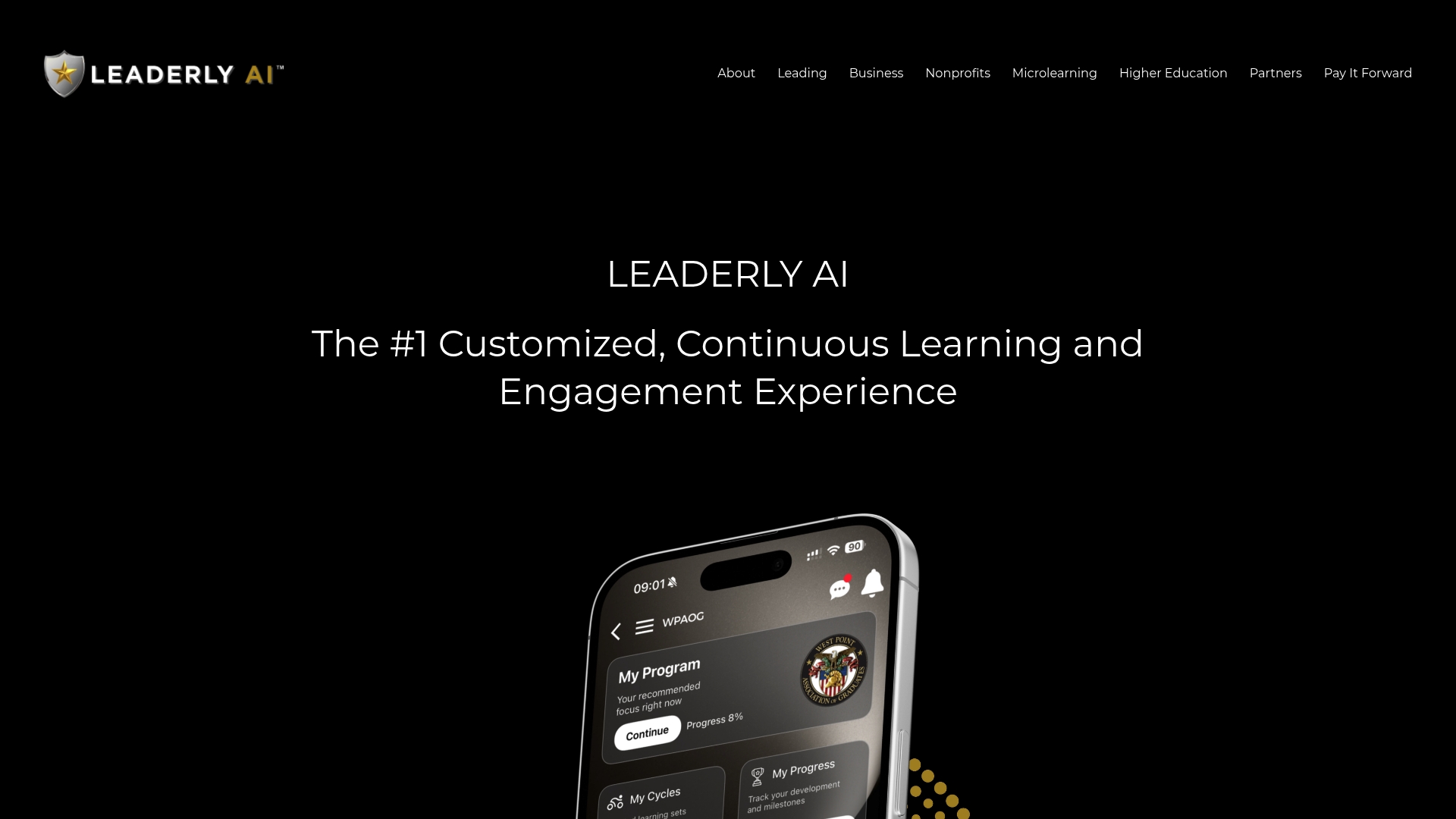
Learn how it works for businesses, nonprofits and higher education, or start with the Leaderly AI overview. You can also read how microlearning supports leadership growth in short daily sessions.
FAQ
What are some fun employee engagement games for the office?
Trivia, Two Truths and a Lie, Pictionary, Name That Tune, scavenger hunts and mini escape rooms all work with little preparation. Choose one that fits your group size and keep it under 30 minutes. Offer a way to take part without being on stage.
What are good team engagement games online?
Try a Know Your Colleague quiz, virtual charades, drawing-and-guessing games or multiplayer crosswords in teams of two to four. Keep groups small and sessions short. Turn on captions and share instructions in writing so everyone can follow.
How do we use gamification for employee engagement without forcing it?
Make participation optional, rotate who leads, and favor collaboration over competition. Tie the activity to something people value, such as learning a skill or recognizing a colleague, rather than to rewards alone. Pilot with one team before you scale.
How do I know if engagement games are worth the time?
Set your measures first: participation, a short pulse survey before and after, and behavior signs such as peer recognition. Review them after a few weeks, then keep, change or drop formats based on what your people tell you.
Sources
- How to Engage Employees Using Gamified Learning Strategies (SHRM)
- How to Use Gamification to Engage Your Team (American Academy of Physician Leaders)
- Game on: Can gamification enhance productivity? (PMC, 2023)
- A Spoonful of Sugar: Gamification as Means for Enhancing Self-Leadership (Administrative Sciences, 2021)
- Why gamifying work works (Atlassian)