
Peer learning in leadership programs is defined as a structured process where leaders at similar levels teach, coach, and challenge each other to grow. This method does something traditional training cannot: it creates the conditions for genuine, pressure-tested insight. Google's peer coaching program reports that 96% of internal coaches improved their leadership and communication skills, and 99% of coaching recipients reported high satisfaction. Those numbers reflect a fundamental truth about how leaders actually develop. Real growth happens in conversation with peers who face the same pressures, not in a classroom designed for a generic audience.
What is the role of peer learning in leadership programs?
Peer learning, also called collaborative leadership development, accelerates skill-building by putting leaders in the role of both learner and teacher simultaneously. That dual role is what separates it from lecture-based training. When a leader explains a decision to a peer who can push back with real context, the thinking sharpens in ways that a facilitator-led workshop rarely achieves.
The mechanisms behind this are well documented. Reciprocal coaching builds communication skills by forcing leaders to listen before they respond. Exposure to peers who handle similar challenges from different angles broadens perspective and reduces blind spots that come from operating inside a single team or function. Psychological safety, the belief that honest sharing will not be punished, grows faster in peer groups than in hierarchical settings because no one in the room holds formal authority over anyone else.
Leadership development expert Julian Johnson, ICF PCC, argues that peer learning enables leaders to be genuinely known in spaces of similar pressure, which typical training cannot replicate. That phrase, "genuinely known," carries real weight. It points to the difference between a leader who performs competence in a training room and one who actually works through uncertainty with people who understand the stakes.
- Reciprocal coaching: Leaders practice giving and receiving feedback in real time, building communication habits that transfer directly to their teams.
- Perspective broadening: Exposure to peers from different functions or geographies reduces cognitive bias and expands the range of solutions a leader considers.
- Psychological safety: Peer groups without formal hierarchy create conditions where leaders admit mistakes and ask hard questions without career risk.
- Accountability: Commitments made to peers carry social weight that self-directed learning goals rarely do.
Pro Tip: Structure peer sessions around a specific challenge one leader is facing, not a general topic. Specificity forces the group to engage with real complexity rather than trading generic advice.
How are peer learning programs typically structured?
The structure of a peer learning program determines whether it produces durable behavior change or just a pleasant conversation. Two well-documented models illustrate the range of design choices available to HR professionals.

AIEA's peer learning circles use small groups of 4–6 leaders who meet monthly over four months. Groups are formed around shared factors such as geographic location or institutional type. That intentional matching is not incidental. When peers share enough context to understand each other's constraints, the feedback they give is specific and credible rather than generic.
Google's approach goes further on the training side. Google's peer coaching programs use intentional matching combined with formal training in listening and powerful questioning. Formats range from single sessions to multi-month engagements, giving organizations flexibility based on their goals and resources. Trained peer coaches report gains not just in coaching skill but in their own career development capabilities.
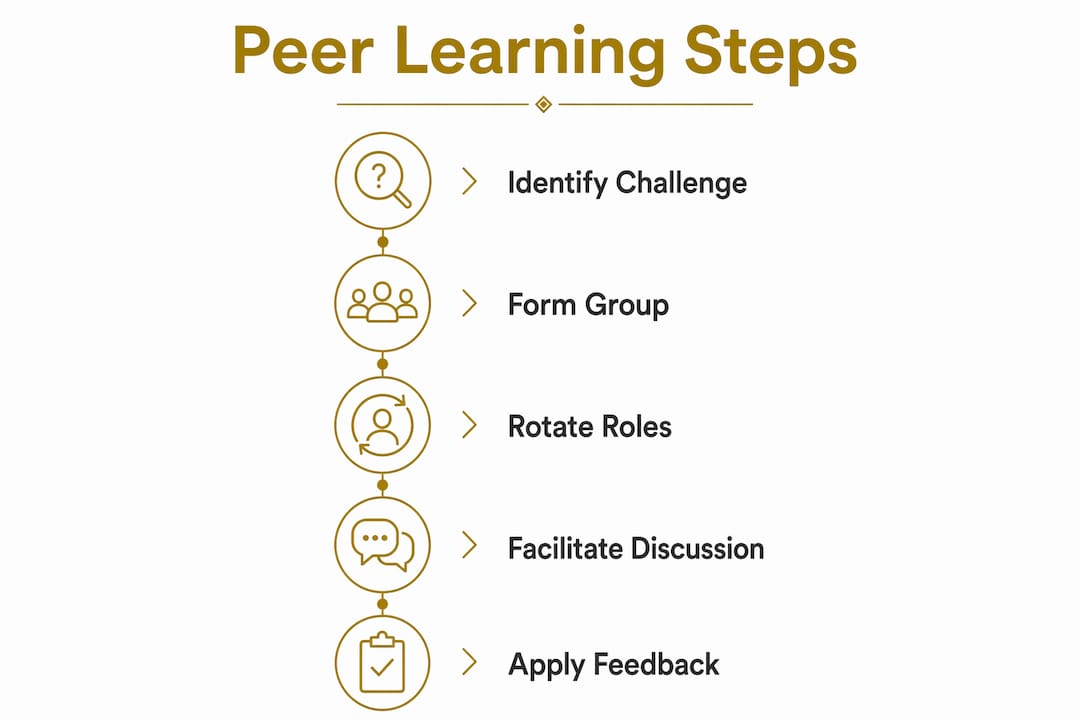
A third model worth knowing is the peer coaching circle with rotating roles. Role rotation assigns each participant the positions of coached participant, active coach, and observer across sessions. Each position teaches something different. The coached participant practices vulnerability. The active coach practices listening and questioning. The observer practices pattern recognition. Together, the three roles create a learning environment that is richer than any single perspective could produce.
| Format | Group size | Duration | Key design feature |
|---|---|---|---|
| Peer coaching circles | 4–6 leaders | Ongoing, monthly | Rotating coached, coach, and observer roles |
| AIEA learning circles | 4–6 leaders | 4 months, monthly | Matched by geography or institutional type |
| Google peer coaching | Varies | Single session to multi-month | Formal training in listening and questioning |
Pro Tip: Train peer coaches before the program launches. Even two hours of instruction on active listening and open-ended questioning measurably improves session quality.
What are the key benefits of peer learning in leadership development?
The benefits of peer learning in leadership extend well beyond individual skill gains. High-performing organizations that use peer learning report 36% more net revenue per employee and stronger leadership cultures overall. That figure points to a systemic effect. When leaders coach each other regularly, coaching becomes a habit embedded in how the organization operates, not a one-time event tied to a training budget.
Peer coaching circles drive continuous learning, sharper coaching skills, increased trust, and greater accountability among participants. These outcomes compound over time. A leader who practices coaching skills monthly with peers becomes a better manager of their direct reports. That improvement then spreads through the team, multiplying the return on the original program investment.
Peer learning also addresses a gap that most leadership programs ignore: inclusion. Research shows that peer learning helps marginalized leaders reframe belonging paradoxes into concrete, workable dilemmas. Leadership knowledge is situational. It is built through interaction with the environment and with other people. A peer group that reflects diverse experiences gives underrepresented leaders a space to construct leadership identity on their own terms, not through a framework designed for a different demographic.
The intangible benefits matter just as much as the measurable ones:
- Trust: Shared vulnerability in peer sessions builds trust that carries into cross-functional collaboration.
- Reduced burnout: Peer relationships reduce isolation, which is a primary driver of leadership burnout and talent retention problems.
- Coaching culture: Leaders who are coached by peers begin coaching their own teams, spreading the behavior organically.
- Confidence: Google's data shows 92% of peer coaches reported increased confidence in their roles after participating.
What challenges should HR leaders expect, and how do they fix them?
The most common failure mode in peer learning is the advice session disguised as coaching. When leaders default to sharing what worked for them rather than asking what the other person needs, the session loses its learning value. Sessions that default to advice-giving limit honesty and diminish the quality of insight for everyone in the room.
The fix is structural, not motivational. Clear working agreements that explicitly limit advice-giving and require curiosity-based questioning change the dynamic before the first session begins. Agreements might include rules like "ask two questions before offering a perspective" or "no solution-giving in the first 15 minutes." These constraints feel artificial at first. They become natural within two or three sessions.
A second challenge is superficial engagement. Leaders who attend peer sessions without genuine investment produce polite conversation, not growth. Slowing down conversations to allow reflection and honest sharing, rather than rushing to solutions, builds the psychological safety that makes real engagement possible. Facilitators who hold space for silence and discomfort are more effective than those who keep sessions moving at a comfortable pace.
- Pitfall: Advice-dominant sessions. Fix: Working agreements that require questions before opinions.
- Pitfall: Superficial networking. Fix: Assign a specific challenge as the session anchor, not a general topic.
- Pitfall: Inconsistent attendance. Fix: Keep groups small (4–6 people) so absence is visible and felt.
- Pitfall: No transfer to daily work. Fix: End each session with a specific commitment each participant will act on before the next meeting.
Pro Tip: Rotate the facilitation role among group members rather than assigning a permanent facilitator. Leaders who facilitate develop listening and group management skills that directly improve their performance as managers.
Key Takeaways
Peer learning is the most underused tool in leadership development, and the organizations that treat it as a core program element, not an add-on, see measurable gains in leadership confidence, coaching culture, and organizational performance.
| Point | Details |
|---|---|
| Peer learning drives real skill gains | Google's program shows 96% of peer coaches improved leadership and communication skills. |
| Structure determines outcomes | Small groups of 4–6 with intentional matching and role rotation produce the deepest learning. |
| Advice-giving is the primary failure mode | Working agreements that require curiosity before opinion are the most effective structural fix. |
| Inclusion is a measurable benefit | Peer learning helps marginalized leaders build leadership identity through situated, relational learning. |
| Coaching culture compounds over time | Leaders who are coached by peers begin coaching their own teams, multiplying program ROI. |
Why I think most peer learning programs underdeliver, and what actually fixes them
Most peer learning programs I have seen fail at the same point: they treat peer interaction as a feature rather than a discipline. Organizations announce a peer coaching initiative, form groups, and then assume the learning will happen naturally. It does not. Peer learning requires as much intentional design as any other leadership intervention, and often more, because the quality of the interaction depends entirely on the willingness of participants to be honest.
The programs that work share one characteristic: they choose leaders wisely for peer groups based on shared context, not just availability. A group of leaders who face genuinely similar pressures, whether by function, level, or organizational challenge, will go deeper faster than a randomly assembled cohort. That matching decision is where most programs cut corners, and it is where the most value is lost.
The forward-looking question for HR professionals is how technology can support peer learning without replacing the human element that makes it work. AI-driven platforms can surface relevant peer connections, track commitments between sessions, and deliver microlearning that reinforces what peers discussed. The risk is using technology to scale peer learning before the underlying design is sound. A poorly designed peer program delivered at scale just produces more of the same shallow interaction. Get the design right first. Then scale it.
— Drew
How Leaderlyapp supports peer learning in leadership programs
Leadership development works best when peer learning and personalized growth reinforce each other. Leaderlyapp is built on that principle. The platform delivers personalized microlessons grounded in behavioral science, giving leaders the individual development foundation that makes peer conversations more substantive and specific.
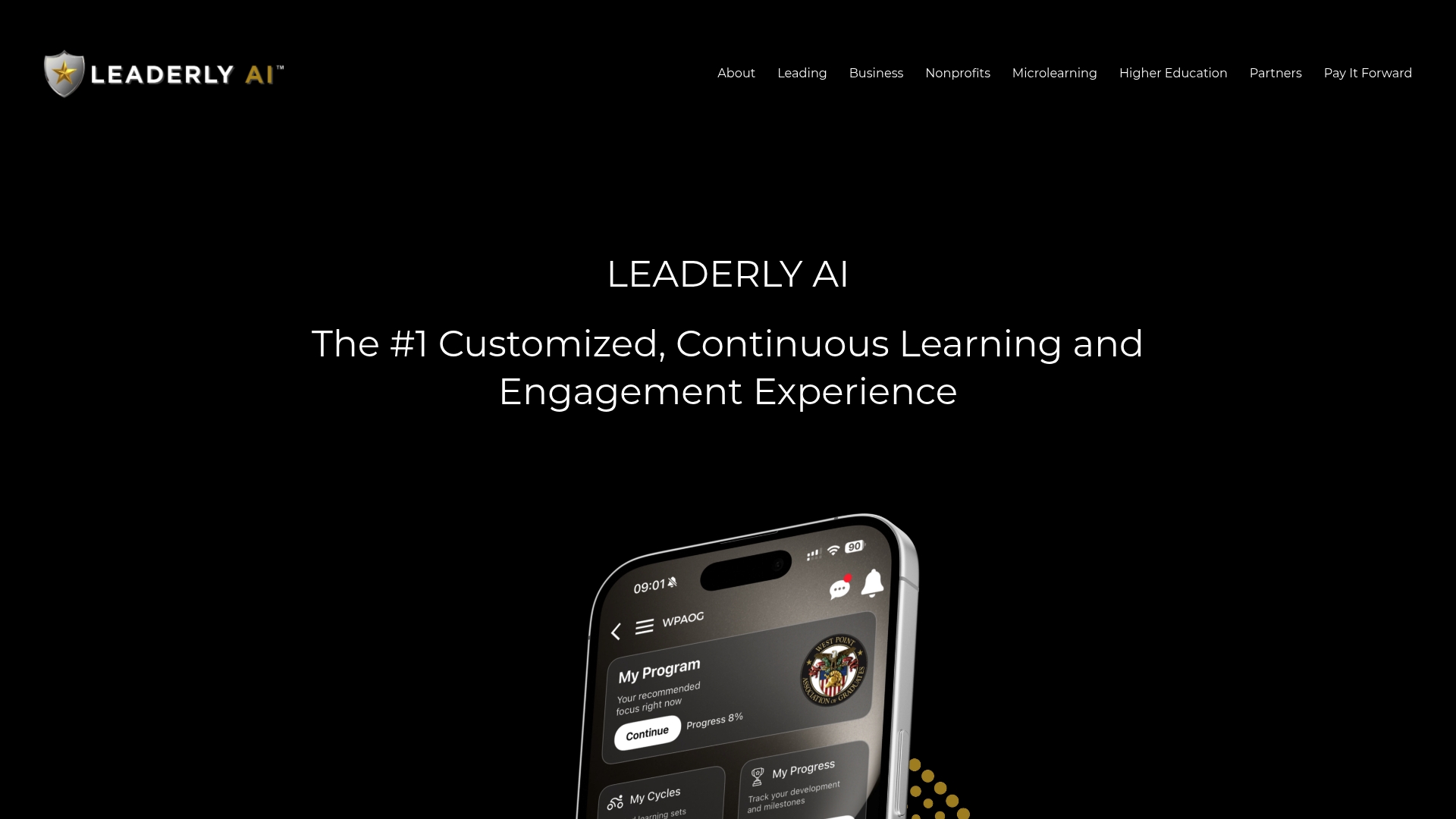
HR professionals designing or refining leadership programs can use Leaderlyapp to complement peer coaching structures with continuous, habit-forming learning between sessions. The platform's machine learning adapts content to each leader's progress, so the development does not stop when the peer group meeting ends. For teams looking to build a people-centric leadership culture that scales, Leaderlyapp provides the infrastructure to make that culture stick. Explore the full range of leadership development resources on the Leaderlyapp platform.
FAQ
What is peer learning in a leadership context?
Peer learning in leadership is a structured process where leaders at similar levels coach, challenge, and learn from each other. It differs from traditional training because it draws on shared real-world experience rather than expert-delivered content.
How does peer learning improve leadership skills?
Peer learning builds communication, coaching, and decision-making skills through reciprocal feedback and role rotation. Google's program reports that 96% of peer coaches improved their leadership and communication skills directly through the process.
What is the ideal group size for peer learning circles?
Groups of 4–6 leaders produce the best results. AIEA's peer learning circles use this size to maintain accountability and allow enough diversity of perspective without losing the intimacy that honest sharing requires.
How do you prevent peer sessions from becoming advice-giving conversations?
Set working agreements before the first session that require participants to ask at least two questions before offering any opinion or solution. This structural constraint shifts the default from advice-giving to genuine inquiry.
Can peer learning support underrepresented leaders?
Research confirms that peer learning helps marginalized leaders reframe complex belonging challenges into workable dilemmas. It works because leadership knowledge is situational, built through interaction with peers who share relevant context and experience.