
This page gathers seven classroom-ready leadership case studies, including Christiana Figueres and the Paris Agreement, the Cape Town water crisis, and the Deepwater Horizon response, each paired with concrete takeaways. Use the summaries below to pick a case, pull a discussion prompt, and apply research-backed facilitation tips so the lessons actually transfer to practice.
TL;DR:
- Match the case to the skill: Figueres illustrates coalition building, Cape Town tests equitable crisis rationing, and Deepwater Horizon examines coordination across agencies.
- Analyze one decision point by mapping the stakes, actors, incentives, missing information, and alternatives, then compare likely consequences with the actual outcome.
- A 2024 study involving 226 public managers and thousands of employees linked classroom learning plus timely nudges to behavior change, while relationship quality predicted transfer.
- After discussion, assign an empathy exercise that takes five minutes, then send a reminder one to two weeks later asking whether participants tried it.
Table of Contents
- 1. Seven leadership case studies worth teaching
- 2. How do you get the most out of a leadership case?
- 3. What makes case-based learning actually stick?
- 4. Pairing case discussion with small daily practice
- 5. Turning case takeaways into daily practice with Leaderly
- FAQ
- Sources
1. Seven leadership case studies worth teaching
These cases span negotiation, crisis response, organizational transformation, and servant leadership, so a facilitator or solo learner can match the example to the skill in question.
Christiana Figueres and the road to the Paris Agreement. As the United Nations climate chief tasked with rebuilding talks after the failed Copenhagen summit, Figueres faced a fractured coalition and widespread skepticism that any deal was possible. She spent years doing preparatory work outside the formal negotiating room, building trust bilaterally before the 2015 Paris conference ever opened. The Harvard case on Figueres frames her approach as system work: pairing personal, inside-out resilience with outside-in redesign of the negotiation process itself. Takeaway: large-scale consensus often depends more on quiet relationship-building before the table than on arguments made at it. Provider: PON/Harvard Business School; format: suited to a stop-action discussion that pauses at key pre-summit decisions.
Cape Town's water crisis and adaptive leadership. Facing an unprecedented drought that threatened to leave a major city without taps running, officials had to ration water, communicate hard truths, and manage political backlash while rebuilding public trust. The Harvard Kennedy School case centers on equity trade-offs: who absorbs restrictions first, and how leaders sustain credibility when the public has reason to doubt them. Takeaway: in a slow-building crisis, trust is a resource that has to be managed as carefully as the crisis itself. Provider: Harvard Kennedy School; format: works well as a practitioner guide for public-sector or utility teams.
Valerie Jarrett and the Deepwater Horizon response. As a senior White House advisor during the 2010 Gulf oil spill, Jarrett had to coordinate across federal agencies, state governments, and a private company whose interests did not align with the public's. The HBR/HKS case materials model political crisis leadership under intense media scrutiny and conflicting jurisdictional authority. Takeaway: coordinating across organizational boundaries during a crisis requires explicit agreements on who decides what, decided before the next crisis hits.
Novo Nordisk and disrupting the perfect. A leader inside a highly successful, process-driven pharmaceutical company had to convince colleagues to take innovation risks despite decades of profitable execution. The IMD case explores how the leader normalized small failures and ran structured experiments without destabilizing core operations. Takeaway: future-proofing an organization that is already winning means protecting space for controlled experiments, not just defending what already works.
Servant leadership in hospitality event management. A case from the Journal of Hospitality & Tourism Cases examines a manager who prioritized staff development and guest welfare over top-down directives during a complex event. Takeaway: servant leadership's payoff depends heavily on context, and it tends to show up most clearly under time pressure with a dispersed team.
A short list of what each case is best for:
- Figueres: coalition-building and long-horizon negotiation.
- Cape Town: adaptive leadership and equity in crisis rationing.
- Deepwater Horizon: cross-agency political crisis coordination.
- Novo Nordisk: transformational leadership inside a successful incumbent.
- Hospitality servant leadership: contextual, people-first management under pressure.
2. How do you get the most out of a leadership case?
Reading a case passively rarely changes behavior. A short, repeatable sequence turns the material into something usable.
- Identify the stakes and timeline: what was at risk, and how much time did the leader actually have to decide?
- Map the actors and their incentives, including who was not in the room but still shaped the outcome.
- Isolate the specific decision point where the leader's choice diverged from the obvious or safe option.
- Hypothesize at least one credible alternative the leader could have taken instead.
- Evaluate the likely consequences of that alternative against what actually happened.
A few prompts work well in a seminar or solo reflection: What assumptions underlie the leader's choice? Who gained and who lost from that decision? What information was missing at the time? What would you do differently with the same constraints? To move from discussion into practice, try a short role-play of the decision point, assign a one-page action plan applying the case's lesson to a current situation, and set a nudge a week later asking participants whether they tried the behavior.
Pro Tip: Pick one decision point per case rather than discussing the whole narrative; depth on a single choice teaches more than a broad summary.
3. What makes case-based learning actually stick?
Reading a good case is not the same as changing behavior afterward, and the research on training transfer is specific about what closes that gap. A 2024 study spanning 226 public managers and thousands of employees found that combining classroom learning with just-in-time implementation nudges increased observed transformational leadership behavior, and that leader-member exchange quality predicted whether training stuck at all. A separate longitudinal study tracking leaders before training, one month after, and six months after found modest gains in favorable behaviors but a clearer, more consistent drop in unfavorable ones, especially as rated by subordinates.
One diary study found that weekly satisfaction with a leader's own transfer attempts predicted whether they kept applying the lesson the following week, according to a 2026 transfer study, which suggests early wins matter more than perfect execution.
Facilitation practices that support this:
- Frame the case using a decision template like PACADI: problem, alternatives, criteria, analysis, decision, implementation.
- Build in stop-action pauses at the leader's key decision point rather than narrating straight through.
- Use light-touch Socratic questions that let participants map the dilemma onto their own context, an approach described in case facilitation research.
- Close every session with one applied assignment and a nudge scheduled one to two weeks later.
A session built around clear learning objectives, a brief applied task, and a short follow-up nudge has a real shot at producing behavior change instead of just a good conversation. For more on why development programs sometimes fail to translate into results, see our piece on whether leadership development produces real outcomes.
4. Pairing case discussion with small daily practice

A case discussion is a strong starting point, but the behavior it describes rarely survives contact with a busy week unless someone builds in a next step. We have found that following a case with one small, specific practice assignment works better than asking participants to simply apply broad lessons.
After discussing the Figueres case, for instance, a short five-minute empathy exercise aimed at a real stakeholder relationship gives participants something concrete to try before the memory fades. Our work on assessments and micro-practice reflects this same logic: a case gives the insight, and a small, repeated action gives it a chance to become a habit.
— Drew
5. Turning case takeaways into daily practice with Leaderly
Classroom discussion builds insight, but insight fades fast without a way to practice it between sessions. Our platform pairs case-based learning with short, personalized follow-through so the lesson from Monday's discussion does not disappear by Friday.
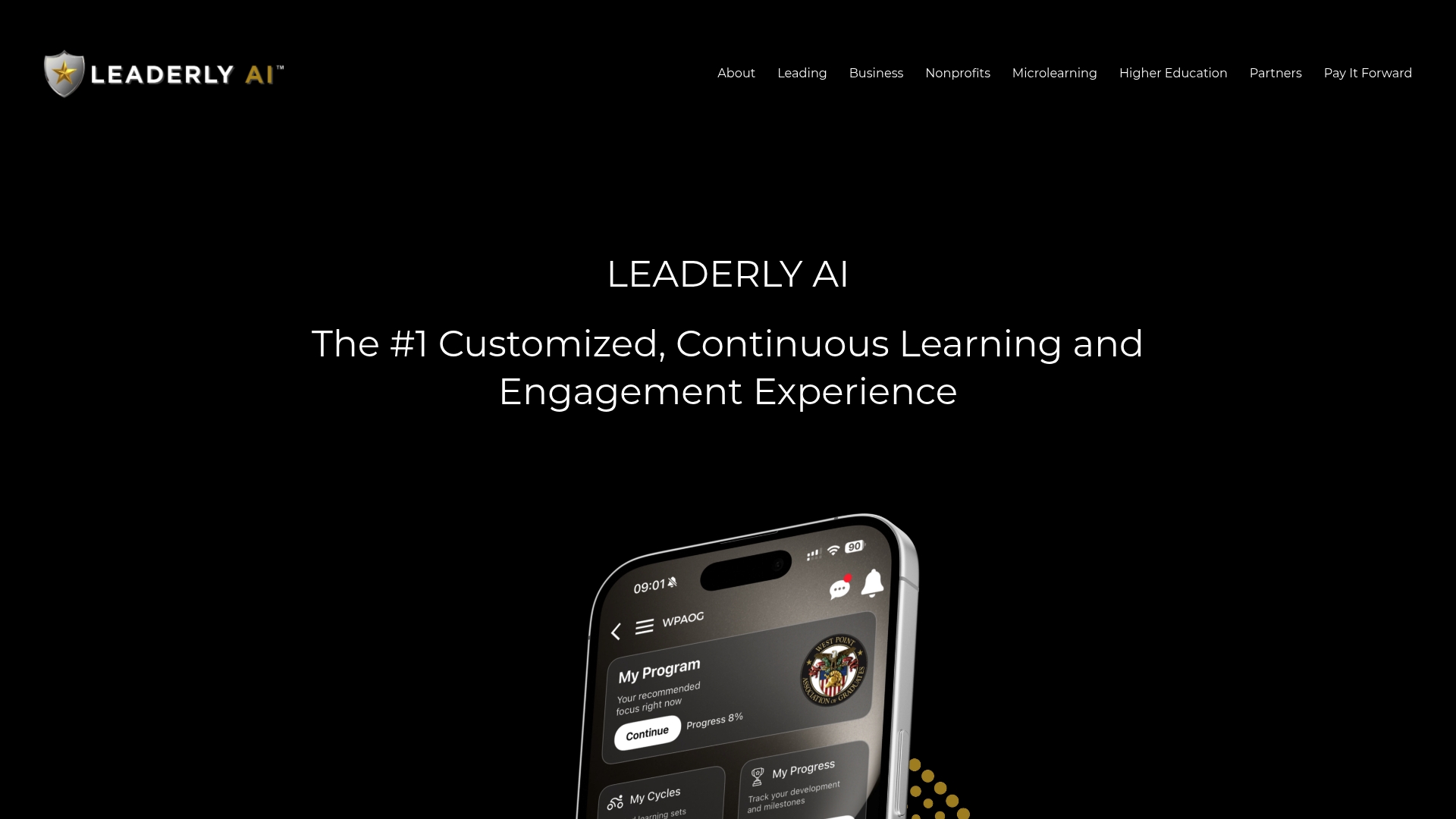
A typical sequence looks like this:
- Assign a case, such as the Cape Town water crisis, for group discussion.
- Follow it with a five-minute microlesson tied to the specific decision point discussed.
- Schedule a nudge one to two weeks later asking whether the participant tried the behavior.
- Track engagement and self-assessment results on a shared dashboard for HR or program leads.
This kind of pairing fits naturally into programs for corporate teams, nonprofit staff, or academic cohorts already using case studies. If you are building or scaling a leadership program, our business page outlines how organizations use Leaderly AI to extend case learning into daily habits.
FAQ
What is a leadership case study?
A leadership case study is a detailed, real-world account of a leader facing a specific decision or crisis, used to help readers analyze the choices, context, and outcomes involved. Cases like the Figueres Paris Agreement case are built specifically for structured classroom or seminar discussion.
How do I choose the right case for a training session?
Match the case to the leadership skill you want to practice: coalition-building fits the Figueres case, crisis trust-building fits the Cape Town water crisis, and cross-agency coordination fits the Deepwater Horizon response. Picking a case with a clear, isolatable decision point makes discussion sharper than choosing one based on industry alone.
Can AI tools help with case analysis?
Generative AI can assist with brainstorming alternatives or summarizing background facts, but guidance from Harvard Business School treats it as a supplement rather than a replacement for instructor-led discussion. For deeper reading on AI's role in leadership education, see this partner overview of AI in leadership education.
How do I know if case-based training is actually working?
Look for behavior change rather than just satisfaction scores: a longitudinal intervention study found reductions in unfavorable leadership behaviors measurable by subordinates months after training. Pairing case discussion with a short follow-up assignment and a nudge a week or two later gives you a concrete way to check whether the lesson was applied.
Does Leaderly AI include leadership case studies?
Leaderly AI focuses on personalized microlessons, behavioral nudges, and assessments rather than a case library on its own, and it is designed to extend lessons from case discussions into daily practice. Organizations typically use it alongside case-based training sessions, assigning a short practice exercise after each discussion.
Sources
- New Great Negotiator Case: Christiana Figueres and the Road to the Paris Agreement - PON
- No trust in miracles: Leading through a water crisis in Cape Town - Harvard Kennedy School Case