
DiSC describes how a person tends to behave at work. MBTI describes how a person prefers to take in information and make decisions. If your goal is better communication and teamwork, DiSC is usually the more direct fit. If your goal is self-insight and a shared vocabulary for thinking styles, MBTI is the fit. Either result only changes behavior when people practice on it afterward, and that is where Leaderly AI comes in: its self-assessments, including DiSC, EQ and MBTI, sit inside personalized microlessons and habit-building exercises, so a profile becomes something people use every week.
TL;DR
- DiSC sorts observable workplace behavior into four styles: Dominance, Influence, Steadiness and Conscientiousness. MBTI sorts internal preferences into 16 types built from four pairs of letters.
- Use DiSC for team communication and working-style conversations. Use MBTI for personal reflection on how people take in information and decide.
- Neither should screen job applicants. The MBTI publisher's own ethics code says so, and results should always be framed as tendencies, never absolutes.
- A profile is a starting point. Habit-building after the assessment is what moves leadership behavior.
Table of Contents
- What each assessment actually measures
- DiSC vs MBTI side by side
- How reliable are they?
- Ethical use: what HR must get right
- Choosing by the problem you are solving
- Practical steps to run an assessment program that works
- Where the profile ends and leadership begins
- Putting assessments to work with Leaderly AI
- Our perspective
- FAQ
- Sources
What each assessment actually measures
The two tools answer different questions, which is why comparing them head to head can mislead.
DiSC looks at behavior and communication style. A City of Madison human resources toolkit summarizes it as a model built on Dominance, Influence, Steadiness and Conscientiousness. In plain terms:
- D (Dominance): direct, results-focused, comfortable making fast calls.
- I (Influence): enthusiastic, people-oriented, persuasive.
- S (Steadiness): patient, supportive, values stability and cooperation.
- C (Conscientiousness): analytical, precise, values quality and accuracy.
Most people show a blend, and the question DiSC asks is how you come across on the job, especially when working with others.
MBTI (the Myers-Briggs Type Indicator) looks at preferences in how you perceive and judge. The same toolkit describes 16 types built from four pairs: Extraversion or Introversion (where you draw energy), Sensing or Intuition (how you take in information), Thinking or Feeling (how you decide), and Judging or Perceiving (how you approach structure and deadlines). A result such as ISTJ or ENFP is a four-letter code made from those choices.
The short version: DiSC is about what people see you do. MBTI is about what goes on in your head before you do it.
DiSC vs MBTI side by side
| Question | DiSC | MBTI |
|---|---|---|
| What it describes | Observable behavior and communication style at work | Preferences for perceiving information and making decisions |
| Output | Four core styles, usually a primary style or blend | One of 16 four-letter types |
| Best for | Team communication, conflict, sales and service interactions, manager-report conversations | Self-awareness, understanding how colleagues think, reflection in development programs |
| Typical question it answers | "How do I come across, and how do I adapt to others?" | "How do I prefer to process the world and decide?" |
| Main caution | Limited evidence that scores predict job performance | Type labels can be treated as fixed, and the binary split adds noise |
Which should your company choose? If the problem on the table is that people clash, miscommunicate or misread each other in meetings, start with DiSC. If the goal is deeper personal reflection for emerging leaders, MBTI is the stronger conversation starter. Many organizations use both for different purposes, which works as long as nobody is asked to treat either as a verdict.
How reliable are they?
HR teams are right to ask this before spending budget or participants' time. The evidence is mixed for both tools, and knowing the shape of it helps you use results sensibly.
MBTI reliability
Reliability means getting a similar result when the same person takes the test again. A 2017 systematic review and meta-analysis found satisfactory test-retest reliability of .75 or higher on three MBTI scales (Extravert-Introvert, Sensing-Intuition, Judging-Perceiving) and a lower .61 on Thinking-Feeling. It also noted that most studies used college-age students.
A 25-year synthesis in the Journal of Counseling & Development covering 193 studies found high internal consistency across the subscales (0.845 to 0.921). It also reported that only 65% of participants got the same four-letter type on a four-week retest. That gap matters in practice: someone near the middle of a scale can land on either side from one sitting to the next.
The Psychology Today piece by Clearer Thinking explains why. Most personality traits form a bell curve, with most people near the middle, so forcing a person into one of two letters creates noise. The practical takeaway is to read each preference as a spectrum and focus on the strength of the preference, not only on the letter.

DiSC reliability and validity
A peer-reviewed evaluation published in Psychologische Rundschau, as reported by The Human Capital Hub, found that a widely used DiSC instrument largely met reliability requirements. It fell short on validity, with no validation data linking DiSC scores to job-relevant outcomes. The same article notes that the model rests on a typological framework from 1928.
What does that mean for an HR leader? Both tools are best treated as conversation frameworks and development aids, not predictors. They give people a common language for differences. They do not tell you who will perform well in a role.
Ethical use: what HR must get right
The most important rules are not about which tool is more accurate. They are about how you use the results.
- Never use results to screen candidates. The MBTI publisher's Code of Ethics states that using MBTI results to screen job applicants is unethical. The same logic is sensible for DiSC, given the validity findings above.
- Make participation voluntary and explain the purpose. The same code says respondents should know in advance why they are taking the instrument and how the results will be used, and that taking it is voluntary.
- Describe results as tendencies. The code asks practitioners to talk about type attributes as tendencies, preferences or inclinations rather than absolutes. "You tend to prefer" is accurate. "You are not a people person" is not.
- Keep results from becoming boxes. Avoid seating charts, role assignments or promotion decisions based on a letter or a style.
These rules also protect the program. Employees engage honestly with an assessment when they trust it will be used to help them, not to rank them.
Choosing by the problem you are solving
Start with the outcome, then pick the tool.
You want better day-to-day collaboration. Choose DiSC. Its language ("I tend to move fast, you tend to want detail") translates straight into how people write emails, run meetings and give feedback. It suits manager and team workshops.
You want emerging leaders to understand themselves. Choose MBTI, or pair it with an emotional intelligence (EQ) assessment. Reflection on how you take in information and decide supports self-awareness, which is the base of most leadership growth. Our guide on building self-awareness at work shows practical ways to start.
You are a nonprofit, school or university with a wide group of participants. Consider what each person will do with the result. Students and volunteers often benefit from a plain-language behavioral style (DiSC) plus a reflection exercise. Faculty and program leads may value the cognitive-preference view.
You are a veteran moving into a civilian leadership role. Military teams often run on clear roles and direct communication. DiSC can help you see how your natural style lands with civilian colleagues who may prefer more context or collaboration. MBTI can help you describe how you process decisions when you explain your approach to a new team.
You are a leader of leaders. Use both, with purpose. Our article on how leaders can use Myers-Briggs, DiSC and FIRO-B tests to drive corporate culture goes deeper on combining them.

Practical steps to run an assessment program that works
1. Define one decision the results will inform
Examples: how a new team sets working agreements, or what an emerging-leader cohort will practice in the next quarter. If you cannot name the decision, you do not yet need an assessment.
2. Brief participants first
Tell people why they are taking it, who sees the results, and that it is voluntary. This follows the publisher's ethics guidance and raises honesty in responses.
3. Debrief in small groups
A report alone does little. A short guided conversation, where each person shares one thing the profile gets right and one thing it misses, builds the habit of treating results as hypotheses.
4. Translate the profile into one behavior
A high-D leader might practice asking one open question before giving a direction. A high-S colleague might practice stating a disagreement in the meeting rather than afterward. Our five-step DiSC micro practice plan for leaders shows how to build range beyond your default style, and the four-week MBTI plan for managers does the same for type.
5. Repeat in short bursts
One workshop fades within weeks. Small, frequent practice sticks. That is the logic behind microlearning, and it is why we build development as short, repeated lessons rather than a single event.
Where the profile ends and leadership begins
A DiSC style or an MBTI type tells you where you start. It does not tell you how far you can go. Leadership range comes from doing things that do not come naturally: giving direct feedback when you favor harmony, slowing down when you favor speed, listening longer when you favor solutions. Our piece on strategic reflection offers three ways to build that habit, and what kind of leader you are based on emotional intelligence adds the EQ view.
For HR teams, this is the scaling problem. A cohort workshop reaches a handful of managers. Habit-building has to reach everyone who leads, formally or not.
Putting assessments to work with Leaderly AI
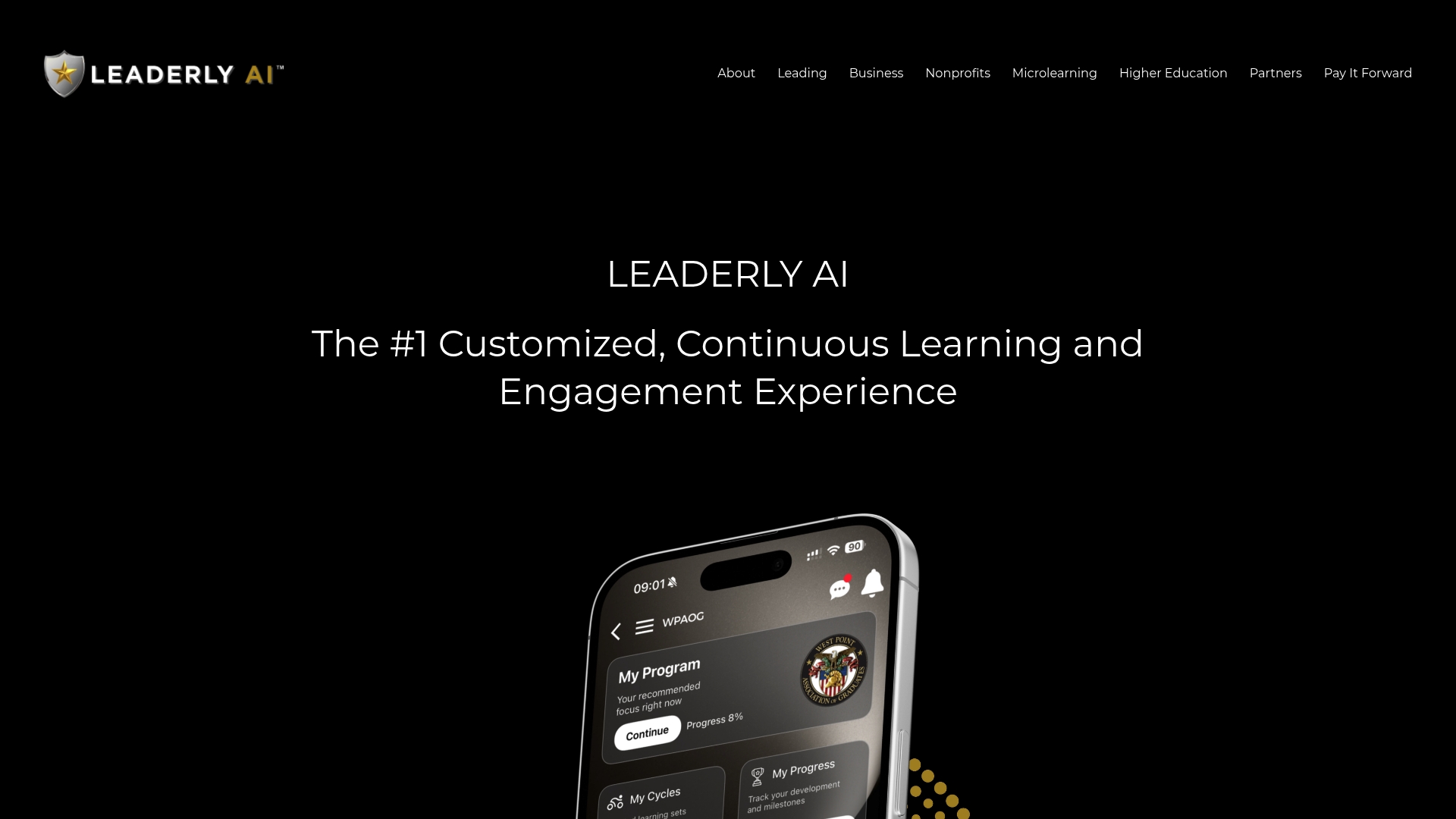
Leaderly AI is a mobile-first platform for organizations that delivers personalized, AI-driven leadership development through microlessons and behavioral habit-building exercises. It includes self-assessments (DiSC, EQ and MBTI among them), customizable learning journeys, analytics dashboards, surveys and simulations. It is designed so HR teams or educators can offer development to all employees, not just managers, and it serves corporate, nonprofit and educational settings.
If you are choosing between DiSC and MBTI, you do not have to build the follow-through yourself. Explore Leaderly AI for your organization, or see the versions for higher education and nonprofits.
Pricing is tiered by organization size or user count, with custom plans available.
Our perspective
Most debates about DiSC versus MBTI start from the wrong end. People ask which test is better, when the better question is what happens on Tuesday after the results arrive.
We believe leadership is a set of habits, and habits form through frequent, small, personal practice. A profile is a good first mirror. It gives someone words for something they half knew. But a mirror does not change a behavior. A short lesson tomorrow, an exercise next week and a reflection the week after do.
That is why we pair assessments with microlessons that adapt to each person's journey, and why we want development to reach every employee, volunteer or student, not only people with a manager title. Affordable, accessible leadership growth for everyone is the point.
If you choose DiSC, choose it for how your team communicates. If you choose MBTI, choose it for reflection. Either way, keep it voluntary, keep it framed as tendencies, and keep practicing.
Drew
FAQ
Is DiSC or MBTI better for the workplace?
For team communication and working-style conversations, DiSC is usually the more direct fit because it describes observable behavior at work. MBTI suits personal reflection on how people take in information and decide. Choose by the problem you want to solve, and treat both as development aids.
Can we use DiSC or MBTI to hire people?
No. The MBTI publisher's code of ethics states that using results to screen job applicants is unethical, and the validity findings on DiSC give the same reason for caution. Use either tool for development with voluntary participation, not for selection.
Are MBTI results stable over time?
Partly. Research reports solid reliability on individual scales, but in one synthesis only 65% of people received the same four-letter type on a four-week retest. People near the middle of a scale may see their letters shift, so read results as preferences, not fixed labels.
Can we use both assessments in one program?
Yes, as long as each has a clear purpose. A common pattern is DiSC for team communication and MBTI or EQ for individual reflection, followed by the same set of small practice habits so people are not left with two sets of labels and no action.
Sources
- City of Madison: DISC, StrengthsFinders and MBTI overview
- MBTI Code of Ethics
- Validity and Reliability of the Myers-Briggs Personality Type Indicator (2017 meta-analysis)
- A 25-Year Review and Psychometric Synthesis, Journal of Counseling & Development
- The DISC Personality Quiz: Popular, Profitable, and Scientifically Questionable
- Why You Shouldn't Always Trust Personality Tests, Psychology Today