
Why feedback is essential for leadership success
Feedback is the single most direct path a leader has to knowing whether they're actually leading well. Not performance reviews, not gut instinct, not tenure. Feedback, given and received consistently, is what separates leaders who grow from those who stagnate.
The case for making feedback a core leadership skill comes down to four things:
- Trust and psychological safety. Teams that receive regular, honest feedback from their leaders feel safer speaking up, flagging problems, and taking calculated risks. That safety is the foundation of high performance.
- Self-awareness. Leaders can't fix what they can't see. Feedback surfaces blind spots that no amount of self-reflection alone will reveal.
- Continuous improvement. Continuous feedback creates a learning loop that keeps both leaders and teams improving rather than coasting.
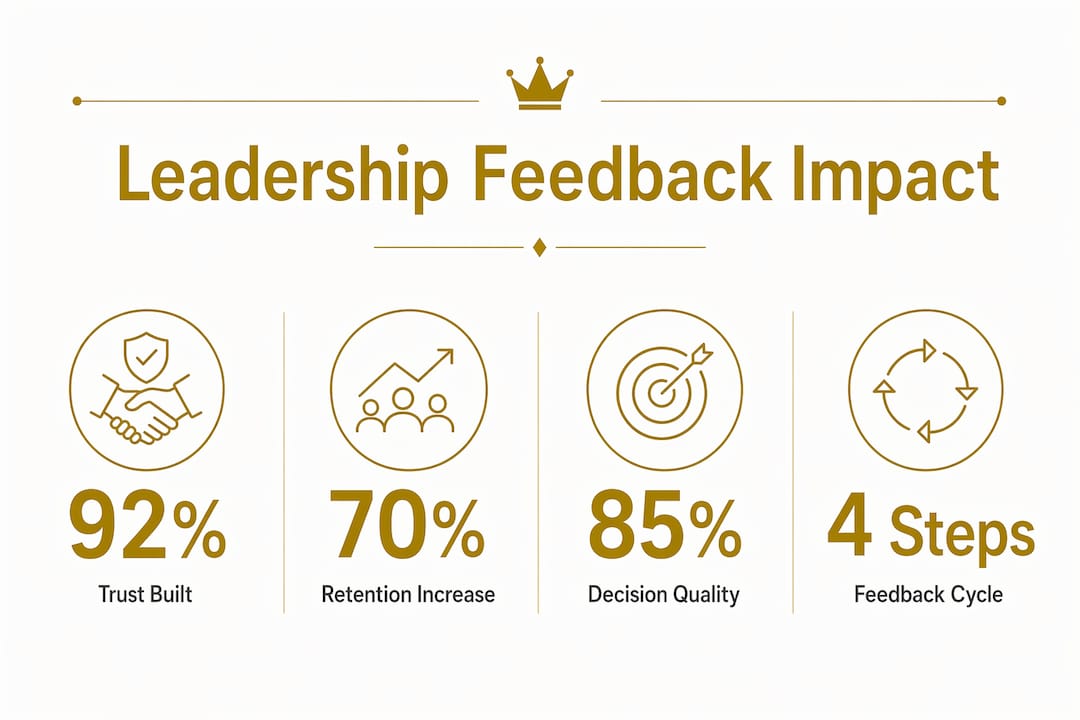
- Motivation and engagement. Employees with weekly feedback feel supported at a 92% rate, versus 59% with annual feedback only.
The importance of feedback in leadership isn't a soft skill argument. It's a performance argument backed by behavioral science and organizational data.
Table of Contents
- The psychology behind effective feedback in leadership
- How feedback drives organizational performance
- Key strategies for giving and receiving feedback effectively
- How feedback develops the skills that define great leaders
- Common misconceptions that keep leaders from using feedback well
- How Leaderlyapp supports continuous leadership feedback and development
- Key Takeaways
- Leaderlyapp turns feedback knowledge into leadership practice
The psychology behind effective feedback in leadership
Feedback triggers an emotional response before it triggers a cognitive one. That's not a character flaw in your team members. It's neuroscience. When people hear critical feedback, the brain's threat-detection system activates, and the instinct is to defend, not to learn.
This is why feedback focused on behavior and impact rather than character or personality lands so differently. "You interrupted three people in today's meeting" is observable and specific. "You're dismissive" is a character judgment that puts someone on trial. The first opens a conversation; the second closes it. A meta-analysis found that one-third of feedback interventions are ineffective, and another third actually worsen performance, largely because of poor delivery and the emotional reactions it triggers.
Leaders who give feedback well have usually done the inner work first. They regulate their own emotional state before the conversation, which keeps the exchange from becoming reactive on both sides. Presence matters here: a distracted or visibly frustrated leader signals that the conversation is a formality, not a genuine exchange.
Creating psychological safety is the longer game. When team members trust that honest feedback won't be punished, they stop filtering what they say. That openness is what makes feedback a leadership tool rather than just a management ritual.
Pro Tip: Use language that targets the action, not the person. "When you send reports without the summary section, the executive team has to dig for context" is specific, behavior-focused, and gives the person something concrete to change.

How feedback drives organizational performance
Organizations that build open feedback cultures don't just feel better to work in. They perform measurably better. Companies encouraging open and continuous feedback are 4.2 times more likely to outperform their competitors.
4.2x — Organizations with open, continuous feedback cultures are 4.2 times more likely to outperform their competitors. (Source)
The mechanism isn't mysterious. When feedback flows freely, decision-making improves because leaders hear what's actually happening on the ground rather than a polished version of it. Problems surface earlier, when they're still fixable. Teams that know their input shapes outcomes feel accountable for those outcomes, which drives both innovation and follow-through.
Retention is another direct benefit. Leaders who give feedback regularly signal to their teams that individual growth matters to the organization. That signal keeps talented people from quietly deciding to look elsewhere. The connection between feedback culture and retention isn't incidental. It's one of the clearest patterns in modern workforce research.
Key strategies for giving and receiving feedback effectively
The most effective feedback habits are two-directional. Leaders who only give feedback but never solicit it create a one-way dynamic that erodes trust over time. Asking for feedback as often as you give it is what makes the exchange feel like a genuine conversation rather than a performance evaluation.
Best practices for giving feedback:
- Be specific and timely. Feedback loses impact when it's vague or delayed. Address the behavior close to when it happened, and name exactly what you observed.
- Focus on impact. Connect the behavior to a concrete outcome: what happened as a result, and why it matters to the team or the work.
- Choose the right setting. Corrective feedback belongs in private. Recognition can go public, but even then, know your audience. Some people find public praise uncomfortable.
- Stay curious, not prescriptive. Ask what the person was trying to achieve before telling them what they should have done differently.
Best practices for receiving feedback:
- Resist the urge to explain. The first response to critical feedback should be a question, not a defense. "Can you tell me more about what you observed?" keeps the conversation open.
- Thank the person. Feedback takes courage to give, especially upward feedback. Acknowledging that explicitly makes it more likely to happen again.
- Follow through visibly. The most powerful signal you can send is acting on what you heard.
Leaders who actively ask for feedback build trust and psychological safety faster than those who wait for it to arrive. Asking is itself a leadership behavior.
Pro Tip: After receiving feedback, send a brief follow-up note a few weeks later describing one specific change you made based on what you heard. It closes the loop and shows the feedback wasn't performative.
How feedback develops the skills that define great leaders
Self-awareness sits at the center of nearly every leadership competency model, and feedback is the primary mechanism for building it. You can't develop what you can't see, and most leaders have at least a few blind spots that their own reflection won't surface. Feedback from peers, direct reports, and managers reveals the gap between how a leader thinks they're showing up and how they're actually landing.
"Leadership development is fundamentally human development. The challenge lies in managing emotional responses to feedback to promote learning rather than defensive reactions." (Harvard Business Review)
Empathy develops through feedback in a way that's hard to replicate through training alone. When a team member tells a leader that a particular communication style felt dismissive, that leader gets a direct window into another person's experience. Over time, those windows accumulate into a richer understanding of how different people process information, pressure, and recognition.
Regular feedback cycles also normalize the growth mindset that effective leadership requires. When feedback is a routine part of how a team operates, receiving it stops feeling like a verdict and starts feeling like useful data. Leaders who model this shift, treating their own development as ongoing rather than complete, give their teams permission to do the same.

Consider a mid-level manager who consistently received feedback that her team felt micromanaged. Her instinct was to defend her approach as thoroughness. But when she started asking her team specific questions about which decisions they wanted more autonomy over, the dynamic shifted. Within two quarters, her team's project completion rate improved and two team members took on stretch assignments they'd previously avoided. The feedback didn't just change her behavior. It changed what her team believed was possible.
Emotional intelligence and leadership effectiveness are deeply connected, and feedback is one of the most direct ways to build both.
Common misconceptions that keep leaders from using feedback well
The most persistent myth about feedback is that needing it signals weakness. Senior leaders especially tend to operate under the assumption that asking for input undermines their authority. The opposite is true. Requesting feedback is recognized by leadership researchers as a high-trust behavior that builds credibility, not one that erodes it.
Power dynamics create a specific and underappreciated problem at the top of organizations. Senior leaders often receive little honest feedback because the people around them are reluctant to deliver it. The result is a feedback void that produces leadership blind spots and reduces organizational agility. The leaders who most need honest input are often the ones least likely to get it.
Fear of conflict is another common barrier. Leaders who avoid giving corrective feedback to preserve harmony usually end up with the opposite: unresolved performance issues that fester, team members who feel their contributions aren't differentiated, and a culture where mediocrity goes unchallenged. Avoiding feedback doesn't protect relationships. It just delays the damage.
A feedback void at any level of an organization creates silence and disengagement that harm both innovation and team performance. Senior leaders who want to break this pattern need to do more than say they're open to feedback. They need to actively and repeatedly signal that honest input is welcome, even when it's uncomfortable.
Common questions leaders ask about feedback:
"Won't asking for feedback make me look uncertain?" No. Research consistently shows that leaders who solicit feedback are rated as more effective and more trustworthy by their teams, not less.
"What if the feedback I receive is unfair or wrong?" Even inaccurate feedback tells you something about perception. How others experience your leadership is data, regardless of whether their interpretation is correct.
"How do I give feedback to someone who gets defensive every time?" Start with the relationship, not the feedback. Defensiveness usually signals a lack of psychological safety. Build trust first through smaller, positive exchanges before addressing harder topics.
How Leaderlyapp supports continuous leadership feedback and development
Building a feedback habit is harder than understanding why it matters. The gap between knowing and doing is where most leadership development efforts stall. Leaderlyapp is built specifically to close that gap.
The platform delivers personalized microlessons grounded in behavioral science, which means leaders get targeted content on feedback skills, emotional regulation, and self-awareness rather than generic training modules. Machine learning adapts the content to each leader's specific development journey, so the experience gets more relevant over time, not less.
For organizations, Leaderlyapp supports feedback at scale. Leaders can track their own progress, identify recurring blind spots, and build the kind of consistent feedback habits that research links to higher team engagement and retention. The platform makes continuous, two-way feedback a structural part of how leaders develop rather than an occasional event.
Pro Tip: Use Leaderlyapp's microlessons before a difficult feedback conversation. A five-minute lesson on behavior-focused language or emotional regulation can shift the entire tone of the exchange.
Developing leadership skills through people-centric practices is exactly what Leaderlyapp is designed to support, from emerging leaders building their first feedback habits to senior leaders working to break the feedback silence that power dynamics create.
Key Takeaways
Feedback is the foundational leadership skill that drives self-awareness, trust, team performance, and organizational growth when practiced consistently and with intention.
| Point | Details |
|---|---|
| Feedback builds trust fast | Employees with weekly feedback feel supported at a 92% rate, versus 59% with annual feedback only. |
| Behavior focus reduces defensiveness | Feedback aimed at observable actions rather than character keeps conversations productive and learning-oriented. |
| Feedback cultures outperform | Organizations with open feedback cultures are 4.2 times more likely to outperform their competitors. |
| Senior leaders are most feedback-deprived | Power dynamics create a feedback void at the top; proactively signaling openness is the fix. |
| Leaderlyapp builds the habit | Personalized microlessons and behavioral science tools help leaders practice feedback skills continuously, not just in training. |
Leaderlyapp turns feedback knowledge into leadership practice
Most leaders understand that feedback matters. The harder part is making it a consistent, skilled practice rather than something that happens when a situation forces it. That's the gap Leaderlyapp fills.
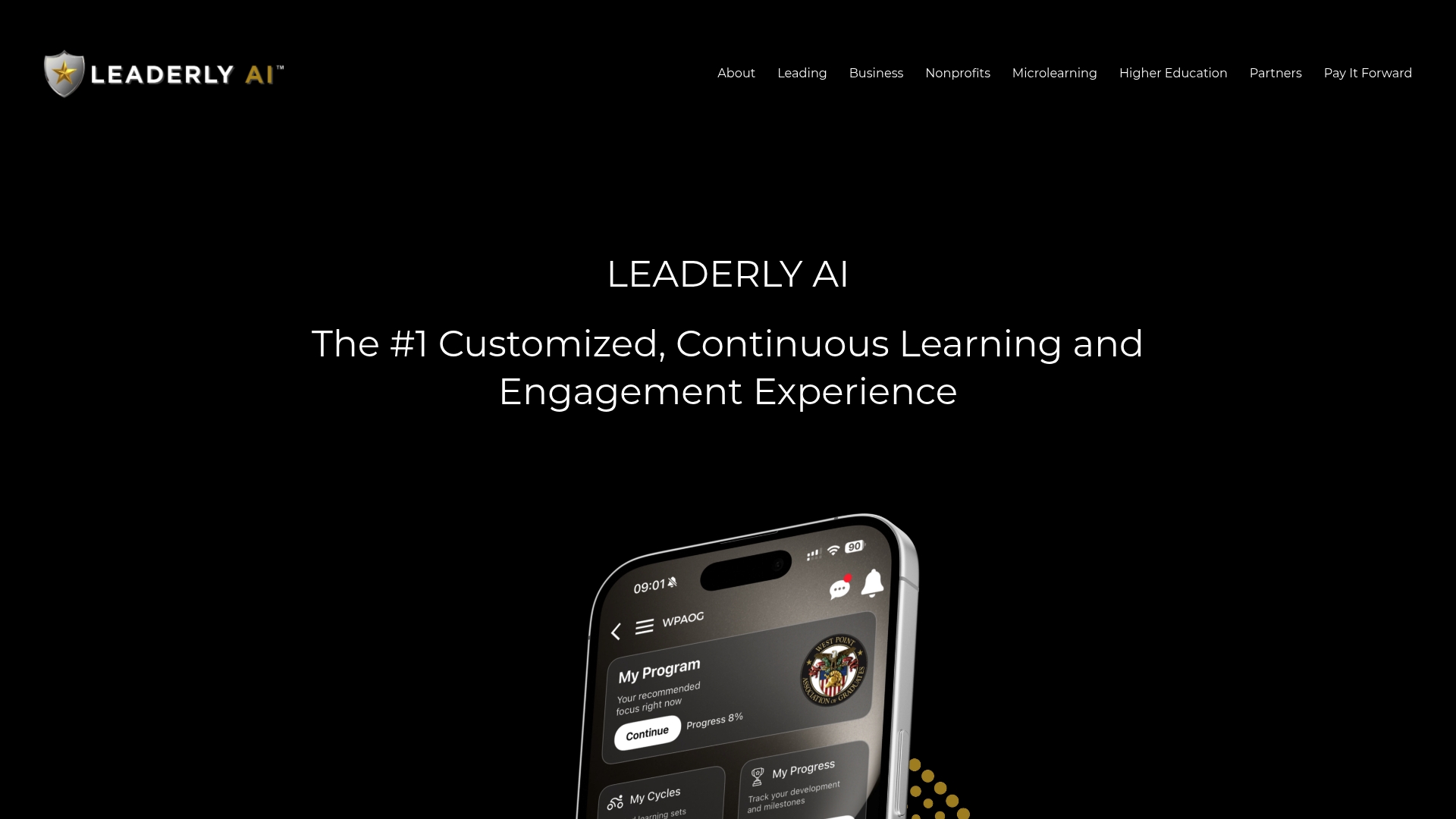
Leaderlyapp delivers personalized, science-backed microlessons that build real feedback skills over time, not in a single workshop. Leaders at every level, from first-time managers to senior executives, get content tailored to where they actually are in their development. The platform tracks progress, surfaces blind spots, and adapts as each leader grows. For organizations looking to build a genuine feedback culture rather than just talk about one, Leaderlyapp offers a practical, affordable path that scales across teams without requiring a dedicated L&D budget.
Ready to make feedback a real leadership strength? Start building your leadership skills with Leaderlyapp today and see how daily microlearning translates into the kind of leadership your team actually responds to.