
Coaching is a short-term, goal-focused partnership built to close a specific skill or performance gap, while mentoring is a longer-term relationship built on shared experience and career guidance. Pick coaching when you need to fix or sharpen something measurable within weeks or months. Pick mentoring when you're navigating a career path and need someone who has walked it before. Many professionals eventually use both, at different points in the same career.
TL;DR:
- Coaching is short-term and goal-oriented, suitable for fixing specific skills within weeks or months, while mentoring is a long-term relationship focused on career development.
- Formal coaching often includes measurable success metrics and credentials from bodies like ICF, whereas mentoring relies on experience and reputation without formal certification.
- Coached relationships tend to be structured with clear scope and confidentiality protocols, unlike mentoring, which is generally informal and less bounded.
- Combining coaching and mentoring enhances development, with coaching improving immediate skills and mentoring guiding long-term career progression.
- Selecting between the two depends on whether the problem is specific and time-bound or open-ended and career-level, with clear success indicators for each.
Table of Contents
- What coaching and mentoring actually mean
- Key differences between coaching and mentoring
- Where coaching and mentoring overlap
- How do you choose between a coach and a mentor?
- How do you find and set up a coach or mentor relationship?
- Can one person be your mentor and your coach?
- What does the research actually say
- What I'd tell a friend deciding between the two
- A different way to build leadership skills at scale
- Sources
- FAQ
What coaching and mentoring actually mean
Coaching, as defined by professional bodies, is a partnership between coach and client that uses structured conversation, goal setting, and pointed questions to help the client find their own answers. The coach doesn't tell you what to do. They ask the questions that help you figure it out yourself, then hold you accountable to the plan you set.
Mentoring works differently. A mentor draws on their own career and experience to guide someone earlier in the path, sharing advice, making introductions, and sometimes acting as a sponsor who advocates for the mentee when opportunities arise. A mentor is less a facilitator and more a guide who has already been where you're trying to go.
A quick contrast in practice: someone struggling to land a pitch might work with a coach for six weeks on structure, delivery, and handling questions. Someone deciding whether to pursue a director-track role five years out is better served by a mentor who has made that climb and can talk through the tradeoffs.
Both roles show up in several formats:
- Internal coaching, where a trained employee or manager coaches colleagues as part of a company program.
- External coaching, hired independently or through an organization's leadership program for a defined engagement.
- Formal mentoring programs, where organizations pair employees with more senior mentors on a structured cadence.
- Peer mentoring, where colleagues at similar levels exchange guidance and perspective.
- Virtual coaching or mentoring, delivered over video or through digital platforms to widen access.
The right format depends heavily on what you're solving for, which is where the differences below become useful.
Key differences between coaching and mentoring
- Time horizon. Coaching engagements typically run weeks to a few months around a defined goal; mentoring relationships often last years and evolve with the mentee's career.
- Orientation. Coaching targets performance and specific outcomes; mentoring targets development, perspective, and long-term growth.
- Method. A mentor shares advice and models behavior from experience; a coach uses structured, powerful questions so the client reaches their own conclusions, a distinction the Duke Office for Faculty Advancement lays out clearly for anyone choosing between the two.
- Structure and measurement. Coaching often includes formal agreements, defined success metrics, and sometimes assessments like 360 reviews; mentoring tends to be less formal, measured more by career trajectory and sponsorship than KPIs.
- Credentials. Professional coaching has accrediting bodies such as the ICF and EMCC that define competencies and issue credentials; mentoring credibility rests on relevant experience and reputation rather than certification.
- Confidentiality and role conflict. Coaches typically maintain near-absolute confidentiality and stay outside the client's reporting chain, according to the same Duke guidance. Mentors, especially internal ones, may sit closer to evaluators or decision-makers, which means confidentiality boundaries need to be spelled out early.
Pro Tip: If you're not sure which you need, ask whether the problem has a deadline. A deadline points to coaching; a horizon points to mentoring.
Where coaching and mentoring overlap
The two aren't competing options so much as different tools for different jobs, and they share real common ground. Both provide individualized attention that generic training can't match, both push people to solve real problems rather than hypothetical ones, and both are linked to better performance and retention.
The evidence for that last point is strongest on the coaching side. A randomized controlled study out of Stanford found coached college students were 5.2 percentage points more likely to still be enrolled after six months, with a 3.4 percentage point higher retention rate after 24 months compared to peers who weren't coached. The same research points to corporate leadership-development trials showing effect sizes as high as d = 1.1, a notably strong result for a workplace intervention.
Organizations that get the most out of both tend to combine them rather than pick one:
- Pairing new hires or emerging leaders with a mentor for long-term orientation and sponsorship.
- Bringing in a coach for leaders facing a specific transition, like a promotion to their first people-management role.
- Using structured coaching programs alongside informal mentoring networks so employees have both a sounding board and a skills partner.
How do you choose between a coach and a mentor?
Three questions will get you most of the way to an answer.
- Is the problem specific and timebound, or open-ended and career-level? A defined skill gap, like public speaking or delegation, points to coaching. A question like "should I move into management" points to mentoring.
- Do you need someone to ask you the right questions, or someone who's already answered them? Coaches facilitate your own thinking. Mentors offer a shortcut built on their own experience.
- How will you know it worked? Coaching usually has a measurable endpoint. Mentoring is judged more by whether you feel better equipped to navigate what's next.
A few scenarios make this concrete. A new manager who struggles to deliver hard feedback needs coaching, ideally over eight to twelve weeks with a clear before-and-after measure, like a direct report survey. A mid-career employee eyeing a director role in three years needs a mentor who has made that jump and can open doors along the way. Someone doing both, building a skill now while planning a career move later, is a candidate for a coach and a mentor running in parallel.
How do you find and set up a coach or mentor relationship?
Start with what's already available. Many employers run internal coaching or mentoring programs; if not, professional directories tied to accrediting bodies and personal referrals are the next best sources. Paid coaches typically work under a formal contract with defined fees; mentors are more often volunteers, whether internal colleagues or people you approach directly.
Before committing, check a few things:
- Credentials, such as an ICF certification for coaches, matter more for coaching than mentoring, where relevant experience carries more weight.
- References or track record from people who've worked with this coach or mentor before.
- Sector relevance, especially for mentors, since career advice lands better from someone who has navigated a similar path.
- Red flags include vague promises of guaranteed outcomes or an unwillingness to put scope and confidentiality in writing.
Once you've found a fit, a simple written agreement should cover scope, confidentiality, meeting cadence, fees or time commitment, how you'll know it's working, and how either party can end the arrangement. In a discovery call, ask directly how they define success, what a typical engagement looks like, and how they'll handle a session that goes off track.
Pro Tip: Put the exit terms in writing before the first session. It's the clause everyone skips and the one that prevents an awkward ending.
For mentoring specifically, these characteristics are worth screening for before you ask someone to take on the role.
Can one person be your mentor and your coach?
Yes, but not usually at the same time within the same conversation. The skills overlap enough that an experienced mentor can coach you through a specific problem, and a coach with deep sector experience may end up giving mentoring-style advice. The issue is clarity, not capability.
The clearest risk shows up when a manager tries to coach a direct report on performance while also evaluating that person's raises and promotions. The dual role muddies confidentiality and makes honest disclosure harder for the employee, which is why many organizations separate coaching relationships from the reporting line entirely.
If the same person plays both roles over time, a short written note on which mode you're in for a given conversation, coaching or mentoring, keeps expectations clear and avoids the mentee wondering whether they're getting a question or an answer. Good mentoring guidance generally recommends stating that boundary up front.
What does the research actually say
The strongest evidence for coaching's impact comes from randomized trials rather than testimonials. Beyond the Stanford retention findings already cited, a peer-reviewed overview in PMC concludes that mentoring tends to be informal and development-driven while coaching is more structured and goal-oriented, and that both work best alongside formal training rather than as a replacement for it.
Mentoring is typically informal and development-oriented while coaching is more structured and goal-oriented; both complement formal training and must be contracted or agreed to avoid expectation mismatches.
Trust signals worth checking before you commit to either route include ICF or EMCC competency standards for coaches and a written mentoring agreement that spells out scope and confidentiality for mentors.
For organizations weighing one-off coaching engagements against something that reaches more people, Leaderly AI offers scalable, personalized leadership development built around microlearning and behavioral habit-building, positioned as a complement to individual coaching rather than a replacement for high-sensitivity, one-on-one work.

What I'd tell a friend deciding between the two
Most people overthink the choice. If you can name the skill you're missing and a date you need it fixed by, get a coach. If you're staring down a fork in your career with no clear map, find a mentor who has already walked one of those paths. The mistake isn't picking the wrong one, it's picking neither and hoping the problem resolves itself.
Whichever you choose, put the agreement in writing and check in on progress every few weeks. Vague arrangements are the most common reason coaching and mentoring relationships fizzle out.
— Drew
A different way to build leadership skills at scale
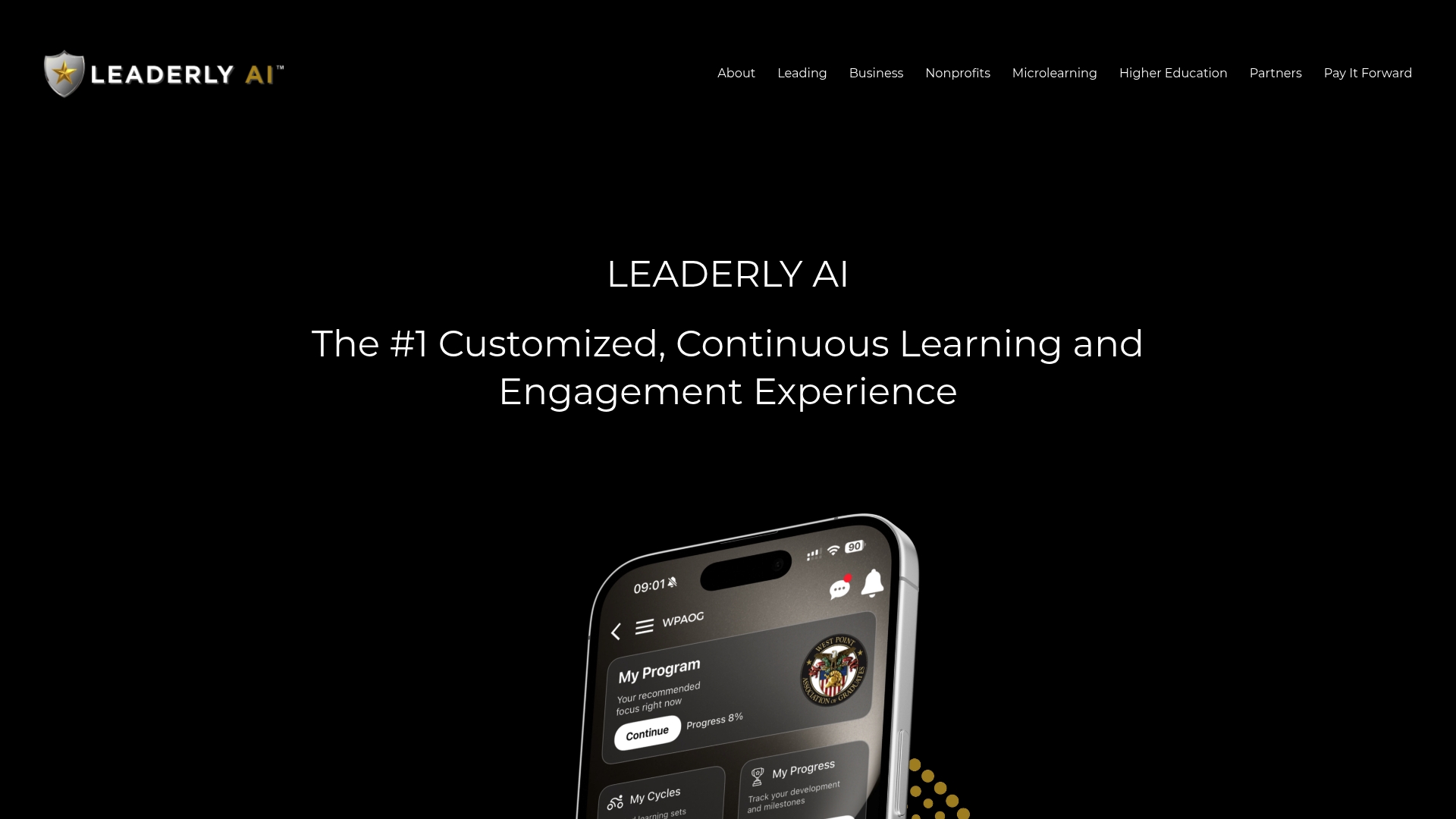
Individual coaching and mentoring both work best when they're built around one person's specific problem, but that model gets expensive and hard to standardize once you're trying to develop dozens or hundreds of people at once. That's the gap Leaderly AI is built to fill. Instead of a single coach working with a single client, Leaderly AI delivers personalized microlessons, behavioral exercises, and self-assessments to every employee, adjusting as each person's habits develop.
Leaderly AI tends to fit best when:
- An organization needs a consistent leadership curriculum across a large cohort, not just senior managers.
- HR or L&D teams want analytics dashboards to track engagement and progress across teams.
- Budget or headcount makes one-on-one coaching for every employee unrealistic.
Individual coaching and mentoring still matter most for high-sensitivity conversations and career sponsorship, the kind of work a platform can't replace. For everything else, from building consistent habits to giving every employee, not just the top of the org chart, a path to grow, explore Leaderly AI for your organization.
Sources
- Stanford study shows college student coaching improves retention and graduation rates
- Mentoring vs. Coaching: Why Faculty Need to Know the Difference | Duke Office for Faculty Advancement
- Do I need a mentor or a coach? | PMC (peer-reviewed article)
FAQ
How is mentoring different from coaching?
Mentoring relies on a mentor's own experience to guide someone's career over the long term, while coaching uses structured, goal-focused questioning to help a client solve a specific, often shorter-term problem. Mentors tend to advise; coaches tend to ask.
Can a mentor be a coach?
The same person can take on both roles, but usually not in the same conversation or relationship at once. Clarity about which mode you're in, and separating coaching from any evaluative relationship like a direct manager role, keeps the arrangement useful for both sides.
What are the three A's of mentorship?
Definitions vary across programs and organizations, so there's no single agreed standard for this framework. If a specific mentoring program uses it, check that program's own materials for its exact definition.
What is the difference between a mentor and a career coach?
A mentor draws on personal experience to guide someone's overall career path, often including introductions and sponsorship. A career coach uses a more structured, question-led process focused on a defined goal, such as landing a specific role or improving interview performance, within a set timeframe.