
Learning data privacy means building working knowledge of the laws, technical methods, and organizational practices that govern how personal information is collected, used, and protected. For most people the fastest useful step is a foundational course, followed by IAPP certification prep for compliance roles or hands-on labs in differential privacy for engineers. The NIST Privacy Framework is the reference point worth anchoring your study plan around either way.
TL;DR:
- Completing a foundational course or IAPP certification prep provides a practical entry point; advanced skills involve conducting DPIAs and understanding anonymization limits.
- Focus on core domains such as law, engineering, governance, and ethics, especially understanding jurisdictional differences and technical risk assessments like DPIAs.
- Choose courses based on your career goal: microcourses for quick skill gaps, academic certificates for credentials, or vendor training for certification prep, favoring those with practical exercises.
- The CIPP/US credential remains the most recognized for U.S. compliance roles, with CIPM and CIPT suited for program management and engineering respectively.
- Master key frameworks like NIST Privacy Framework functions and technical concepts such as privacy by design and differential privacy to strengthen cross-functional privacy value.
Table of Contents
- What to learn: core domains and topics
- How to learn: formats, time, and cost expectations
- Certifications and credentials employers recognize
- Key technical concepts and frameworks to master
- How to choose the right course or learning path
- Recommended starting courses and programs
- Why privacy skills compound across careers
- An organizational alternative for ongoing privacy habits
- Sources
- FAQ
What to learn: core domains and topics
Privacy knowledge splits into four broad domains: law and regulation, privacy engineering, governance, and ethics. A syllabus that only covers one of these will leave gaps that show up quickly on the job or in an interview.

Within those domains, a few concrete subtopics come up constantly. Personal data and personally identifiable information (PII) definitions vary by law, so you need to understand how scope changes across jurisdictions. Privacy impact assessments (PIAs) and data protection impact assessments (DPIAs) are the standard tools for evaluating risk before a project launches. Consent management, data inventories, and data minimization form the operational backbone of most compliance programs, while anonymization limits and differential privacy sit at the technical edge where legal requirements meet engineering reality.
A beginner should be able to explain what counts as personal data and draft a basic data inventory. An advanced learner should be able to run a DPIA on a real system and explain where anonymization fails against modern reidentification techniques.
- Law and regulation: sector-specific rules, breach notification, cross-border transfer basics.
- Privacy engineering: data flow mapping, anonymization techniques, differential privacy fundamentals.
- Governance: policy drafting, vendor risk assessment, records of processing activity.
- Ethics: balancing business use of data against individual harm and trust.
How to learn: formats, time, and cost expectations
Course formats trade speed against depth, and picking the wrong one wastes months. Microcourses on platforms like LinkedIn Learning take a few hours and suit someone who needs a single concept explained quickly. Platform specializations, such as Coursera's modular privacy tracks, run several weeks and mix theory with light practice. Academic certificates from institutions like Harvard Online take longer, cost more, and carry more weight on a resume. Vendor training and bootcamps sit in between, often built around a specific certification exam.
- Microcourses (1 to 5 hours, often free to $50): best for filling a specific knowledge gap fast.
- Platform specializations (2 to 6 weeks, free to a few hundred dollars): best for a structured beginner foundation.
- Academic certificates (a few weeks of part-time study, several hundred to over $1,000): best for a career pivot or resume credential, as with Harvard Online's Data Privacy and Technology course, which runs 4 to 5 hours a week and is a paid program with no coding background required.
- Vendor or exam-prep training (days to a few weeks, a few hundred to over $1,000): best for someone targeting a specific certification like CIPP/US.
- Bootcamps (weeks to a few months, often $1,000 or more): best for a full career change into a privacy-focused technical role.
If you are aiming for a compliance role, start with a foundational course and move straight into certification prep. If you are an engineer, prioritize formats with hands-on labs over lecture-heavy ones.
Certifications and credentials employers recognize
Professional certification remains the clearest signal to employers that someone has verified privacy knowledge, and IAPP issues the credentials most widely recognized in the field. CIPP/US covers U.S. private-sector privacy law and is the standard entry point for compliance-focused roles. CIPM focuses on building and running a privacy program, while CIPT is built for engineers and technical staff who need to embed privacy into product design.
CIPP/US carries ANAB accreditation, and it is widely recognized by employers hiring for U.S. privacy compliance roles, which makes it a reasonable first target for most learners entering the field.
- CIPP/US: U.S. federal and state privacy law, sectoral rules, and enforcement basics.
- CIPM: privacy program design, governance, and ongoing operational management.
- CIPT: privacy engineering, technical safeguards, and product-level implementation.
- Academic certificates like Harvard Online's can complement IAPP credentials, especially for learners without a legal or technical background.
Most candidates prepare for IAPP exams through dedicated training rather than self-study alone, since the material spans overlapping federal and state statutes that are easy to mix up without structured review.
Key technical concepts and frameworks to master
The NIST Privacy Framework organizes privacy risk management into five functions: Identify-P, Govern-P, Control-P, Communicate-P, and Protect-P. Organizations use it to translate privacy values into concrete, measurable outcomes, and it is built to work alongside existing legal and regulatory requirements rather than replace them. Learning the five functions gives you a shared vocabulary with the privacy teams you will eventually work alongside.
Beyond the framework itself, a few technical concepts deserve hands-on practice. Privacy by design means building safeguards into a system from the start rather than bolting them on later. Differential privacy and the limits of traditional anonymization matter increasingly for anyone working with machine learning, since modern research shows models can memorize training data in ways that make naive anonymization vulnerable to extraction.
- Practice building a data inventory for a small sample application or dataset.
- Run a mock DPIA on a hypothetical product launch.
- Experiment with a differential privacy library on a public dataset to see how noise affects accuracy.
- Draft a privacy-by-design checklist for a feature you use every day.
Pro Tip: Use sandboxed or public datasets when practicing anonymization and differential privacy techniques, never live personal data.
How to choose the right course or learning path
A quick screening process saves you from wasting money on a course that looks good but teaches nothing you can use. Check whether the syllabus lines up with the domains covered above, whether the course includes hands-on exercises rather than only video lectures, and whether the credential is recognized outside the platform that issued it.
- Compare the syllabus against core domains: law, engineering, governance, and ethics.
- Confirm the course includes graded assessments or practical exercises, not just video playback.
- Check whether the credential is accredited or widely cited by employers, as CIPP/US is through ANAB.
- Estimate the real time commitment against your schedule, not just the advertised course length.
- Weigh the cost against the career outcome you are targeting.
Watch for red flags: no final assessment, vague learning outcomes like "master data privacy," or credential claims that sound impressive but map to no recognized body. Before enrolling, ask providers three questions: what does a graduate actually walk away able to do, is the certificate recognized by employers in your target field, and what is the real weekly time commitment.
Recommended starting courses and programs
A handful of programs cover most learner needs without overlap. Coursera's Data Privacy Fundamentals course is a solid entry point for beginners, covering core theories along with privacy issues in social media and AI in a self-paced, modular format. Harvard Online's Data Privacy and Technology certificate suits learners who want an academic credential and can commit 4 to 5 hours a week for the paid program.
For anyone targeting a compliance career, IAPP's own CIPP/US training addresses the tangle of federal and state privacy rules directly, including sectoral laws and enforcement policy. It is built specifically for the certification exam. LinkedIn Learning offers shorter, modular tracks that work well for filling specific gaps once you already have a foundation.
- Coursera, Data Privacy Fundamentals: beginners, self-paced, several weeks.
- Harvard Online, Data Privacy and Technology: career changers wanting an academic credential, 4 to 5 hours weekly.
- IAPP CIPP/US training: compliance-track professionals preparing for certification.
- LinkedIn Learning privacy tracks: working professionals filling specific skill gaps.
Stack these deliberately: a foundational course first, then a credential-bearing certificate or IAPP prep, then targeted microcourses to keep skills current.
Why privacy skills compound across careers
Cross-functional privacy knowledge makes you useful in legal, product, and engineering conversations at once, which is rare enough to matter in hiring. Build evidence of skill along the way: a sample DPIA, a draft privacy policy, or a small audit of a real (or practice) system. Treat the learning as ongoing rather than a one-time course, since regulations and technical risks keep shifting.
— Drew
An organizational alternative for ongoing privacy habits
Formal courses and certifications build the knowledge base, but knowledge fades without repetition. That is where scalable microlearning fits: short, recurring lessons that keep privacy awareness active across an entire workforce, not just the people who took a course once. Leaderly AI builds this kind of continuous learning into its platform, using behavioral science and habit-based microlessons to keep concepts like data minimization or consent practices part of daily work rather than a one-time training memory.
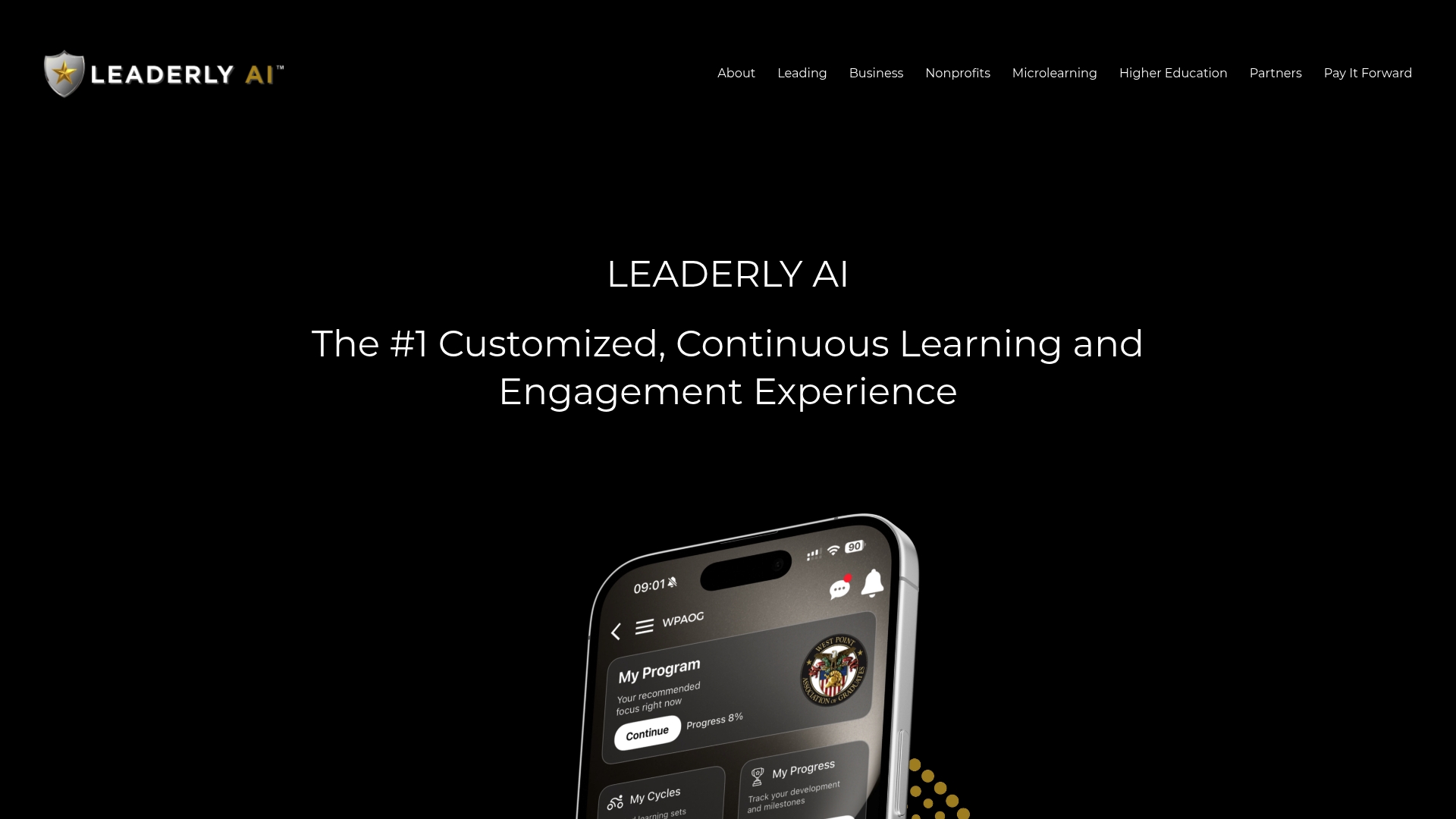
The platform is not a substitute for CIPP/US or a university certificate. It is built for organizations that already have people trained and want to keep that knowledge sharp across teams over time.
- Scales privacy awareness across an entire organization, not just specialists (claim about Leaderly scaled coverage removed).
- Uses microlearning to reinforce habits between formal training cycles (specific method claim removed).
- Fits HR and L&D teams building continuous professional development programs for staff at every level.
If your organization wants a practical way to keep privacy awareness alive after the certificates are earned, see how Leaderly's programs work.
Sources
For primary references, start with IAPP's certification pages, the NIST Privacy Framework document and its getting-started guidance, and Harvard Online's course page. Learners handling education records may also find identity verification and compliance guidance useful for governance practice.
- IAPP certification
- NIST Privacy Framework: A Tool for Improving Privacy through Enterprise Risk Management, Version 1.0
- Data Privacy and Technology (Harvard Online)
FAQ
What are the 7 principles of data privacy?
Definitions vary across frameworks and regulations, so there is no single universal list of seven principles. Common themes across privacy laws and frameworks like NIST's include data minimization, purpose limitation, consent, transparency, security safeguards, accountability, and individual rights over personal data.
Is there a free course in data privacy?
Yes, several platforms offer free or low-cost introductory privacy courses, including modular tracks on Coursera that cover foundational theories and applications. Paid academic certificates and IAPP certification training generally cost more but carry stronger recognition for career advancement.
What are the four types of data privacy?
There is no single standardized "four types" classification used across the privacy field. Learners typically encounter categories like informational privacy, communications privacy, bodily privacy, and territorial privacy in general privacy law discussions, though frameworks and jurisdictions define these boundaries differently.
What are the 7 types of privacy?
As with the seven principles, there is no universally agreed list of seven privacy types, and different scholars and regulators categorize privacy differently. Most frameworks touch on informational, communications, bodily, territorial, and increasingly digital or data privacy as overlapping categories rather than a fixed set of seven.
Which certification should I pursue first for a privacy career?
For most people targeting compliance roles, CIPP/US is the standard starting credential since it is ANAB-accredited and widely recognized by employers hiring for U.S. privacy compliance work. Engineers building privacy into products often pursue CIPT instead, since it focuses on technical implementation rather than legal compliance.