
The five feedback practices that consistently move the needle are: deliver feedback within 48 hours of the observed behavior, anchor every comment to a specific situation and its impact using the SBI model, balance developmental input with genuine recognition, co-create the next step rather than prescribing it, and follow up with a measurable checkpoint. These aren't theory. They're the difference between a conversation that changes behavior and one that gets nodded at and forgotten.
Quick-start checklist: Within 48 hours, note two specific examples you observed. Set a two-week check-in on the calendar. Agree on one measurable next step before the conversation ends.

The rest of this guide gives you the scripts, frameworks, and checklists to make every feedback conversation count, whether you're correcting a pattern, recognizing a win, or navigating a genuinely hard conversation.

Table of Contents
- Why timely, structured feedback matters for performance
- What are the core rules every leader should follow?
- What types of feedback should you use, and when?
- Feedback do's and don'ts that prevent the most common failures
- How to structure a feedback conversation with ready-to-use scripts
- How do you give difficult feedback without escalating defensiveness?
- How do you build a culture where feedback flows both ways?
- How do you follow up and measure whether feedback actually worked?
- What does the research actually say about effective feedback?
- Key Takeaways
- The feedback habit most leaders skip
- Leaderlyapp helps you scale feedback across your whole team
- Useful sources
Why timely, structured feedback matters for performance
Most leaders know feedback matters. Fewer act on it with the consistency it deserves. The Education Endowment Foundation's evidence synthesis found that oral feedback produces roughly seven months of additional learning progress compared to five months for written feedback alone. That gap exists because spoken feedback is faster, more specific, and easier to clarify in real time.
The business case is equally clear. When feedback is critical to improving performance, it has to be timely and structured to land. Vague, delayed, or purely critical feedback does the opposite: it erodes trust, increases anxiety around manager interactions, and conditions employees to dread one-on-ones.
Three things structured feedback reliably produces:
- Faster skill development, because employees know exactly what to adjust
- Higher engagement, because people feel seen and coached rather than judged
- Stronger psychological safety, because feedback becomes a routine rather than a warning sign
The investment is modest. The EEF notes that feedback interventions carry a low material cost; the real requirement is manager time and capability. That's where most organizations leave performance on the table.
What are the core rules every leader should follow?
These principles apply whether you're giving a quick in-the-moment correction or sitting down for a formal development conversation.
-
Be specific and objective. Reference dates, observable behaviors, and measurable outcomes. "On Tuesday's client call, you interrupted the client twice before they finished their question" is actionable. "You need to listen better" is not.
-
Deliver within the 24–48 hour window. Practitioner guidance consistently points to this window as the sweet spot. Wait longer and the details blur; deliver too immediately after a charged moment and you risk reactivity.
-
Separate behavior from identity. Comment on what someone did, never on who they are. "The report was submitted two days late" keeps the conversation factual. "You're disorganized" shuts it down.
-
Balance recognition with development. If feedback only arrives when something goes wrong, employees learn to fear your attention. Consistent positive reinforcement keeps the recipient's defenses down and makes constructive input easier to absorb.
-
Co-create the next step. Ask "What do you think would help here?" rather than handing down a solution. Ownership of the plan increases follow-through.
-
Adapt to the individual. Some people want direct, unvarnished input. Others need more context and framing. Knowing your team's communication preferences, through tools like DiSC or MBTI, lets you adjust delivery without changing the substance.
-
Maintain psychological safety. Never give critical feedback publicly. The embarrassment of an audience shuts down the prefrontal cortex and turns a development conversation into a threat response.
-
Close with potential-focused language. Ending with belief in the person's capacity to grow, not just a list of corrections, significantly increases the likelihood they act on what you said. Something as simple as "I'm raising this because I know you can do this well" changes the emotional register of the whole conversation.
-
Keep a running feedback log. Logging observable behaviors with timestamps, quotes, and context prevents feedback from drifting into personality critiques and gives you defensible documentation if a pattern persists.
-
Ask for feedback yourself. Leaders who model receptivity normalize the practice for their teams. Asking "What would you suggest I do differently?" signals that feedback flows in both directions.
Pro Tip: Run your planned feedback through the BOOST checklist before any hard conversation: Balanced, Observed, Objective, Specific, Timely. If it fails any letter, rewrite it. This BOOST framework takes two minutes and prevents most feedback disasters.
What types of feedback should you use, and when?
Not all feedback serves the same purpose. Using the wrong type at the wrong moment is one of the most common ways leaders accidentally undermine their own intent.
| Feedback Type | Definition | Best Used When |
|---|---|---|
| Impact feedback | Connects a specific behavior to its measurable outcome | A behavior has a clear, demonstrable effect on results or relationships |
| Appreciative feedback | Recognizes genuine effort, skill, or contribution | You want to reinforce a behavior worth repeating; not just as a "sandwich" opener |
| Coaching feedback | Asks questions to surface the employee's own insight | The person has the capability but needs to think through the problem themselves |
| Feedforward | Focuses entirely on future behavior, not past mistakes | After a setback, or when the past event can't be changed and forward motion matters more |
A few practical notes on balance and cadence:
- Aim for a ratio that leans toward recognition: most practitioners suggest about three positive interactions for every corrective one, though the exact number matters less than consistency.
- Feedforward is particularly useful after a difficult project debrief. Instead of "here's what went wrong," try "for the next project, what's one thing you'd do differently?"
- Coaching feedback pairs well with leadership development approaches that build self-awareness over time.
- Reserve impact feedback for moments when the connection between behavior and outcome is clear and recent.
Feedback do's and don'ts that prevent the most common failures
Do's:
- Cite specific timestamps, examples, or observable data points
- State the impact on the team, project, or client, not just your personal reaction
- Ask the employee for their perspective before offering your interpretation
- Confirm understanding at the end: "What are you taking away from this conversation?"
- Follow up within two weeks with a concrete checkpoint
Don'ts:
- Use judgment words: "lazy," "careless," "unprofessional." They trigger defensiveness and end the conversation.
- Give feedback publicly. The audience changes the dynamic entirely.
- Stack multiple issues into one conversation. Pick the most important one.
- Deliver feedback while you're still emotionally activated. A 24-hour pause is not weakness; it's accuracy.
- Rely on hearsay. Only give feedback on behaviors you personally observed.
Red flags that mean "pause and reassess":
- You're still angry or frustrated about the incident
- You're about to give feedback in a group setting
- You're working from secondhand reports rather than direct observation
- The employee is visibly distressed before you've even started
- You haven't thought through what a realistic next step looks like
If any of these apply, delay the conversation. A feedback session delivered in the wrong state does more damage than no feedback at all.
How to structure a feedback conversation with ready-to-use scripts
The SBI template
The SBI model (Situation-Behavior-Impact) gives you a clean, defensible structure that reduces the chance of triggering defensiveness.
- Situation: "During Monday's team meeting..."
- Behavior: "...you interrupted three colleagues before they finished their points..."
- Impact: "...which meant two of them stopped contributing for the rest of the session."
- Next step: "What do you think would help you catch that in the moment going forward?"
The feedforward template
"I noticed [behavior]. For future situations like this, what's one thing you'd try differently?"
This keeps the conversation forward-facing and hands ownership to the employee.
Sample scripts
Positive feedback: "In Thursday's presentation, you anticipated every client objection before it was raised. That kind of preparation builds trust fast. Keep doing that."
Developmental feedback: "In last week's project handoff, the documentation was incomplete when it reached the design team. They lost half a day reconstructing context. What would a complete handoff look like from your end?"
Quick in-the-moment correction: "Hey, quick note before the next call: let the client finish their thought before responding. It'll change how they feel about the conversation."
Remote or async feedback: For video or written feedback after remote interactions, keep it short, specific, and behavior-focused. Delivering feedback after video interactions follows the same SBI logic: name the moment, describe what you observed, state the effect.
Pre-meeting checklist
- Write down two to three specific, observed examples with dates
- Run the draft through BOOST (Balanced, Observed, Objective, Specific, Timely)
- Confirm the environment: private, no interruptions, enough time
- Check your own emotional state: are you calm enough to listen?
- Prepare one open question to invite the employee's perspective
Pro Tip: Keep a shared notes doc or a simple spreadsheet per direct report. Log behaviors as they happen, not the night before a review. This running feedback log takes 90 seconds per entry and transforms the quality of every conversation.
How do you give difficult feedback without escalating defensiveness?
Hard conversations go sideways not because the feedback is wrong, but because of how it lands. Here's a step-by-step process that keeps the recipient's thinking brain engaged.
-
Prepare your intent. Before the conversation, write one sentence: "I'm having this conversation because I want [person] to succeed at [specific goal]." Read it before you walk in.
-
Open with intent, not the issue. "I want to talk about something I observed because I think it's getting in the way of where you want to go." This frames the conversation as supportive before it feels threatening.
-
Use SBI, then stop. State the situation, behavior, and impact. Then go quiet. Silence is not a problem; it's the employee processing.
-
Listen before you interpret. Ask "What was going on for you in that moment?" before you offer any analysis. You may learn something that changes your read entirely.
-
Validate without agreeing. "I can see why that felt like the right call" is not the same as "you were right." Validation keeps the conversation open.
-
Co-create the next step. Never prescribe. Ask: "What do you think needs to change?" and "What support do you need from me?"
-
Close with potential-focused language. Affirming belief in the person's capacity to grow is not soft. It's the most practical thing you can do to increase the probability they act on the feedback.
On body language and nonverbal cues: Maintain open posture, make consistent eye contact without staring, and keep your tone steady. On video calls, look at the camera rather than the screen. Strong communication skills include knowing that your face and body often communicate more than your words.
When to escalate: If the same specific, observed behavior persists after two or three documented feedback conversations, the issue has moved beyond awareness into performance management. Documentation from prior feedback sessions becomes your evidence base. Loop in HR before the next conversation, not after.
Emotional intelligence matters here. Leaders with higher EQ navigate these conversations more effectively because they can regulate their own state while reading the employee's. Developing emotional intelligence is not a soft skill add-on; it's the mechanism that makes every other feedback technique work.
How do you build a culture where feedback flows both ways?
A single well-delivered feedback conversation is useful. A team where feedback is normal, expected, and mutual is a competitive advantage.
Model asking for it yourself. The fastest way to normalize feedback is for the leader to request it first. Asking for advice rather than critique produces more specific, useful responses. Try: "What's one thing I could do differently in our team meetings?" That question does more for feedback culture than any policy.
Practical actions to build the habit:
- Start one-on-ones with "What feedback do you have for me this week?" before giving your own
- Create a short peer feedback ritual: at the end of a project, each person names one thing a colleague did well and one thing they'd suggest for next time
- Recognize publicly when someone acts on feedback. Visibility reinforces the behavior.
- Train managers in giving and receiving feedback as a paired skill, not two separate competencies
Sample open questions to invite perspective:
- "What would you suggest I do differently as your manager?"
- "What's one thing about how we work together that you'd change?"
- "What do you need more of from me to do your best work?"
On cadence: Weekly or biweekly micro-check-ins outperform quarterly reviews for most teams. Short, frequent, and specific beats long, rare, and comprehensive. The goal is to make feedback unremarkable, not a scheduled event people dread.
Continuous feedback also directly improves engagement. When employees receive regular input, they feel seen and coached rather than evaluated. That distinction changes how they show up.
How do you follow up and measure whether feedback actually worked?
Feedback without follow-up is advice. The loop closes when you can point to a behavioral change and connect it to the conversation.
Follow-up template:
| Element | Example |
|---|---|
| Success criterion | "Completes project handoffs with full documentation by the agreed deadline" |
| Owner | Employee, with manager check-in |
| Measurement method | Peer confirmation, manager observation, or output review |
| Timeline | Two-week micro-sprint, then monthly review |
Cadence guidance:
- 48-hour check-in: A brief message or two-minute conversation. "How are you thinking about what we discussed?" No pressure, just presence.
- Two-week micro-sprint: Review one specific behavioral checkpoint. Did the behavior change? What support is still needed?
- Monthly review: Assess the pattern. Is the change holding? Is it time to set a new goal or escalate?
Simple measurement approaches:
- Behavioral checkpoints: did the specific behavior appear or disappear in the two weeks following the conversation?
- Performance metrics: where the behavior connects to a measurable output (turnaround time, error rate, client satisfaction score), track it
- Short survey items: a single-question pulse ("How supported do you feel in your development this month?") gives you a directional read without survey fatigue
Formative assessment approaches in leadership work the same way: frequent, low-stakes checkpoints that adjust the development path rather than waiting for an annual verdict.
What does the research actually say about effective feedback?
A few findings worth knowing, and what they mean in practice.
| Finding | Source | Practical implication |
|---|---|---|
| Oral feedback produces ~7 months of additional learning progress vs. ~5 months for written feedback | Education Endowment Foundation | Prioritize spoken feedback; don't rely on email or written notes alone |
| The 24–48 hour window preserves specificity and actionability | Evalflow practitioner guidance | Build the habit of logging examples immediately; schedule feedback conversations within two days |
| Consistent positive reinforcement prevents fear-based conditioning | Jo Gonsalves | Make recognition a weekly practice, not a quarterly event |
| Potential-focused closing language increases the probability of action | Braden Kelley | End every feedback conversation with a belief statement and a specific next step |
The EEF also notes that feedback interventions have a low material cost but require real investment in manager capability. That's the lever most organizations underuse. Giving leaders better frameworks and practice time, rather than just telling them to "give more feedback," is what produces results at scale.
For practitioners looking to build that capability systematically, Leaderlyapp offers microlessons, self-assessments, and habit-building exercises specifically designed for leaders at every stage.
Key Takeaways
Effective feedback delivery requires specificity, timing, two-way dialogue, and consistent follow-up to produce measurable behavioral change.
| Point | Details |
|---|---|
| Deliver within 48 hours | The 24–48 hour window preserves specificity; waiting longer reduces the quality of feedback. |
| Use SBI for structure | Situation-Behavior-Impact separates observable facts from interpretation and reduces defensiveness. |
| Balance recognition and development | Consistent positive reinforcement prevents fear-based conditioning and keeps employees receptive. |
| Close with potential-focused language | Ending with a belief statement and a specific next step increases the probability the employee acts. |
| Leaderlyapp scales the habit | Leaderlyapp's microlessons, self-assessments, and analytics dashboards help leaders build feedback skills systematically across teams. |
The feedback habit most leaders skip
Here's the thing about feedback that most guides won't say plainly: the biggest failure isn't bad delivery. It's inconsistency. Leaders invest in one hard conversation, see some improvement, and then go quiet for six weeks. The employee interprets the silence as either "I'm fine" or "they've given up on me." Neither is useful.
The research points to the same conclusion from multiple directions. Oral feedback outperforms written. Short, frequent check-ins outperform quarterly reviews. Potential-focused closes outperform correction-only conversations. Every one of those findings has the same underlying logic: feedback works through repetition and relationship, not through a single well-crafted session.
What I'd push back on in conventional feedback advice is the obsession with frameworks at the expense of frequency. SBI is excellent. BOOST is a genuinely useful prep tool. But a leader who runs BOOST religiously and still only gives feedback twice a year is missing the point. The framework is the vehicle; the habit is the destination.
The leaders I've seen build genuinely strong feedback cultures share one trait: they treat feedback as a weekly operating rhythm, not a special event. They ask for it as often as they give it. They log examples in real time. They follow up two weeks later without being asked. That consistency, more than any script, is what makes people feel developed rather than managed.
Try one script from this guide this week. Not all of them. One. See what changes.
Leaderlyapp helps you scale feedback across your whole team
Most leaders know what good feedback looks like. The gap is building the habit consistently, especially when you're managing a large team, a remote workforce, or leaders at different skill levels.
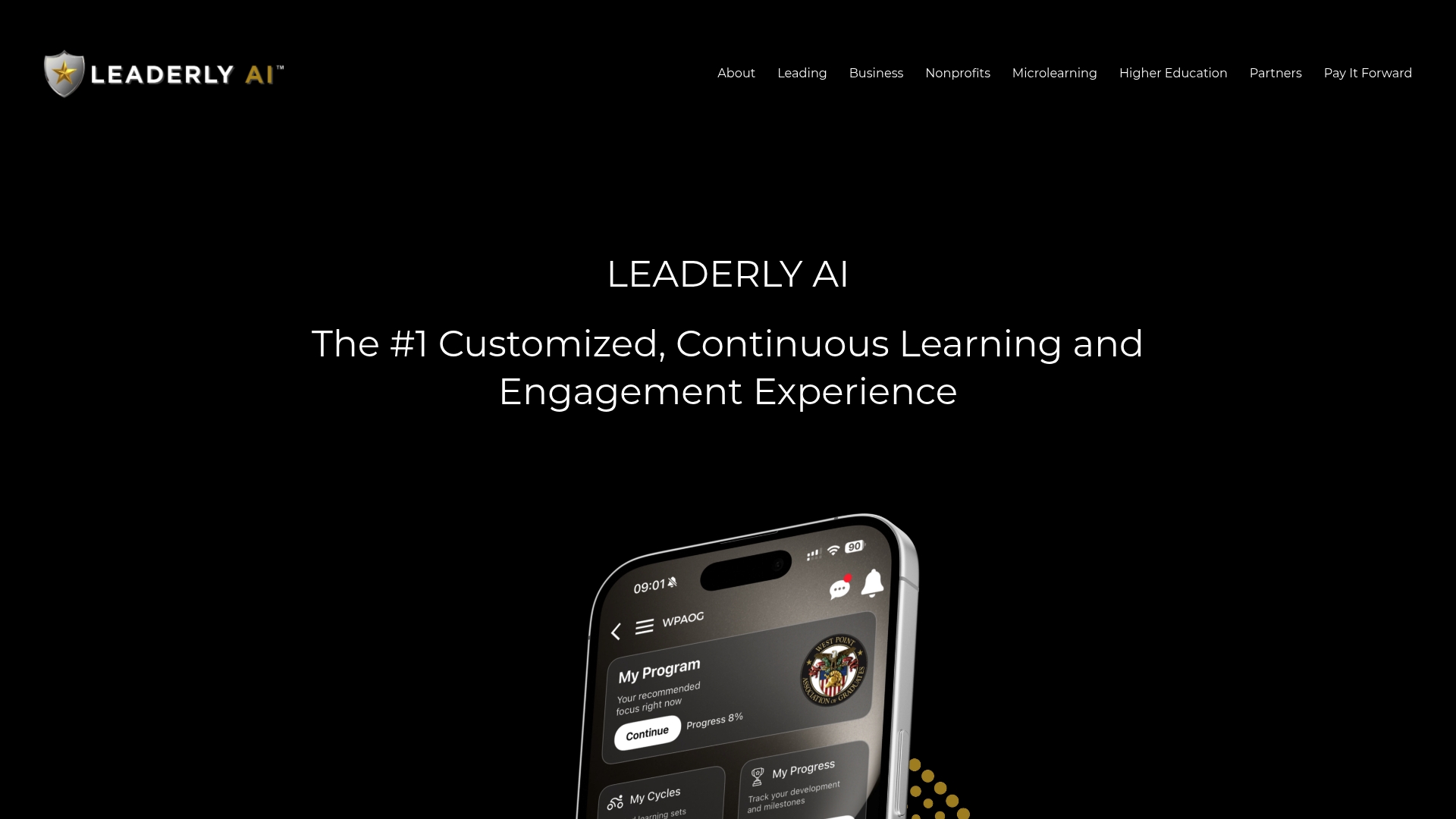
Leaderlyapp is built for exactly that problem. Instead of a one-time training event, it delivers personalized microlessons that fit into a manager's actual day, covering feedback frameworks, emotional intelligence, communication skills, and habit-building exercises grounded in behavioral science. Leaders get self-assessments (including DiSC and EQ tools) that surface their own blind spots, and analytics dashboards that let HR and executives track development progress across the organization.
Three things it does that matter for feedback specifically:
- Scales skill-building without scaling cost. Every manager on your team gets a personalized development path, not a generic workshop.
- Connects feedback to measurable outcomes. Built-in assessments and progress tracking make it easy to see whether leadership behaviors are actually changing.
- Builds the habit, not just the knowledge. Microlessons and behavioral nudges keep feedback practices active between formal training moments.
Start building people-centric leadership skills with Leaderlyapp, or explore the full leadership development platform to see how it fits your organization.
Useful sources
These are the sources behind this guide. Worth bookmarking if you're designing a feedback training program or building measurement frameworks.
- Education Endowment Foundation: Feedback — The most rigorous evidence synthesis available on feedback impact, including the oral vs. written comparison. Use this when making the business case to senior leadership.
- Jo Gonsalves: How to Give Feedback That Actually Helps — Practical SBI guidance and coaching-oriented scripts; strong on the psychology of defensiveness and co-creating next steps.
- Evalflow: Effective Feedback Delivery Guide for Managers — Covers the 24–48 hour golden window, running feedback logs, and cadence recommendations for busy managers.
- Andi Roberts: The BOOST Feedback Model — The clearest explanation of BOOST as a pre-meeting checklist. Useful for training managers who tend to drift into judgment language.
- Braden Kelley: Feedback Giving Secrets Every Leader Should Know — Focused on closing language and the psychology of potential-focused feedback; practical and concise.
- PMC: How to Give and Receive Feedback Effectively — Peer-reviewed overview of feedback models and barriers; useful for grounding training programs in clinical and organizational research.
- SHRM: Delivering Feedback That Drives Workplace Success — HR-practitioner perspective on feedback as a performance management tool; relevant for aligning feedback practices with formal HR processes.
- CCL: How to Give Different Types of Feedback — The Center for Creative Leadership's breakdown of feedback types; authoritative and well-suited for leadership development curricula.