
Leadership integration is the process of aligning leadership behaviors, values, and strategies to produce cohesive and adaptive organizational outcomes. When executives treat leadership as a system rather than a set of individual skills, the results are measurable and significant. Organizations using distributed-integrated leadership networks show 37% higher adaptive performance in volatile environments. That number reflects a structural advantage, not a personality trait. Understanding why leadership integration improves outcomes starts with recognizing that coherence across a leadership team is itself a performance driver.
Why leadership integration improves outcomes across organizations
Leadership integration is defined by the Leadership Integrity Framework as the ability to manage multiple dimensions simultaneously under pressure. Those dimensions include purpose, presence, partnership, and perspective. The framework treats integration as a measurable outcome, not a soft skill. That distinction matters because it shifts how executives evaluate their own development and the development of their teams.

Most leadership programs focus on skill acquisition. Integration goes further. It asks whether a leader's behaviors, identity, and organizational role are coherent with each other. A leader can be technically skilled and still create friction if their values conflict with how they actually show up in meetings, decisions, and conversations. That gap between stated values and lived behavior is where organizational performance quietly erodes.
Integration also supports better decision-making under pressure. When a leadership team shares a coherent framework for how they think and act, they spend less time resolving internal conflict and more time responding to external complexity. The four dimensions of the Leadership Integrity Framework give teams a shared language for diagnosing where alignment breaks down.
Key components of leadership integration include:
- Purpose alignment: Leaders connect individual decisions to organizational mission without needing to be reminded.
- Presence: Leaders show up consistently, regardless of pressure or audience.
- Partnership: Leaders build trust across functions rather than protecting departmental turf.
- Perspective: Leaders maintain strategic clarity while managing day-to-day demands.
These are not abstract ideals. They are observable behaviors that can be tracked, coached, and improved over time.
What research shows about the impact of integration on results
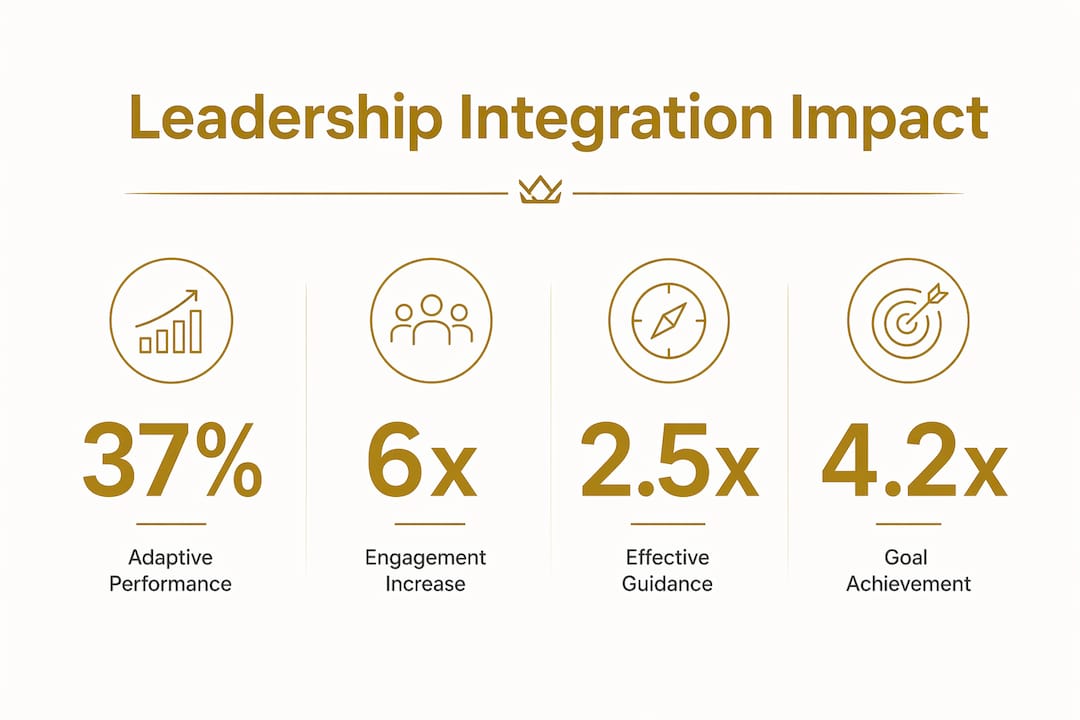
The performance case for leadership integration is grounded in data. Distributed-integrated networks outperform centralized and fragmented leadership structures by 37% on adaptive performance measures. Adaptive performance means the ability to respond effectively when conditions change without waiting for top-down direction. That is the exact capability most executive teams say they want and struggle to build.
Employee engagement follows the same pattern. Companies with strong leadership alignment report employees who are six times more likely to describe themselves as highly engaged. Six times is not a marginal improvement. It represents the difference between a workforce that executes and one that actively contributes to organizational health.
| Outcome | Impact of leadership integration |
|---|---|
| Adaptive performance | 37% higher in distributed-integrated networks |
| Employee engagement | 6x more likely to report high engagement |
| Guiding employee behavior | 2.5x more likely to be effective |
| Organizational health | 4.2x more likely to be sustained |
Aligned leadership teams are also 2.5 times more likely to guide employee behavior effectively and 4.2 times more likely to sustain organizational health over time. Those multipliers compound. A team that guides behavior well and sustains health simultaneously creates a self-reinforcing cycle of performance.
The research also points to network fluidity as a key mechanism. Integrated leadership networks share information across functions and levels rather than hoarding it within silos. That distributed cognition means better decisions reach the right people faster. The result is an organization that adapts rather than stalls when conditions shift.
Pro Tip: Map your leadership team's decision-making patterns quarterly. Look for which functions consistently get left out of key conversations. Those gaps are integration failures, not communication problems.
How integration transforms individual leaders and leadership teams
Integration changes how individual leaders experience their own role. Identity alignment shifts leadership from constant reinvention to a more grounded, sustainable presence. Leaders who integrate show up with clearer boundaries, less visible effort, and greater influence. That is not a paradox. It reflects the fact that internal coherence reduces the cognitive load of leadership.
The shift is practical. A leader who has integrated their values, identity, and role does not need to perform authority. They exercise it naturally. Decisions come faster. Communication becomes more direct. Teams respond to that clarity with higher trust and less second-guessing.
At the team level, integration requires something most executive teams avoid: vulnerability and shared accountability. Leadership teams that share honest reactions, including fears and uncertainties, build trust faster than teams that present only polished positions. That trust is the substrate on which real integration grows.
The risks of surface-level alignment are real. A team can agree in a boardroom and then act independently in ways that contradict that agreement. Without a shared operating rhythm, those contradictions stay hidden until they surface as organizational dysfunction. The gap between stated alignment and actual behavior is where most integration efforts fail.
Key elements of genuine leadership team cohesion include:
- Shared accountability standards: Everyone owns outcomes, not just their function.
- Agreed behavioral norms: How the team makes decisions, handles conflict, and communicates is explicit, not assumed.
- Regular vulnerability: Leaders name what is not working before it becomes a crisis.
- Consistent follow-through: What is decided in leadership meetings is reflected in how each leader acts with their own teams.
Pro Tip: Schedule a monthly leadership team session with no agenda items. Use the time to surface disagreements that did not get resolved in formal meetings. That unstructured space is where real integration happens.
Practical approaches for executives to implement leadership integration
Implementation starts with design, not intention. Most executive teams assume alignment exists because they share a strategy document. Effective leadership alignment requires explicit operating rhythms and accountability standards that expose and resolve disagreements before they become costly.
A practical implementation sequence looks like this:
- Audit existing systems first. True integration succeeds by aligning existing workflows among finance, operations, and people strategies rather than adding disconnected initiatives. Map what already exists before building anything new.
- Define leadership operating rhythms. Set a cadence for how the leadership team meets, reviews decisions, and surfaces conflict. Frequency matters less than consistency and honesty.
- Build psychological safety deliberately. Systemic trust-building takes several months to produce results. Quick wins in communication clarity come first. Deeper behavioral change follows sustained effort.
- Align communication across levels. What the leadership team decides must be translated consistently to managers and front-line teams. Inconsistent messaging is a symptom of integration failure.
- Measure coherence, not just outcomes. Track whether leadership behaviors align with stated values. Use 360-degree feedback, behavioral assessments, and direct observation to identify gaps.
The most common mistake executives make is treating integration as an add-on. They launch a new leadership initiative while leaving existing systems unchanged. That approach creates noise, not alignment. The collaborative leadership model works precisely because it reduces complexity by aligning what already exists.
Pro Tip: Before your next leadership offsite, ask each member of your team to write down the top three behaviors they believe define your leadership culture. Compare the answers. The gaps between them are your integration agenda.
Key Takeaways
Leadership integration is the single most reliable driver of adaptive performance, employee engagement, and sustained organizational health available to executive teams.
| Point | Details |
|---|---|
| Integration outperforms skill acquisition | Coherence across behaviors, values, and strategy produces measurable performance gains. |
| Engagement multiplies with alignment | Employees are six times more likely to report high engagement when leadership alignment is strong. |
| Operating rhythms prevent hidden drift | Explicit rhythms surface disagreements before they become organizational dysfunction. |
| Identity alignment reduces leadership effort | Leaders who integrate internally show up with more clarity and less visible strain. |
| Subtract complexity, do not add it | Align existing finance, operations, and people systems rather than launching isolated new programs. |
What I have learned about integration that most frameworks miss
The most persistent failure I see in executive teams is the belief that alignment happened because everyone nodded in the same room. Boardroom agreement is not integration. It is the beginning of a conversation that needs to continue in every hallway, every one-on-one, and every decision made when no one is watching.
The leaders who integrate most effectively are not the ones with the most polished communication. They are the ones willing to say, in front of their peers, "I do not know how to handle this." That kind of honesty creates the conditions for real trust. And real trust is what makes distributed decision-making safe enough to actually work.
I have also noticed that integration is not a destination. The leaders I respect most treat it as a practice. They revisit their own coherence regularly, the way a musician returns to fundamentals. They ask whether their behavior last week matched what they say they believe. That question, asked honestly and often, is more powerful than any framework.
The integrity in leadership conversation is not about being a good person. It is about being a consistent one. Consistency at the leadership level cascades through every layer of an organization. That cascade is what produces the engagement and performance numbers the research describes.
— Drew
How Leaderlyapp supports leadership integration for your team
Leadership integration requires sustained practice, not a single workshop or offsite. Leaderlyapp delivers personalized microlessons built on behavioral science, giving executives and managers a daily structure for developing the coherence that integration demands.
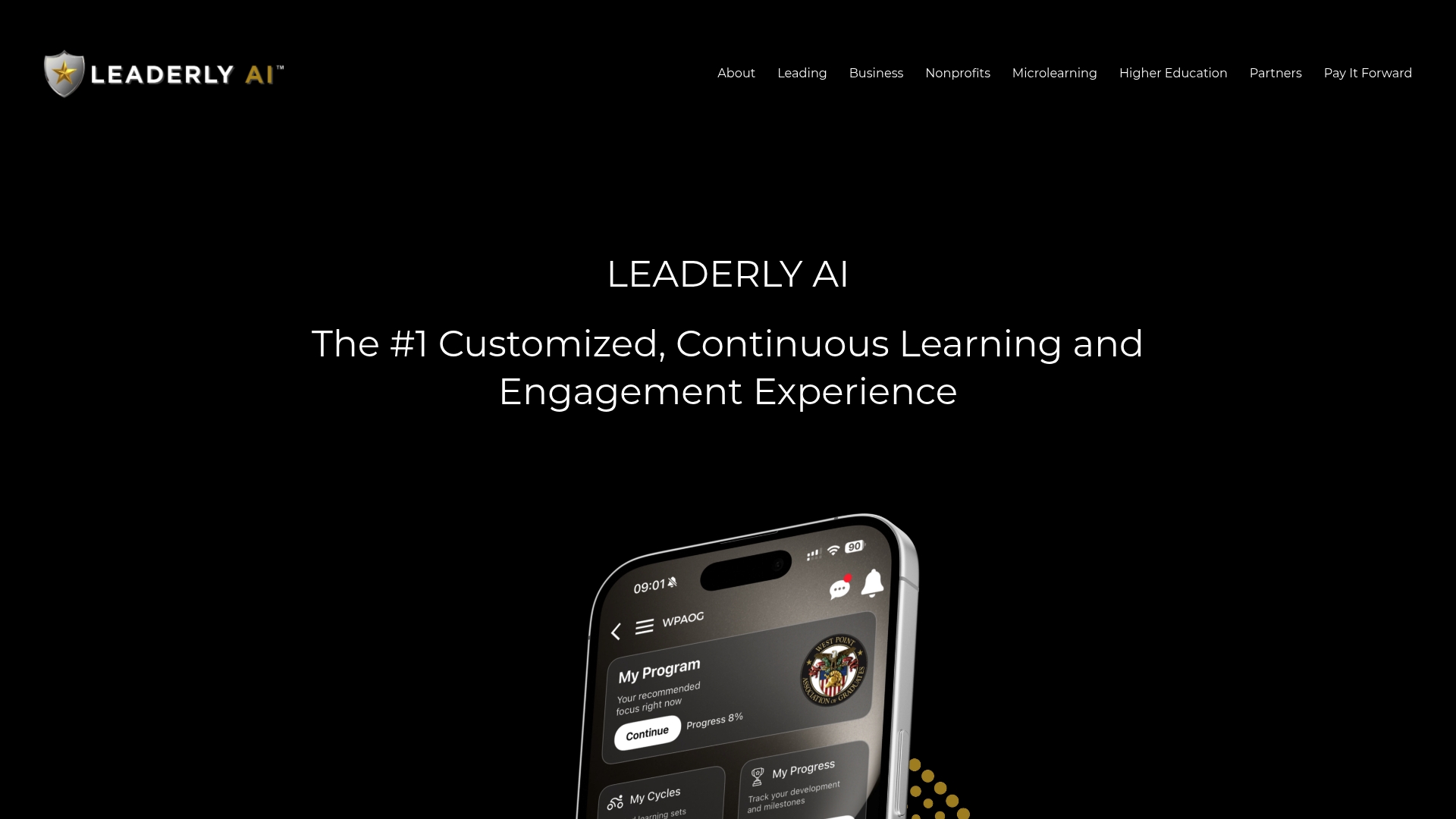
The platform uses machine learning to adapt content to each leader's specific development stage. That means a newly promoted manager and a seasoned executive both receive relevant, challenging material rather than generic content. Leaderlyapp also supports team-level alignment by tracking behavioral patterns over time, making it possible to see where integration is holding and where it is slipping. If you are serious about building leadership skills that produce measurable results, Leaderlyapp gives you the structure to make that happen consistently.
FAQ
What is leadership integration?
Leadership integration is the alignment of a leader's behaviors, values, identity, and organizational role into a coherent whole. The Leadership Integrity Framework defines it as managing purpose, presence, partnership, and perspective simultaneously under pressure.
How does leadership integration improve team outcomes?
Organizations with integrated leadership networks show 37% higher adaptive performance and employees who are six times more likely to report high engagement. Alignment across the leadership team reduces internal friction and accelerates effective decision-making.
What is the biggest risk of poor leadership integration?
The biggest risk is hidden misalignment. Leaders can agree in formal settings and then act independently in ways that contradict that agreement, creating confusion and eroding trust at every level below them.
How long does leadership integration take to produce results?
Communication clarity improves quickly, often within weeks of deliberate effort. Deeper systemic trust-building takes several months of sustained practice before it produces measurable behavioral change across a team.
How can executives start building leadership integration?
Start by auditing existing systems and defining a consistent leadership operating rhythm. Align finance, operations, and people strategies rather than adding new isolated programs, and measure behavioral coherence alongside business outcomes.