
The most effective stack for culture improvement combines AI-personalized leadership development, continuous listening through pulse surveys, peer-to-peer recognition, and microlearning with analytics. That four-part mix is not arbitrary. Each component targets a different failure point in how culture actually degrades.
Here is why this combination works:
- AI-personalized leadership development moves manager behavior in ways one-off training never does. Gallup recommends ongoing, individualized development over generic programs because sustained coaching is what shifts engagement.
- Continuous listening and pulse surveys catch disengagement weeks before it shows up in attrition data. SHRM confirms that regular pulse surveys, combined with strengths-based development, help organizations avoid the distrust and cynicism that follow poorly managed culture programs.
- Peer-to-peer recognition normalizes values-aligned behavior across the organization without requiring manager intervention on every interaction.
- Microlearning with analytics builds habits incrementally and gives HR leaders the leading indicators to prove ROI before annual review season.
For the AI-personalized leadership component, Leaderlyapp is the recommended platform. The sections below explain how to evaluate, procure, and roll out the full stack.
Table of Contents
- What top tools for workplace culture improvement actually require
- What every culture-improvement tool must have
- Which tool categories should you prioritize?
- How to separate vendors who deliver outcomes from those who just demo well
- A realistic 30–90 day rollout plan
- How to measure ROI and avoid the metrics traps
- Why AI-personalized learning accelerates culture change
- Key Takeaways
- What I have seen actually work
- Leaderlyapp: the AI-personalized leadership layer your culture stack needs
- Useful sources
What top tools for workplace culture improvement actually require
No single tool fixes culture. California Management Review research is direct on this: durable culture change requires embedding new rituals and resetting organizational norms, not just deploying software. Tools are the infrastructure. Rituals and leadership behavior are the mechanism.
Gallup's 2025 data puts the problem in sharp relief: global employee engagement fell to 20%, with declines in manager engagement accounting for most of the drop. That is not a survey-design problem. It is a manager development problem, and it requires a coordinated response across multiple tool categories.
CIPD research identifies transformational leadership as a primary driver of positive organizational climate, improving innovation, psychological safety, and ethical behavior. The implication for HR leaders: tools that develop managers as coaches, not just administrators, produce measurable climate shifts.
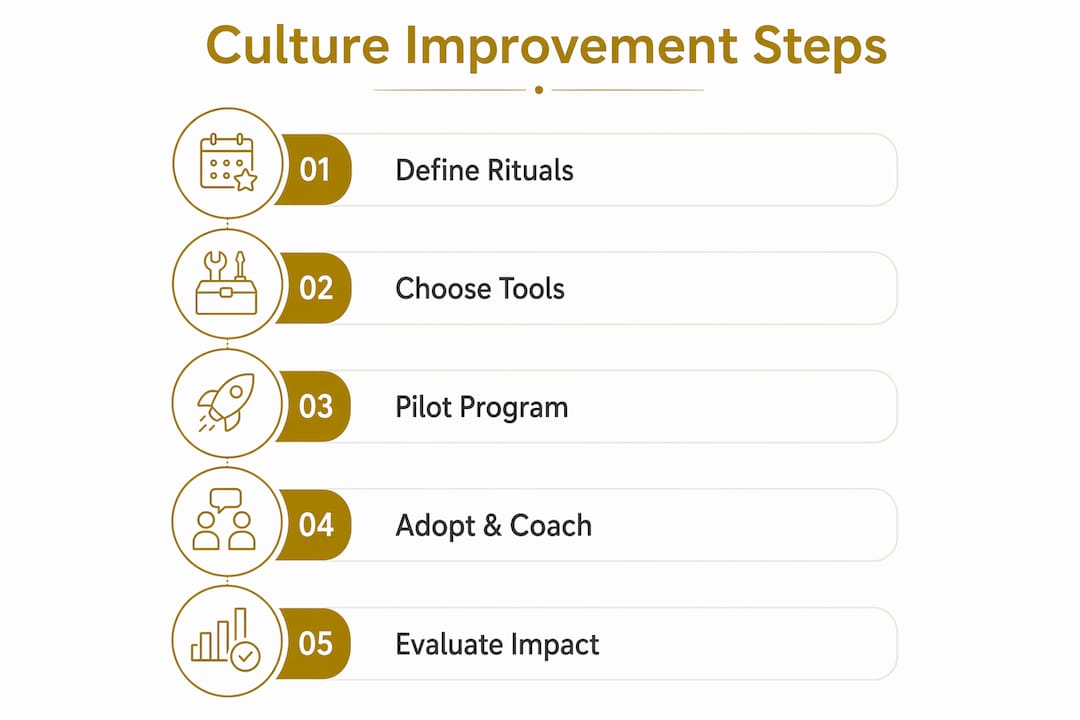
Pro Tip: Before selecting any platform, define two or three cultural rituals you want to reinforce, such as weekly coaching conversations or values-based recognition moments. Then evaluate whether the tool's features map directly to those rituals. Without that alignment, engagement features become vanity metrics that never move sentiment or retention.
What every culture-improvement tool must have
Start with the non-negotiables. Any platform worth piloting should include:
- AI personalization that adapts content to each manager's development stage, not just their job title
- Manager coaching workflows with structured prompts and cadence reminders
- Pulse survey engine with configurable anonymity controls and automated cadence
- Peer recognition module tied to organizational values, not just generic praise
- Microlearning library with short-form lessons and behavioral exercises
- Analytics dashboard surfacing leading indicators: participation rates, recognition frequency, real-time sentiment
For U.S. organizations, data privacy requirements are non-negotiable. Look for SOC 2 Type II certification, role-based access controls, data residency options if your legal team requires them, and clear data processing agreements that comply with applicable state privacy laws.
Adoption lives or dies on UX. Buyer guides consistently rate engagement tools on ease of use, anonymity of feedback, reporting depth, and automation for scheduled collection. A mobile-first interface, native integrations with Slack or Microsoft Teams, and HRIS sync (Workday, BambooHR, Rippling) are the difference between a tool people use daily and one that collects dust after the launch email.

Pilot-friendly pricing matters too. Require vendors to offer a scoped proof-of-concept before a full contract. Define measurable pilot goals upfront: a target pulse response rate, a minimum manager coaching frequency, and a recognition-per-capita baseline.
Which tool categories should you prioritize?
The six categories below cover the full culture stack. Not every organization needs all six on day one. The table maps each category to its primary use cases and the leading metrics it moves.
| Category | Primary use cases | Leading metrics |
|---|---|---|
| AI-personalized leadership development | Manager coaching, habit-building, strengths-based development | Coaching conversation frequency, microlesson completion rate |
| Continuous listening / pulse platforms | Real-time sentiment, engagement tracking, issue detection | Pulse response rate, net sentiment score |
| Peer recognition and rewards | Values reinforcement, milestone celebration, belonging | Recognition per capita, values-tag frequency |
| Microlearning platforms | Skill-building, behavioral exercises, onboarding | Lesson completion, behavior self-assessment scores |
| Manager enablement platforms | 1-on-1 frameworks, feedback tools, goal alignment | Manager-to-direct-report conversation rate |
| Engagement analytics and people analytics | Cohort analysis, attrition risk, program ROI | Voluntary turnover by cohort, eNPS trend |
Integration expectations vary by org size. For teams under 500, a single platform that covers leadership development, pulse surveys, and recognition often makes more sense than three separate tools. Above 500 employees, dedicated platforms with deep HRIS integration and SSO become worth the added complexity. Either way, require API access or native connectors before signing.
Peer recognition deserves special attention. CMR research shows that decentralized recognition accelerates behavioral alignment through social norms, not just top-down incentives. Platforms that let any employee recognize any colleague, tagged to a specific value, move culture faster than manager-only award programs.
How to separate vendors who deliver outcomes from those who just demo well
The single most important procurement test: can the vendor show measurable changes in manager behavior and leading indicators from a real pilot, not a case study slide?
Ask these questions in every RFP:
- What does your standard pilot design look like, and what are the success thresholds?
- How does your AI personalization logic work, and how does it adapt over time?
- What manager behavior metrics do you track, and how do you attribute changes to the platform?
- What is your average pulse survey response rate across comparable customers?
- How do you handle data access and portability if we end the contract?
- What HRIS and communication tool integrations are native versus API-only?
- What is your SOC 2 certification status and data residency policy?
- How do you support admin onboarding and ongoing change management?
- What does your recognition module tie to, and can values tags be customized?
- What is your pricing model for a 90-day pilot versus full deployment?
- Can you provide a reference from an organization of similar size and industry?
- What does your analytics dashboard show at the manager level versus the org level?
Use this scorecard to compare vendors after demos:
| Dimension | What to look for |
|---|---|
| Outcome evidence | Real pilot data showing manager behavior change, not just satisfaction scores |
| Integrations | Native HRIS, SSO, Slack/Teams connectors |
| Security | SOC 2 Type II, role-based access, data residency |
| Adoption features | Mobile-first UX, onboarding flows, manager nudges |
| Pricing model | Pilot-friendly entry, transparent per-seat or tiered pricing |
| Support | Dedicated CSM, implementation support, admin training |
A 90-day pilot succeeds when you define success before launch. Set a pulse response rate target above 60%, a manager coaching frequency of at least twice per month, and a recognition-per-capita baseline. If the vendor cannot help you hit those thresholds in 90 days, the full deployment will not perform either.
A realistic 30–90 day rollout plan
The 30/60/90 framework works because it separates three distinct jobs: building the foundation, driving early behavior change, and making a data-backed scale decision. Trying to do all three at once is why most culture pilots stall.
Days 1–30: Setup and baseline. Identify your executive sponsor and a pilot cohort of 50–150 employees across two or three teams. Run a culture audit using anonymous surveys, focus groups, and one-on-one interviews, as SHRM recommends, to establish a baseline. Configure the platform, connect HRIS, and define the two or three cultural rituals the tool will reinforce. Typical internal effort: 15–20 hours from HR, 5 hours from IT, and 2 hours from the executive sponsor.
Days 31–60: Adoption and early behavior change. Launch pulse surveys on a two-week cadence. Activate manager coaching workflows and microlesson assignments. Track participation daily. Expect the first recognition moments to feel awkward; that is normal. The goal is frequency, not quality, at this stage. Budget for a mid-pilot check-in with managers to surface friction points before they become dropout reasons.
Days 61–90: Evaluate and decide. Pull leading indicators: pulse response rate, manager coaching frequency, recognition per capita, and microlesson completion. Compare against your baseline. If two of three thresholds are met, the case for full deployment is strong. If not, diagnose before scaling. Licensing costs for a pilot of this size typically run in the range of a few thousand dollars per month depending on the platform and user count, though vendors vary widely and custom quotes are standard.
How to measure ROI and avoid the metrics traps
Prioritize three leading KPIs: manager coaching adoption rate, real-time sentiment trend from pulse surveys, and recognition frequency per capita. These predict retention and engagement improvements months before annual survey scores move.
| KPI | What it measures | Attribution guidance |
|---|---|---|
| Manager coaching adoption | % of managers completing coaching workflows monthly | Compare coached vs. non-coached cohorts |
| Pulse net sentiment | Aggregated sentiment from bi-weekly surveys | Track trend, not point-in-time score |
| Recognition per capita | Monthly recognitions per employee | Segment by team to find adoption gaps |
| Voluntary turnover by cohort | Annualized attrition in pilot vs. control group | Requires 6+ months of data for significance |
| Microlesson completion rate | % of assigned lessons completed per manager | Leading indicator of behavior change |
The most common pitfall: treating annual engagement scores as the primary success metric. SHRM's guidance is clear that leading indicators, specifically real-time sentiment, recognition frequency, and participation rates, are more actionable than lagging annual data. By the time an annual survey shows a problem, the employees who caused the score drop have often already left.
A second pitfall is single-source attribution. Triangulate: if pulse sentiment improves but recognition frequency stays flat, the tool is not driving behavioral change yet. If both move, and voluntary turnover in the pilot cohort drops relative to the control group, you have a credible ROI story.
Why AI-personalized learning accelerates culture change
One-off training does not change manager behavior. Gallup's research is consistent: individualized, ongoing development, specifically strengths-based coaching, drives sustained engagement improvements in ways single-session programs cannot replicate. The mechanism is repetition and relevance. A manager who receives a five-minute microlesson on coaching conversations, followed by a behavioral prompt before their next 1-on-1, is more likely to change what they actually do than one who attended a half-day workshop six months ago.
CIPD's evidence review connects transformational leadership directly to climate outcomes: psychological safety, innovation, and ethical behavior all improve when leaders are developed as coaches and role models, not just task managers. AI personalization accelerates this by adapting content to each manager's current development stage, their assessment results (DiSC, EQ, MBTI), and their team's real-time pulse data.
The practical benefits of AI-driven personalization include:
- Microlessons that adapt to a manager's strengths profile and current team challenges
- Behavioral exercises tied to real coaching scenarios, not generic case studies
- Progress tracking that surfaces which managers need additional support before disengagement spreads
- Content that evolves as the manager's skills and team dynamics change
Pro Tip: When configuring a personalized learning pilot, start with self-assessments (DiSC or EQ) in week one. Use those results to segment managers into two or three development tracks. Personalization that starts from a known baseline produces faster behavior change than generic content delivery, and it gives HR a cleaner attribution story when measuring outcomes.
The future of leadership development is moving away from event-based training toward continuous, AI-adapted learning that fits into a manager's actual workflow. That shift is not cosmetic. It is the difference between a program that changes what managers know and one that changes what they do.
Key Takeaways
The most effective culture improvement stack pairs AI-personalized leadership development with continuous listening, peer recognition, and microlearning, and measures success through leading indicators, not annual survey scores.
| Point | Details |
|---|---|
| Start with the four-part stack | Combine AI-personalized development, pulse surveys, peer recognition, and microlearning for durable culture change. |
| Manager engagement is the lever | Global engagement fell to 20% in 2025; individualized manager development is the highest-impact intervention. |
| Lead with leading indicators | Track manager coaching frequency, pulse net sentiment, and recognition per capita before relying on annual scores. |
| Run a scoped 90-day pilot | Define success thresholds before launch: 60%+ pulse response rate, twice-monthly coaching, and a recognition baseline. |
| Leaderlyapp for AI-personalized development | Leaderlyapp delivers personalized microlessons, coaching workflows, assessments, and analytics in a mobile-first platform built for scale. |
What I have seen actually work
Culture programs fail in a predictable pattern: the tools get deployed, the launch email goes out, and three months later the only people still using the platform are the ones who were already engaged. The technology was fine. The rituals were missing.
The organizations that see real movement do two things differently. They tie every platform feature to a pre-existing or newly defined ritual, a weekly coaching conversation, a Friday recognition moment, a monthly pulse debrief with the team. And they make managers the primary users, not just HR administrators. When a manager's coaching workflow, their team's pulse data, and their own microlesson queue all live in one place, the behavior change compounds. Without that integration, you are just adding another app to the stack.
Leaderlyapp is built around exactly this model: personalized development that adapts to each manager's profile, connected to the team signals that make coaching conversations relevant. The evidence on individualized development and the building belonging at work frameworks both point the same direction. Start there, add your pulse and recognition layer, and measure the leading indicators from day one.
Leaderlyapp: the AI-personalized leadership layer your culture stack needs
Most culture programs invest heavily in surveys and recognition but underinvest in the one variable that moves everything else: manager behavior. Leaderlyapp fills that gap directly.
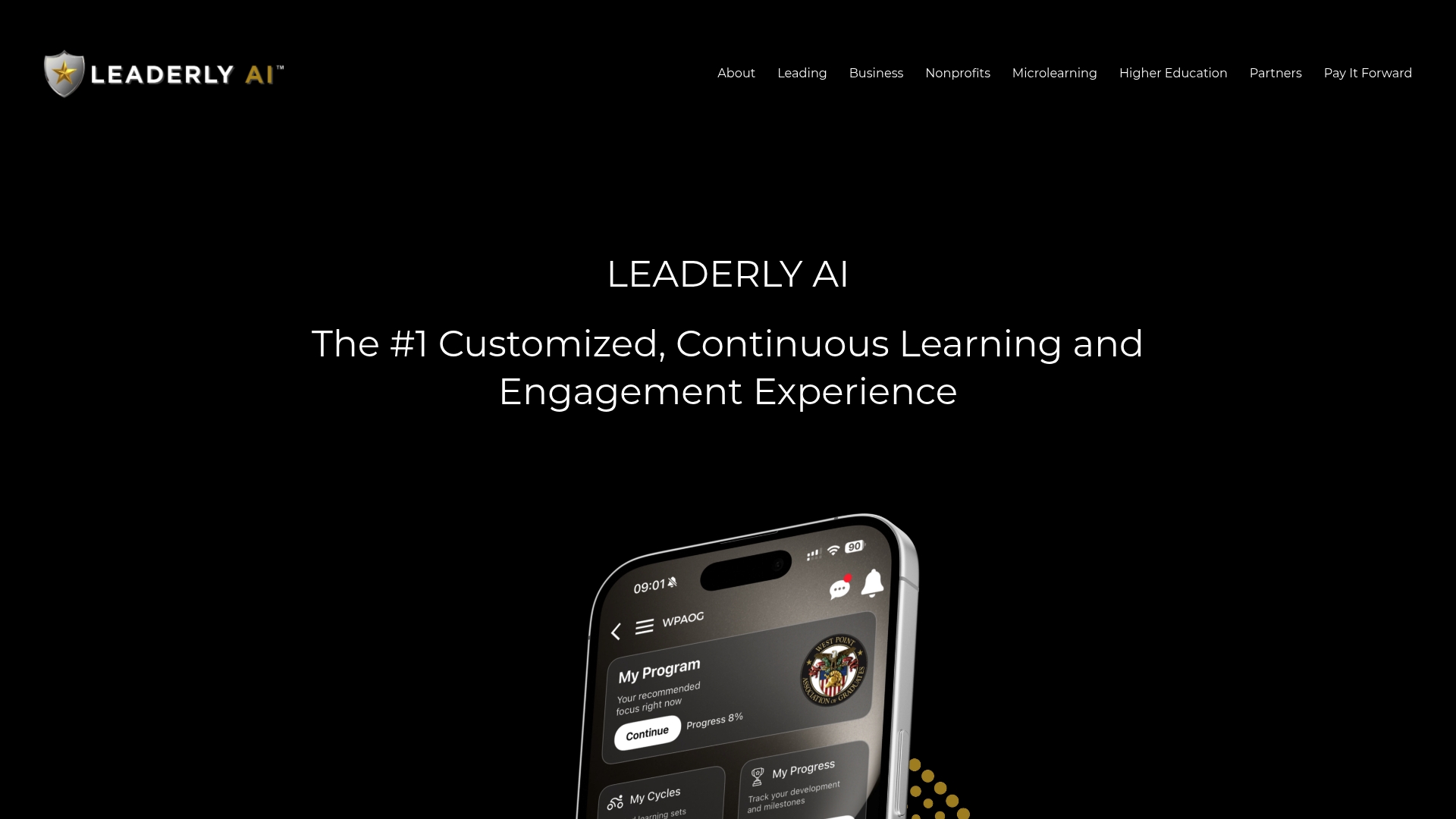
The platform delivers AI-personalized microlessons, strengths-based coaching workflows, self-assessments (DiSC, EQ, MBTI), gamified recognition, and an analytics dashboard that surfaces leading indicators at the manager and org level. It integrates with the HRIS and communication tools your teams already use, and it scales from a 50-person pilot to an enterprise deployment without requiring a separate implementation project.
For HR leaders who need to show ROI before committing to a full rollout, Leaderlyapp's pilot-friendly model lets you scope a 90-day proof-of-concept with defined success thresholds. You get real behavior data, not just satisfaction scores, before the full contract conversation.
Start with Leaderlyapp's people-centric leadership program to see how personalized development maps to your culture goals, or visit leaderlyapp.com to scope a pilot for your organization.
Useful sources
The recommendations in this article draw on four bodies of research HR leaders should consult directly when building a business case or evaluating vendors.
- Gallup: How Leaders Can Improve Employee Engagement and Company Culture — The primary source for engagement benchmarks, the 2025 global engagement decline, and the case for individualized manager development.
- SHRM: Building a Strong Organizational Culture — Covers culture audit methodology, pulse survey design, strengths-based development, and peer recognition alignment.
- California Management Review: Making Organizational Culture Great — Research-backed framework for embedding rituals and resetting norms rather than relying on incentives alone.
- CIPD: Organisational Culture and Climate Evidence Review — The strongest available evidence base for transformational leadership as a climate lever, covering psychological safety, innovation, and ethical behavior.
- IXCommunities: Benchmark Surveys — Useful for contextualizing your organization's engagement and pulse results against industry benchmarks during and after a pilot.