
Reflection in leadership learning is the deliberate process of converting raw experience into insight, behavioral change, and lasting capability. Without it, leaders repeat the same patterns under pressure and mistake activity for growth. Employees who spent 15 minutes daily reflecting improved their performance by 23%. That single finding reframes reflection from a soft habit into a measurable performance driver. Organizational psychology has long recognized this through frameworks like David Kolb's experiential learning cycle, which positions reflection as the critical bridge between having an experience and actually learning from it. The leaders who grow fastest are not the ones who do the most. They are the ones who think hardest about what they have done.
What is the role of reflection in leadership learning?
Reflection is not passive thinking. It is a structured cognitive process that converts experience into learning by forcing leaders to examine what happened, why it happened, and what they would do differently. The industry term for this practice is reflective practice, a concept formalized in organizational psychology and adult learning theory. Both terms, reflective practice and leadership reflection, describe the same discipline and are used interchangeably throughout this article.
David Kolb's four-stage experiential learning cycle places reflection at the center of professional development. The cycle moves through concrete experience, reflective observation, abstract conceptualization, and active experimentation. Leaders who skip the reflection stage jump straight from experience to action, which produces repetition rather than growth.
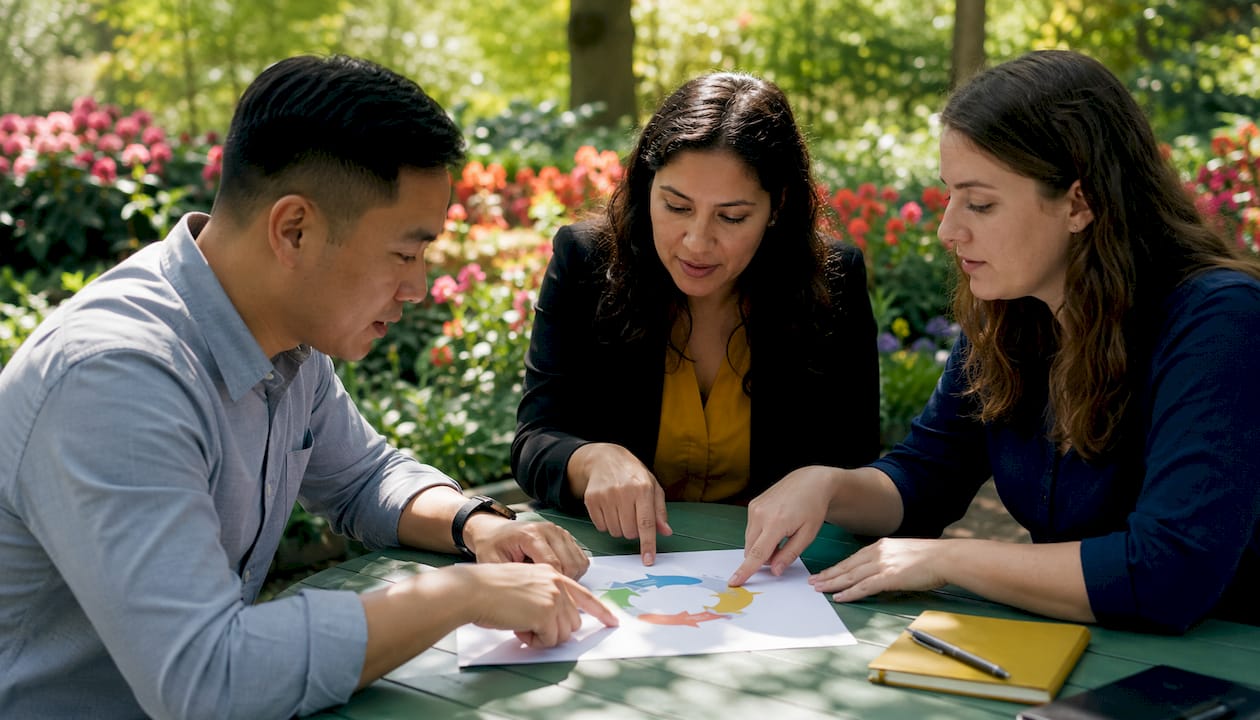
Neuroscience reinforces this. Reflection activates the brain's default mode network, the neural system responsible for consolidating memories and building long-term skills. This means reflection is not just philosophically useful. It is biologically necessary for deep learning to occur.
How does structured reflection accelerate leadership growth?
Structured reflection produces results that unstructured thinking cannot. Unstructured reflection tends to loop. Leaders revisit the same event, feel the same emotions, and arrive at the same conclusions. Structured reflection applies a disciplined sequence of questions and analysis that moves thinking forward rather than in circles.
Two frameworks stand out for leaders:
- Kolb's experiential learning cycle provides the macro structure: experience, reflect, conceptualize, experiment. It works well for reviewing projects, team dynamics, or strategic decisions over days or weeks.
- Gibbs' reflective cycle offers a six-stage micro process: description, feelings, evaluation, analysis, conclusion, and action plan. Gibbs' six-stage cycle moves reflection beyond description into commitment to change, which is where most leaders stall.
- Structured post-event questions such as "What did I intend?" "What actually happened?" and "What does that gap tell me?" create the discipline that prevents reflection from becoming journaling without purpose.
The most common failure mode is the reflection-as-description trap. Leaders write or think through what happened in detail but never reach the "so what" or "now what" stages. Gibbs' cycle was designed specifically to break that pattern.
Pro Tip: Set a timer for 10 minutes immediately after a high-stakes meeting or decision. Answer three questions in writing: What did I expect? What surprised me? What will I do differently? Speed and specificity matter more than length.
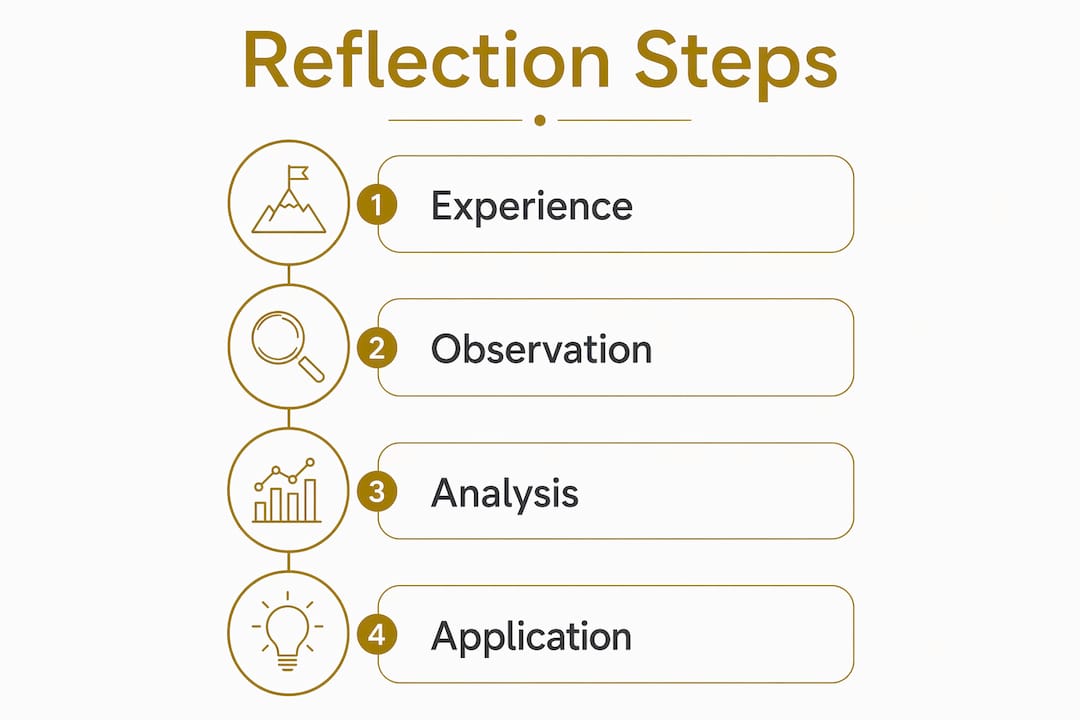
The science behind this is worth understanding. When you reflect with structure, you force your brain to encode the experience in multiple ways, emotionally, analytically, and behaviorally. That multi-layered encoding is what makes learning stick rather than fade within 48 hours.
What leadership reflection techniques actually work?
The most effective leadership reflection techniques share one quality: they are specific enough to be repeatable. Vague intentions to "think more" produce nothing. Concrete methods produce results.
-
Daily micro-reflections. Spend 10–15 minutes at the end of each workday answering three fixed questions: What went well? What did not? What is one thing I will adjust tomorrow? This practice builds the self-reflection habit that separates reactive leaders from deliberate ones.
-
Reflection-in-action. This technique, formalized by Donald Schön, means adjusting your thinking and behavior while an event is unfolding. A leader who notices mid-conversation that a team member has gone quiet and pauses to ask an open question is practicing reflection-in-action. It requires slowing down your internal pace even when the external pace is fast.
-
Reflection-on-action. This is the structured review that happens after an event. It is slower, deeper, and more analytical. Leaders who master both modes, in-action and on-action, develop the full range of reflective capability.
-
Structured journaling with prompts. Open-ended journaling rarely produces insight. Prompts like "What assumption did I make today that I should question?" or "Where did I avoid a difficult conversation and why?" force honest analysis rather than narrative recap.
-
Coaching conversations. External feedback from coaches uncovers blind spots that internal reflection cannot reach. A coach asks the questions you would not ask yourself. This is why 86% of companies report positive ROI from coaching programs that embed reflection and feedback. The ROI is not accidental. It comes from the combination of internal reflection and external challenge.
Pro Tip: Pair your weekly reflection with a trusted peer or mentor. Share one leadership moment from the week and ask them one question: "What do you think I missed?" External perspective cuts through the cognitive biases that make solo reflection incomplete.
The goal across all these techniques is not self-criticism. It is pattern recognition. Leaders who reflect well start to see their own tendencies clearly, when they default to control under pressure, when they avoid conflict, when they overcommunicate or undercommunicate. Seeing the pattern is the first step to changing it.
How does reflection shape adaptive and relational leadership?
Reflective practice does more than improve individual performance. It changes the kind of leader you become. A 2026 study analyzing 120 reflective journals from 25 transformational leaders found that reflective inquiry shifted leadership understanding toward more relational, ethical, and adaptive models. Leaders who reflected regularly moved away from directive, authority-based approaches and toward collaborative, trust-based ones.
The table below shows how reflective practice connects to specific leadership shifts:
| Leadership shift | What reflection makes possible |
|---|---|
| From directive to collaborative | Questioning your own assumptions before imposing decisions |
| From reactive to adaptive | Noticing patterns in your responses before they become habits |
| From transactional to relational | Building trust by demonstrating you learn from mistakes openly |
| From certainty to complexity | Holding multiple perspectives without rushing to a single answer |
Leaders who ask better questions of themselves develop the same capacity in their teams. Reflective leaders model intellectual humility, and teams respond by taking more risks, surfacing problems earlier, and engaging more honestly. The shift to adaptive leadership is not a personality change. It is a practice change, and reflection is the mechanism.
Relational trust also deepens when leaders reflect openly. A leader who says "I handled that poorly last week, and here is what I learned" signals psychological safety to the entire team. That signal is more powerful than any team-building exercise.
What challenges block leadership reflection and how do you fix them?
The most common objection to reflective practice is time. Leaders say they are too busy to reflect. The real problem is that reflection feels unproductive compared to action, so it gets cut first when schedules compress. Reframing reflection as a performance tool rather than a contemplative exercise solves this objection at the root.
Other barriers are more subtle:
- The description trap. Leaders describe what happened without analyzing why. Gibbs' cycle and structured prompts are the direct fix.
- Cognitive bias. Solo reflection reinforces existing beliefs. Top leaders integrate external feedback through coaching and peer review to counteract this. The importance of self-reflection grows when it is paired with honest external input rather than practiced in isolation.
- Inconsistency. Reflection practiced once a month produces almost no behavioral change. Reflection practiced daily, even for 10 minutes, compounds into measurable growth over 90 days.
- Depth avoidance. Leaders reflect on tactics but avoid examining values, motivations, or fears. The most growth-producing reflection asks uncomfortable questions about identity and intent, not just about what happened in a meeting.
Building accountability into the practice solves the consistency problem. A standing weekly reflection block in your calendar, a peer accountability partner, or a structured feedback loop with your team all create external pressure that sustains the habit when internal motivation dips.
Key Takeaways
Structured reflective practice is the single most reliable method for converting leadership experience into lasting behavioral change and adaptive capability.
| Point | Details |
|---|---|
| Reflection drives measurable results | Daily 15-minute reflection produces a 23% performance improvement, making it a quantifiable development tool. |
| Structure prevents stagnation | Frameworks like Gibbs' reflective cycle move leaders beyond description into committed behavioral change. |
| Two reflection modes matter | Mastering both reflection-in-action and reflection-on-action builds the full range of leadership learning capacity. |
| External feedback is non-negotiable | Coaching and peer input eliminate blind spots that solo reflection cannot reach, which explains the 86% positive ROI from coaching programs. |
| Reflection reshapes leadership identity | Regular reflective inquiry shifts leaders from directive to adaptive, relational, and ethically grounded models of leadership. |
Why I think most leaders are reflecting wrong
Most leaders treat reflection as a review session. They replay what happened, decide whether it was good or bad, and move on. That is not reflection. That is evaluation, and it rarely changes anything.
What I have seen work, consistently, is reflection that targets the gap between intention and impact. You intended to motivate your team in that meeting. The room went quiet. The gap between those two realities is where the learning lives, and most leaders skip right past it because sitting in that gap is uncomfortable.
The best leaders I have observed develop what I would call a formal reflective practice. They ask "What is really going on here?" before they reach for an answer. They write things down, not to remember them, but because writing forces precision that thinking alone does not. They seek out the person most likely to disagree with their self-assessment and ask that person directly.
Reflection also changes the time horizon of leadership. Leaders who reflect regularly stop optimizing for the next quarter and start building the kind of judgment that compounds over years. That shift, from short-term performance to long-term capability, is the real return on reflective practice. It does not show up in a single meeting. It shows up in who you become over a decade of deliberate learning.
— Drew
How Leaderlyapp builds reflection into leadership development
Reflective practice works best when it is embedded into daily routines rather than reserved for annual reviews or offsite retreats.
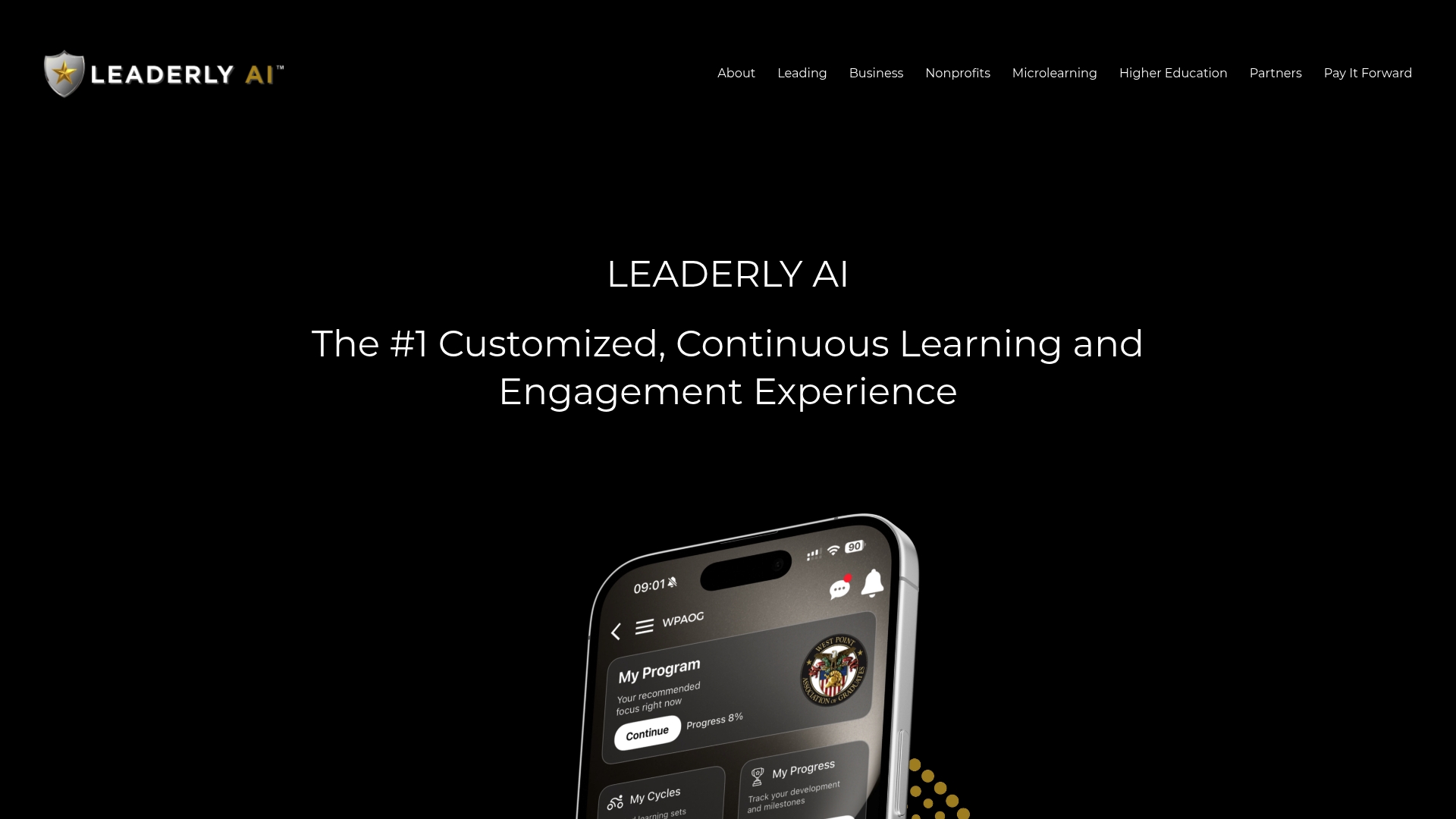
Leaderlyapp is built around exactly that principle. The platform delivers personalized microlessons grounded in behavioral science, giving leaders structured prompts, assessments, and feedback loops that make reflection a daily habit rather than an occasional event. Whether you are developing people-centered leadership skills across an organization or deepening your own adaptive leadership capacity, Leaderlyapp provides the scaffolding that turns good intentions into consistent practice. The platform evolves with each leader's unique growth path, which means the reflection it supports gets deeper and more targeted over time. Explore how Leaderlyapp can make continuous leadership learning a built-in part of how your organization grows.
FAQ
What is the role of reflection in leadership learning?
Reflection is the process that converts leadership experience into insight and behavioral change. Without structured reflection, leaders repeat patterns rather than grow from them.
How much time does daily leadership reflection require?
Research shows that 15 minutes per day produces a 23% performance improvement. Consistency matters more than duration.
What is the difference between reflection-in-action and reflection-on-action?
Reflection-in-action means adjusting your thinking while an event unfolds. Reflection-on-action is the structured review that happens afterward. Effective leaders practice both.
Why do leaders need external feedback alongside self-reflection?
Solo reflection reinforces existing beliefs and misses blind spots. External coaching and peer input challenge assumptions that internal reflection cannot surface on its own.
Which framework works best for structured leadership reflection?
Gibbs' reflective cycle is the most practical starting point. Its six stages, from description through to action planning, prevent the common trap of reflection that stops at storytelling without producing change.