
Empathy strengthens leadership by building the trust, psychological safety, and team cohesion that drive real performance. When leaders genuinely understand what their people are experiencing, they signal that understanding through their words and actions, and teams respond with greater effort, honesty, and creativity. The causal chain is short: understanding leads to signaling, signaling produces felt validation, and felt validation unlocks the discretionary effort that separates good teams from great ones.
Start practicing in your next meeting with these three steps:
- Listen without interrupting. Ask one open question ("What's making this feel difficult right now?") and stay quiet for the full answer.
- Follow up within 24 hours. Send a brief message acknowledging what you heard and one concrete step you'll take.
- Name what you noticed. A single sentence ("I could see that was a tough conversation") costs nothing and signals more than a paragraph of praise.
Key Takeaways
Empathy is a learnable, measurable leadership skill that drives trust, psychological safety, and team performance when practiced consistently and sincerely.
| Point | Details |
|---|---|
| Empathy has three components | Cognitive (perspective-taking), affective (emotional resonance), and compassionate (action-oriented) empathy all matter in leadership. |
| Research confirms broad positive outcomes | A systematic review finds empathetic leaders are predominantly associated with constructive outcomes across affect, relationships, and performance. |
| Role-modeling creates a cascade | Leaders who model empathy increase empathetic behavior across their teams, but must manage their own stress or empathy erodes under pressure. |
| Measure with specific instruments | Track psychological safety scores, 360 manager ratings, engagement pulse, voluntary turnover, and idea submission rates on a quarterly cadence. |
| Leaderlyapp supports structured practice | A 6–8 week microlearning pilot with habit nudges and analytics dashboards gives HR measurable data on empathy skill growth across manager cohorts. |
Table of Contents
- What empathy in leadership actually means
- Why empathy improves leadership outcomes
- What recent research tells us about empathetic leadership
- How to demonstrate empathy as a leader: scripts and examples
- How organizations can scale empathetic leadership
- Common pitfalls: when empathy goes wrong
- How to measure whether empathetic leadership is working
- Leaderlyapp's approach: microlearning and habit-based empathy development
- The small moment that changes everything
- Leaderlyapp makes empathy training practical and measurable
- Sources
What empathy in leadership actually means
Most leaders conflate empathy with sympathy, and that confusion is where the practice breaks down. Sympathy is feeling for someone ("I'm sorry you're going through that"). Empathy is something more active: understanding what someone is experiencing from their vantage point, registering the emotional weight of it, and then doing something useful with that understanding.
The Greater Good Science Center at UC Berkeley distinguishes three components that map directly onto leadership practice:
Cognitive empathy is perspective-taking. You mentally step into a colleague's situation and ask: what does this look like from where they're standing? A manager who learns that a high performer has been quiet in meetings lately might assume disengagement. A cognitively empathetic leader asks instead: what changed for this person recently?
Affective empathy is emotional resonance. You register the feeling, not just the fact. When a team member describes a conflict with a peer, you notice the frustration underneath the words, not just the logistical problem being described.
Compassionate (action-oriented) empathy is where the other two become leadership. You understand the situation, you feel its weight, and you act. That action might be a schedule adjustment, a direct conversation with another party, or simply naming what you observed so the person feels seen.

Here's a quick workplace contrast. A team member tells you they're struggling to meet a deadline because of a family situation. Sympathy says, "That's really hard, hang in there." Empathy says, "I hear you. Let's look at what can shift this week so you're not carrying this alone." One acknowledges; the other moves.
Sincerity is the variable that makes or breaks all three components. Research on empathetic leadership describes empathy as an active process: leaders must cognitively and affectively understand someone, signal that understanding, and act cooperatively. Performative empathy, the kind that goes through the motions without genuine attention, breaks this process and reduces effectiveness. People can tell the difference, usually within seconds.
Why empathy improves leadership outcomes
The mechanisms connecting empathy to organizational results are well-documented. Understanding someone's experience allows a leader to communicate in ways that feel relevant and supportive. That supportive communication produces felt validation. Felt validation, in turn, increases a person's willingness to take risks, speak up, and put in effort beyond the minimum. Each step in that chain has a measurable organizational correlate.
Psychological safety is the most direct outcome. When team members believe their leader genuinely understands them, they're more willing to raise problems, admit mistakes, and propose ideas that might fail. That openness is the precondition for learning and adaptation.
Job satisfaction and retention follow closely. Research published in the Leadership & Organization Development Journal links empathetic leadership to higher job satisfaction and stronger innovative behavior among employees. People who feel understood by their manager are less likely to look for a manager elsewhere.
Innovation is perhaps the least obvious benefit. A peer-reviewed PMC study finds that empathetic leadership increases employee innovative behavior, mediated by factors like career adaptability and reduced uncertainty avoidance. When people feel psychologically safe enough to experiment, idea generation goes up.
Ethical behavior and mutual care round out the picture. Business Ethics Quarterly finds that empathic conversations create a space where both leader and team member feel cared for, which increases generosity, responsibility, and cooperative behavior. Empathy, in other words, is also an ethics lever.
| Mechanism | Primary outcome | Indicator to track |
|---|---|---|
| Felt understanding and validation | Psychological safety | Psychological safety survey score |
| Supportive communication | Job satisfaction and engagement | Engagement pulse score |
| Reduced uncertainty avoidance | Innovative behavior | Idea submissions, new initiatives launched |
| Empathic conversations | Ethical responsibility and mutual care | 360 feedback on manager trust |
| Role-modeling cascade | Team-wide empathy and well-being | Peer review scores, voluntary turnover rate |
What recent research tells us about empathetic leadership
The evidence base has grown considerably in the past two years, and the direction of findings is consistent. A systematic literature review published in Springer examined the effects of empathetic leaders across multiple domains and found that empathetic leaders are predominantly associated with constructive organizational outcomes, spanning affect and attitudes, interpersonal relationships, and performance. The breadth of that finding matters: empathy's positive effects aren't confined to "soft" relational outcomes. They show up in performance metrics too.
BMJ Leader's proposed model of empathic leadership adds a mechanism that HR teams often overlook: the cascade effect. When a leader consistently models empathy, team members become more empathetic toward each other. The leader's behavior sets a norm, and that norm spreads. The same research carries an important caution: empathy can erode under leader stress. Without self-awareness routines in place, a leader's capacity for empathy degrades precisely when teams need it most, during crises, restructuring, or high-pressure delivery periods.
Practical implications for training and HR:
- Prioritize cognitive empathy first in training. Perspective-taking is the most teachable component and produces the fastest visible behavior change.
- Build in self-awareness practices alongside empathy skills. Without them, the BMJ Leader caution applies: leaders revert under stress.
- Expect short-term gains in psychological safety scores and manager effectiveness ratings within 6–8 weeks of structured practice. Retention and innovation indicators take longer, typically 6–12 months.
How to demonstrate empathy as a leader: scripts and examples
Knowing the theory is one thing. Knowing what to say on a Tuesday afternoon when a team member looks like they're about to quit is another. Here are the behaviors that matter most, in order of impact, followed by three scenarios with sample language.
Core behaviors
- Active listening. Give your full attention. No phone, no half-open laptop. Reflect back what you heard before responding: "What I'm hearing is..."
- Perspective-taking questions. Ask questions that invite the other person's frame, not yours. "What's this situation like from your end?" beats "Have you tried..."
- Reflective language. Name the emotion you're observing without projecting. "It sounds like this has been really draining" is safer and more accurate than "You must be furious."
- Pragmatic follow-up. Empathy without action is just acknowledgment. Identify one concrete thing you can do and do it. Even a small action signals that the conversation mattered.
- Boundary-aware support. Know where your role ends. If someone needs professional support, say so directly and connect them to resources. Trying to be a therapist is a different kind of failure.
Three workplace scenarios
Scenario 1: One-on-one performance check-in A team member who usually delivers strong work has missed two deadlines. Instead of opening with the problem, try: "Before we look at the project, I want to check in. How are you doing, genuinely?" After they respond: "That makes sense. What would help most right now, more time, a different kind of support, or something else?" Follow up the next day with whatever you agreed to.
Scenario 2: Remote team burnout signal During a video call, you notice two people have their cameras off and responses are clipped. At the end of the meeting, message them individually: "I noticed you seemed a bit quieter today. No pressure to share anything, but I wanted you to know I'm paying attention. Is there anything I can do to make the next few weeks more manageable?"
Scenario 3: Conflict between peers Two team members are in a visible disagreement. Bring them in separately first. To each one: "I want to understand your perspective before we figure out next steps. Walk me through what happened from your side." Then, in a joint conversation: "I've heard both of you, and I think you're both dealing with something real. Here's what I'd like us to try..."
For practical scripts and extended examples, Leaderlyapp's resource library covers additional workplace contexts.
Pro Tip: After each empathetic conversation, spend two minutes writing down what you noticed about your own reactions. That brief reflection builds the self-awareness that keeps empathy from degrading under stress, the exact mechanism BMJ Leader flags as the most common failure point.
Harvard Business Review frames empathy as a non-negotiable leadership skill and offers language-based exercises that make the practice feel less "touchy-feely" and more like a professional discipline. The framing matters: leaders who resist empathy training often do so because they associate it with emotional exposure rather than performance improvement.
How organizations can scale empathetic leadership
Individual skill-building only goes so far. For empathy to shift culture, organizations need a structured rollout that moves from pilot to habit. Here's a realistic program path with rough timeline expectations.
| Phase | Duration | Key activities | Who leads |
|---|---|---|---|
| Pilot | 6–8 weeks | Microlearning cohort (10–20 managers), 360 baseline, weekly coaching | HR + external facilitator |
| Initial rollout | 3–6 months | Broader microlearning deployment, manager peer groups, habit nudges | L&D team + line managers |
| Embedment | 6–12 months | Integration with performance reviews, quarterly pulse surveys, leader recognition | Senior leadership + HR |
Cost shape considerations. Subscription-based microlearning platforms cost significantly less per head than traditional instructor-led programs, particularly at scale. A one-off workshop might run $1,500–$5,000 per cohort depending on facilitator and format; a subscription model spreads that cost across the year and allows for repeated practice, which is what actually builds habits. The BMJ Leader cascade model supports investing in senior leaders first: their behavior sets the norm that ripples through teams.
Who to involve. HR owns the design and measurement. Senior leaders need to visibly participate, not just endorse. Line managers are the delivery mechanism. Without all three groups aligned, programs tend to stall after the pilot.
Resistance is common and worth planning for. Leaders sometimes push back on empathy training because it feels disconnected from business outcomes. Tie every program element to a metric they already care about: engagement scores, voluntary turnover, 360 ratings. The importance of empathy in leadership becomes much easier to sell internally when it's framed as a performance driver, not a wellness initiative.
Common pitfalls: when empathy goes wrong
Empathy fails in predictable ways. Knowing the failure modes in advance makes them easier to avoid.
-
Performative empathy. Going through the motions without genuine attention. Asking "How are you?" while looking at your phone. Teams notice immediately, and the effect is worse than saying nothing, because it signals that the gesture is about the leader's image, not the team member's experience. Corrective tactic: schedule check-ins when you can give full attention, even if that means fewer of them.
-
Boundary erosion. Empathy doesn't mean absorbing every problem or becoming a confidant for personal crises. When leaders blur the line between professional support and personal counseling, they create dependency, exhaust themselves, and expose the organization to risk. Corrective tactic: acknowledge the situation, offer one concrete professional resource (EAP, HR), and redirect to what you can actually do within your role.
-
Empathy collapse under stress. This is the BMJ Leader finding in practice. When leaders are under pressure, their capacity for empathy shrinks first. They become transactional, short, and directive, exactly when their teams need the opposite. Corrective tactic: build a two-minute self-check into your daily routine. "Am I present right now, or am I just managing?" That question alone interrupts the collapse.
-
Confusing empathy with agreement. Empathizing with someone's frustration doesn't mean validating every conclusion they've drawn. Leaders who conflate the two end up avoiding necessary feedback or difficult decisions. Corrective tactic: separate the emotional acknowledgment from the substantive response. "I understand why this feels unfair, and here's the decision I need to make and why" is both empathetic and clear.
-
Empathy fatigue. Leaders who give a great deal of emotional attention without replenishing their own reserves burn out. This is especially acute for leaders managing large teams or navigating organizational crises. Corrective tactic: treat self-care as a professional responsibility, not a personal indulgence. If you can't sustain empathy, escalate to HR or a coach before the deficit becomes visible to your team.
Business Ethics Quarterly's research on empathic relational leadership underscores that the ethical dimension of empathy depends on its authenticity. Empathy deployed as a manipulation tool, to extract effort or loyalty without genuine care, corrodes trust faster than no empathy at all.
How to measure whether empathetic leadership is working
Measurement is where most empathy programs fall apart. Leaders practice, HR runs a workshop, and then nobody checks whether anything changed. Here's a practical framework.
Core metrics to track:
- Psychological safety score. Use Amy Edmondson's validated 7-item scale or a shortened 3-item pulse version. Run it quarterly.
- Manager effectiveness rating. Include 2–3 empathy-specific items in your 360 feedback cycle: "My manager listens without interrupting," "My manager follows up on concerns I raise."
- Engagement score. Track overall engagement and the specific sub-dimension related to manager relationship quality.
- Voluntary turnover rate. Segment by manager to identify where empathy gaps correlate with attrition.
- Innovation indicators. Count idea submissions, new initiatives proposed, or participation in cross-functional problem-solving sessions.
Sample survey questions for quarterly pulse:
- "When I share a concern with my manager, I feel heard." (1–5 scale)
- "My manager follows up after difficult conversations." (1–5 scale)
- "I feel comfortable raising a problem before it becomes a crisis." (1–5 scale)
Recommended cadence: quarterly pulse surveys (3–5 items, 5 minutes to complete) plus an annual deep 360 that includes peer and direct-report ratings on empathy-specific behaviors.
Triangulating with qualitative signals. Numbers tell you what changed; conversations tell you why. Pair your quantitative metrics with skip-level interviews (every 6 months), case reviews of specific team situations, and anecdotes collected during manager coaching sessions. A psychological safety score that went up by 0.4 points means more when you can also point to three specific incidents where a team member raised a problem early and it was resolved before escalating.
Leaderlyapp's approach: microlearning and habit-based empathy development
Building empathy as a leadership skill requires more than a one-day workshop. The research on trainability is clear: short, repeated practice paired with mindful awareness produces faster and more durable skill gains than massed training events. That's the design logic behind Leaderlyapp's microlearning approach.
A typical empathy-focused microlesson on Leaderlyapp runs 3–7 minutes and follows a consistent structure: a learning objective ("Recognize when a team member is signaling distress"), a short scenario with a decision point, a practice prompt ("In your next one-on-one, try one perspective-taking question and note the response"), and a daily 2-minute reflection habit tied to the skill. The platform tracks habit completion and surfaces nudges when a leader's engagement with the practice drops, which is typically the first sign that stress is crowding out empathy.
Rollout tips for HR:
- Start with a cohort of 10–20 managers for the pilot phase (6–8 weeks).
- Pair microlearning with bi-weekly 30-minute coaching check-ins during the pilot.
- Set manager checkpoints at weeks 4 and 8 to review 360 baseline data and adjust content paths.
- Integrate completion data and self-assessment results (EQ, DiSC) into your existing performance review process so empathy development is visible alongside other leadership competencies.
Leaderlyapp's analytics dashboard lets HR track habit completion rates, self-assessment trends, and engagement scores across cohorts, so you can see which managers are building the skill and where the program needs reinforcement. For organizations ready to connect people-centric leadership development to measurable outcomes, the platform offers a low-risk entry point through a structured pilot.
The small moment that changes everything
There's a pattern that shows up repeatedly in leadership development work: the intervention that matters most is rarely the big speech or the all-hands meeting. It's the two-minute conversation a manager has on a Tuesday afternoon when they notice something is off and decide to say so.

A leader notices a usually-engaged team member has gone quiet during a project sprint. Instead of waiting for the next scheduled one-on-one, they send a short message: "Hey, I noticed you've seemed a bit stretched this week. No agenda, just checking in." The team member responds. The conversation is brief. But three weeks later, that team member volunteers to lead a cross-functional initiative they would have declined before.
That's the mechanism in miniature: understanding, signaling, felt validation, discretionary effort. The role of empathy in effective leadership isn't about grand gestures. It's about the consistent, small acts of attention that accumulate into a culture where people feel safe enough to do their best work.
Try one micro-action from the checklist at the top of this article in the next 24–48 hours. Pick the one that feels most natural and notice what happens. That's where the practice starts.
Leaderlyapp makes empathy training practical and measurable
Most empathy training programs fail not because the content is wrong, but because it's delivered once and never reinforced. Leaderlyapp takes a different approach: personalized microlessons delivered in 3–7 minute sessions, habit nudges that keep the practice alive between formal training events, and an analytics dashboard that shows HR exactly which managers are building the skill and which need additional support.
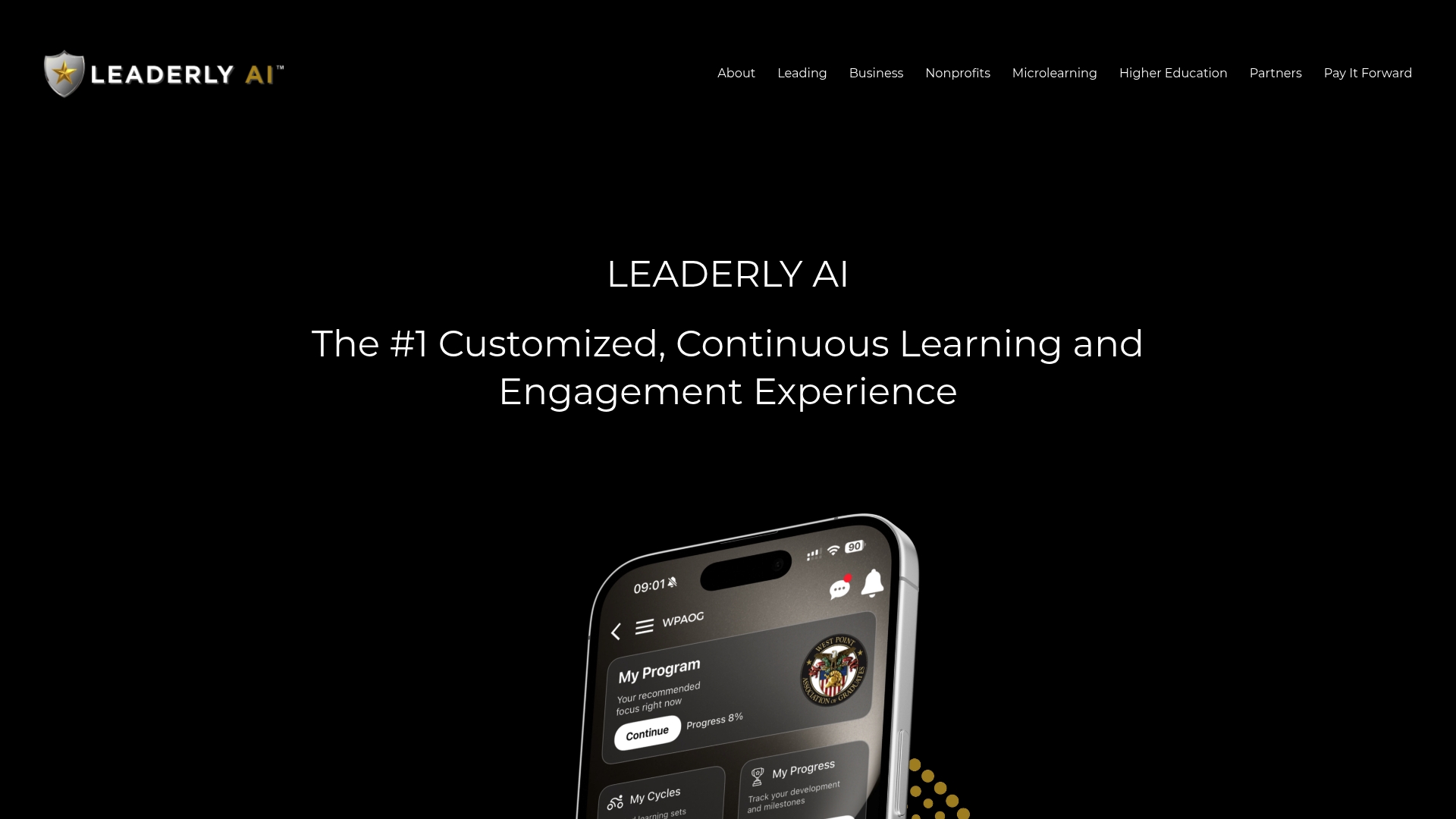
For organizations serious about building empathetic leadership habits at scale, Leaderlyapp's platform supports a low-risk pilot: a cohort of 10–20 managers, a 6–8 week microlearning sequence focused on empathy and psychological safety, paired with bi-weekly coaching check-ins and a 360 baseline measurement. Success metrics are built in from day one: psychological safety scores, manager effectiveness ratings, and engagement pulse data tracked through the platform's dashboard. If you're ready to move from knowing empathy matters to actually measuring its growth across your organization, explore Leaderlyapp's leadership development platform and request a pilot conversation.