
Accountability in leadership means owning your outcomes and creating the conditions for everyone around you to own theirs. Three things you can do today: name one expectation you have left vague, schedule a feedforward conversation with someone on your team, and remove one obstacle that has been quietly blocking their progress. Your team, your organization, and every stakeholder who depends on your decisions all benefit when you do.
- Clarify one expectation you have been assuming people already understand.
- Schedule a feedforward conversation focused on what the person will do differently next week, not what went wrong last month.
- Remove one obstacle — a missing tool, an unclear approval path, a resource that has been stuck in queue.
Key Takeaways
Accountability in leadership is the practice of owning outcomes, naming clear owners, and building the conditions where everyone on the team can do the same.
| Point | Details |
|---|---|
| Name one accountable owner | Every commitment needs a single named owner; shared accountability defaults to no accountability. |
| Use feedforward, not just feedback | Future-focused conversations reduce defensiveness and produce more learning than retrospective blame. |
| Accountability must be chosen | Monitoring produces compliance; designing for ownership produces real commitment. |
| Measure what matters | Track follow-through rates, psychological safety scores, and 360 perception data on a regular cadence. |
| Leaderlyapp builds the skill | Personalized microlessons, analytics, and surveys help leaders develop accountability as a practiced habit. |
Table of Contents
- What the role of accountability in leadership actually means
- Why accountability matters for leaders and organizational performance
- Accountability versus responsibility: practical differences leaders must use
- Core leader competencies that enable accountability
- How leaders can build accountability now
- Measuring accountability and tracking progress
- Common barriers to leader accountability and how to remove them
- Research-backed insights on feedforward, virtue, and choice
- What installing accountability actually taught me
- Leaderlyapp supports leaders building accountability
- Sources
What the role of accountability in leadership actually means
Accountability in leadership is formally defined as a leader's willing acceptance of responsibilities, the expectation of being publicly linked to their actions, and the duty to explain decisions to the people who depend on them. That definition has four working components.
- Answerability: You can be asked why you made a decision, and you give a real answer.
- Ownership of outcomes: You do not redirect blame when results fall short.
- Transparency: You share information that lets others evaluate your choices.
- Support and authority: You give people both the resources and the decision rights they need to meet their commitments.
A simple framework for applying this: Who is accountable? What outcome do they own? When is it due? How will progress be visible? What support do they have? Run that five-question check on any commitment before you leave a meeting.
Accountability flows in multiple directions. A leader is accountable to their team for clarity and support, to a board or senior stakeholders for results and ethics, and to peers for shared commitments. Responsible leaders also credit others publicly when work goes well, not just when something needs correcting.
Why accountability matters for leaders and organizational performance
Weak accountability has a compounding cost. When no one owns an outcome, priorities blur, execution slows, and trust erodes. The effects show up in performance data, in retention numbers, and eventually in reputation. A bibliometric review of leadership and accountability research found that accountability is necessary for effective organizational functioning, yet adoption of structured accountability practices in business settings remains uneven.
The benefits of getting it right are concrete:
- Clearer priorities: People know what matters and why, so they spend energy on the right things.
- Better execution: Commitments with named owners and visible follow-up get done at higher rates.
- Higher trust: Leaders who model accountability by admitting mistakes and following through on commitments report stronger team trust and better decision-making.
- Ethical behavior: Transparency about decisions reduces the conditions that allow misconduct to hide.
- Improved retention: Employees who work in accountable cultures know where they stand, which reduces the ambiguity that drives people to leave.
The cost of failure: When a product defect reaches customers because no one owned the quality checkpoint, the company pays for the recall, the PR response, and the lost customer trust. The root cause is almost always an accountability gap, not a skills gap.
Accountability versus responsibility: practical differences leaders must use
These two words are often used as synonyms. They are not, and the confusion costs teams real time.
- Responsibility is the obligation to perform a task. Multiple people can share it.
- Accountability is the obligation to own the outcome. Only one person can hold it at a time.
A RACI-style example makes this concrete. On a product launch, the marketing team is responsible for creating the campaign assets. The marketing director is accountable for whether the launch lands on time and hits its targets. If the campaign misses, the director answers for it, even if the copywriter wrote the wrong headline.
Why this matters in practice: When accountability is shared, it effectively belongs to no one. Diffusion of ownership is one of the most common reasons projects stall without anyone feeling at fault.
- Name one person as accountable for each outcome, not a team.
- Separate "who does the work" from "who answers for the result."
- Revisit RACI assignments when a project changes scope — the accountable owner often shifts without anyone noticing.
Pro Tip: At the end of every meeting where a commitment is made, state it aloud: "So [Name] is accountable for [outcome] by [date] — does everyone agree?" That one sentence prevents the most common post-meeting confusion.
Core leader competencies that enable accountability
Accountability does not happen because a leader demands it. It happens because a leader builds the conditions for it. Five competencies do most of the work.
Clarity. Great managers set clear expectations and follow up. Vague goals produce vague results. The micro-practice: before any meeting ends, restate the commitment in one sentence and confirm the owner heard it the same way you did.
Courage. Owning outcomes when they go wrong, in front of the people who are watching, is harder than it sounds. The micro-practice: the next time something on your team misses, say "I should have caught that earlier" before you say anything else.
Feedback skill. Feedback that focuses on past failure tends to produce defensiveness. Feedforward, which focuses on what the person will do differently going forward, produces learning. The micro-practice: replace "here is what you did wrong" with "here is what I think would work better next time."
Trust building. People will not take ownership of outcomes in an environment where mistakes are punished rather than examined. The micro-practice: when someone brings you a problem early, thank them for it explicitly.
Systems thinking. A leader who only holds individuals accountable without examining the systems those individuals work in will keep getting the same results. The micro-practice: when a commitment is missed, ask "what in the system made this hard?" before asking "who dropped the ball?"
Research on accountability practices and psychological mechanisms supports using structured feedback and perception measures to track whether these competencies are actually taking hold in a team, not just being talked about.
How leaders can build accountability now
The most common mistake leaders make is announcing an accountability initiative without changing any of the underlying conditions. Here is a step-by-step approach that works.
Step 1: Audit your current expectations. Write down the five most important outcomes your team owns. For each one, name the accountable person, the success criteria, and the deadline. If you cannot fill in all three columns, that is your first gap.
Step 2: Assign authority alongside responsibility. People cannot be accountable for outcomes they do not have the authority to influence. Confirm that the person you name as accountable can actually make the decisions that affect the result.
Step 3: Remove the obstacles you control. Ask each direct report: "What is the one thing I could do or stop doing that would make it easier for you to deliver?" Then act on the answer within a week.
Step 4: Build a monitoring cadence. Weekly check-ins on commitments, not just status updates, keep accountability visible without becoming surveillance. The difference: a status update tells you what happened; a commitment check-in asks what the person will do next.
Step 5: Give feedforward, not just feedback. Shifting from retrospective blame to future-focused feedforward reduces defensiveness and makes conversations productive. It also makes people more willing to surface problems early.
Step 6: Recognize publicly, correct privately. Accountability covers both sides. Credit people openly when they deliver. Address misses in a direct, private conversation.
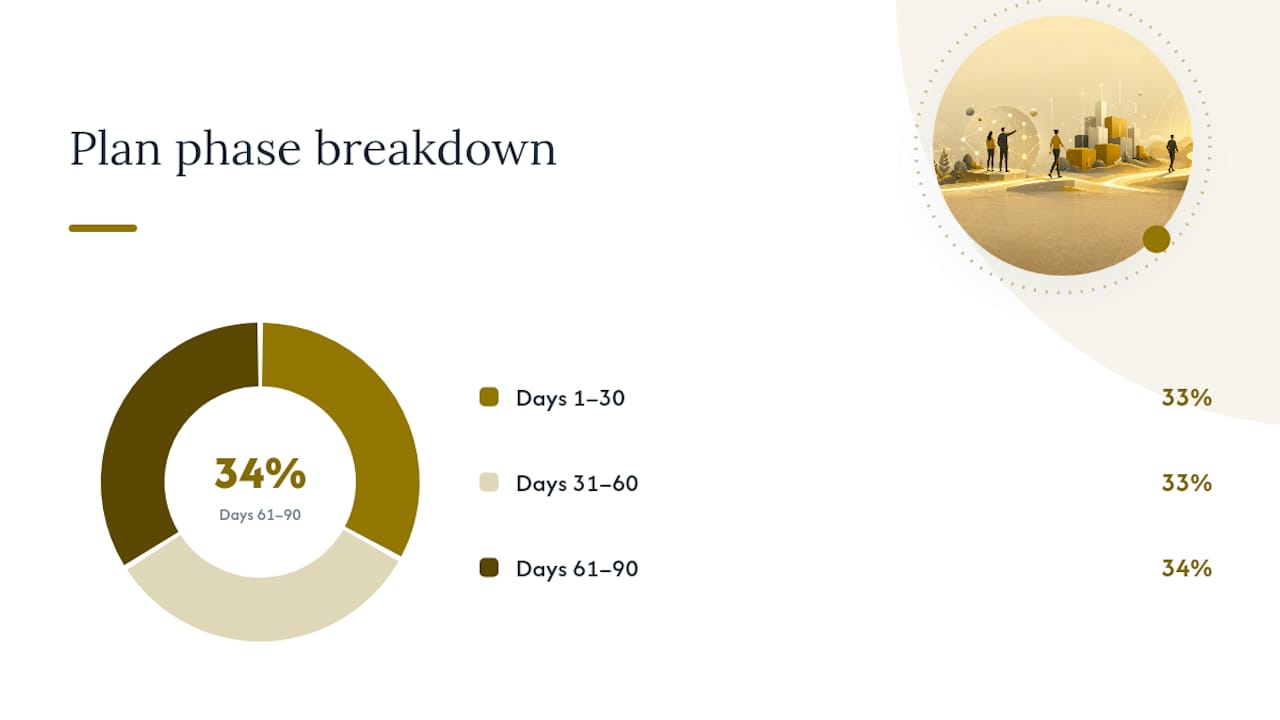
30/60/90 timeline:
- Days 1–30: Audit expectations, name accountable owners, hold your first feedforward conversation, remove one systemic obstacle.
- Days 31–60: Run weekly commitment check-ins, collect one round of pulse survey data on psychological safety, adjust any RACI assignments that are unclear.
- Days 61–90: Review follow-through rates, run a short 360 on accountability behaviors, identify one cultural norm that is still undermining ownership.
Example feedforward script: "I noticed the report came in two days late. I am not interested in relitigating that. What I want to talk about is what would need to be different for the next one to land on time. What do you need from me?"
Pro Tip: When introducing feedforward to a team that is used to blame-focused reviews, name the shift explicitly: "I am going to ask you what you will do differently, not what went wrong. That is the conversation I want us to have."
You can also make accountability a core part of your workplace culture by embedding these habits into your team's regular rhythms, not just your one-on-ones.
Measuring accountability and tracking progress
You cannot manage what you cannot see. These metrics give you a real signal on whether accountability is strengthening or stalling.
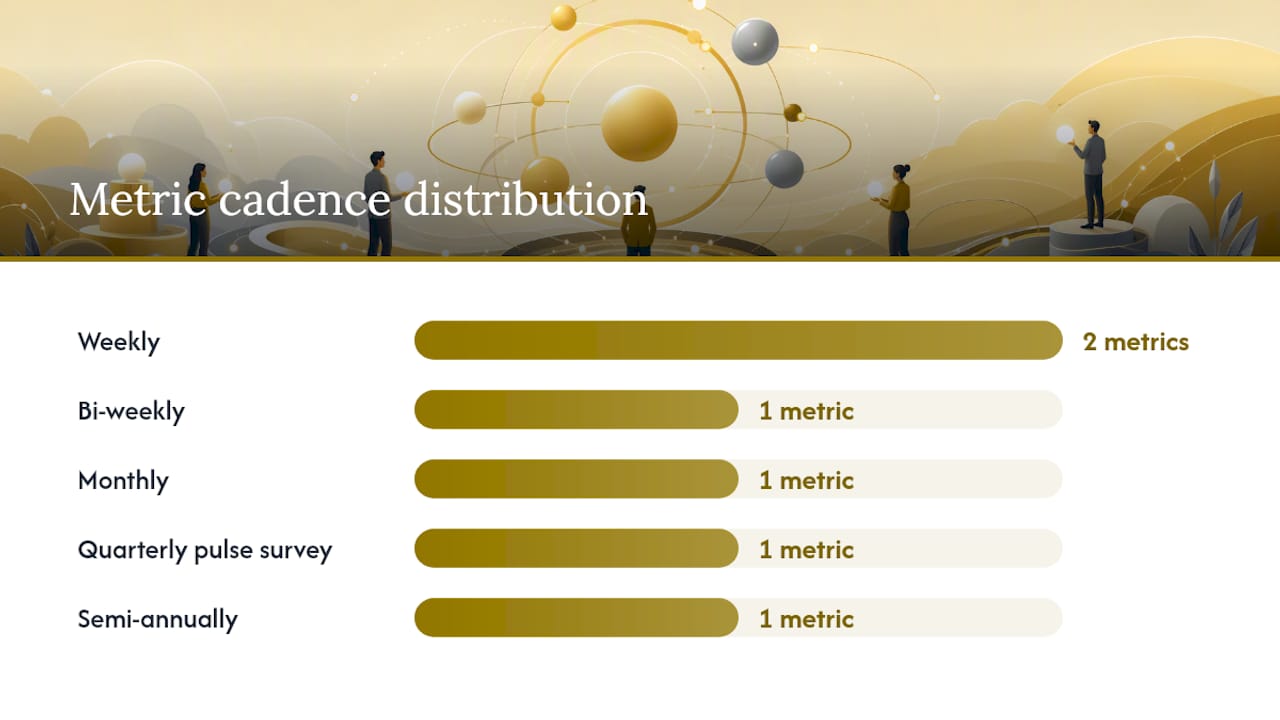
| Metric | What it signals | Recommended cadence |
|---|---|---|
| Commitment follow-through rate | Percentage of stated commitments met by agreed deadline | Weekly |
| On-time delivery rate | Project and task completion against schedule | Bi-weekly |
| Rework count | How often work is returned for correction | Monthly |
| Psychological safety score | Whether people feel safe raising problems early | Quarterly pulse survey |
| 360 accountability perception | How peers and direct reports rate leader follow-through | Semi-annually |
| OKR check-in completion | Whether teams are tracking and updating key results | Weekly |
- Pulse surveys (3–5 questions, run quarterly) catch shifts in psychological safety and perceived fairness before they become retention problems.
- 360 feedback on specific accountability behaviors, such as "Does this leader follow through on commitments?" and "Does this leader give clear expectations?", gives you perception data that self-assessment alone cannot provide.
- OKR check-ins create a visible, shared record of what was committed and what was delivered. The cadence matters: weekly is enough to catch drift early.
Psychological research on accountability measurement supports using perception measures alongside outcome metrics, because how people experience accountability in their environment predicts behavior as reliably as the hard numbers do.
Leaderly's self-assessment tools can help leaders identify where their accountability behaviors are strong and where they need development, before the 360 data arrives.
Common barriers to leader accountability and how to remove them
Most accountability failures are systemic, not personal. Here are the five most common barriers and a direct fix for each.
-
Unclear authority. People cannot own outcomes they cannot influence. Fix: map decision rights explicitly for every major commitment. If someone is accountable, they need the authority to act.
-
Low psychological safety. When mistakes are punished, people hide problems until they are too big to fix. Fix: respond to early problem-raising with gratitude, not frustration. The signal you send the first time someone brings you bad news sets the norm for everyone watching.
-
Misaligned incentives. If the reward system recognizes individual heroics over team delivery, people will optimize for visibility, not ownership. Fix: tie recognition and performance conversations to whether commitments were met, not just whether results looked impressive.
-
Lack of resources. Accountability without resources is just blame. Fix: when assigning accountability, ask explicitly whether the person has what they need. If not, either provide it or renegotiate the commitment.
-
Excessive monitoring. Tighter controls often produce compliance without commitment. When people feel watched rather than trusted, they perform for the observer, not for the outcome. Fix: shift from monitoring activity to reviewing results. Check in on commitments, not on hours.
A useful example of a systemic barrier: a mid-size company ran quarterly performance reviews but had no mechanism for naming who owned each project outcome. Every review became a conversation about effort rather than results, because no one had been named accountable for a specific deliverable. The fix was simple: a one-page RACI for every project over two weeks, reviewed at kickoff. Follow-through rates improved within one quarter.
Understanding shared accountability for safety and responsibilities in workplace settings offers a useful parallel: the same principle of naming one accountable owner applies whether the outcome is a product launch or a safety standard.
Research-backed insights on feedforward, virtue, and choice
Three findings from recent research are worth building into your practice directly.
Feedforward reduces defensiveness. Psychology Today's analysis of accountability practices found that the "invisible work" of accountability, setting clear expectations, removing obstacles, and supporting learning, matters more than the visible corrective conversations most leaders focus on. Feedforward, which orients the conversation toward future change rather than past blame, is one of the most consistent ways to make accountability conversations productive rather than defensive.
Accountability as a virtue, not just a system. A 2025 study published in the Journal of Business Ethics found that conceptualizing accountability as a virtue, an internalized moral mindset rather than an external enforcement mechanism, supports voluntary, trustworthy behavior and complements formal accountability systems. Leaders who think of accountability as something they are, not just something they do, sustain it more reliably across different contexts and pressures.
Accountability must be chosen. Harvard Business Review's 2026 analysis found that designing for choice and ownership yields stronger, sustained accountability than monitoring or mandating it. When people choose to be accountable, they bring real commitment. When they are forced into it, they bring compliance.
Three practices that follow directly from this research:
- Replace your next corrective conversation with a feedforward conversation and notice whether the person's posture changes.
- Ask yourself whether you are modeling accountability as a personal value or just enforcing it as a policy.
- Audit one accountability mechanism in your team: is it designed to monitor people, or to give them ownership? Redesign it toward the latter.
What installing accountability actually taught me
The first time I tried to build an accountable team, I did it wrong. I named owners, set deadlines, and ran weekly check-ins. Follow-through was still inconsistent. What I had missed was the invisible layer: the expectations I thought were clear were not, the authority I thought I had delegated was still effectively mine, and the environment I thought was safe was not safe enough for people to raise problems early.
The course correction was unglamorous. I went back to each person and asked two questions: "Do you know exactly what you are accountable for?" and "What is making it hard?" The answers were uncomfortable. But within sixty days, follow-through rates had improved, and the check-ins had become actual conversations instead of status theater.
The lesson: accountability starts with the leader's own clarity, not the team's compliance. If your team is not delivering on commitments, the first question to ask is what you have left unclear or unsupported.
Leaderlyapp supports leaders building accountability
Building accountability is a skill that develops with practice, feedback, and the right structure. Leaderlyapp delivers personalized microlessons on exactly the competencies this article covers: clarity, feedforward, trust building, and systems thinking. The platform's analytics dashboards let HR teams and managers track behavior change over time, and its built-in surveys and 360-style assessments give leaders the perception data they need to know whether accountability is actually landing in their teams.

For organizations that want to move from accountability as a policy to accountability as a culture, Leaderlyapp's AI-driven learning journeys adapt to each leader's development stage, so a first-time manager and a senior director are both getting practice that fits where they are. Start with a leadership development overview to see how the platform maps to the steps in this article.
Sources
- The Hidden Practices That Make Accountability Work | Psychology Today
- Examining the Importance of Accountability as a Virtue | Journal of Business Ethics | Springer Nature Link
- Why accountability is essential for responsible leaders
- The Relationship between Leadership and Accountability (bibliometric review) — ABAcademies
- Toward a New Understanding of Leader Accountability: Defining a Critical Construct
- Accountability in Leadership: Why It Matters and How To Foster It | SUCCESS
- What Great Managers Do | Harvard Business Review
- Psycnet