
Leadership habits for emerging managers are consistent, repeatable behaviors that directly determine whether a new manager builds a high-performing team or struggles through the transition. About 60% of new managers receive no formal training at promotion. That gap makes deliberate habit development the most reliable path to early leadership effectiveness. The core habits new managers need include active listening, trust-building, delegation, and consistent coaching. These are not personality traits. They are skills you practice daily until they become second nature.
1. Leadership habits emerging managers need: trust and communication first
Trust is the foundation every other leadership habit depends on. Without it, feedback lands poorly, delegation fails, and team engagement drops. The good news is that trust builds through small, repeated actions rather than grand gestures.
Active listening is the fastest trust-builder available to a new manager. During one-on-ones and team meetings, resist the urge to solve problems immediately. New leaders who rush to fix things before listening erode trust. The sequence that works is listen, align, then act.
- Schedule recurring one-on-ones every week and protect them from cancellation. Consistency signals that your team members matter.
- Model vulnerability by admitting when you do not have an answer. Teams trust managers who are honest about their limits.
- Create a safe space for disagreement by thanking people when they push back. This signals that honesty is welcome.
- Avoid over-talking in meetings. Ask one open question and let the team fill the silence.
Pro Tip: Start your first one-on-one with this question: "What would make your work easier right now?" You will learn more in 10 minutes than in a week of observation.
2. What are the top delegation habits new managers should adopt?

Delegation is the habit that separates managers who scale from those who burn out. Delegation involves transferring outcome ownership and authority, not just handing off tasks. That distinction matters because task-only delegation keeps you in the weeds while true delegation multiplies your impact.
The "top IC trap" is the single biggest pitfall for new managers. It describes the tendency to keep doing the work you were promoted for, because that is where your confidence lives. Breaking this pattern requires a deliberate identity shift: you now achieve results through your team, not by yourself.
- Identify your highest-value tasks and ask which ones only you can do. Everything else is a delegation candidate.
- Assign outcomes, not steps. Tell your team member what success looks like, then step back.
- Block protected time for leadership work: people development, planning, and feedback. Treat these blocks like client meetings.
- Follow up without micromanaging. Schedule a brief check-in at the midpoint of any delegated project.
- Debrief after completion. Ask what went well and what the team member would do differently. This turns every task into a coaching moment.
Effective managers allocate at least 30% of their weekly time to developing their people through coaching and delegation. That number is a useful benchmark when you audit your own calendar.
Pro Tip: Block 90 minutes every Friday for leadership-only work. Label it "People Development" so your team sees that it is protected time, not a free slot.
3. Which daily habits build emotional resilience and self-awareness?
Self-awareness and resilience are the habits that keep your leadership steady when pressure spikes. Without them, stress leaks into your team's behavior and erodes the trust you have built.
Self-awareness in leadership means knowing your triggers, your default reactions under pressure, and the gap between your intentions and your impact. You can read more about why self-awareness matters for team relationships and leadership effectiveness. The research is clear: leaders who understand their own patterns create more honest, engaged teams.
- Run a brief end-of-day review. Ask yourself: "Where did I react instead of respond today?" Three minutes of reflection beats an hour of regret.
- Seek 360-degree feedback early. Ask two or three team members for one thing you could do better. Do this in your first 60 days, not your first annual review.
- Name your triggers. Write down the situations that cause you to lose composure. Naming them reduces their power.
- Protect recovery time. Block 15 minutes between back-to-back meetings. Leaders who run on empty make poor decisions.
A 28-day to 6-week window is typical for new leadership behaviors to shift from effortful to automatic. That timeline means your daily micro-practices compound into genuine habits faster than most new managers expect.
4. How do coaching and feedback habits improve team performance?
Coaching is the habit that turns a group of individuals into a team that grows. The key shift is moving from giving answers to asking questions that develop your team members' own problem-solving ability.
Weekly one-on-one meetings are the single most important leadership habit for trust and coaching effectiveness. These meetings should follow the employee's agenda, not yours. When your team member sets the topics, you get honest data about what is actually happening.
- Give behavior-specific feedback within 48 hours of an event. "You interrupted Sarah twice in that meeting" is more useful than "You need to work on communication."
- Use coaching questions instead of solutions. "What options have you considered?" develops thinking. "Here is what you should do" creates dependency.
- Address difficult conversations early. Waiting makes the problem bigger and the conversation harder.
- Track coaching moments in writing. A short note after each one-on-one helps you spot patterns and measure growth over time.
| Feedback type | When to use it | What it builds |
|---|---|---|
| Real-time behavior feedback | Within 48 hours of an event | Specific skill correction |
| Coaching questions | During one-on-ones | Independent problem-solving |
| Recognition feedback | Immediately after strong performance | Motivation and repetition |
| Development feedback | Monthly or quarterly | Long-term growth planning |
Daily micro-coaching moments are more effective than occasional intensive training because repetition builds skill faster than volume. A 5-minute coaching conversation three times a week outperforms a 90-minute workshop once a month.
5. What are the best habits for creating clarity and consistency?
Reliability and predictability in leadership behavior build psychological safety more reliably than charisma. Teams perform better when they know what to expect from their manager. Clarity reduces anxiety and frees up mental energy for actual work.
Consistent operating rhythms reduce team stress by creating predictability. Set your recurring meetings in week one and protect them. A weekly team huddle, individual one-on-ones, and a monthly retrospective give your team a reliable structure to work within.
Written agreements on how your team communicates, makes decisions, and handles conflict remove ambiguity before it becomes friction. Create a simple one-page team charter in your first 30 days. Cover three things: how decisions get made, how disagreements get raised, and how progress gets reported.
Managing former peers requires extra consistency. Apply the same standards to everyone, visibly and without exception. One instance of favoritism undoes weeks of trust-building. Visible felt leadership, which combines presence, follow-through, and coaching routines, is what makes your consistency felt by the team rather than just noticed.
Follow-through on small commitments builds more credibility than big promises. If you say you will send something by Thursday, send it by Thursday. Your team tracks these moments even when you think they do not. Earning a recognized credential in leadership can also signal your commitment to growth and reinforce the habits you are building.
Key Takeaways
The most effective leadership habits for emerging managers are built through daily repetition, not one-time training events, and they compound into lasting team trust and performance over weeks.
| Point | Details |
|---|---|
| Listen before acting | Follow the listen, align, act sequence to build trust before making changes. |
| Delegate outcomes, not tasks | Transfer authority and ownership to develop your team and free your time. |
| Protect weekly one-on-ones | Consistent one-on-one meetings are the single highest-impact coaching habit. |
| Build self-awareness daily | Brief end-of-day reviews and early 360 feedback prevent blind spots from compounding. |
| Create operating rhythms | Predictable meeting cadences and written team agreements reduce stress and build safety. |
What I have learned about habits and the identity shift
The hardest part of becoming a manager is not learning new skills. It is letting go of the identity that got you promoted. For most new managers, being the best individual contributor in the room felt safe. Leading through others feels exposed, slow, and uncertain. That discomfort is not a sign you are failing. It is a sign you are actually making the shift.
What I have seen work, consistently, is patience with the process. The "Lead Yourself, Lead the Work, Lead the People" framework is a useful mental model here. You cannot lead your team well if you have not first gotten your own reactions and habits under control. Start there. The team habits follow.
Small daily wins matter more than most new managers realize. Showing up on time to every one-on-one, following through on one commitment per week, asking one good coaching question per conversation. These are not glamorous. They are the characteristics of emerging leaders who actually build lasting teams. The managers who try to prove themselves with bold moves in the first 30 days almost always damage trust they spend months rebuilding.
Give yourself the 28-to-6-week window the research describes. Habits form slowly and then suddenly. One day you will realize you listened through an entire meeting without jumping to a solution, and it felt natural. That is the moment the identity shift has taken hold.
— Drew
How Leaderlyapp supports your leadership habit development
Building leadership habits is easier with a structured system behind you. Leaderlyapp delivers personalized microlessons built on behavioral science, so you develop people-centric leadership skills through daily practice rather than one-off workshops.
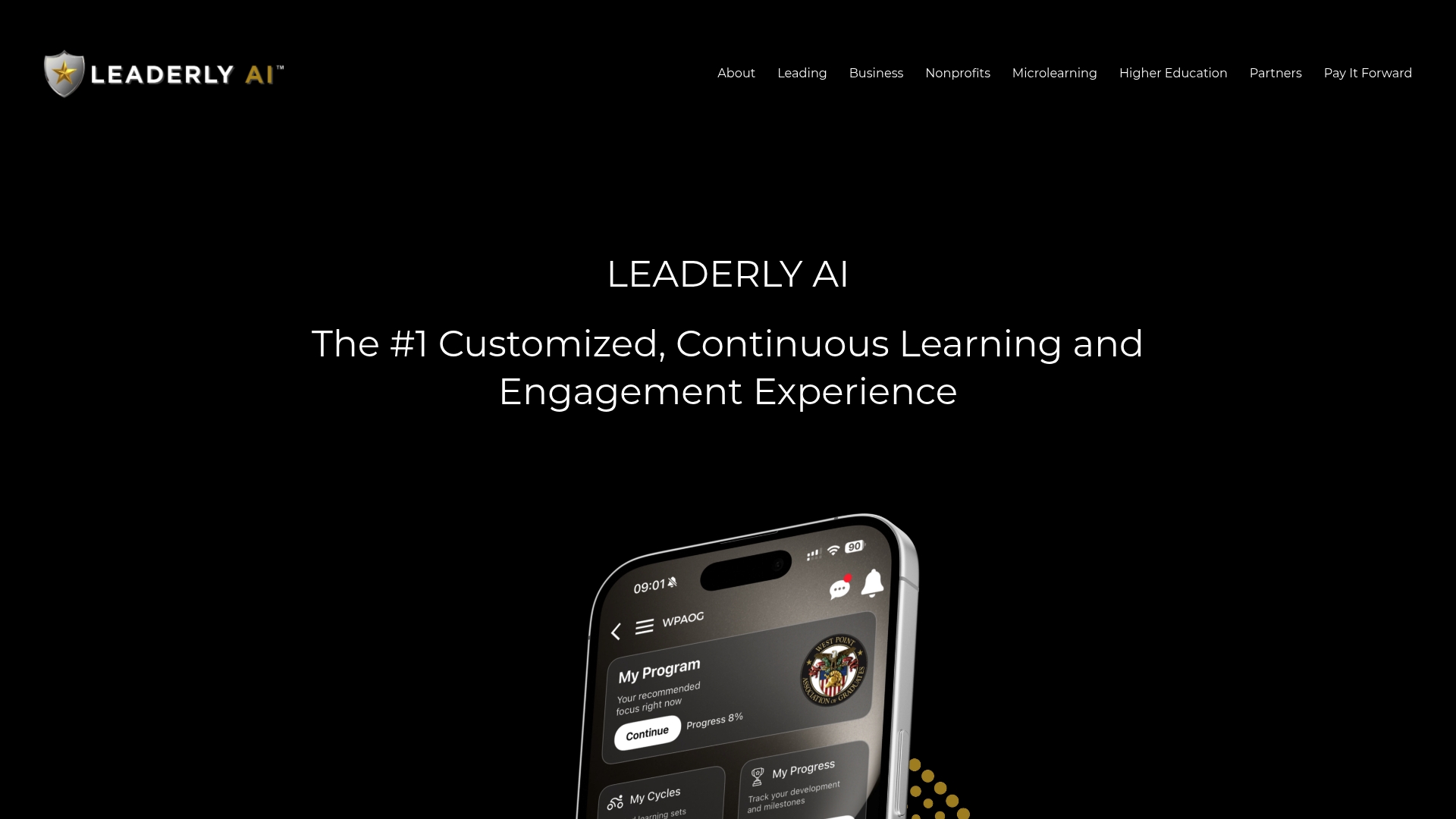
The platform adapts to your specific growth areas, whether that is delegation, coaching, or self-awareness, and tracks your progress over time. Leaderlyapp is built for emerging managers who want to build real habits, not just consume content. If you are ready to move from individual contributor to confident team leader, Leaderlyapp gives you the daily structure to make that shift stick.
FAQ
What are the most important leadership habits for new managers?
The most critical habits are active listening, weekly one-on-ones, consistent delegation, and brief daily self-reflection. These four routines build trust, develop your team, and keep your own leadership behavior steady under pressure.
How long does it take to build leadership habits?
A 28-day to 6-week window is typical for new leadership behaviors to shift from effortful to automatic. Daily micro-practices compound faster than most new managers expect.
Why do so many new managers struggle in their first year?
About 60% of new managers receive no formal training at promotion. Without deliberate habit development, most default to doing the work themselves rather than leading through their team.
What is the "top IC trap" in leadership?
The top IC trap describes a new manager's tendency to keep performing individual contributor work instead of shifting to leading others. Breaking it requires delegating outcomes with authority, not just assigning tasks.
How does self-awareness improve leadership effectiveness?
Self-awareness helps managers recognize their triggers and manage their reactions before stress affects the team. Leaders with strong self-awareness create more honest, psychologically safe environments where teams perform at a higher level.