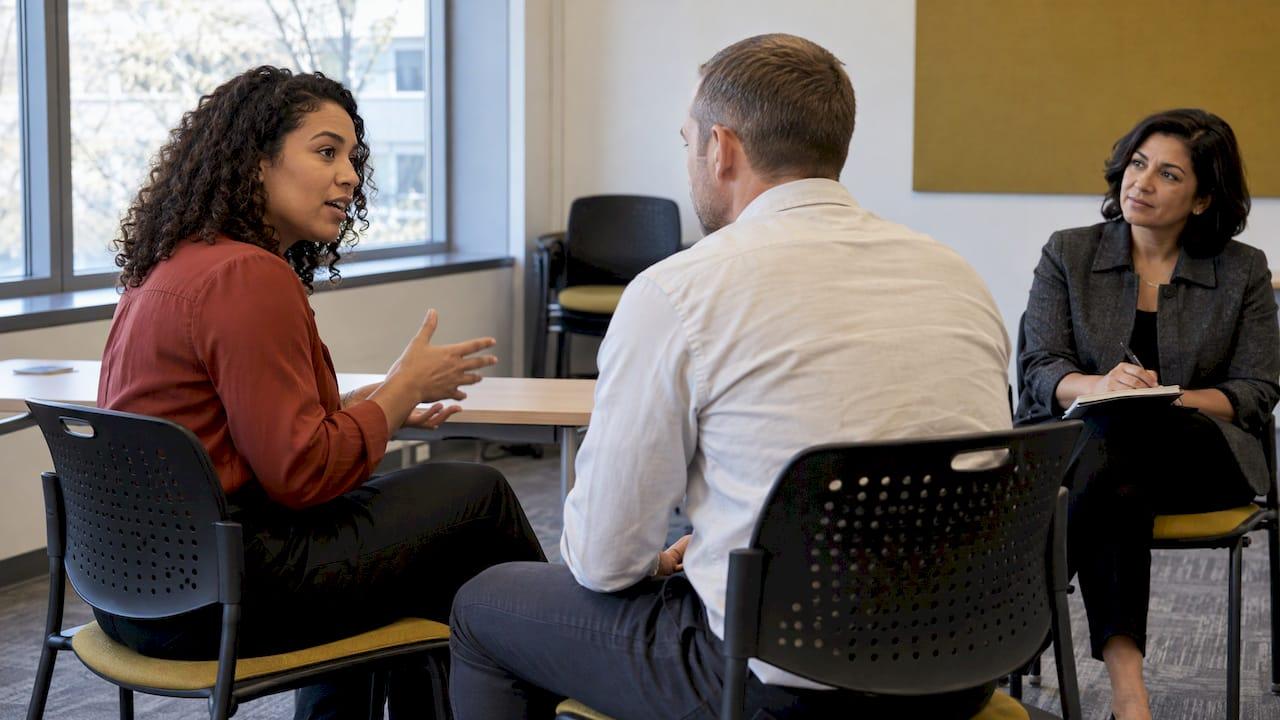
Training teaches managers what to do. Coaching helps them work out how to do it in their own situations. Neither works well alone: training builds shared knowledge quickly, coaching turns that knowledge into behavior, and the gap between the two is where most leadership programs lose their value. The practical answer for HR is a continuous loop of short learning, real practice and feedback, offered to every manager rather than a few. That is the approach we built Leaderly AI around.
TL;DR
- Training transfers knowledge and skills to a group, usually through courses, workshops or simulations. Coaching is personalized, centered on the individual's goals and real challenges, and runs over time.
- Use training when many managers need the same baseline (feedback, conflict, decision-making). Use coaching when the need is individual: a specific behavior, a transition or a long-term path.
- Training's effects are short-lived without follow-up, so pair it with ongoing coaching and on-the-job practice.
- Measure behavior change with before-and-after feedback, not course completion.
- At scale, microlearning, habit exercises and manager-led coaching conversations let you reach every manager, not just the senior few.
Table of Contents
- The difference between coaching and training for managers
- What training does well for managers
- What coaching does well for managers
- How to choose: start with what needs to change
- Why the strongest programs combine both
- A practical model for HR: the learn, apply, reflect loop
- How to tell whether it is working
- Who this matters for
- Promo: bringing the loop to every manager
- Our perspective
- FAQ
- Sources
The difference between coaching and training for managers
The two are often used as synonyms, but they answer different questions.
Training answers: "What do managers need to know or be able to do?" It is structured and led by an instructor or a program. SHRM describes workshops, seminars and online courses as focused, structured skill-building in areas such as communication, decision-making and conflict resolution, often with simulations or role-play.
Coaching answers: "What is getting in the way of this particular manager, and what will they try next?" The same SHRM guide notes that pairing leaders with mentors or coaches provides personalized feedback that builds confidence and speeds learning. The agenda belongs to the manager, and the work happens in conversation, over weeks or months, around real situations.
| Training | Coaching | |
|---|---|---|
| Main purpose | Build shared knowledge and skills | Improve one person's performance and growth |
| Format | Courses, workshops, simulations, microlessons | One-to-one or small-group conversations over time |
| Content | Set by the program, same for the group | Set by the manager's goals and challenges |
| Facilitator's role | Teaches and demonstrates | Asks questions, gives feedback, holds the manager accountable |
| Best for | New managers, common skill gaps, compliance-style basics | Specific behaviors, transitions, long-term development |
| Typical risk | Learning fades if nothing follows it | Hard to deliver to everyone if it depends on a few coaches |
A short way to remember it: training gives managers the playbook, coaching helps them run the plays in their own game.
What training does well for managers
Training is the fastest way to give a whole group of managers the same vocabulary and the same starting skills. A first-time manager who has never run a one-on-one, given difficult feedback or handled a conflict needs a model before they need a coach.
Academic work on leadership development backs this role. Conger (2024) argues that training has a place in building awareness of common leader derailers, teaching managers how to ask for and act on feedback, and setting expectations for how leaders should behave.
Where training goes wrong is in what happens afterward. Conger notes that its effects are short-term, so follow-up coaching, by supervisors or professional coaches, is essential to keep what was learned from decaying. A one-day workshop with no practice, no reminders and no conversation afterward is an event, not development.
Good training for managers tends to share a few traits:
- A narrow target. "Giving feedback that changes behavior" beats "leadership essentials."
- Practice built in. Role-play and simulations let managers try the skill before it counts.
- Short and repeated. Small lessons spaced over weeks fit a manager's calendar better than a single long session.
- A bridge to the job. Each lesson ends with something to do this week.
What coaching does well for managers
Coaching works when the issue is personal, specific or ongoing. Research on executive coaching, summarized in a 2005 U.S. study, cites four distinct purposes: improving managerial skills, correcting serious performance problems, preparing for or completing a specific challenge, and long-term development for a future leadership role.
Those are all individual needs. A group course cannot tell one manager why her team goes quiet in meetings or help another prepare to lead a reorganization. Conger (2024) states that coaching is more effective than training for leaders at risk of derailing, because it can be customized to the person and takes place over an extended period.
There is evidence from the field too. In a study at a small Midwestern manufacturer, Luthans and Peterson combined 360-degree feedback (ratings gathered from a manager's boss, peers and direct reports) with systematic self-awareness coaching for 20 managers. Manager and employee satisfaction, commitment and turnover intentions improved.
Coaching also has a skill requirement of its own. Conger points out that discerning readiness for change, having a portfolio of behavioral interventions and reading the client's emotional state make deep coaching engagements complex. That is why many organizations start by teaching every manager core coaching conversations, and reserve specialist coaches for the hardest cases. Our guides on how to hold a coaching conversation and the leader as coach show what that looks like in practice.
How to choose: start with what needs to change
The simplest decision tool is a question: is this a knowledge gap, a behavior gap or a context gap?
| Situation | Likely need | Why |
|---|---|---|
| Newly promoted managers who have never run a team | Training | Everyone needs the same fundamentals, fast |
| Managers know what good feedback looks like but avoid giving it | Coaching | The barrier is confidence and habit, not information |
| A new policy or process affects all managers | Training | Consistent message to a large group |
| One manager is struggling with a specific team dynamic | Coaching | Individual, situational, needs tailored feedback |
| A high-potential manager is preparing for a director role | Coaching | Long-term, personalized development |
| Engagement scores are low across many teams | Both | Shared skills plus individual follow-through |
If you are unsure, run a short self-assessment or collect 360 feedback first. It shows whether the pattern is shared (a training signal) or individual (a coaching signal).
Why the strongest programs combine both
Most leadership learning does not happen in a classroom. SHRM's guide describes the widely used 70-20-10 framework: roughly 70% of effective leadership learning comes from on-the-job experience, 20% from interactions with others such as mentoring or coaching, and 10% from formal education such as workshops and courses.

Taken as a rule of thumb rather than an exact formula, it points to a design principle: formal training is the smallest slice, and its job is to feed the other 90%. The best programs give managers a skill in a short lesson, a real situation to apply it to within days, and a conversation to reflect on what happened.
HR teams are moving this way. An ICF-commissioned study by Corry Robertson of 366 HR, learning and development and talent management professionals found that:
- coaching initiatives are most successful when aligned with the organization's strategic goals;
- the top purposes for coaching were leadership development (55%), talent development (51%) and performance management conversations (49%);
- 32% of organizations use internal coaches, external coaches and managers using coaching skills at the same time;
- 83% plan to expand managers' and leaders' use of coaching skills over the next five years.
The last two numbers matter most for scale. Organizations are not choosing between coaching and training. They are teaching managers to coach, so coaching reaches far more people than a small group of professional coaches could.
A practical model for HR: the learn, apply, reflect loop
Here is a routine HR teams can run for any manager skill, whether it is feedback, delegation or running better meetings.
- Diagnose. Use a self-assessment or 360 feedback to find the two or three behaviors that matter most. Tie them to a business goal, such as retention on a particular team.
- Teach the skill in small pieces. Short lessons or simulations covering one idea at a time. Aim for minutes, not days.
- Assign a real-world practice. One concrete action within a week: hold a recognition conversation, ask for feedback in the next one-on-one.
- Hold a coaching conversation. The manager's own leader, a peer coach or a professional coach asks what happened, what was hard and what to try next. Our guide to coaching an employee in the workplace gives a simple structure, and feedback is critical to improving performance explains why that step cannot be skipped.
- Repeat and measure. Re-run the assessment later and compare. Add the next skill only when the first shows up in behavior.
If you are building this from scratch, our walkthroughs of creating an effective leadership development program and an employee coaching program lay out the planning in more detail.
How to tell whether it is working
Completion rates tell you who clicked through. They do not tell you whether managers behave differently. Measure behavior and, over time, the effect on teams.
A CDC-reported study of 96 public health leaders is a useful model. It used 360-degree multirater assessments before and after coaching, plus interviews. Of the 94 leaders interviewed, 79% reported improvements in leading-change competencies such as creativity and innovation, flexibility and resilience, and all of them identified developmental relationships, assessment and feedback as effective tools.
You can borrow that design at a smaller scale:
- Baseline and follow-up. Run the same assessment before the program and again after several months.
- Direct report input. Ask teams a few consistent questions about their manager's behavior, such as how clearly goals are set and how useful feedback is.
- Engagement trends. Watch team-level survey results over time, alongside manager participation.
- Manager reflection. Ask managers what they changed, not what they liked.
Treat the numbers as direction, not proof of cause. Many things move engagement, so the most credible story combines assessment changes, team feedback and managers' own examples.
Who this matters for
HR and L&D leaders need a way to reach every manager without hiring a coach for each one. Emerging leaders benefit most from short training plus regular practice and feedback, since they are still building habits. Educators can build the same loop into leadership courses, with lessons, assignments and reflection. Veterans moving into civilian management often bring strong leadership experience and need translation more than basics: how civilian teams give feedback, motivate without rank and handle ambiguity. Coaching-style reflection on real situations suits that need well.
Promo: bringing the loop to every manager
Leaderly AI is a mobile-first platform for organizations that delivers personalized, AI-driven leadership development through microlearning and behavioral habit-building exercises. It includes self-assessments (DiSC, EQ and MBTI among them), simulations, customizable learning journeys, analytics dashboards and surveys, so HR can run the diagnose, learn, apply and measure steps in one place and extend them to all employees, not only managers. There are versions for businesses, higher education and nonprofits.
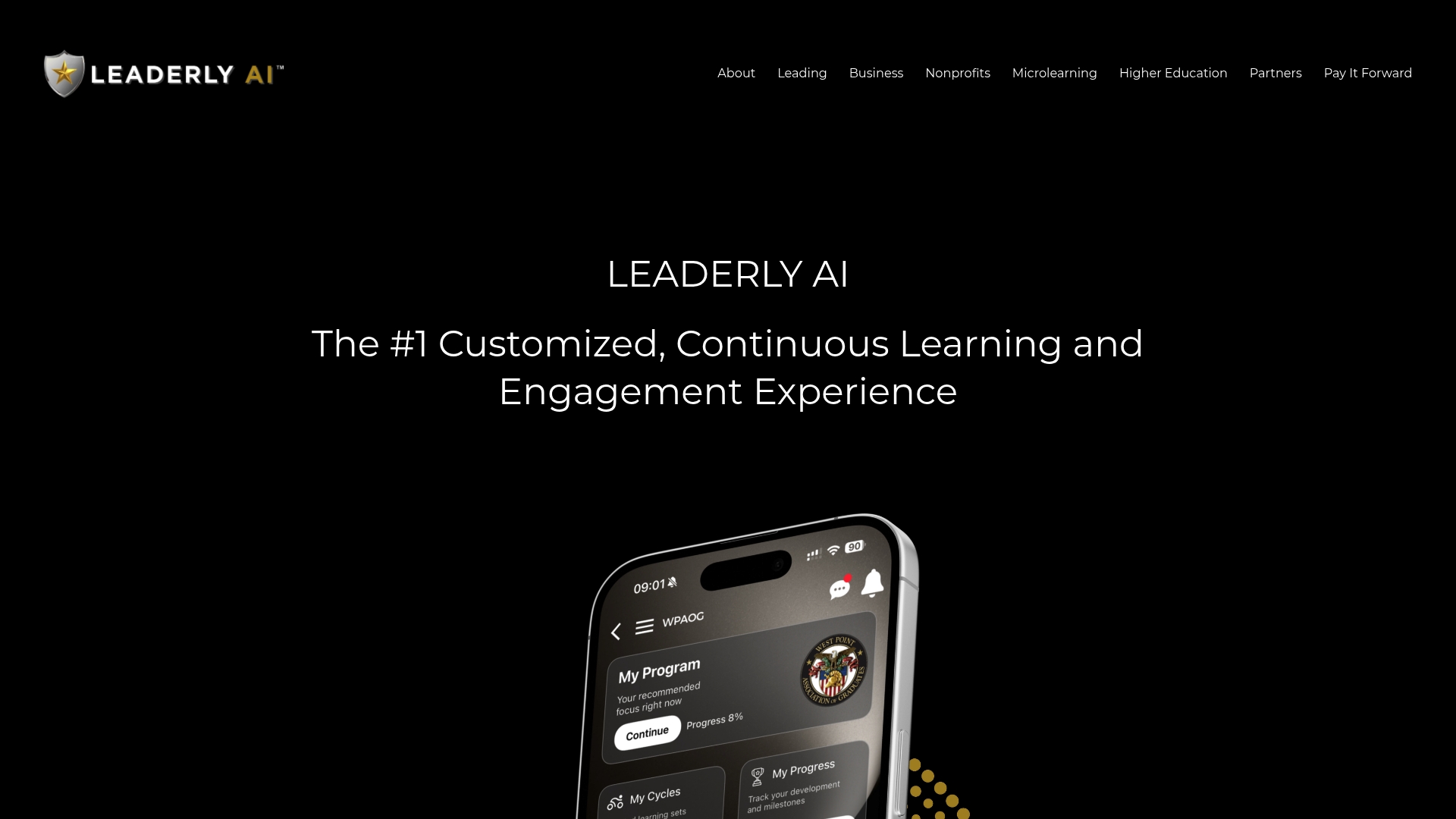
To see how it could fit your managers, start at the Leaderly AI page, or read about microlearning for leadership.
Our perspective
We hear the question "coaching or training?" a lot, and we think it hides the real issue. The question is whether learning continues after the lesson ends.
A manager can understand a framework in ten minutes. Turning it into a habit takes repetition, a real situation and someone, or something, asking how it went. That is why we designed Leaderly AI around short microlessons, practical exercises and assessments, with content personalized by machine learning as each user's journey unfolds.
We also believe leadership development should not be reserved for people with the word "manager" in their title. Emerging leaders, volunteers, faculty and students all lead in some way. When development is affordable and accessible to everyone, a culture of growth stops depending on a handful of coaching engagements.
Our advice to HR teams: teach the skill in small pieces, give people a concrete thing to try, and make reflection a routine. Use the data to see which behaviors are shifting, and let that guide what comes next.
Drew
FAQ
Is coaching better than training for managers?
Neither is better in every case. Training is the efficient way to give many managers the same baseline skills, while coaching suits individual needs and long-term development. Academic work suggests training's effects are short-term without follow-up, so most programs pair the two.
What is the difference between coaching and training in simple terms?
Training teaches a defined skill or body of knowledge to a group, usually in a structured format. Coaching is a personalized, ongoing conversation focused on one person's goals and real situations. Training supplies the tools, and coaching helps the manager use them.
Can managers coach their own teams, or do they need professional coaches?
Managers can and increasingly do. In the ICF-commissioned study, 83% of HR and talent professionals planned to expand managers' and leaders' use of coaching skills over five years. Professional coaches remain valuable for complex individual cases, but everyday coaching conversations are a learnable manager skill.
How long does it take to see results?
It depends on the skill and how often managers practice. A sensible approach is to measure behavior with a baseline and a follow-up assessment several months apart, plus feedback from direct reports, rather than judging by course completion.
How do I decide where to start?
Collect a self-assessment or 360 feedback first. If many managers share the same gap, start with short training on that skill. If the gaps are individual, start with coaching conversations, and tie either to a business goal such as retention or engagement.
Sources
- SHRM: Development Strategies for Leadership and Manager Growth
- Conger (2024), Leveraging Leadership Development to Pre-Empt Leader Derailment, MDPI Behavioral Sciences
- Saling (2005), An Empirical Study Comparing the Effect of Feedback, Training and Coaching, ERIC
- Luthans and Peterson (2003), 360-degree feedback with systematic coaching, Human Resource Management
- Corry Robertson for ICF: Building Strong Coaching Cultures for the Future
- Leading Organizational Change: Improved Leadership Competencies (PMC, 2021)