
Five skills matter most: active listening, powerful questioning, structured feedback, collaborative goal-setting, and empathy tuned to the individual. Start now by turning your next weekly one-on-one into a practice round: listen without interrupting, then ask one open question instead of giving an answer. Meta-analyses on workplace coaching show moderate, statistically significant gains across performance and well-being outcomes, so this isn't a soft skill you're adding for morale. It's a lever with measurable output.
TL;DR:
- Coaching skills such as active listening and powerful questioning lead to measurable performance and well-being improvements within approximately six weeks of practice.
- Managers should focus on specific behaviors like minimizing talk ratio, asking open questions, and providing timely SBI feedback to see tangible coaching gains.
- Using structured frameworks like GROW and micro-patterns like Ask-Reflect-Plan help streamline coaching conversations and reinforce behavior change.
- Regular observation, recording, and tracking simple metrics like 1:1 frequency and follow-through are essential for ensuring skill adoption and behavioral improvement.
- Sustained behavior change benefits most when training is spaced over weeks, paired with continuous practice, rather than one-off workshops or external coaching.
Table of Contents
- The Core Coaching Skills Checklist Every Manager Needs
- How Do You Structure a Coaching Conversation?
- How Do You Build Coaching Skills Through Practice?
- What Results Should You Expect, and By When?
- When Should You Coach Instead of Direct?
- Rolling This Out Across Your Team
- Why Most Coaching Advice Skips the Hard Part
- Turning Practice Into a Habit With Leaderly AI
- Sources
- FAQ
The Core Coaching Skills Checklist Every Manager Needs
Most coaching advice stays abstract. This one is built to use in your next conversation.
Active listening. This means giving full attention, summarizing what you heard at least twice before responding, and tolerating silence instead of rushing to fill it. A quick practice prompt: in your next 1:1, count how many times you interrupt. Aim for zero, and paraphrase the employee's point back to them before you offer your own view.
Powerful questioning. Swap "did you consider X" for open, incisive questions: "What have you already tried?" "What would success look like in three months?" "What's the real obstacle here, not the surface one?" These questions put the thinking back on the employee, which is the entire point of coaching rather than directing.
Feedback using the SBI model. Situation, Behavior, Impact. A one-sentence template: "In [situation], you [specific behavior], and the impact was [result]." Deliver it within 24 to 48 hours of the event, while details are fresh and the emotional charge hasn't calcified into defensiveness. Leaderlyapp's guidance on specific, actionable feedback breaks this down further if you want more templates.
Goal-setting and accountability. Co-create SMART goals rather than assigning them. A goal the employee helped write gets followed through more often than one-handed down. Set a follow-up cadence, weekly for short-term goals, biweekly for longer development plans, and treat the follow-up itself as non-negotiable.
Empathy and individuation. Tailor your approach to the person, not a script. A randomized trial spanning 1,000-plus teams and 7,000-plus individuals found that managers who treated employees as unique individuals, rather than interchangeable team members, saw measurable increases in psychological safety and a higher rate of employees flagging real concerns. That single shift in a manager's approach moved the needle on trust.
- Track your talk ratio: if you're speaking more than 30% of the time in a coaching conversation, you're directing, not coaching.
- Watch for the employee finishing your sentences in their head, a common sign you've slipped into lecture mode.
- Notice repeated one-word answers, which often signal disengagement rather than agreement.
Boundary awareness. Stop coaching and escalate when the issue involves policy violations, safety, or something outside your expertise, like mental health. Coaching a performance gap is your job. Coaching someone through a clinical issue isn't.
Pro Tip: Record yourself (with consent) in one 1:1 this month. Most managers are shocked at how often they answer their own questions before the employee gets a chance to.
How Do You Structure a Coaching Conversation?
The GROW model gives you a repeatable shape for longer conversations. Two shorter patterns cover the quick check-ins that make up most of a manager's week.
- Goal. Purpose: define what the employee actually wants from this conversation. Ask: "What do you want to walk away from this conversation with?" or "What outcome matters most to you here?"
- Reality. Purpose: surface the current situation without judgment. Ask: "What's actually happening right now?" or "What have you tried so far, and what happened?"
- Options. Purpose: generate possible paths before picking one. Ask: "What are two or three ways you could approach this?" or "What would you do if resources weren't a constraint?"
- Way forward. Purpose: lock in a specific next step. Ask: "What's the first thing you'll do this week?" or "How will you know you've succeeded?"
Google's own manager guidance treats GROW as a default framework precisely because it's fast to teach and hard to forget.
For shorter interactions, two micro-patterns cover most of the day. Ask-Reflect-Plan takes about five minutes: ask what's going on, reflect it back in your own words, then agree on one small next step. Quick Connect takes two minutes at the start of any meeting: ask how the person is doing outside the immediate task, actually wait for the answer, then move on. Neither replaces a real coaching conversation, but both build the trust that makes real coaching conversations possible later.
Flex your style based on what the moment calls for. A new hire drowning in ambiguity often needs direct teaching first, coaching second. A capable employee stuck on a judgment call almost always needs facilitation, not instruction.

How Do You Build Coaching Skills Through Practice?
Training that ends after a workshop rarely changes behavior. Capability comes from spaced practice, not a single seminar.
Design the program around short sessions rather than one long event. That ratio, along with a structured observation checkpoint around six weeks after training, reflects the format that practitioner guidance on manager coaching programs consistently recommends.
- Run roleplay sessions on real, current manager problems, not hypothetical case studies.
- Pair managers for peer coaching, where each takes turns being the coach and the coachee.
- Record actual one-on-ones (with consent) and review them against a simple behavior checklist.
- Schedule an observation at roughly six weeks to rate whether core behaviors, like talk ratio and question type, have actually shifted.
Track adoption with metrics that are cheap to collect: manager talk ratio, number of 1:1s held per month, and the percentage of commitments followed up within the agreed timeline. None of these require a survey vendor. A manager or an HR partner can track them in a spreadsheet, though a platform built for behavior tracking removes the manual work.
Pro Tip: Don't teach a third skill until the first two show up consistently in observed conversations. Stacking new skills on top of unpracticed ones is the fastest way to lose all of them.
What Results Should You Expect, and By When?
Coaching produces measurable but not instant results. Meta-analyses find effect sizes in the moderate range, roughly g = 0.43 to 0.74, across outcomes like skill-based performance and goal-directed self-regulation, which puts workplace coaching solidly ahead of many other single-lever management interventions.
A longitudinal study of 313 US employees found something worth remembering: coaching behaviors and employee outcomes reinforce each other over time. As managers coach more, role clarity and organizational commitment rise, which then makes the manager's coaching land better. It's a loop, not a one-time fix.
Expect observable behavior change, better questions, less interrupting, and more follow-through within roughly six weeks of focused practice. Organizational-level outcomes, such as retention or engagement scores, typically require longer periods to become evident, often across a full quarter or more. Track role clarity, engagement, goal attainment rate, 1:1 frequency, and talk ratio as your core KPIs.
One caution: internal coaches, meaning managers coaching their own direct reports, often show stronger effects than external coaches in the research. Multi-source feedback (360-style reviews) can also dilute or mask real gains, so weigh it as one input, not the final verdict.
When Should You Coach Instead of Direct?
Coaching fits developmental goals, skill-building, and problem-solving where the employee has the capability but needs to find their own path. It doesn't fit every situation, and treating it like a universal tool is a common mistake.
- Coach when the issue is skill development, career growth, or a decision the employee is capable of making themselves.
- Direct, don't coach, when there's serious misconduct, safety risk, or a legal or HR process already underway.
- Refer out when the issue looks clinical, such as a mental health concern beyond a manager's training.
- Set a quick coaching agreement upfront: what's in scope, what stays confidential, what's shared with HR, and how you'll both know it worked.
That last point matters more than it sounds. An employee who doesn't know the limits of confidentiality will hold back exactly the information that makes coaching useful.
Rolling This Out Across Your Team
Reusable tools beat one-off training every time. Keep a short 1:1 script (opening question, two follow-ups, one commitment), an SBI feedback template, a GROW quick-reference card, and an observation checklist that rates talk ratio, question type, and follow-through. Managers who use structured artifacts practice more consistently than those relying on memory alone, largely because the artifact removes the guesswork under time pressure.
The ICF's 2025 competency update codifies exactly this kind of behavior: cultivating trust and safety, active listening, and evoking awareness rather than supplying answers. It's a useful external benchmark when you're building an internal checklist from scratch.
If you're piloting this formally, keep the scope tight:
- Cohort size: 8 to 12 managers, small enough to observe closely.
- Duration: six to eight weeks, matching the observation checkpoint window.
- Cadence: two skills per session, spaced weekly or biweekly.
- Success metrics: talk ratio, 1:1 frequency, commitment follow-through, and employee-rated role clarity.
Leaderlyapp's step-by-step guide to launching a coaching program walks through a similar structure if you want a template to adapt.
Why Most Coaching Advice Skips the Hard Part
The research on manager coaching is more encouraging than most skeptics assume, and more limited than most vendors admit. The effect sizes are real but moderate, not miraculous, and internal coaching tends to outperform bringing in outside experts, which cuts against the entire premise of an industry built on external coaching services.
Where conventional advice falls short is the assumption that a workshop changes behavior. It doesn't. The six-week observation checkpoint is the part everyone skips, and it's the part that actually separates managers who improve from managers who attended a nice session and reverted within a month.
If you take one thing from this, prioritize the questioning skill over everything else. Active listening gets talked about more, but powerful questions are what force an employee to do their own thinking, and that's the entire mechanism by which coaching outperforms directing. Master the pause after a hard question before you master anything else on this list.
— Drew
Turning Practice Into a Habit With Leaderly AI
A workshop teaches a skill once. What actually changes behavior is repetition, and that's the gap Leaderlyapp is built to close for organizations trying to scale coaching beyond a handful of managers who happened to read the right guide.
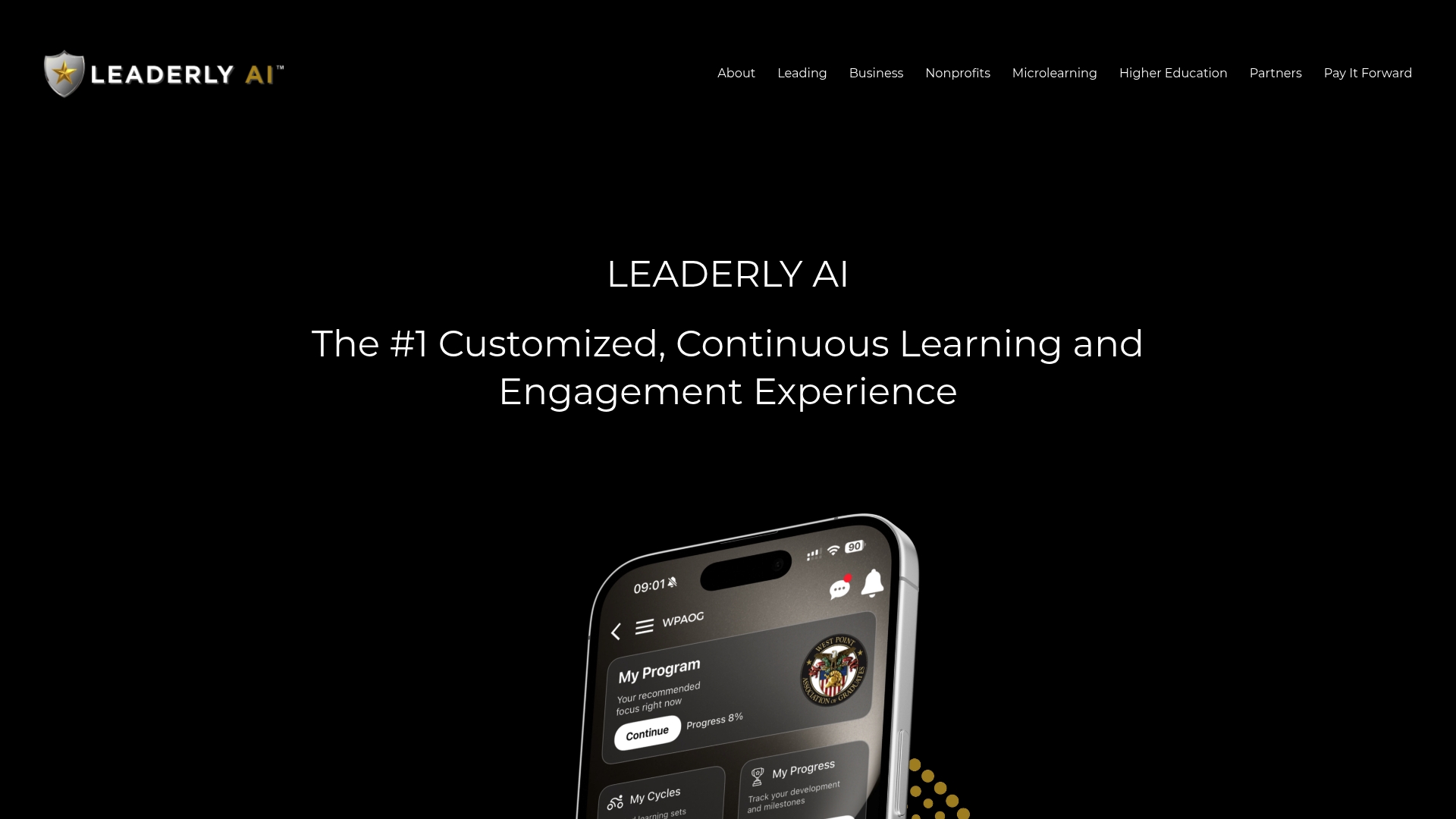
The platform delivers personalized microlessons on coaching behaviors like active listening and SBI feedback, paired with practice nudges timed to when a manager actually has a 1:1 on the calendar. Built-in assessments, including DiSC and EQ, help managers understand their own defaults before they try to adjust them, and analytics dashboards track the same behavior metrics covered above: 1:1 frequency, follow-through on commitments, and manager talk ratio, without anyone building a spreadsheet by hand.
A practical pilot use-case: run an eight-week cohort focused on reinforcing weekly coaching habits, then check the dashboard instead of relying on memory to see whether behavior actually shifted. If you're an HR leader weighing whether to scale this beyond a few early adopters, the Leaderly AI for business page walks through what a pilot with your team could look like.
Sources
FAQ
What Are the Most Important Coaching Skills for Managers?
Active listening, powerful questioning, structured feedback (using SBI), collaborative goal-setting, and empathy tuned to the individual employee top the list. Meta-analyses show coaching interventions built on these skills produce moderate, statistically significant improvements in performance and well-being outcomes.
How Long Does It Take to See Results From Manager Coaching?
Observable behavior change, like fewer interruptions and better questions, typically shows up within about six weeks of focused practice. Organizational-level outcomes such as engagement or retention usually take a full quarter or longer to move.
What Is the GROW Model in Coaching?
GROW stands for Goal, Reality, Options, and Way forward, and it gives managers a repeatable structure for coaching conversations. Google's own manager training uses GROW as its default framework because it's simple to teach and easy to remember mid-conversation.
When Should a Manager Coach Instead of Direct?
Coaching fits developmental goals, skill-building, and decisions the employee is capable of making themselves. Serious misconduct, safety issues, or anything clinical should go to formal HR or professional channels instead.
Can a Platform Like Leaderly AI Help Build Coaching Skills Across a Team?
Yes. Leaderly AI delivers personalized microlessons and practice nudges tied to coaching behaviors, along with analytics that track adoption metrics like 1:1 frequency and manager talk ratio. Current pricing details for organizations are available on the Leaderly AI business page.